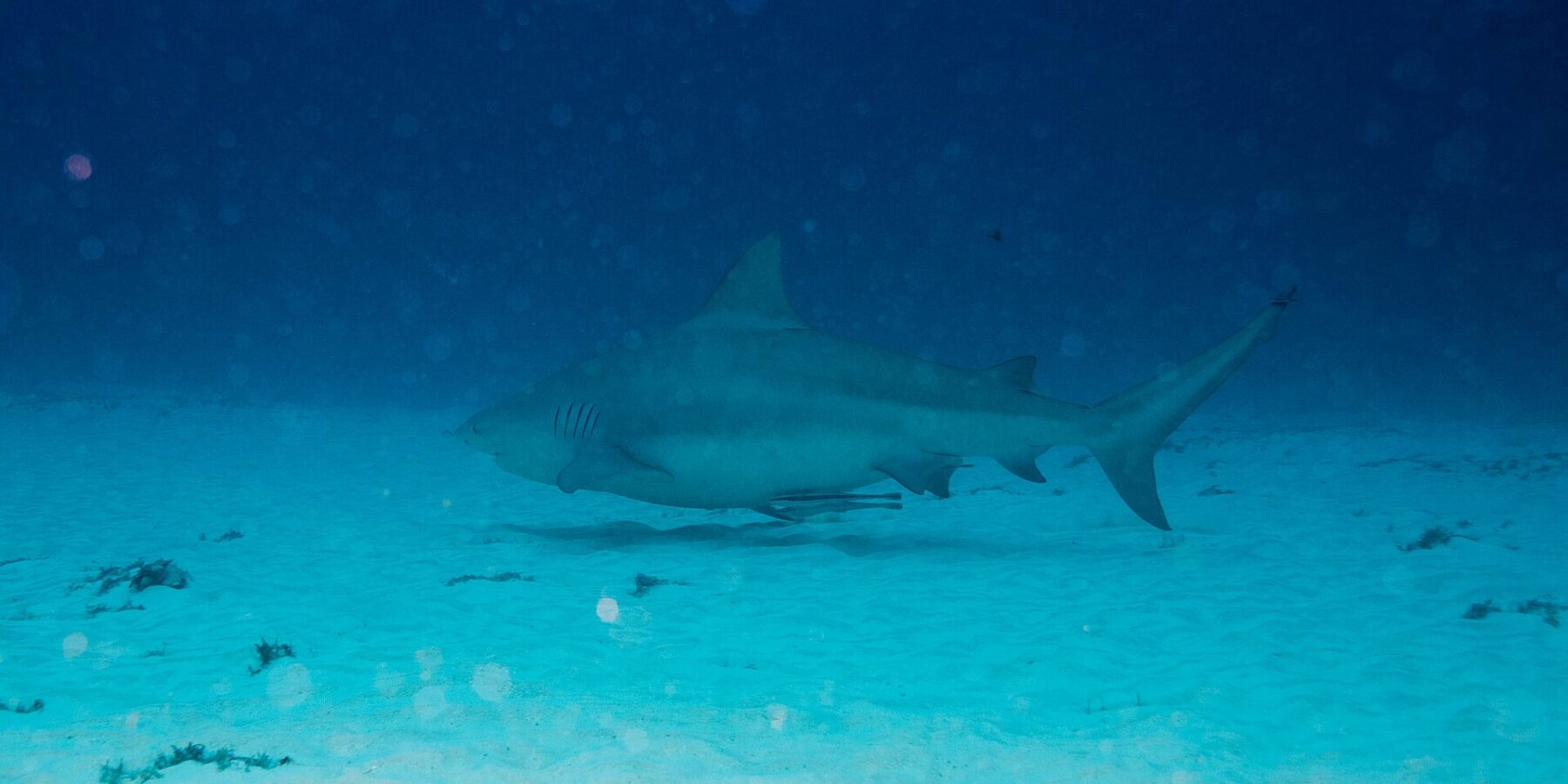
Stocky, with a short snout, the bull shark reaches 3.40 meters, and it is the only shark its size that lives as easily in fresh water as in the sea. In Mexico, pregnant females gather every winter on the sand off Playa del Carmen. The species is Vulnerable: watch it while staying still, without moving toward it.
Where to dive to see the bull shark?
 Costa RicaPelagic
Bat Islands (Islas Murciélago)
Guanacaste and the North PacificPeak season from June to October: at the Big Scare cleaning station, around 30 meters, without bait; present year-round, with trips from mid-May to early November
 MexicoReef
Cabo Pulmo
Sea of Cortez: La Paz and Cabo PulmoPeak season from August to December: on the El Vencedor wreck, at 15 meters; dive centers list them almost year-round, and sightings are most reliable from late summer to December
 Costa RicaCave or cenote
Caño Island
South Pacific: Osa and Caño IslandCan be seen all year round: occasional at El Faro and Bajo del Diablo
 ThailandPelagic
Chumphon Pinnacle
Gulf of Thailand: Koh TaoCan be seen all year round: regular fifteen years ago, now seen only once in a while at depth
 Costa RicaReef
Islas Catalinas
Guanacaste and the North PacificCan be seen all year round: occasional, in open water
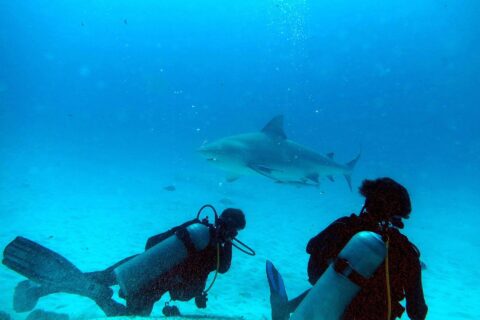 MexicoPelagic
Playa del Carmen bull sharks
Yucatán and the Caribbean: Cozumel, cenotes, Playa del CarmenPeak season from November to March: females, often pregnant, from November to March, peaking from December to February
How do you identify a bull shark?
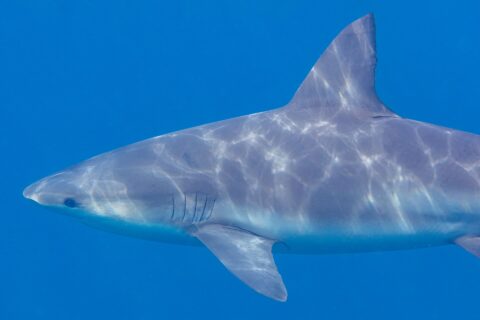
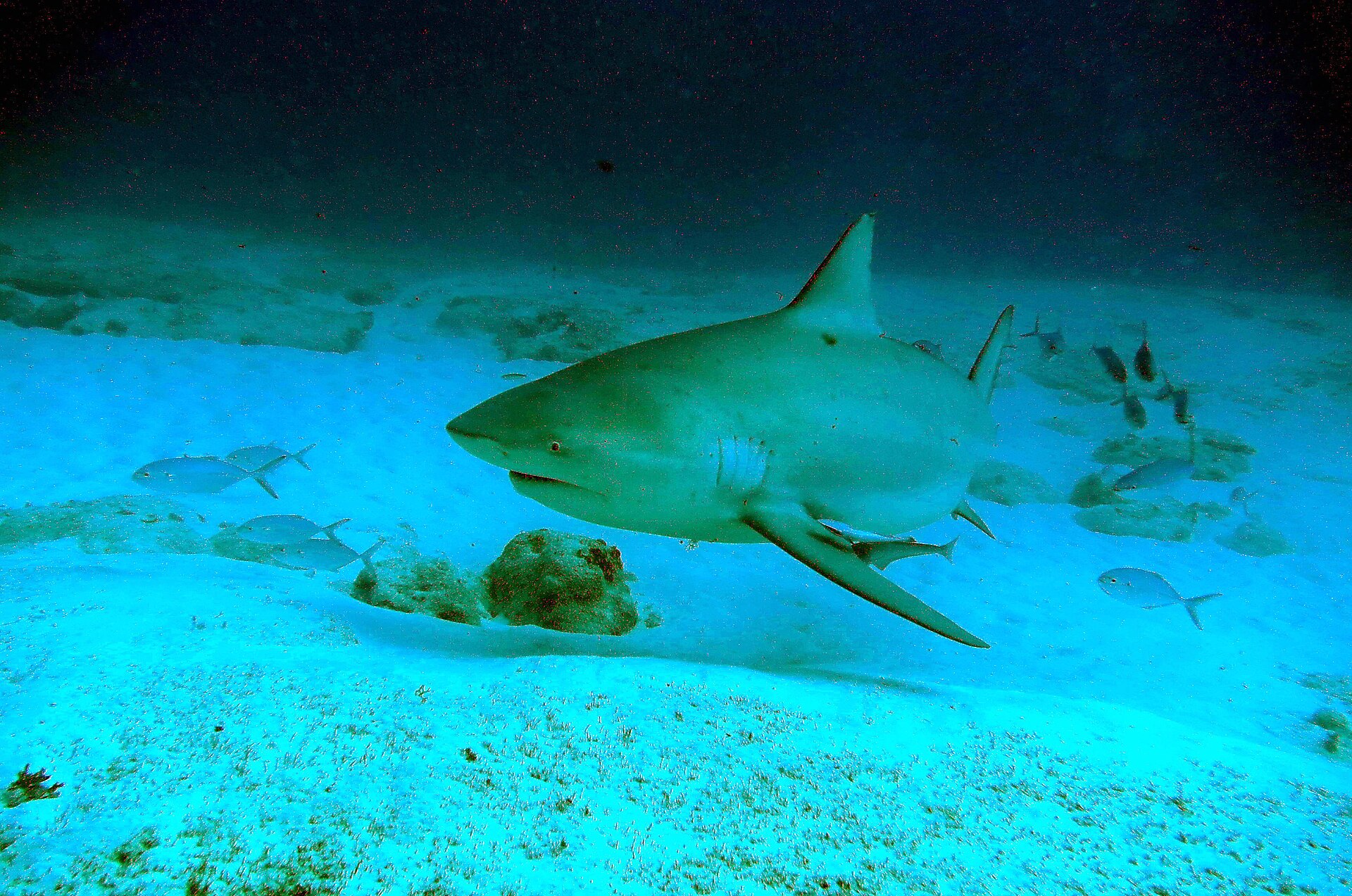
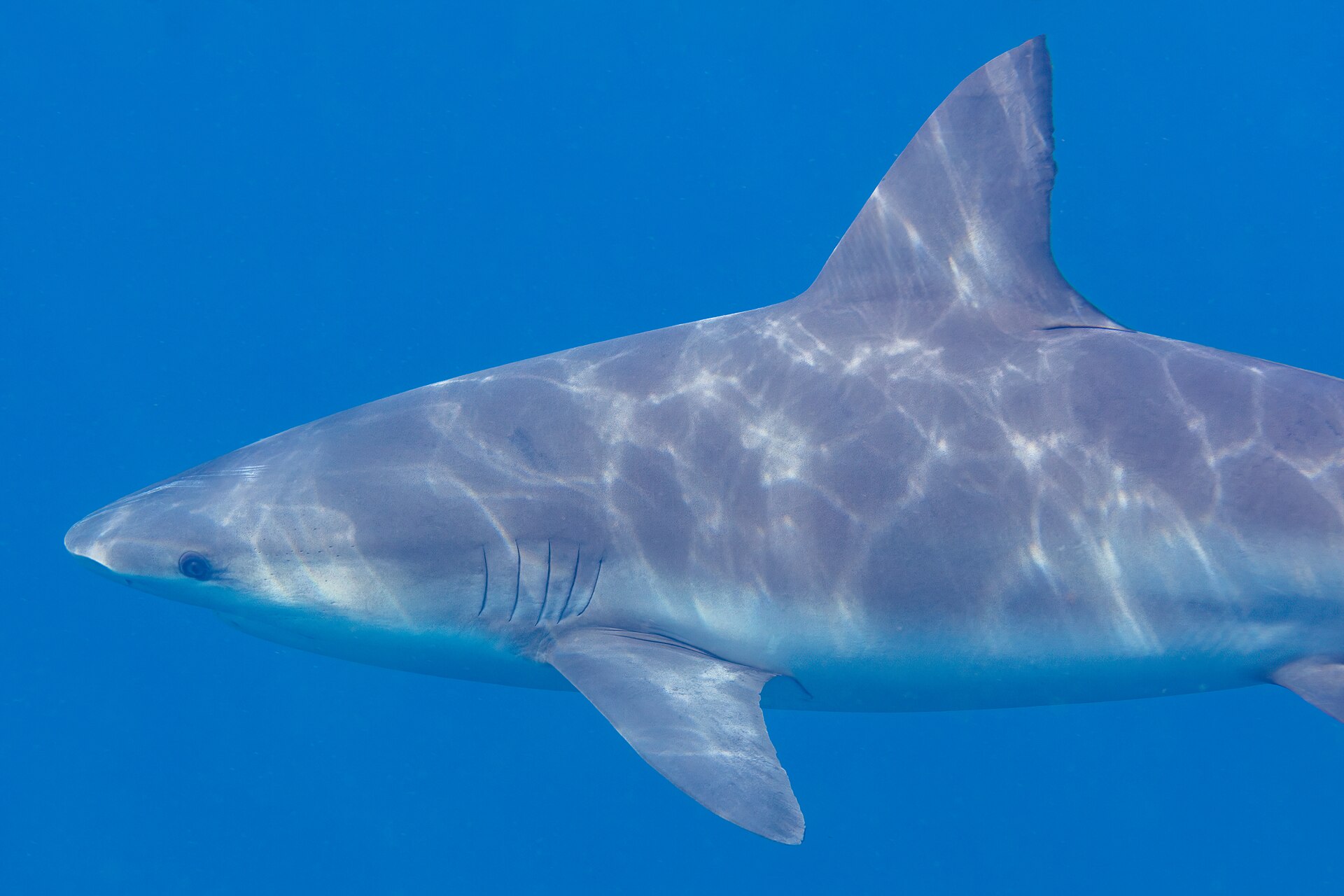
The bull shark, or Zambezi shark, gets its name from its massive, heavy, powerful build and its short, flattened snout. The back is gray or olive brown, the fin tips slightly darker, the belly whitish; the eyes are small, the first dorsal fin tall and broad. Adults usually measure 2 to 2.50 meters. The maximum size is 3.40 meters and 220 kilos, and individuals of 4 meters have been reported. The upper teeth are broad, triangular and serrated, the lower ones narrow and pointed, and the jaw exerts a force of about 6,000 newtons, one of the most powerful bites measured in sharks. At Playa del Carmen, females often carry mating scars on their flanks, and those marks are how the guides recognize them from one year to the next.
Bull shark in pictures
How does the bull shark live?
It is a coastal shark of tropical and subtropical seas, from the Atlantic to the Indo-Pacific, and rare in the Red Sea; in the Pacific, it ranges from Baja California to Ecuador. It prefers shallow water, usually less than 30 meters, as well as estuaries, lagoons and murky river mouths, and it is euryhaline from birth: it travels nearly 3,000 kilometers up the Mississippi, up the Amazon as far as Peru and more than 1,000 kilometers up the Zambezi, and a population lives in Lake Nicaragua. It is viviparous: after ten to eleven months of gestation, the female gives birth to one to thirteen pups of 56 to 81 centimeters, in the lagoons and river mouths that serve as nurseries. In the Gulf of Mexico, mating takes place in summer and births from April to June. Females mature at around 1.80 to 2.30 meters, males at around 1.60 to 2.25 meters, and the species lives more than 25 years.
Where and when can you see bull sharks in Mexico?
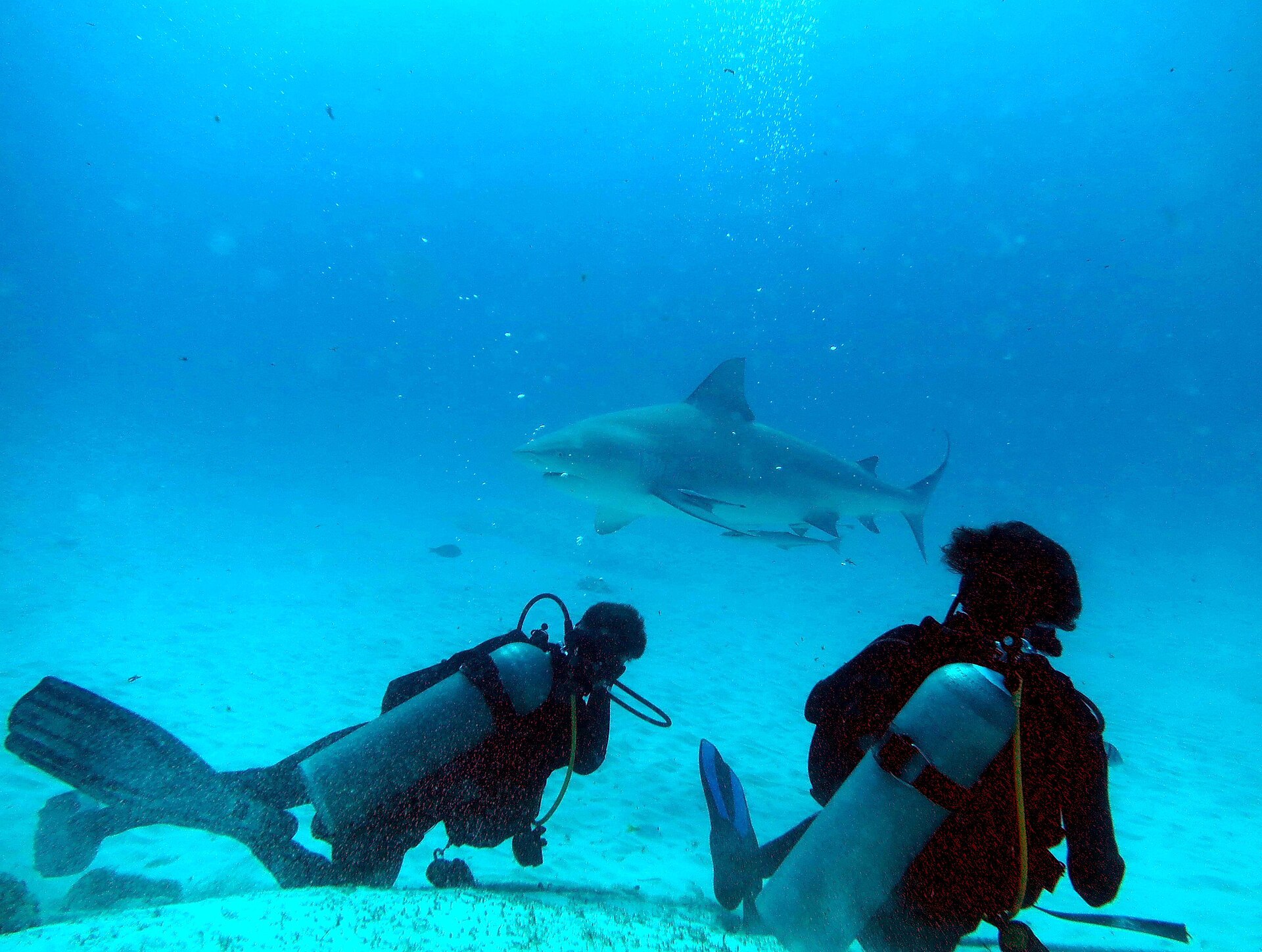
The surest encounter is at Playa del Carmen, on the Caribbean coast. From November to March, with a peak from December to February, females of 2 to 3 meters, some of them pregnant, return to the sand off the beach at 18 to 25 meters. Dive centers run static dives there, with or without bait, where you kneel on the bottom for three quarters of an hour while the sharks circle. The same individuals return from one year to the next, and a scientific program monitors them. In the Sea of Cortez, bull sharks frequent the El Vencedor wreck, a tuna boat sunk at 15 meters in Cabo Pulmo park, and the village dive centers report them for much of the year. Elsewhere, you meet them by chance on coastal reefs and at river mouths.
Is the bull shark dangerous?
Along with the great white and the tiger shark, the bull shark is one of the three species most often involved in incidents with swimmers, in the murky, shallow water where it hunts. On a dive, in clear water, facing a motionless diver, the encounter is calm. Behavior is what creates the risk, hence the strict rules of the dive centers. Fished for its meat, hide and liver, and caught in coastal nets, the species has lost between a third and half of its numbers over three generations: the IUCN has listed it as Vulnerable since 2021. Coastal nurseries, in estuaries close to cities, are the most exposed.
Our tip
Stay in your spot on the sand, hands against your body, and let the females circle: they come close and move away on their own. Never swim toward a shark, or toward the bait box when there is one. Choose the dive without feeding if you prefer animals that pass at a distance, without excitement.