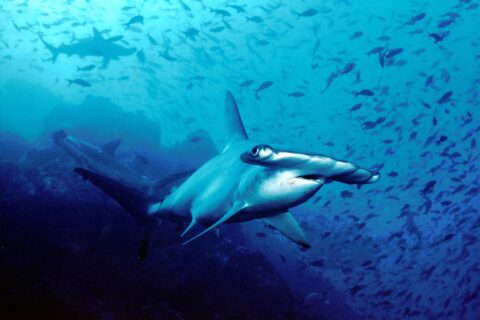
The rainy season, from June to November, brings the big schools: from August to October, scalloped hammerheads gather by the hundreds. The current then reaches two to four knots. From December to May, the sea is calm, the water rises to 26 to 29°C and visibility reaches 30 meters.
Budget
Two boats share the island in 2026: the Sea Hunter sells its ten nights for US$7,250, the Okeanos Aggressor II from US$6,399. Park fees come on top, US$554 for seven days of diving, and so does fuel, US$200 on the Sea Hunter.
Getting there
No flight or hotel serves the island: you reach it by liveaboard from Puntarenas, after 36 hours at sea. Operators require Advanced and experience in current. There is no hyperbaric chamber on the island: the nearest is 36 hours away by boat, so dive insurance is a must.
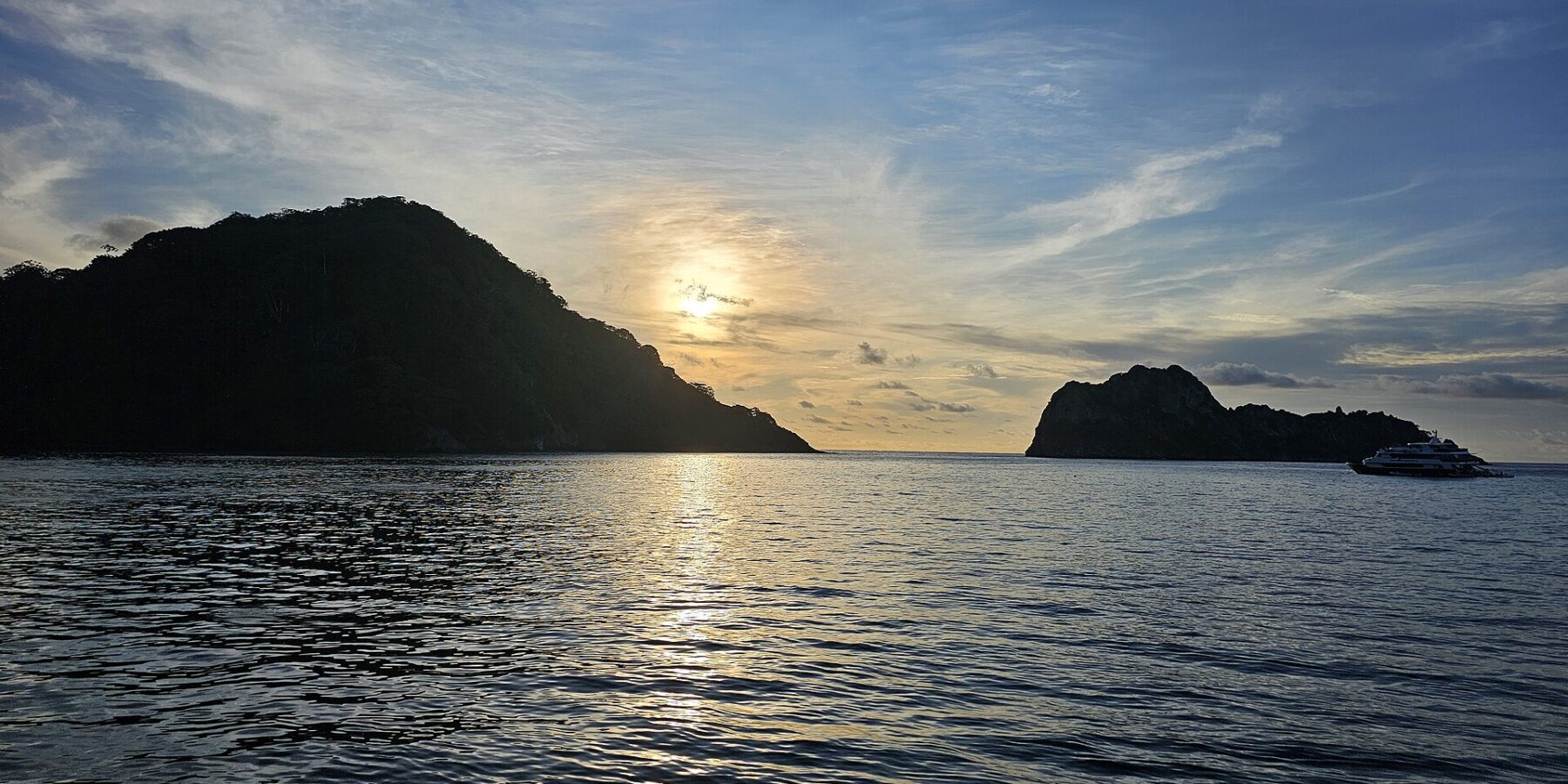
Cocos Island in English, Isla del Coco to Costa Ricans, is a forested volcanic island of 23.85 square kilometers that gets more than 7,000 millimeters of rain a year. It lies 550 kilometers southwest of Costa Rica's Pacific coast. Sighted in 1526, a haunt of pirates and treasure legends, it has been a national park since 1978 and a UNESCO World Heritage Site since 1997, and nobody lives there apart from the park rangers. Jacques-Yves Cousteau called it the most beautiful island in the world. Underwater, it is one of the great hammerhead gatherings of the eastern Pacific, along with the Galápagos and Malpelo.
Which liveaboards go to Cocos Island?
There are no flights and no hotels: you dive Cocos from a liveaboard, after 36 hours at sea from Puntarenas. Two operators share the island in 2026. Undersea Hunter's Sea Hunter, with 20 passengers, offers ten nights for US$7,250, with Nitrox and transfers from San José included, and US$554 in park fees and a US$200 fuel surcharge on top. The Okeanos Aggressor II, with 22 passengers, lists US$6,399 for a Deluxe cabin, US$6,749 for a Master and US$7,249 for a Suite for ten nights, with park fees and fuel extra. Both give you seven days of diving at three dives a day, and four days at sea. Park fees are US$50 per person per day, plus US$20 per diving day.
Where and when to see hammerheads at Cocos Island?
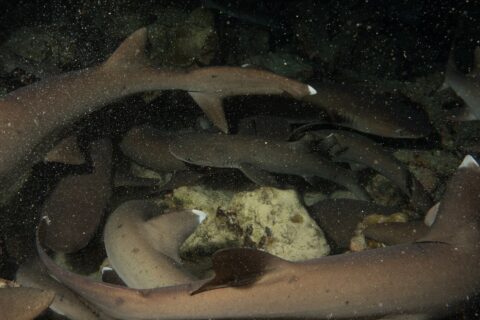
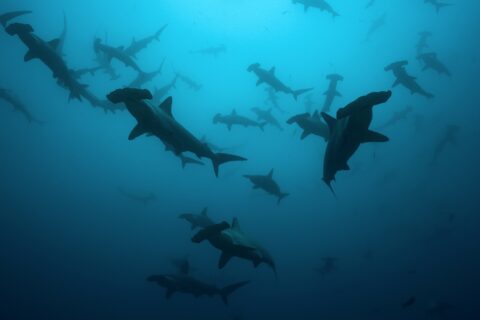
Bajo Alcyone, a seamount whose top sits at 25 meters, Dirty Rock and its pinnacles, and Manuelita, with its night dive among whitetip reef sharks, are the three signature sites described here. The liveaboard adds Punta Maria, Dos Amigos or Submerged Rock. The rainy season, from June to November, brings the big schools. From August to October, scalloped hammerheads gather by the hundreds above the cleaning stations, whale sharks pass through and tiger sharks show up. The water is then 24 to 27°C at the surface and drops to 18 to 22°C below the thermocline, around 25 meters, with visibility of 10 to 25 meters and currents of two to four knots. The dry season, from December to May, brings calm seas, 26 to 29°C at the surface and 30 meters of visibility, with hammerheads still there but in smaller groups.
What are the park rules at Cocos Island?
Groups are limited to twelve divers, guide included, with sixty a day on the island and only one group per site at a time. There are no decompression dives, no contact with the bottom and no fishing. Operators require Advanced Open Water and experience in current. In December 2021, the park grew from 2,034 to 54,844 square kilometers to protect the surrounding seamounts, but illegal fishing remains its main threat.
Where to stay at Cocos Island?
Hotels, apartments and rooms around Puntarenas, the starting point for dives at Manuelita, with current prices.
 Costa RicaPelagic