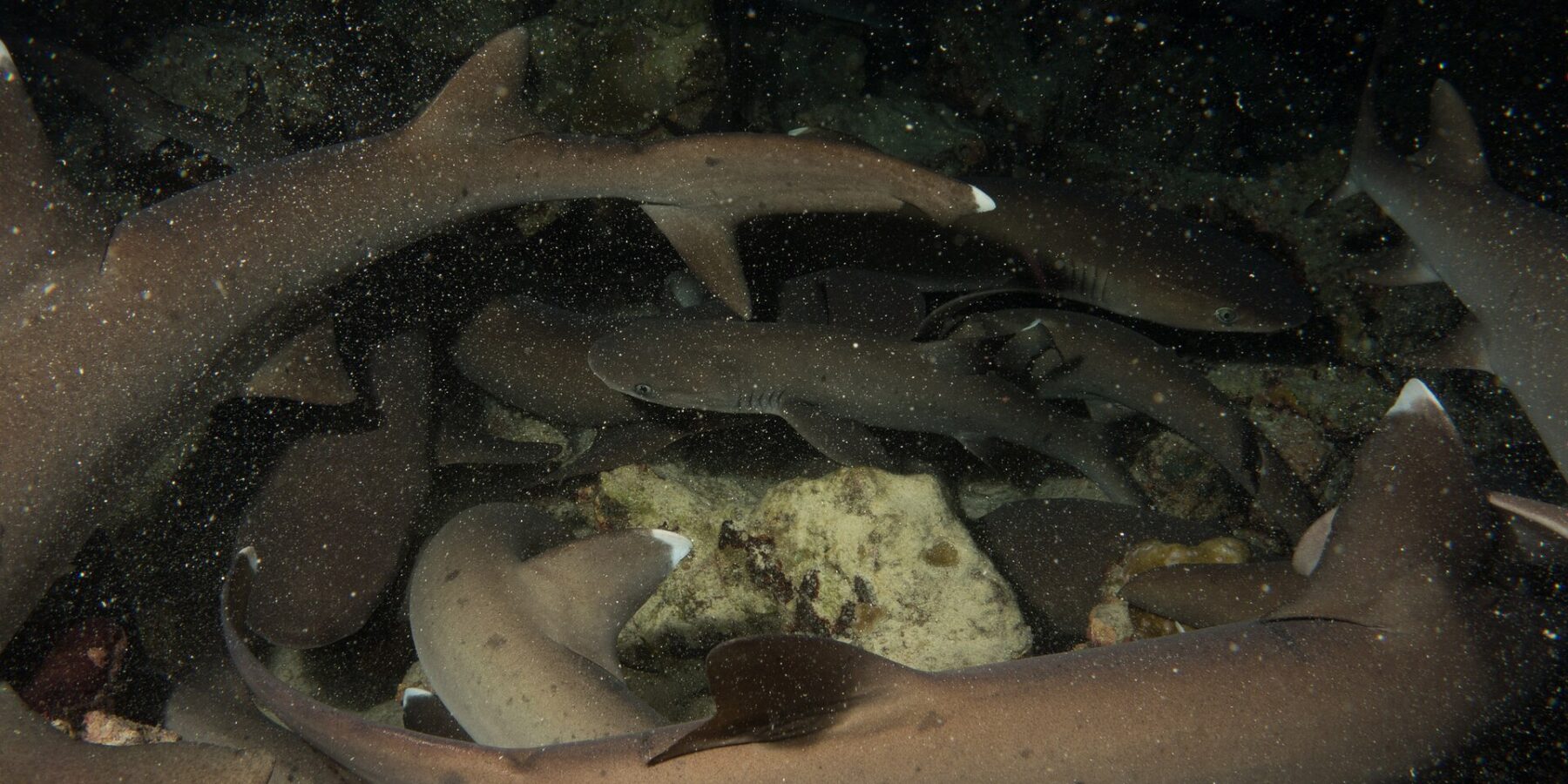
Manuelita is an islet off the north of Cocos Island, near Chatham Bay. On one side lies a sheltered coral garden, on the other a slope where hammerheads pass. At night, dozens of whitetip sharks hunt there in packs in the beam of your light.
Why dive Manuelita?
- The night dive with dozens of hunting whitetip sharks, between 9 and 14 meters
- A sheltered coral garden from 5 to 21 meters, the trip's check-out dive and its macro corner
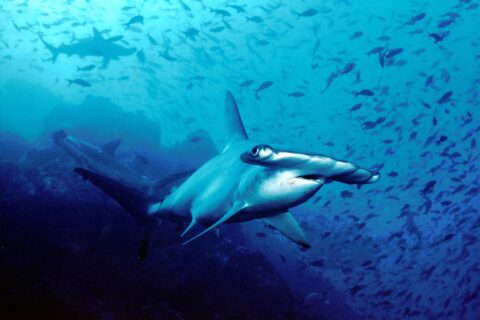
- An outer slope with hammerheads, silky sharks and bigeye trevally, down to 35 meters
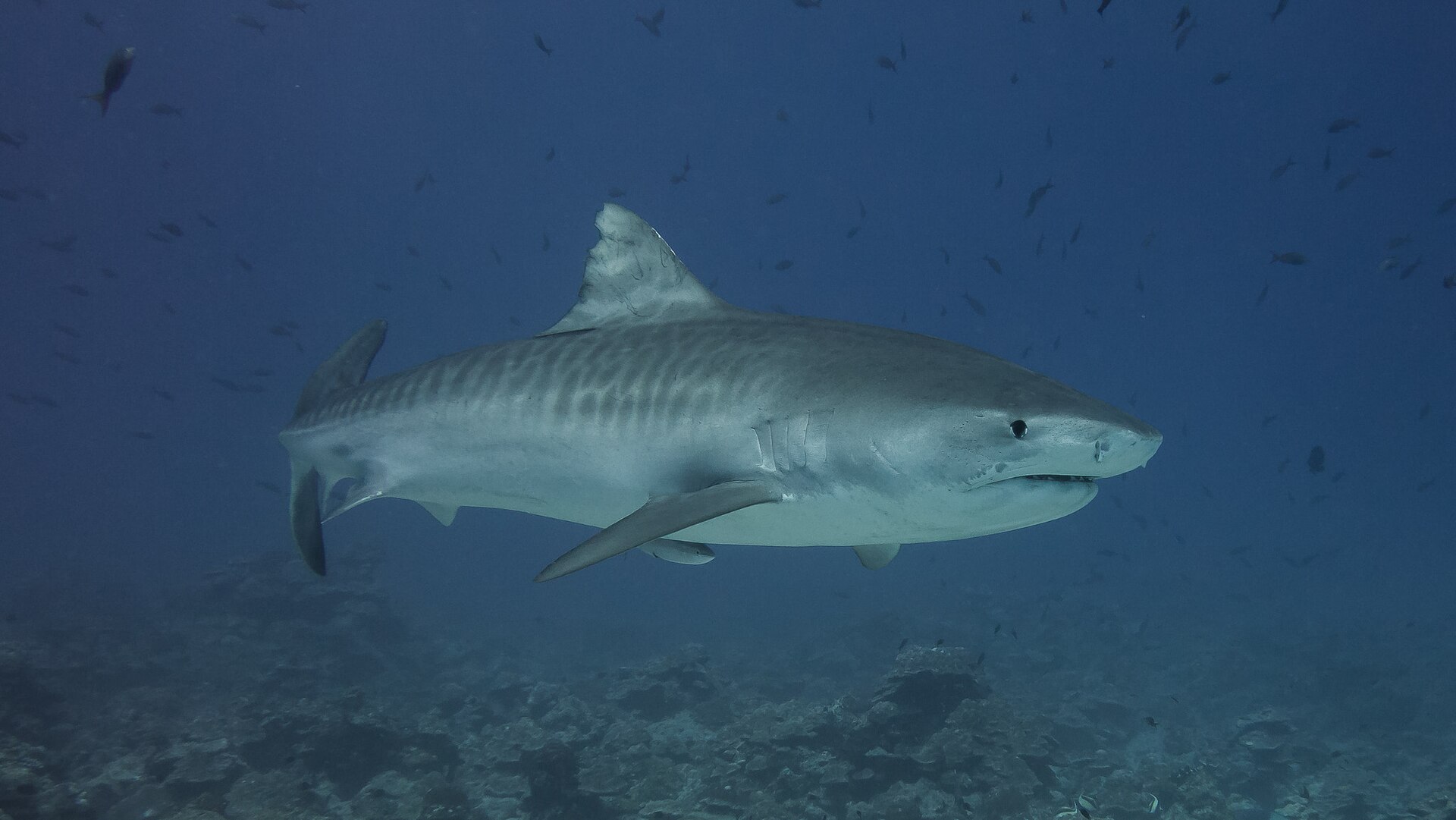
- Tiger sharks reported around the islet for the past few years
- A few minutes by tender from the Chatham Bay anchorage
Manuelita in pictures
What will you see at Manuelita?
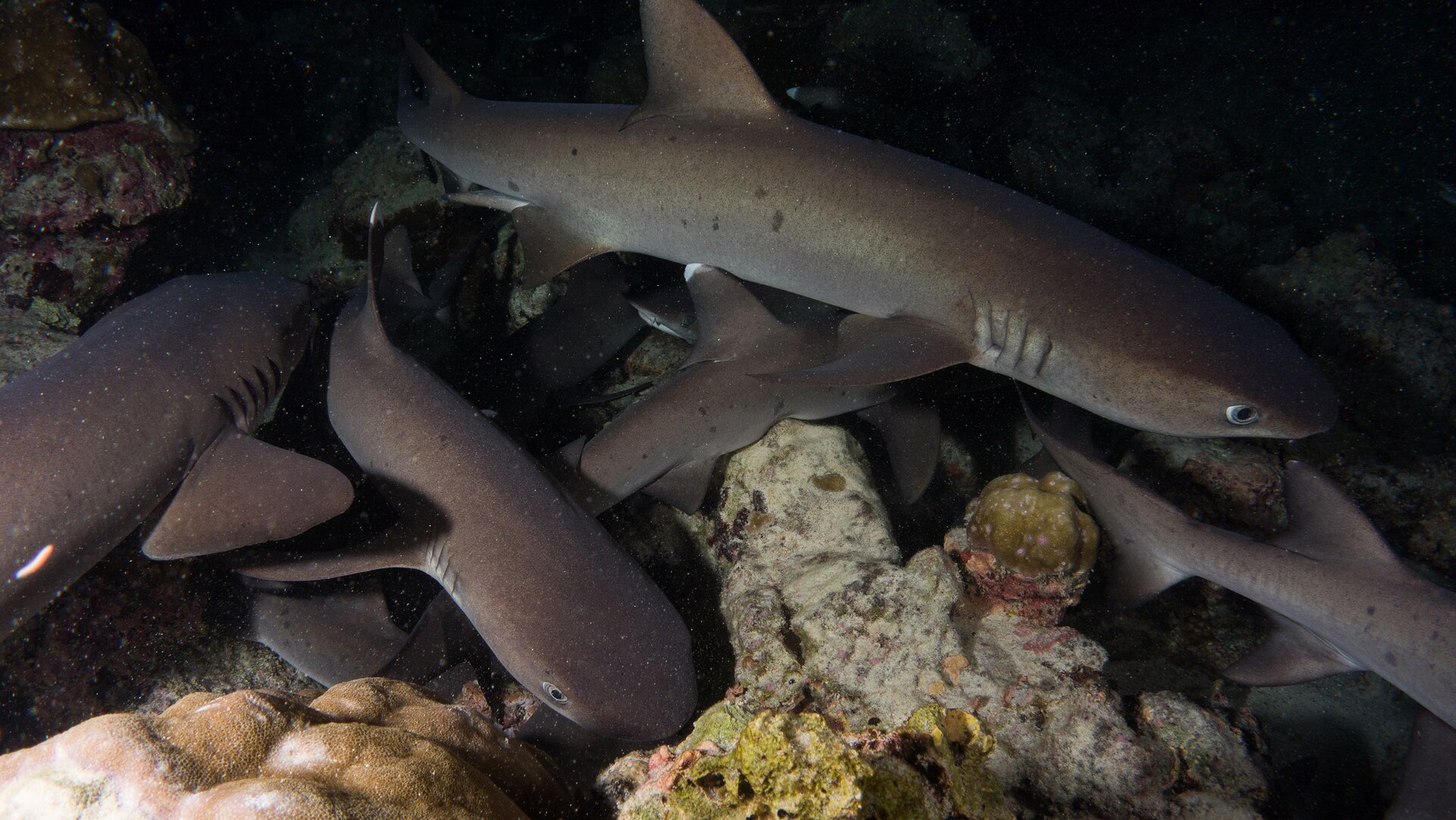
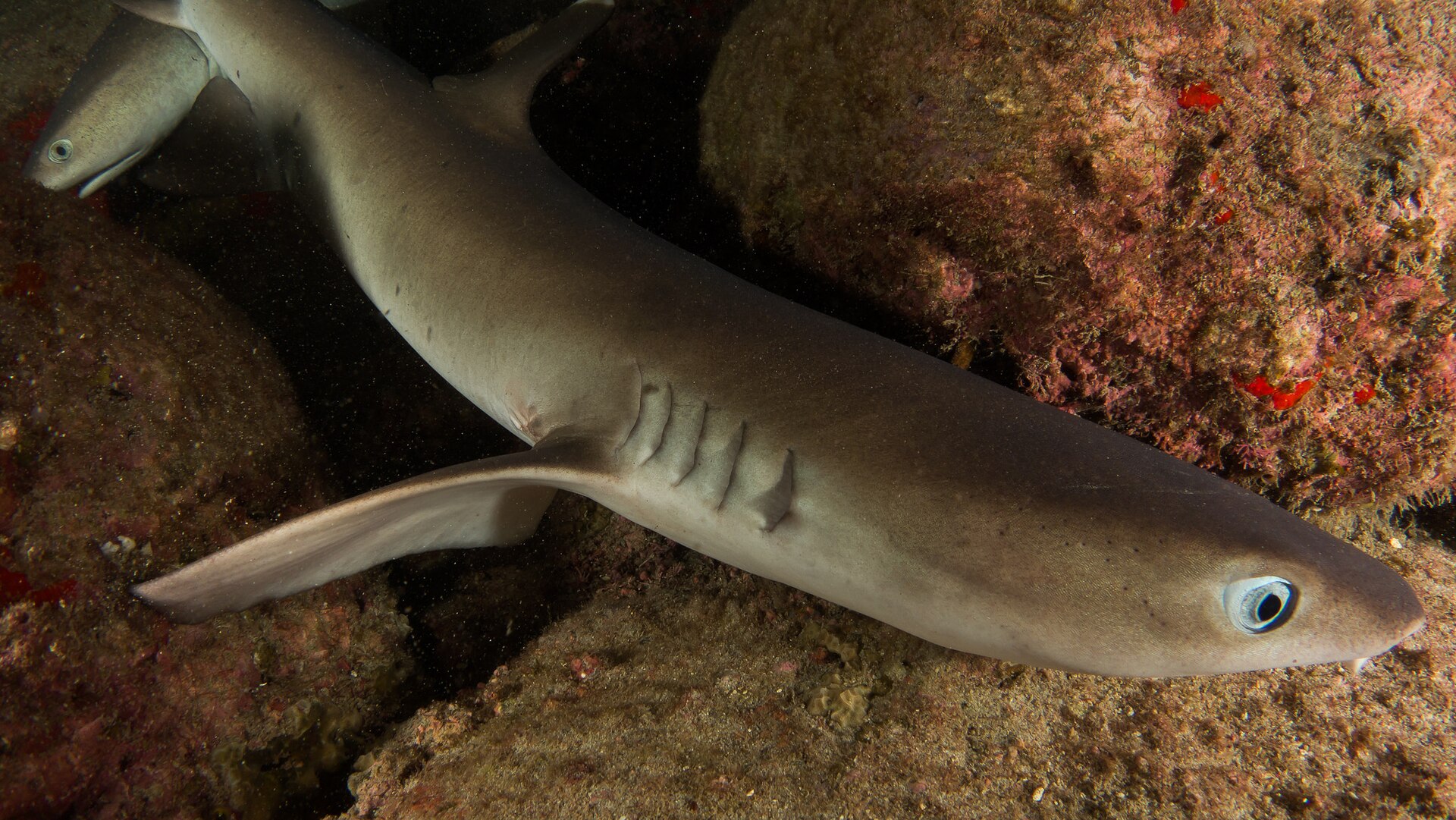
Manuelita is first and foremost about the whitetip reef shark. By day, they sleep by the dozens on the sand and under the boulders of the inner garden; at night, they hunt in packs and use divers' lights to flush out sleeping fish. The sheltered side, a coral garden between 6 and 21 meters, is also the macro corner of the trip: orange frogfish, morays, spiny lobsters and octopus, with jacks, snappers, hawksbill turtles and marbled rays resting on the sand. The outer slope, exposed to the current, is a different story: cleaning stations where scalloped hammerheads and silky sharks rise, a resident school of bigeye trevally, eagle rays, blacktips, and now and then a passing oceanic manta. For the past few years, tiger sharks have been showing up on this slope and around the islet: they remain occasional, but they are part of the scene.
| Species | J | F | M | A | M | J | J | A | S | O | N | D | Note |
|---|---|---|---|---|---|---|---|---|---|---|---|---|---|
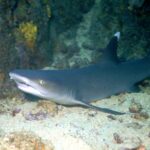 Whitetip reef shark | peak season | peak season | peak season | peak season | peak season | peak season | peak season | peak season | peak season | peak season | peak season | peak season | by the dozens, resting by day, hunting at night, year-round |
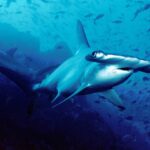 Scalloped hammerhead | possible | possible | possible | possible | possible | peak season | peak season | peak season | peak season | peak season | peak season | possible | at the cleaning stations on the outer slope, in big schools from June to November |
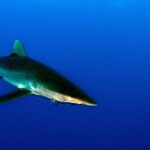 Silky shark | possible | possible | possible | possible | possible | possible | possible | possible | possible | possible | possible | possible | outer slope, year-round |
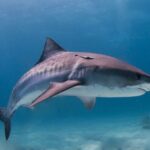 Tiger shark | possible | possible | possible | possible | possible | possible | possible | possible | possible | possible | possible | possible | occasional on the outer slope and around the islet, reported for the past few years |
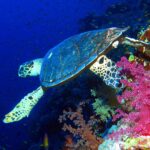 Hawksbill turtle | possible | possible | possible | possible | possible | possible | possible | possible | possible | possible | possible | possible | in the inner garden |
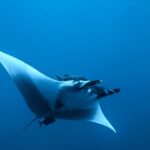 Oceanic manta ray | possible | possible | possible | possible | possible | possible | possible | possible | possible | possible | possible | possible | an occasional visitor on the outer slope |
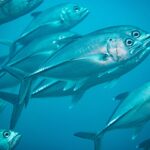 Bigeye trevally | peak season | peak season | peak season | peak season | peak season | peak season | peak season | peak season | peak season | peak season | peak season | peak season | resident school on the outer slope |
| Marbled rays and eagle rays | peak season | peak season | peak season | peak season | peak season | peak season | peak season | peak season | peak season | peak season | peak season | peak season | marbled rays on the garden sand, eagle rays on the slope |
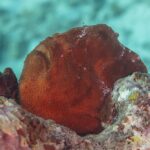 Frogfish | peak season | peak season | peak season | peak season | peak season | peak season | peak season | peak season | peak season | peak season | peak season | peak season | orange, on the boulders of the inner garden |
peak seasonpossiblerare
What is diving like at Manuelita?
Manuelita is a site with two faces. Inside, facing the island, is a garden of coral and boulders from 5 to 21 meters, with little or no current: it is the trip's check-out dive, where you fine-tune your weighting, and the site of the night dive, between 9 and 14 meters. Outside, a steep slope of boulders drops to 35 meters, exposed to the current, with thermoclines that drop the water from 27 to 21 °C: you tuck in against the rocks, facing the current, at the level of the cleaning stations, and ascend under an SMB. Visibility ranges from 15 to 30 meters. Both operators ask for Advanced Open Water to board for Cocos; the inner garden is fine for a less experienced diver, the outer slope is not. At night, you stay grouped, point your light at the bottom and never shine it on a lone fish: the sharks would hunt it down in the beam.
When to dive Manuelita?
idealgoodnot recommended
You can dive the islet year-round. The whitetips are there in every season, and the night dive happens on every trip. From January to June, the dry season, the sea is calm, the surface water is 28 to 29 °C, visibility is at its best, and the inner garden makes a calm first dive. From June to November, the rainy season, the hammerheads gather in big schools on the outer slope and the night hunt is at its peak; the current is stronger, so is the swell, and visibility sometimes drops to 15 meters. Surface water ranges from 27 °C in November to 29.5 °C in March and April; on the dive, you pass through thermoclines that bring it down to between 21 and 27 °C. Average visibility is 25 meters.
How to get to Manuelita?
Manuelita is dived from a liveaboard, and only that way. Undersea Hunter's Sea Hunter and the Okeanos Aggressor II leave from Puntarenas, after a transfer from San José, for 36 hours at sea; they anchor in Chatham Bay, a stone's throw from the islet, and the tenders drop the groups off in a few minutes. It is usually the first dive of the trip, then the night dive, before a return to the outer slope in the middle of the week. In 2026, the Okeanos Aggressor II lists its ten nights from US$6,399, about €5,720, with park fees and fuel extra; the Sea Hunter charges US$7,250, Nitrox, tanks and weights included, plus US$554 in park fees payable in advance and a US$200 fuel surcharge on board. The official park fees are US$50 per person per day, plus US$20 per dive day. Plan a night in San José before boarding, and bring a wide-beam dive light.
Stay in Puntarenas
Where to stay near Manuelita?
Hotels, apartments and rooms around Puntarenas, with current prices.
Where is Manuelita, at the mouth of Chatham Bay?
Manuelita is a small rocky islet lying 150 meters off the northeast coast of Cocos Island, at the mouth of Chatham Bay, one of the park's only two authorized anchorages. This is where George Vancouver dropped anchor in 1795, and where liveaboards spend their nights today, 36 hours from the Costa Rican coast. Cocos Island, 23.85 square kilometers of forest and basalt, is the only land above water on the Cocos Plate; a national park since 1978 and a World Heritage Site since 1997, it has no inhabitants other than its rangers. For divers, Manuelita is at once the gateway, the night site and the fallback dive when the sea rules out the offshore sites.
What will you see in Manuelita's inner garden and on its outer slope?
On the island side is the inner garden: a bottom of coral and boulders that slopes gently from 5 to 21 meters, with little or no current. You fine-tune your weighting here, look for frogfish on the boulders, count the whitetips asleep under the overhangs, and meet hawksbill turtles and marbled rays. On the ocean side, the outer slope drops in big boulders to 35 meters; the current is firm, and cleaning stations draw scalloped hammerheads and silkies, with a school of bigeye trevally circling in place. You dive it the same way as Dirty Rock: tucked against a boulder, facing the current, without finning toward the sharks, then an ascent under an SMB. Blacktips, eagle rays and, once in a while, an oceanic manta or a tiger shark round out the list.
What is the Manuelita whitetip night dive like?
The night dive takes place in the inner garden, between 9 and 14 meters. As soon as the lights come on, the whitetip sharks, shy by day, gather by the dozens and hunt in packs: they search the cracks, squeeze under the boulders and jostle over any fish a beam has just lit up, while black jacks take advantage of the scrum. The action plays out at fin level, and the sharks brush past divers without paying them any attention. You stay together, keep your light pointed at the bottom, avoid lighting up a lone fish, and carry a backup light. It is the dive nobody forgets at Cocos, and one of the few on the island that calls for neither current nor depth.
Our tip
At night, point a wide-beam light at the bottom: a fish caught in the beam becomes the sharks' target. Stay together, close to the sand. Save the outer slope for the middle of the trip, once your weighting is dialed in.
Other dive sites nearby
 Costa RicaPelagic
Dirty Rock
Cocos Island Costa RicaPelagic
Bajo Alcyone
Cocos Island Costa RicaCave or cenote