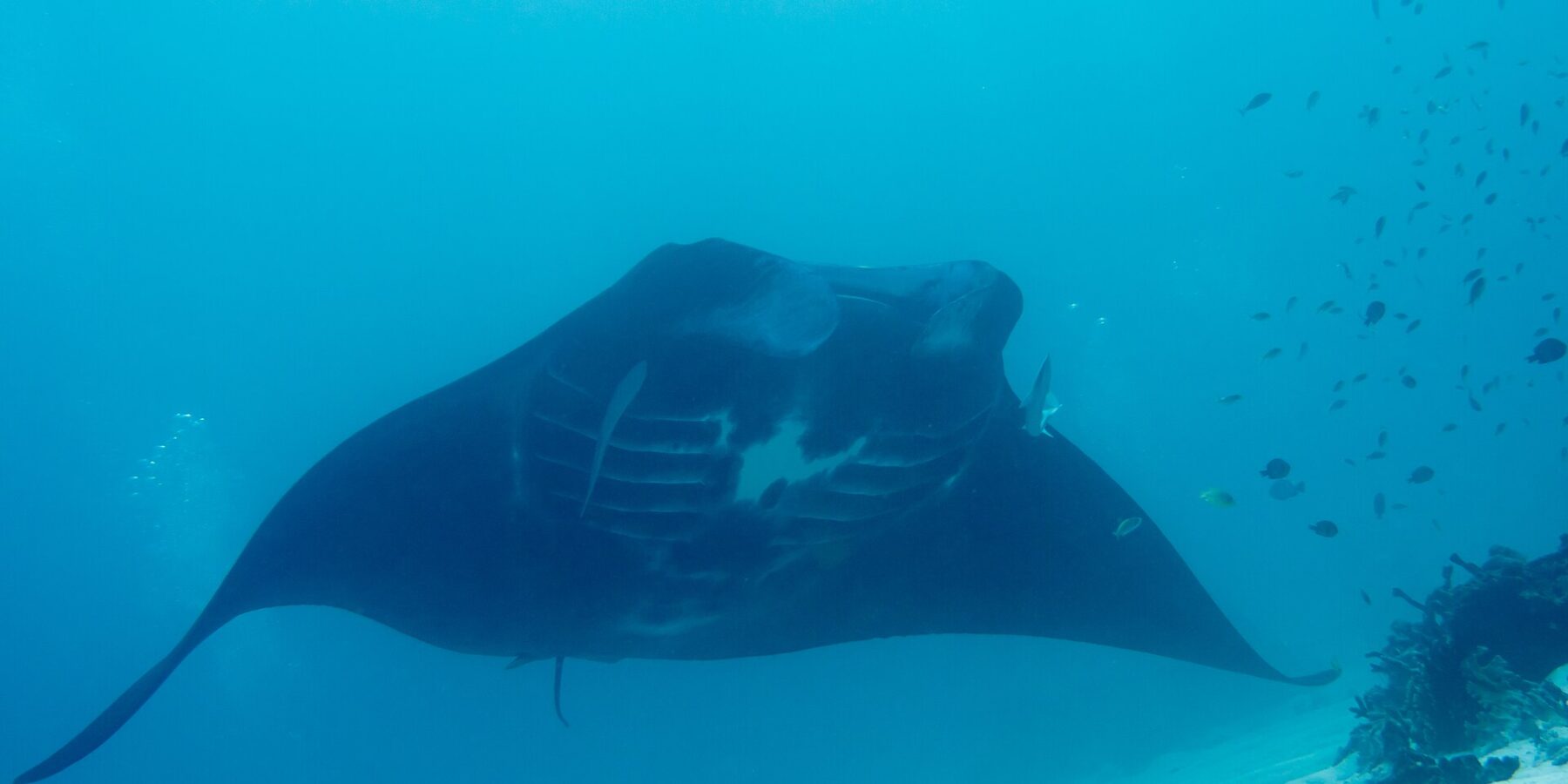
The reef manta ray visits cleaning stations and glides over divers who stay calm. Your best chances are in Thailand, Indonesia and New Caledonia, mostly from December to April. Encounters are rarer in the Red Sea, at Elphinstone in summer or at Daedalus in winter.
Where to dive to see the reef manta ray?
 IndonesiaReef
Batu Bolong
KomodoCan be seen all year round: passing through the blue; the site is not a cleaning station, and the mantas are seen at Makassar Reef, close by
 IndonesiaPelagic
Blue Magic
Raja AmpatPeak season from December to March: possible year-round over the boulders on top, best in season
 FrancePass
Boulari Pass (New Caledonia)
New CaledoniaPeak season from January to April: at the cleaning station on the plateau, at 13 m; all year, especially from January to April
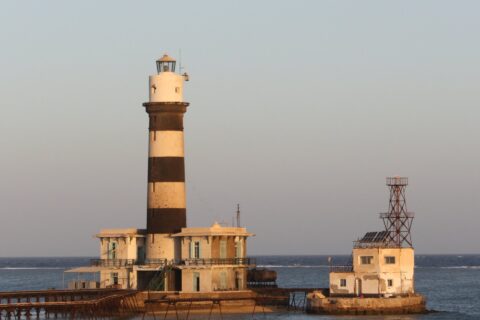
 EgyptPelagic
Daedalus Reef
Southern Red Sea, EgyptPeak season from December to April: more often in winter and spring, over the plateaus
 ThailandReef
Elephant Head Rock
Andaman Sea: Similan, Surin and LantaCan be seen all year round: seen now and then in the blue, with no regularity
 EgyptPelagic
Elphinstone Reef
Southern Red Sea, EgyptPeak season from May to August: May to August, over the plateaus
 FrancePass
Fakarava South Pass (Tumakohua)
French PolynesiaCan be seen all year round: at the mouth of the pass during the spawning, feeding on grouper eggs
 ThailandPelagic
Hin Daeng and Hin Muang
Andaman Sea: Similan, Surin and LantaPeak season from January to February: mostly January and February, often several at once, at the Hin Muang cleaning stations
 ThailandPelagic
Koh Tachai Pinnacle
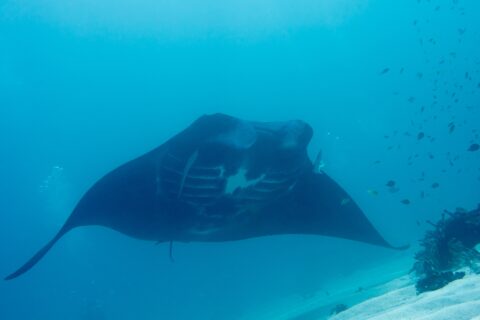
Andaman Sea: Similan, Surin and LantaPeak season from December to May: from December to May, feeding above the pinnacles or circling around them: the manta site of the Andaman Sea
 IndonesiaPelagic
Magic Mountain (Misool)
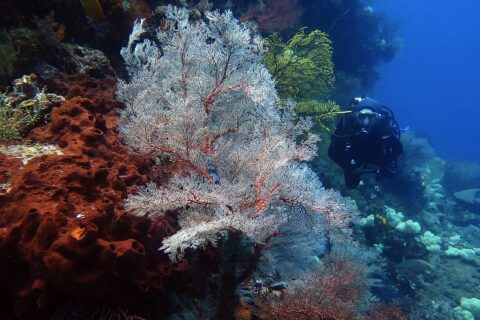
Raja AmpatPeak season from November to March: at the second station, in the shallows, during the safety stop
 ThailandPelagic
Richelieu Rock
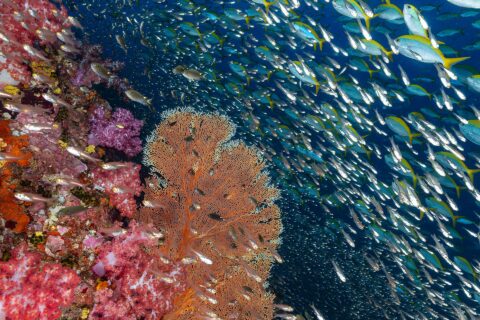
Andaman Sea: Similan, Surin and LantaPeak season from February to April: passing by, in the same season as the whale shark
 ThailandPelagic
Sail Rock
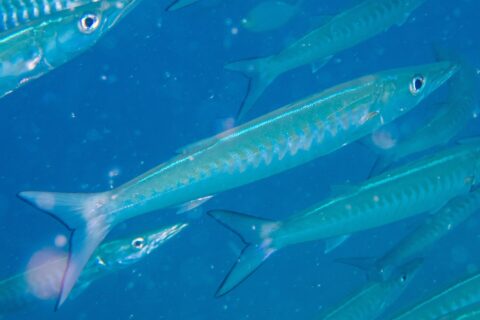
Gulf of Thailand: Koh TaoCan be seen all year round: an occasional encounter, in the same season as the whale shark
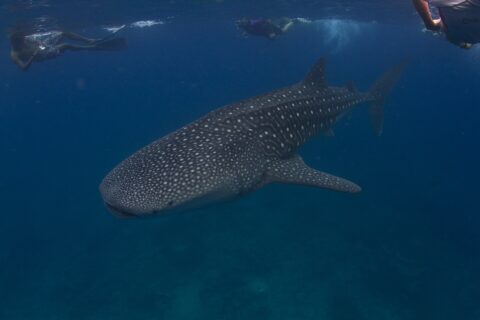
 MaldivesPelagic
South Ari Atoll (Maamigili)
Ari and Rasdhoo atollsCan be seen all year round: passing through the protected area, at the South Ari cleaning stations
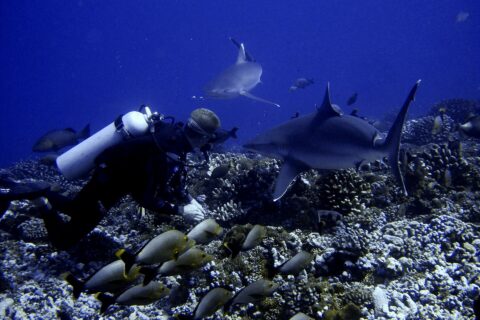 FrancePass
Tiputa Pass (Rangiroa)
French PolynesiaCan be seen all year round: on the outer wall, at the corner of the pass and at the Éolienne
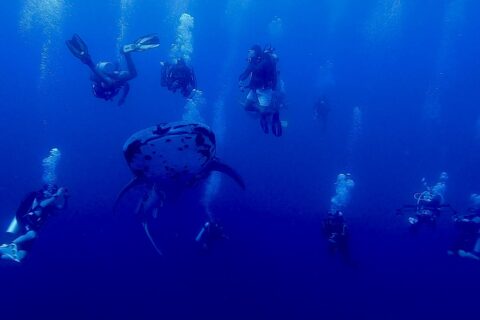
 PhilippinesPelagic
Tubbataha Reef
PalawanCan be seen all year round: at Washing Machine and the Malayan Wreck, unpredictable
How do you identify a reef manta ray?
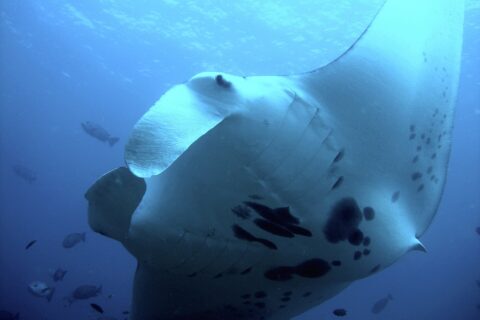
The reef manta ray usually measures 3 to 3.50 meters across, and up to 5 meters for the largest. Its cousin, the oceanic manta, averages 4 to 5 meters and lives offshore. The back is dark, the belly white with black spots whose pattern is unique to each individual, so mantas can be recognized from one year to the next. Two cephalic lobes frame the mouth, which it keeps open to filter plankton. It has neither a stinger nor sharp teeth: it is harmless.
How does the reef manta ray live?
It lives near the coasts and reefs of tropical seas, where it visits cleaning stations, coral heads where small fish come to rid it of its parasites, and plankton-rich areas. It can dive deep to feed, down to 672 meters in New Caledonia. Gestation lasts 12 to 13 months for a single pup, born 1.40 meters across and weighing 9 kilos. Fast when threatened, at 24 km/h when fleeing, it has few predators. Its threat is fishing, and the species is listed as Vulnerable after a sharp drop in its populations over twenty years.
Where and when can you see reef manta rays?
In the Red Sea, manta rays turn up on the offshore reefs of the south. At Elphinstone, they glide over the plateaus from May to August. At Daedalus, they tend to come in winter and spring, from December to April. At the Brothers, they only pass through, in summer. Here, an encounter is a stroke of luck rather than a sure thing. It happens at the edge of the plateaus, in the current.
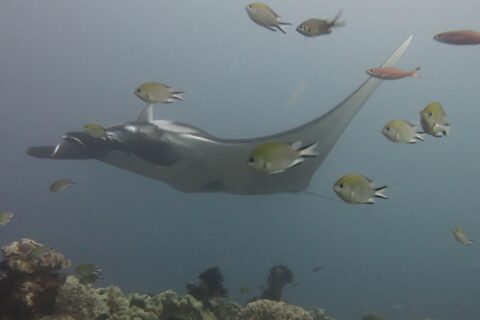
In Thailand, Koh Tachai Pinnacle is the manta site of the Andaman Sea. From December to May, mantas come to feed above the pinnacles or circle around them. At Hin Muang, they often arrive in numbers at the cleaning stations, in January and February. In Indonesia, in Raja Ampat, the season runs from December to March. At Magic Mountain, in Misool, they visit a shallow cleaning station. You watch them circle during your safety stop.
In the Pacific, Boulari Pass, in New Caledonia, has its cleaning station on a plateau at 13 meters. The mantas come all year round, mostly from January to April. In French Polynesia, they sometimes pass at the mouth of Fakarava South Pass in June and July. They come to eat the groupers' eggs. At most of these sites, peak season falls between December and April.
Is the reef manta ray dangerous?
No. The manta has no stinger, unlike stingrays, and its mouth only serves to filter plankton. It is curious and readily approaches a calm diver. The only rules are never to touch it, since the mucus that protects its skin does not recover, and not to swim toward it: get low, breathe slowly, and let it pass overhead.
Our tip
Stay low and still near a cleaning station or at the edge of the plateau, and let it come to you: it often glides over calm divers. Never touch it, don't swim toward it, and no rapid-fire flash.