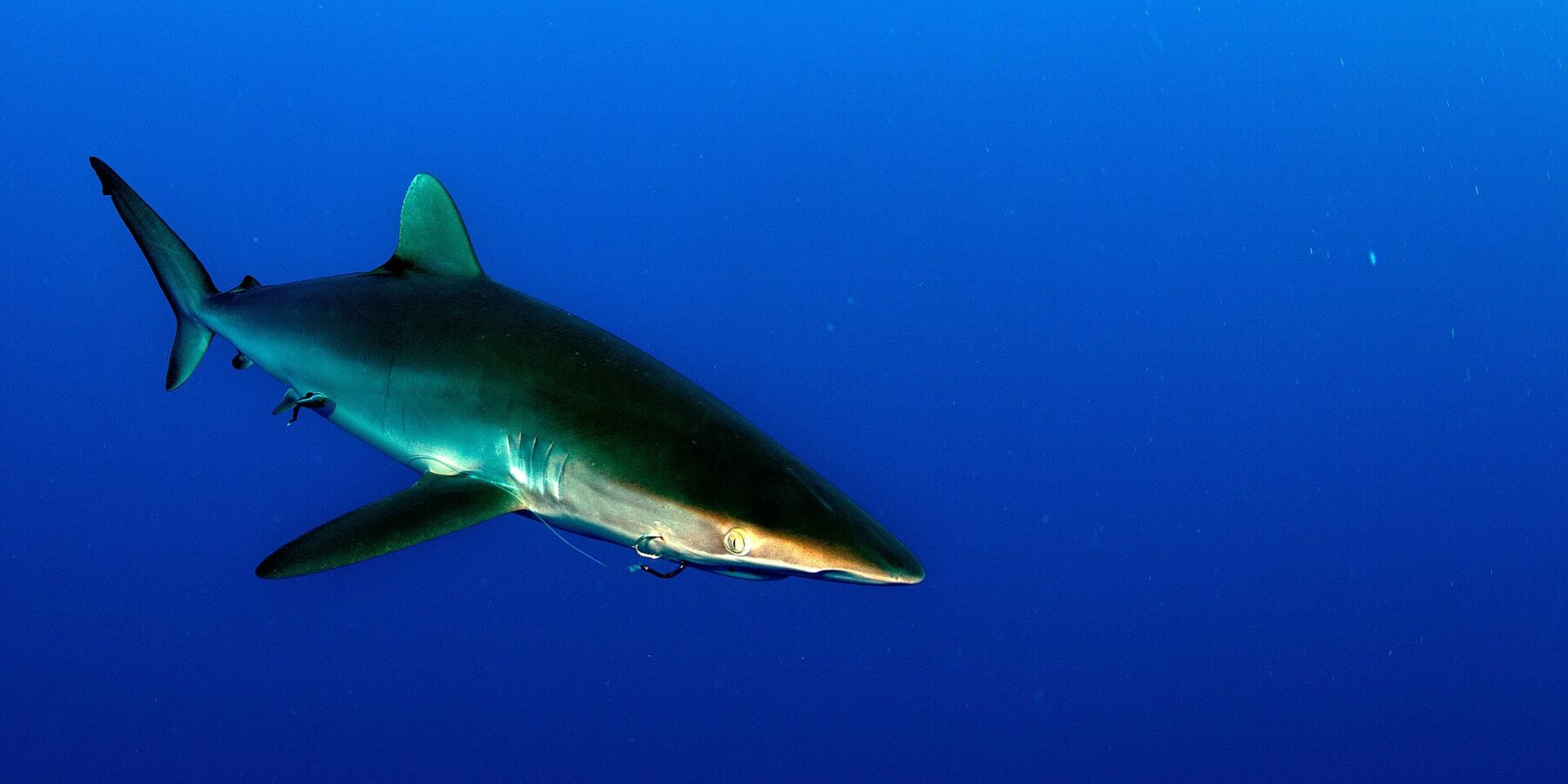
The silky shark lives offshore; bronze and slender, with long sickle-shaped pectorals, it owes its name to the fine grain of its skin. At Cocos Island, it circles in the blue at Dirty Rock and Bajo Alcyone all year round; the species is Vulnerable, and it is the most frequent bycatch of tuna boats in the eastern Pacific.
Where to dive to see the silky shark?
 Costa RicaPelagic
Bajo Alcyone
Cocos IslandCan be seen all year round: in the blue above the seamount and during safety stops, year-round

 EgyptPelagic
Brothers Islands
Southern Red Sea, EgyptCan be seen all year round: passing in the blue
 EgyptPelagic
Daedalus Reef
Southern Red Sea, EgyptCan be seen all year round: one of the eight species recorded on the reef
 Costa RicaPelagic
Dirty Rock
Cocos IslandCan be seen all year round: at the cleaning stations and in the blue, year-round
 MexicoPelagic
El Boiler
Revillagigedo Islands (Socorro)Peak season from November to May: residents, in numbers around the moored boat and on the pinnacle
 Costa RicaPelagic
Manuelita
Cocos IslandCan be seen all year round: outer slope, year-round
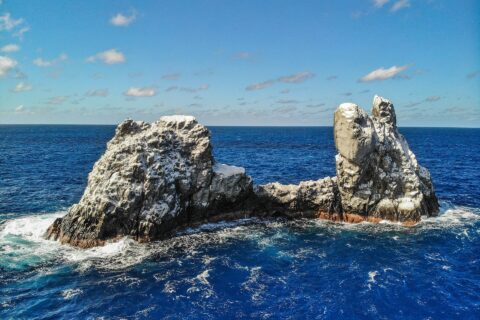 MexicoPelagic
Roca Partida
Revillagigedo Islands (Socorro)Peak season from November to May: always around, along the walls and under the boat
How do you identify a silky shark?
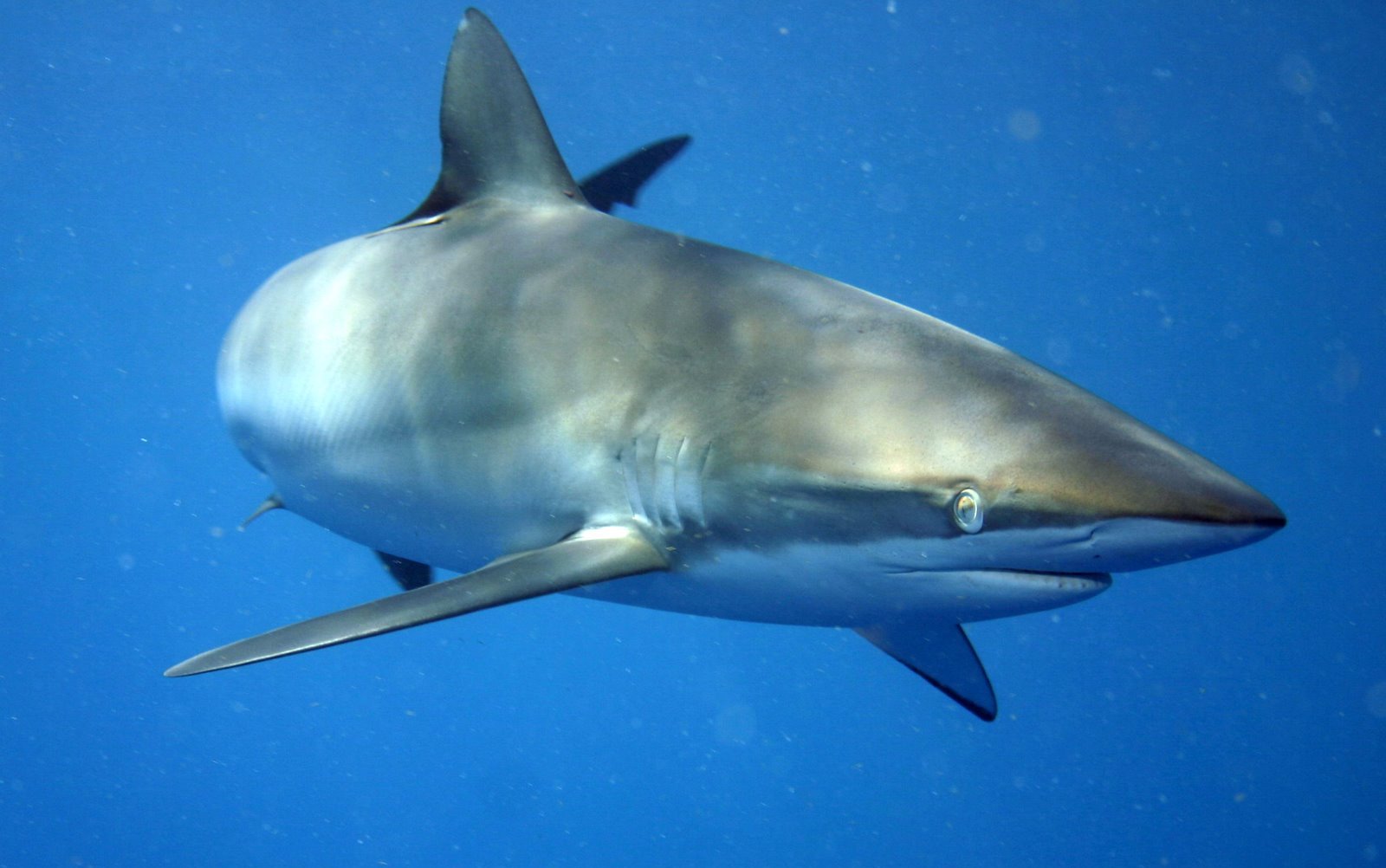
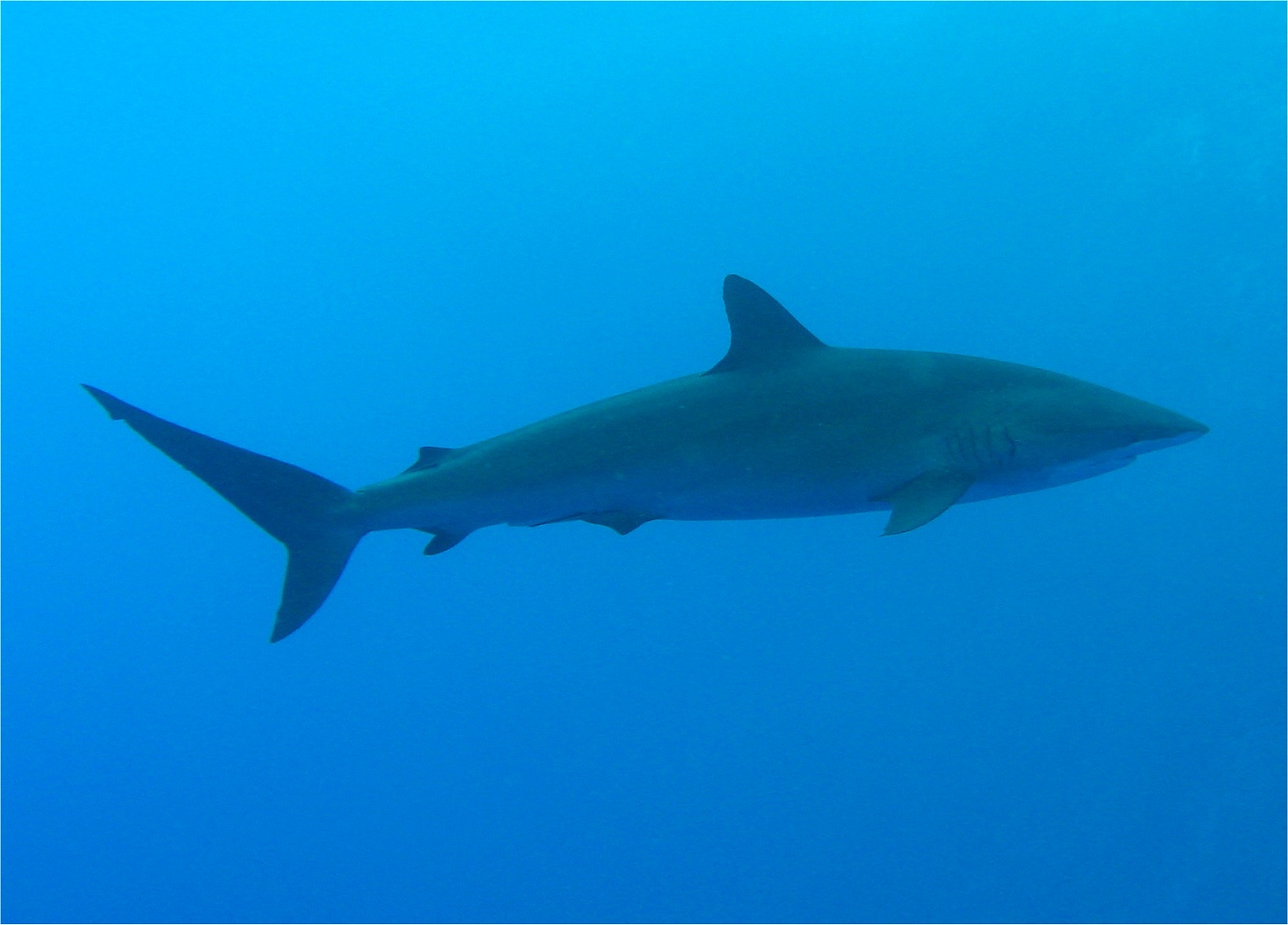
The silky shark is a medium to large shark, 2.5 meters on average and 3.5 meters and 346 kg at most, with a slim, streamlined body. The back is a metallic bronze gray that turns golden depending on the light, and the belly white. Three details set it apart from the other gray open-ocean sharks: long, narrow, sickle-shaped pectoral fins; a fairly small first dorsal fin, set behind the pectorals, with a curved rear edge; and a tiny second dorsal fin that ends in a long filament. The snout is long and rounded, the eyes round. Its skin, with fine, tightly packed denticles, gave it its name.
Silky shark in pictures
How does the silky shark live?
It is an open-ocean shark, found in all tropical oceans wherever the water is above 23 °C, from the surface to 200 meters, sometimes down to 500. It hunts bony fish, such as tuna, mackerel and sardines, and cephalopods, in groups, sometimes herding schools into bait balls. Its attachment to tuna schools makes it the most frequent bycatch of tuna boats in the eastern Pacific. It is viviparous: the female carries her young for twelve months and gives birth to one to sixteen, most often six to twelve. Listed as Vulnerable by the IUCN and in Appendix II of CITES, it pays the price of the fin trade: between half a million and one and a half million are taken every year.
Where and when can you see silky sharks?
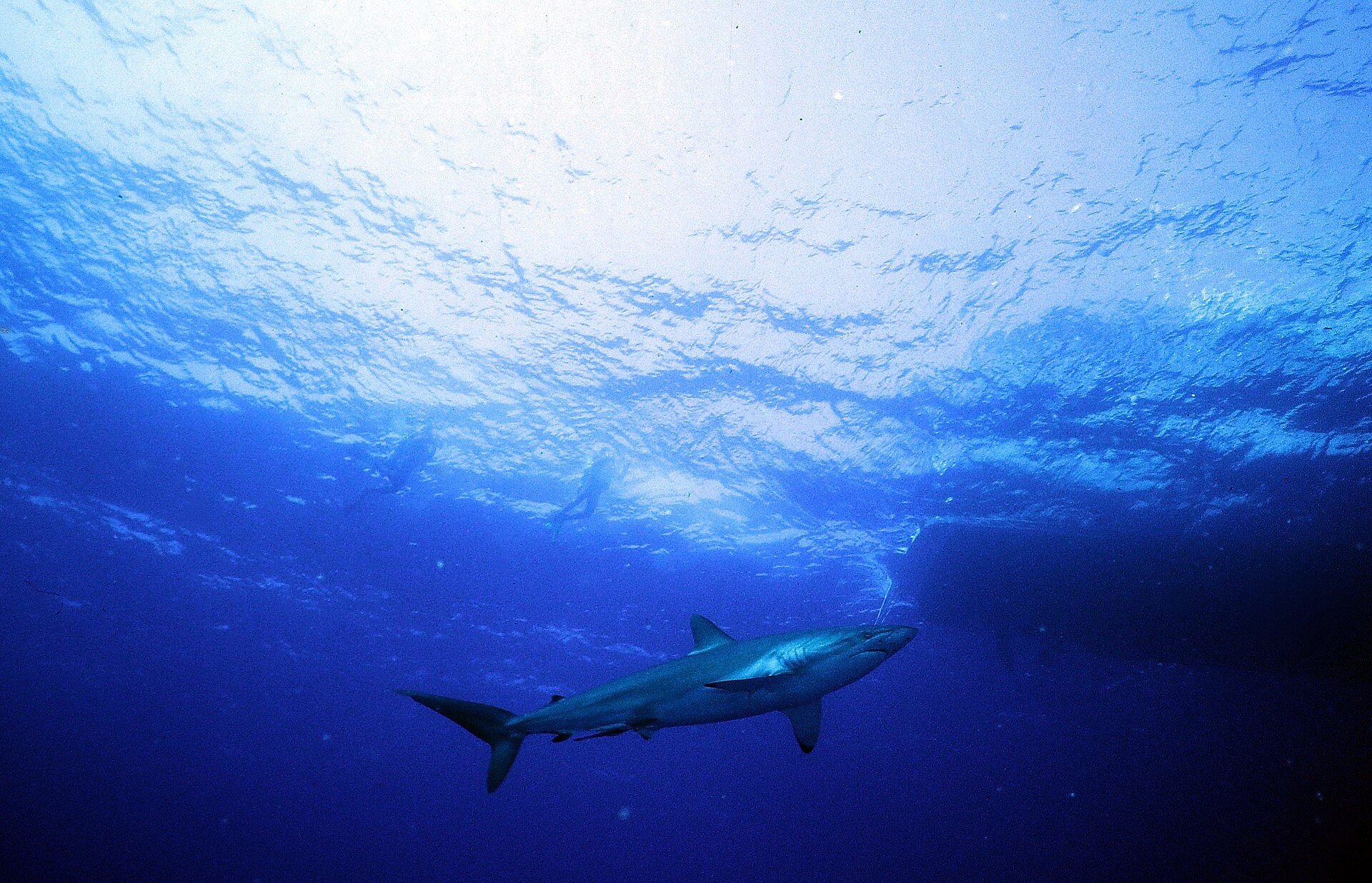
In Costa Rica, the silky shark is a regular at Cocos Island, all year round, in the rainy season as in the dry season. You meet it in the blue at Dirty Rock and above Bajo Alcyone, in midwater during safety stops, and often under the hulls of boats at anchor, where it circles with curiosity. In the Red Sea, it is one of the sharks of the Brothers Islands, where it passes in the blue along the walls.
How do you dive with silky sharks?
The silky is not shy. It comes in close, comes back, passes between divers, and its curiosity turns into persistence as soon as there is food in the water; six minor attacks are attributed to it, none fatal. On a dive, stay together, still, facing it, and never swim toward it or touch it. Do your safety stops as a group, near the boat, with an eye on the blue.
Our tip
Stay together and shallow when it comes to circle under the boat: it is curious, persistent, and gets excited fast if there is food or injured fish in the water. Do not touch it, do not turn your back on it, and keep your camera between it and you. If several of them get pushy, calmly get back on board.