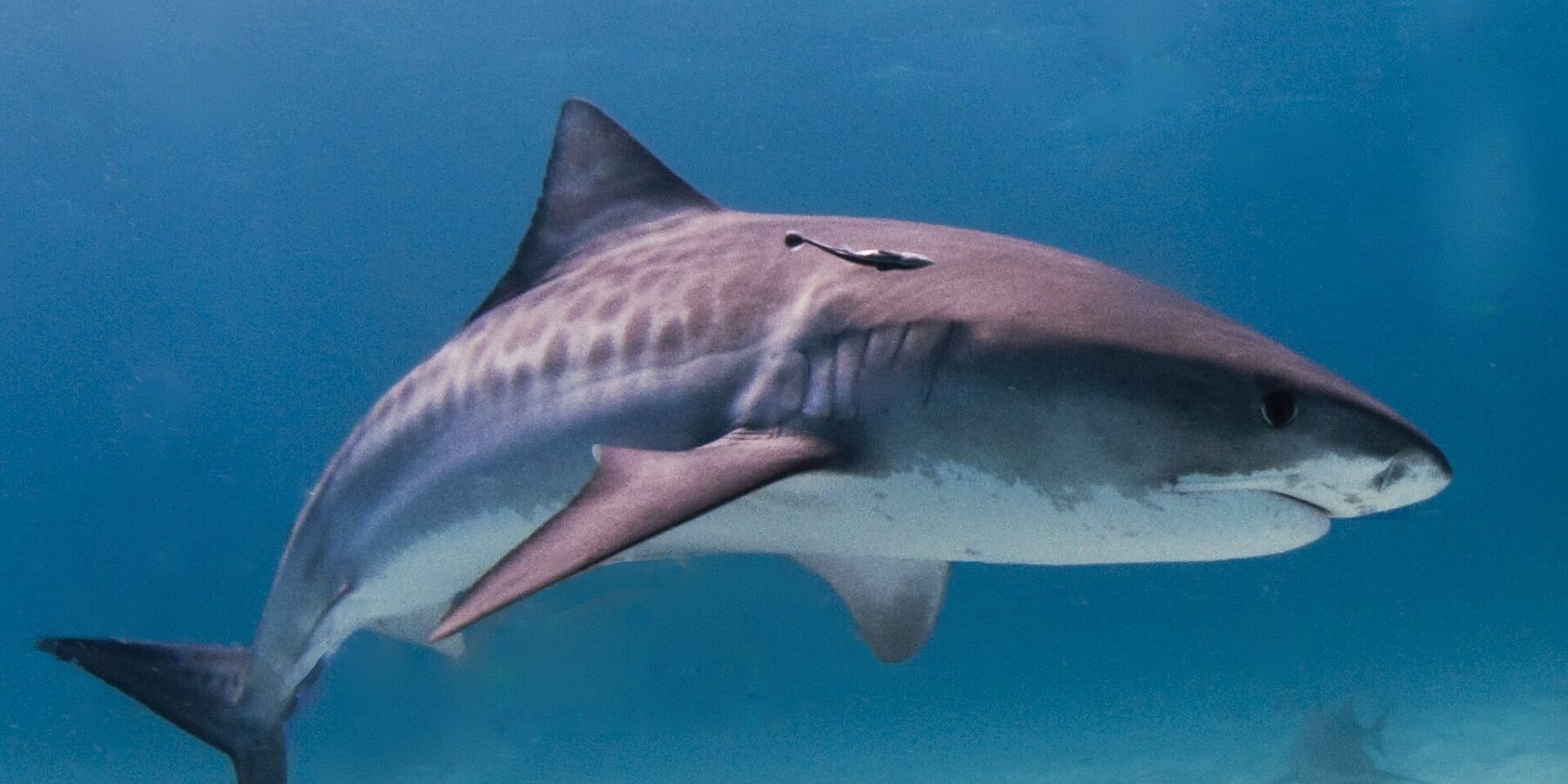
The tiger shark is known by its broad, square snout and the dark stripes of its young years; it eats anything it finds, from turtles to trash. At Cocos Island, it has become a regular at Manuelita and Dos Amigos, mostly from August to October; the species is Near Threatened, and meeting it calls for calm and attention.
Where to dive to see the tiger shark?
 MexicoPelagic
El Boiler
Revillagigedo Islands (Socorro)Can be seen all year round: seen at San Benedicto, more regular at Punta Tosca, on Socorro
 Costa RicaPelagic
Manuelita
Cocos IslandCan be seen all year round: occasional on the outer slope and around the islet, reported for the past few years
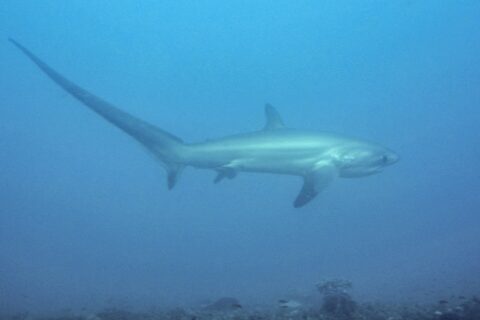
 PhilippinesPelagic
Monad Shoal and Kimud Shoal
Visayas: Cebu, Bohol and NegrosCan be seen all year round: on Monad Shoal since 2022, seen about once a week
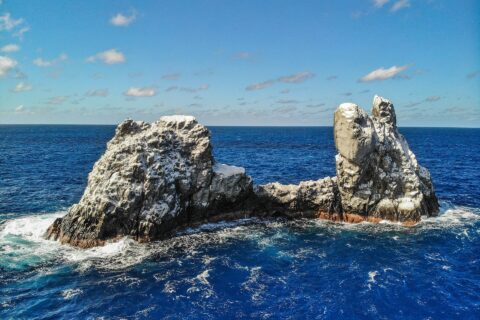 MexicoPelagic
Roca Partida
Revillagigedo Islands (Socorro)Can be seen all year round: possible, as anywhere in the archipelago; more regular at Punta Tosca
How do you identify a tiger shark?
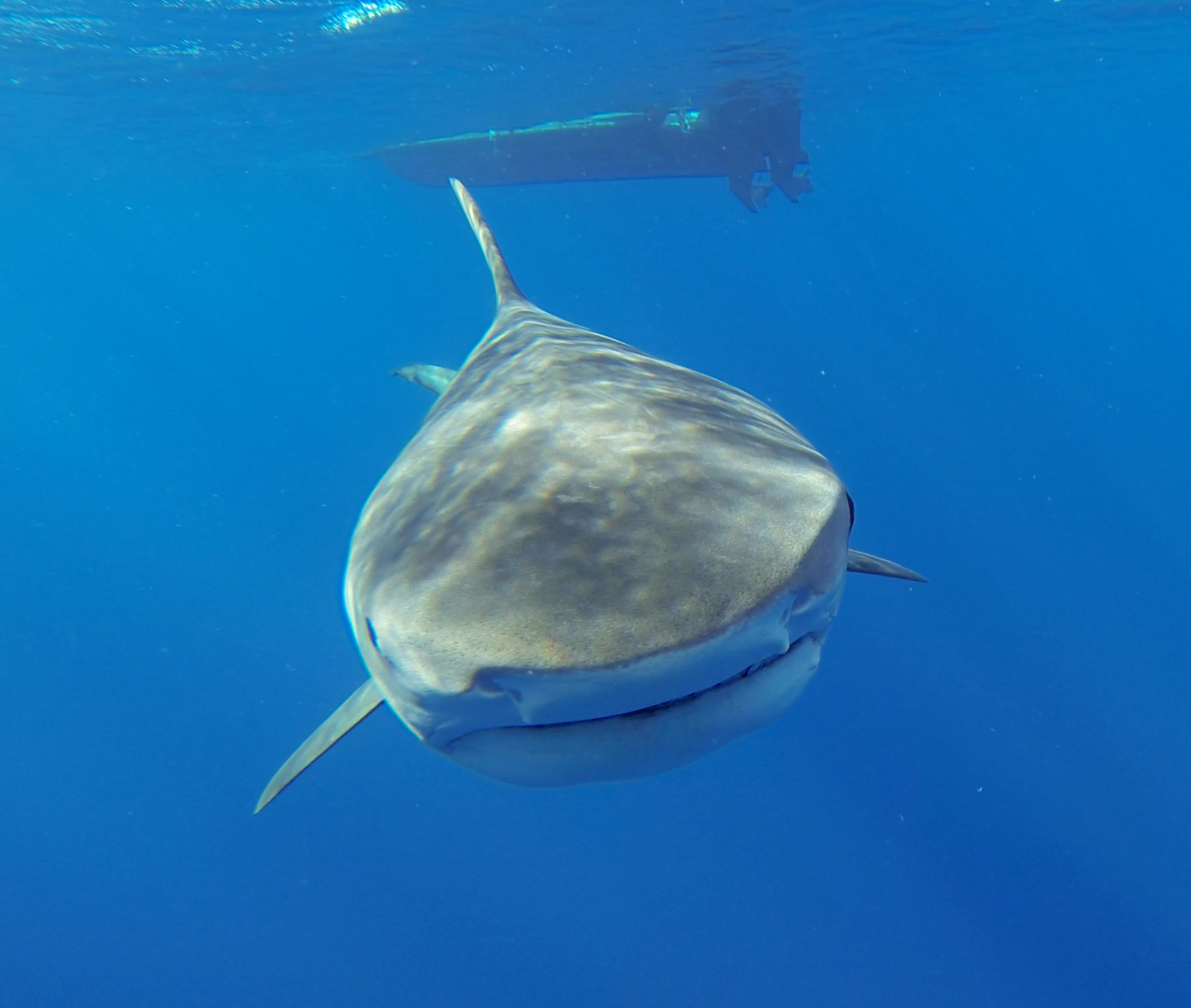
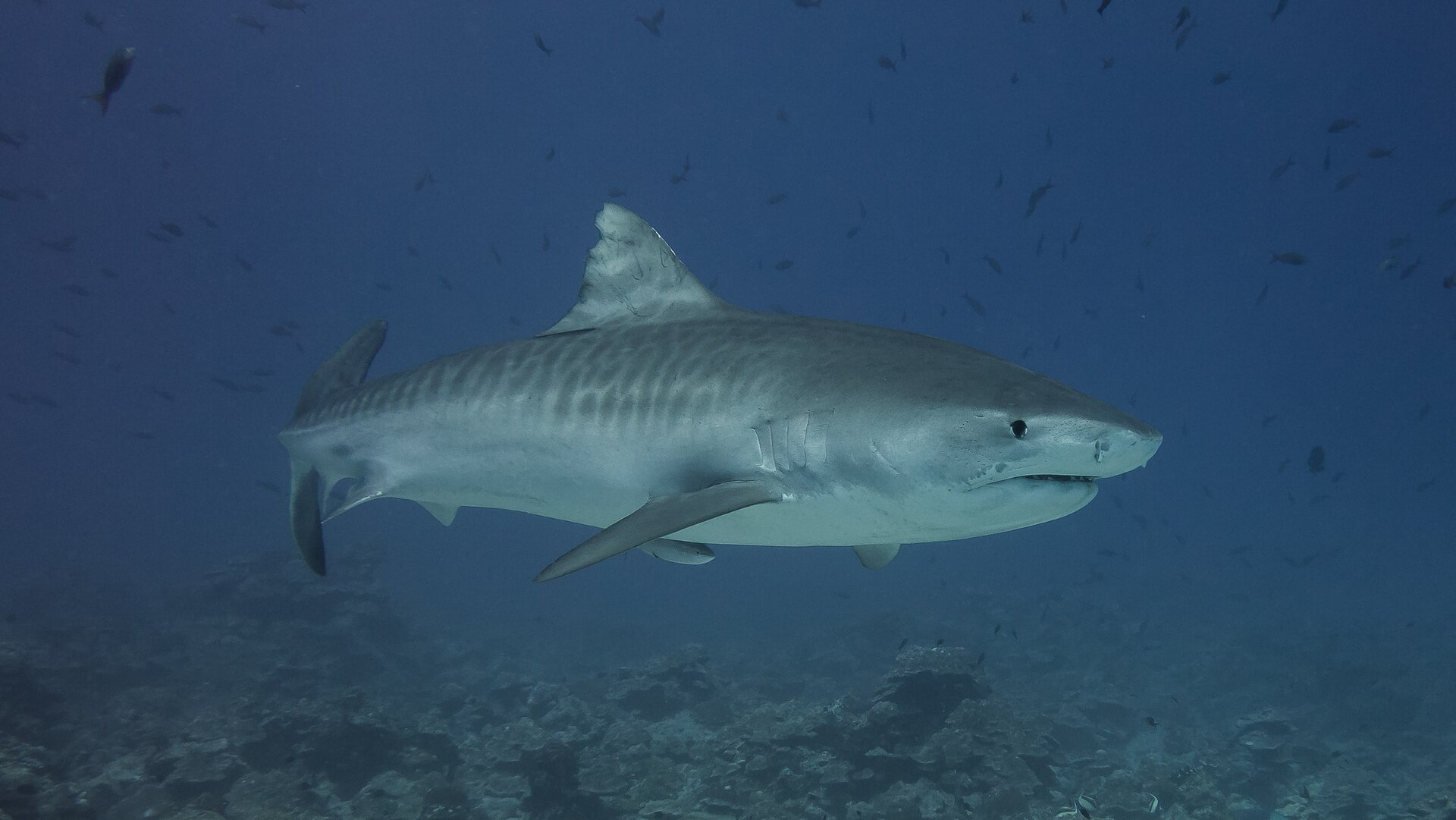
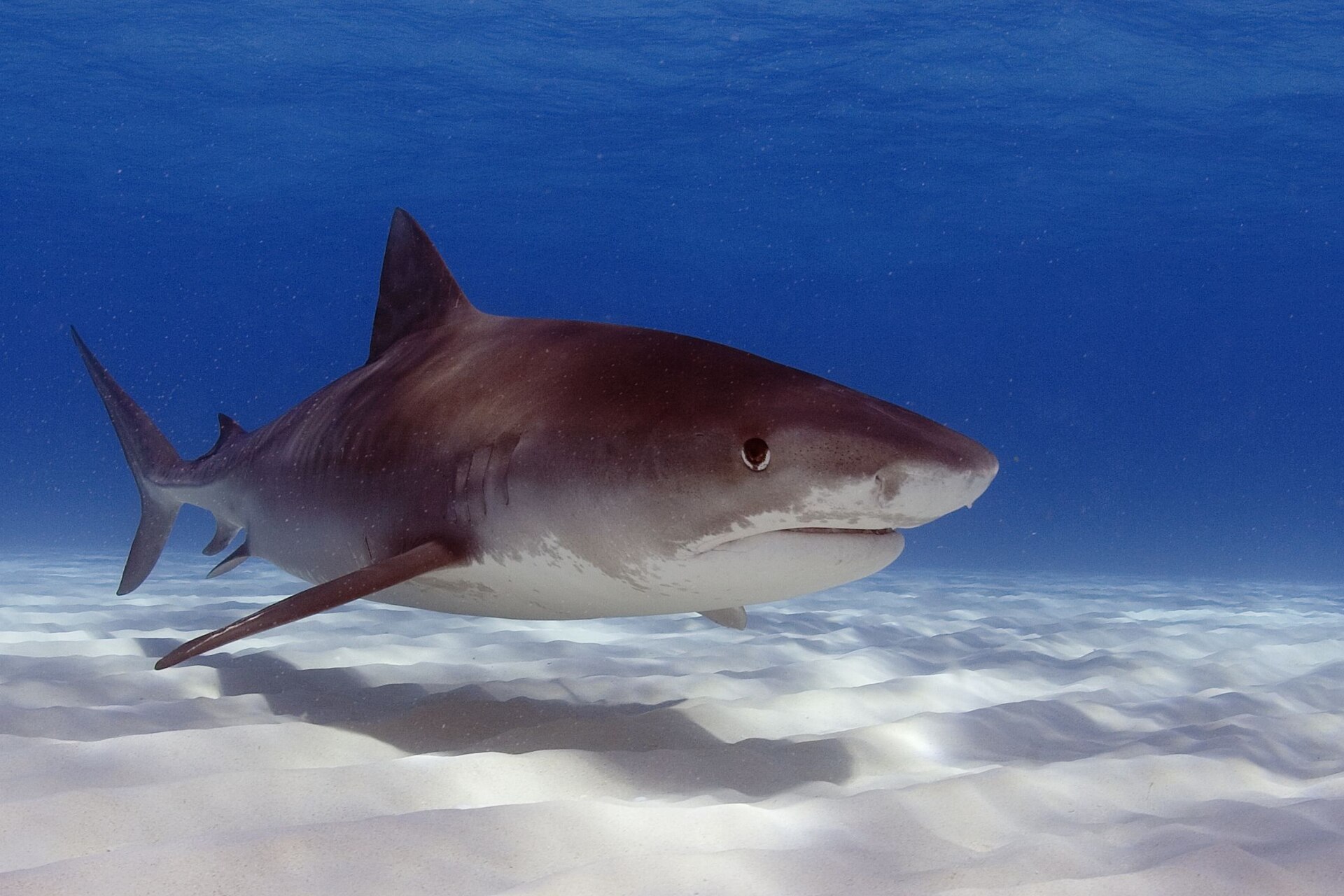
The tiger shark is one of the largest sharks: 3 to 4 meters on average, over 5 meters for the largest females, 385 to 635 kg. The head is broad and wedge-shaped, with a short, almost square snout and big eyes. The teeth, with heavily serrated edges and a sideways-pointing tip, cut through a turtle shell as easily as a big fish. The back is gray to blue-gray, the belly white or pale yellow, and dark bars cross the back and flanks: very sharp in juveniles, they fade with age until they almost disappear in large adults. The body is massive, the swimming slow and sinuous.
Tiger shark in pictures
How does the tiger shark live?
It ranges through all tropical and subtropical seas, especially around the Pacific islands, from the surface to beyond 350 meters, and it likes the murky water of estuaries and lagoons. Its diet is the broadest of any shark: fish, rays, other sharks, sea turtles, sea snakes, birds, dolphins, squid, and even trash, cans, tires and license plates, which earned it the nickname wastebasket of the sea. It is ovoviviparous: the female carries her young for thirteen to sixteen months and gives birth to 10 to 80. It ranks second behind the great white shark for recorded fatal attacks, events that remain very rare. The species is Near Threatened, caught for its fins, meat and liver oil.
Where and when can you see tiger sharks at Cocos Island?
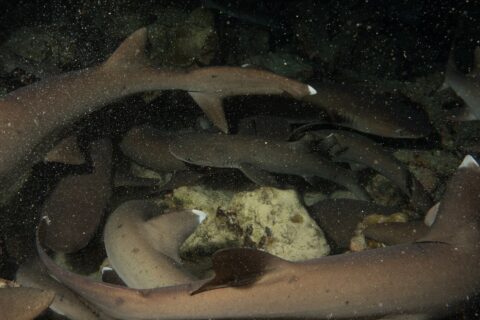
In Costa Rica, Cocos Island is where you meet it, and more and more in recent years. Individuals over three meters patrol the sandy channel of Manuelita, at around 30 meters, and the arch of Dos Amigos Grande, mostly from August to October, at the height of the rainy season, when the hammerhead schools and the whale sharks are there too. A big shark sometimes comes to inspect the Manuelita night dive, behind divers busy watching the whitetips.
How do you dive with tiger sharks?
The tiger is not aggressive by nature, but it is curious and inspects anything new, slowly, pass after pass, often from behind or below. No operator at Cocos feeds it: encounters are natural and are managed by position, close to the bottom or the reef, in a group, facing it, with no sudden moves. Keep an eye behind you, especially at night, do not chase it, do not flash it in the eyes, and ascend as a group if it gets persistent.
Our tip
With a tiger shark, stay close to the bottom or the reef, in a group, and never lose sight of it: it arrives slowly, often from behind or below, and tests what it does not know. No feeding, no chasing, no flash in its eyes. If it keeps coming, regroup, turn vertical and ascend without rushing, with the guide at the rear.