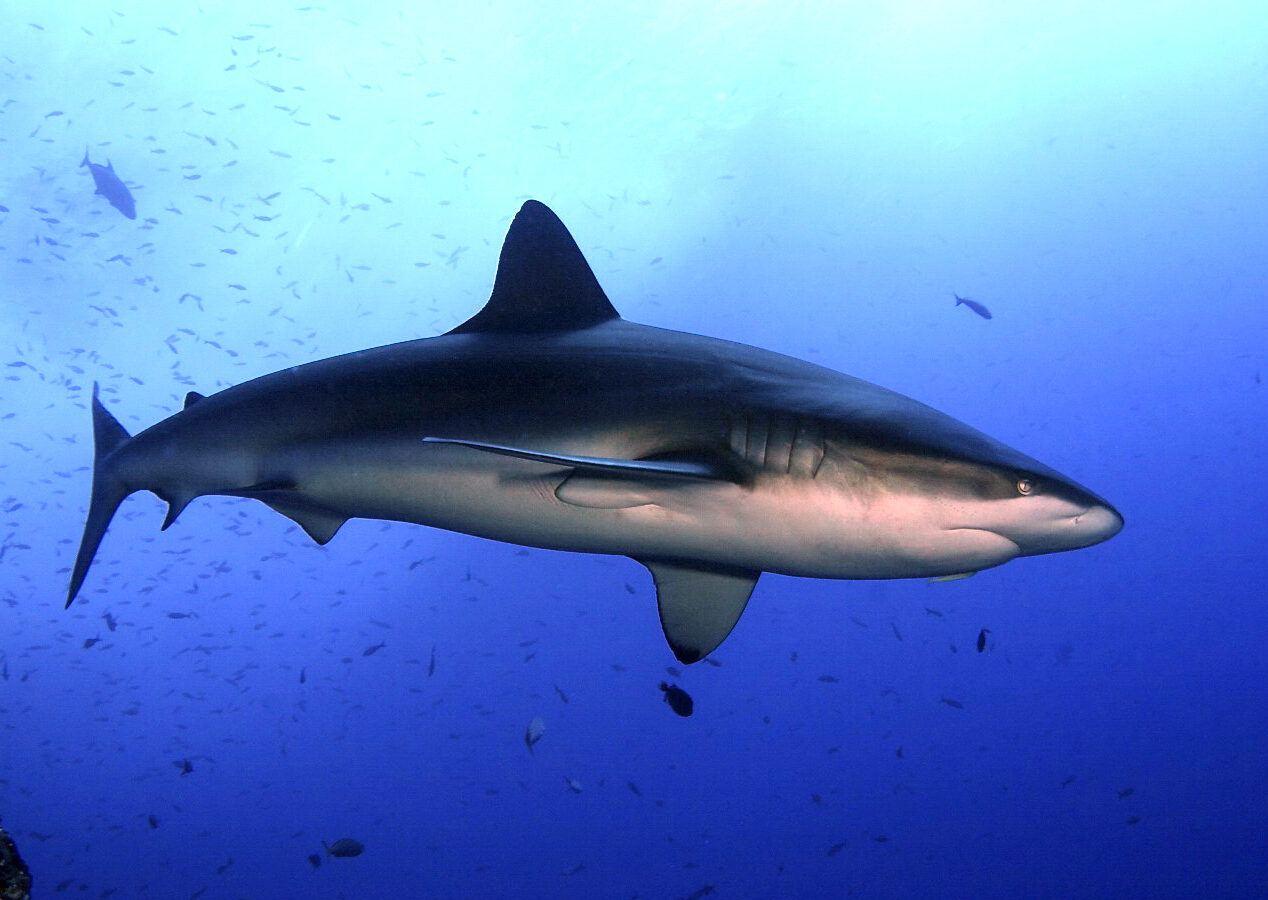
The Galapagos shark, three meters long, gray-brown and streamlined, patrols the current-swept reefs of oceanic islands. It circles Roca Partida and El Boiler from November to May and passes over the cleaning stations at Cocos. Curious and persistent, it is best watched in a group, without provoking it.
Where to dive to see the Galapagos shark?
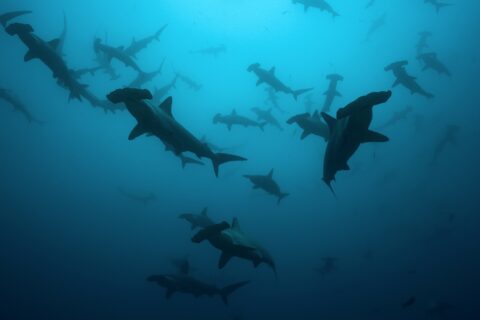
 Costa RicaPelagic
Bajo Alcyone
Cocos IslandCan be seen all year round: at the deepest cleaning station
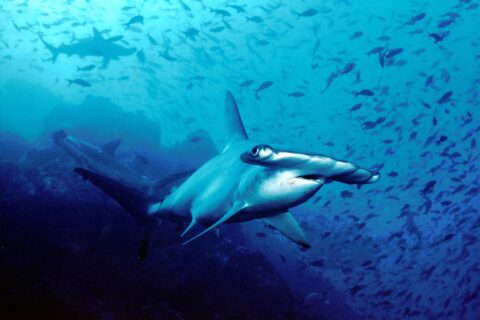 Costa RicaPelagic
Dirty Rock
Cocos IslandCan be seen all year round: a big one now and then at the cleaning stations
 AzoresPelagic
Princess Alice Bank
Pico and FaialCan be seen all year round: at the edge of the plateau, in the current
 MexicoPelagic
Roca Partida
Revillagigedo Islands (Socorro)Peak season from November to May: along the walls, sometimes in numbers
How do you identify a Galapagos shark?
The Galapagos shark is a large shark with a streamlined, slender body, usually 3 meters long and up to 3.30 meters; a 3-meter female weighed 195 kilos. The snout is broad and rounded, the back gray-brown, the belly white, with a barely visible pale stripe along the flank. The first dorsal fin is tall, moderately falcate, and starts above the rear of the pectorals; a low ridge runs along the back between the two dorsal fins. The teeth, in 14 rows on each side of each jaw, are triangular and serrated in the upper jaw, narrower in the lower. It looks a lot like the dusky shark, from which its taller dorsal fins and larger teeth set it apart, and like the gray reef shark, without its stocky body, pointed dorsal fin or black-edged tail.
Galapagos shark in pictures
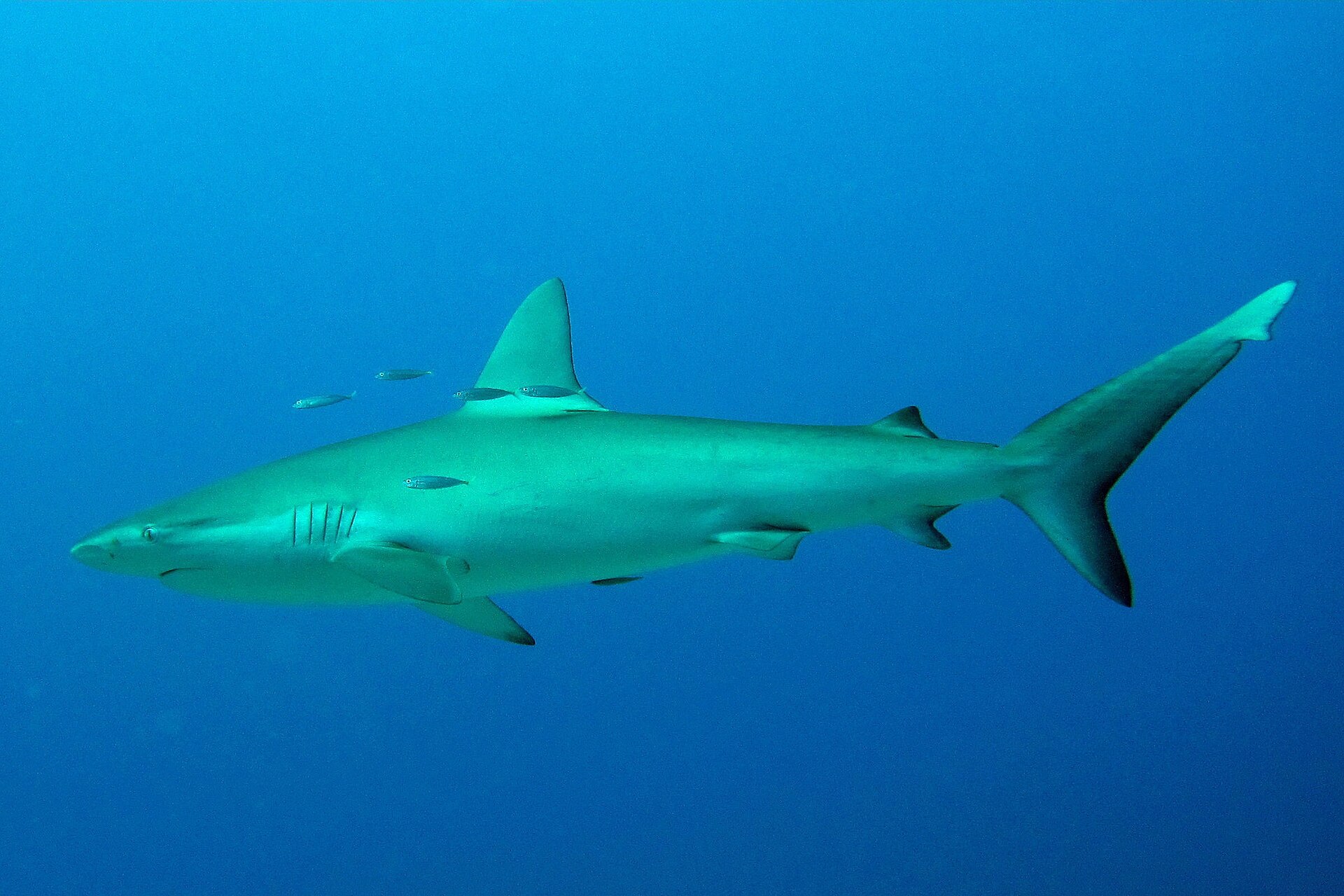
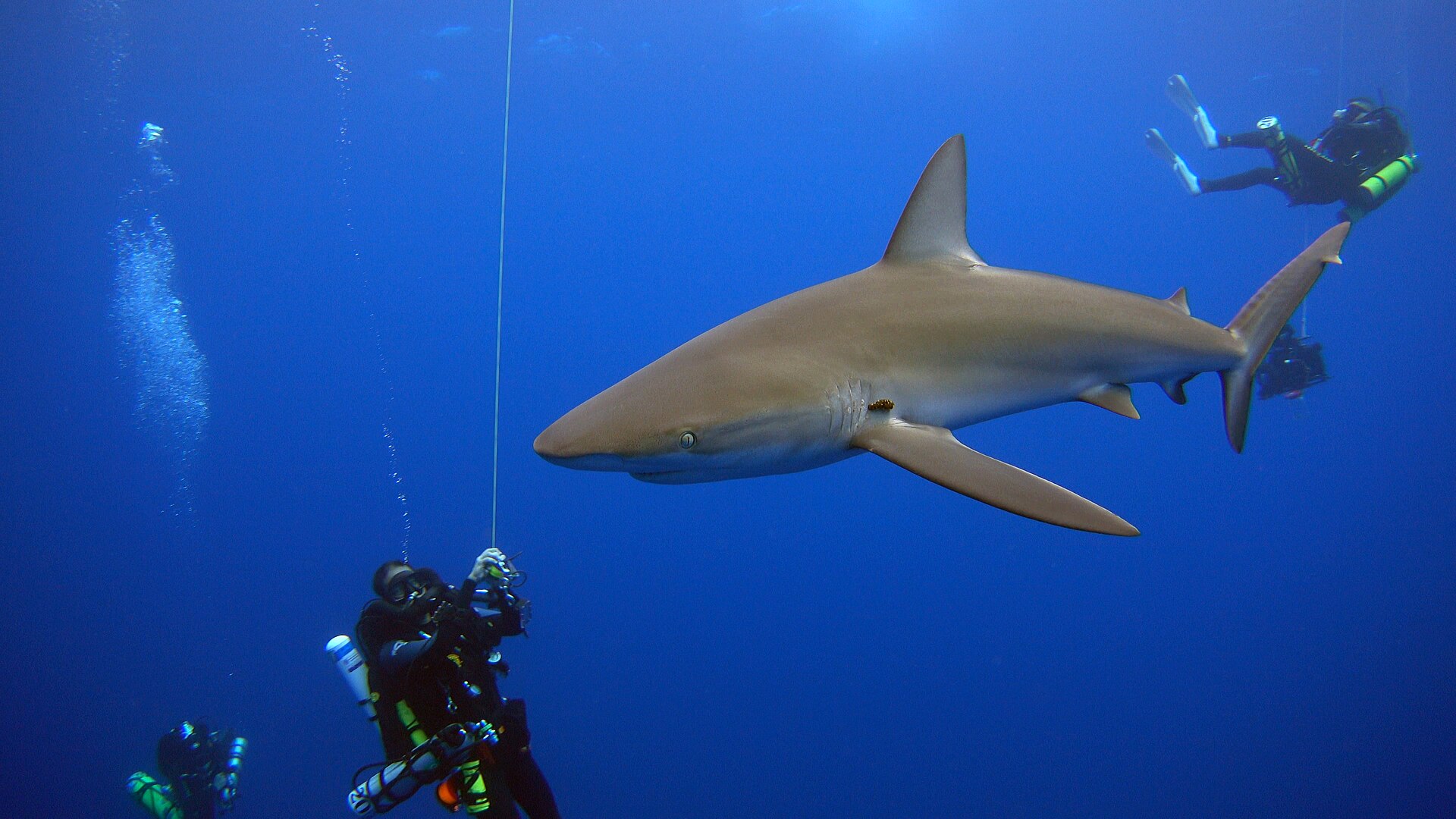
How does the Galapagos shark live?
It is the shark of oceanic islands in all three oceans: in the Galápagos, which gave it its name, at Cocos, Malpelo, the Revillagigedo Islands, Clipperton and Hawaii in the Pacific, in Bermuda, the Virgin Islands, Madeira, Cape Verde, Ascension and Saint Helena in the Atlantic, and it has been recorded as far as the Iberian Peninsula. It likes steep reefs, clear water and the strong currents that converge on the points. Juveniles stay shallower than 25 meters, adults go down to 180 meters, and it crosses open ocean with ease, more than 50 kilometers from land. Around these islands, it is often the most abundant shark, in loose gatherings rather than organized schools; it dominates the blacktip shark and gives way to a silvertip shark of the same size. It mostly eats bottom-dwelling bony fish, such as morays, sea basses, flatfish and triggerfish, and octopus, then mackerel, flying fish and squid. Large individuals take rays, small sharks, including their own species, and, in the Galápagos, sea lions and marine iguanas. The species is viviparous: after about a year of gestation, the female gives birth to 4 to 16 pups of 61 to 80 centimeters, only every two or three years. Males mature at around 2.10 to 2.50 meters and 6 to 8 years, females at around 2.20 to 2.50 meters and 7 to 9 years, and it lives at least 24 years.
Where and when can you see Galapagos sharks?
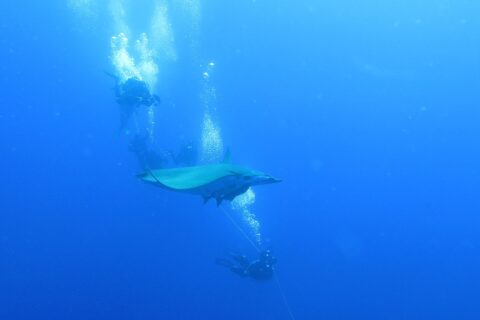
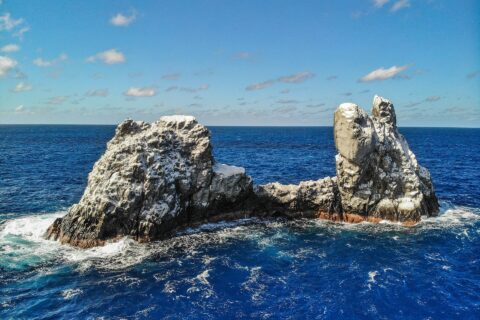
In the Mexican Pacific, Roca Partida and El Boiler are its sites. From November to May, and still in June, it patrols along the walls of Roca Partida, sometimes in numbers, and it circles the El Boiler pinnacle all season, along with whitetip reef sharks. At Cocos, it is possible all year round: at the deepest cleaning station of Bajo Alcyone, and at Dirty Rock, where a large individual passes over the cleaning stations from time to time. In the Azores, it shows up in summer. From June to October, you meet it at the edge of the plateau at Princess Alice Bank, in the current, and it is possible in open water at the Formigas and on the Dollabarat bank, like the smooth hammerhead.
Is it safe to dive with Galapagos sharks?
The Galapagos shark has been listed as Least Concern on the IUCN Red List since 2019. It remains common around several islands, and the Galápagos and Kermadec reserves protect it, but it breeds slowly and fishing has almost wiped it out in parts of Central America. It is a curious, persistent shark that comes to check out swimmers and takes an interest in fins and hands. Two attacks are reliably attributed to it, including a fatal one in the Virgin Islands. It has a recognizable threat display: arched back, lowered pectoral fins, flared gills, open jaws, with an exaggerated rolling swim. If you see it, back toward the reef as a group and get out of the water. Pushing it away is pointless, as it circles back, and most repellents have no effect on it.
Our tip
Stay grouped against the reef or the pinnacle, stacked vertically, and never swim toward it: it approaches, then comes back. If it arches its back, lowers its pectoral fins and rolls from side to side while swimming in jerks, back away slowly without turning your back on it and head up without lingering. Don't push it away with your hand and don't feed it: forced away, it circles back, and the gesture can trigger a frenzy.