 MaldivesReef
Banana Reef
Malé atolls5 to 30 mOpen WaterFrom December to April
BoatCurrent: variableVisibility 20 to 30 m
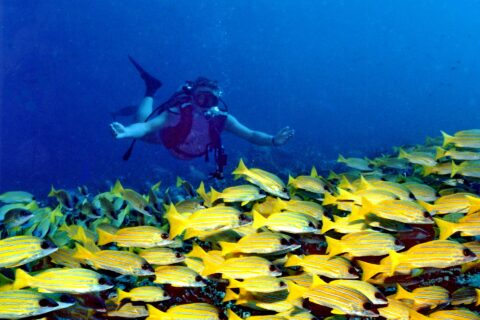
Banana Reef is a banana-shaped reef 20 minutes by speedboat from Malé and one of the first dive sites in the Maldives.
Language
Currency
Maldives7 dive sites
The Maldives are made for scuba diving with sharks, which you meet on almost every thila, the lagoon's pinnacles. You swim with whale sharks in the south of Ari Atoll, where they live year-round. At Rasdhoo, the boat leaves at dawn to watch for hammerheads, which on some mornings cruise past in schools in the blue.
Aim for December to April: the sea stays calm, and visibility climbs to 40 meters. From May to November, the swell picks up and the current gets stronger in the passes. But the plankton then brings mantas and whale sharks off Dhigurah.
On the inhabited islands of Maafushi and Dhigurah, a dive costs US$50 to US$60. For a week's liveaboard on the Best of Maldives route, budget €2,032 to €3,680, taxes included. On land, every night adds a green tax of US$12 on a resort island and US$6 in a guesthouse.
At Velana, Malé's airport, the 30-day visa is free if you show a return ticket, booked accommodation and enough money. Fill in the IMUGA traveler declaration online within 96 hours before your flight. The public speedboat then reaches Rasdhoo or Dhigurah in two and a half hours at most.
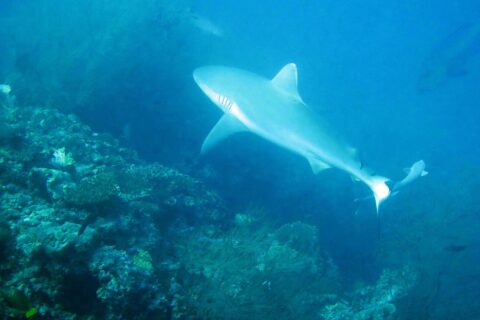
MaldivesReefBanana Reef is a banana-shaped reef 20 minutes by speedboat from Malé and one of the first dive sites in the Maldives.
 MaldivesReef
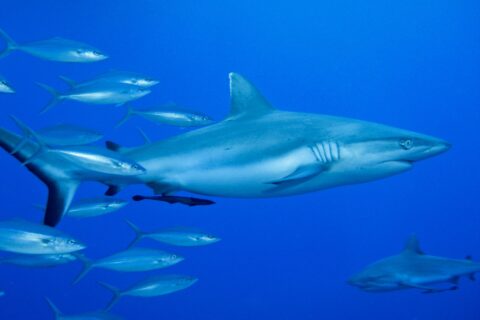
Fish Head is a pinnacle in North Ari Atoll, with a plateau between 8 and 15 meters and sides that drop to 40 or 50 meters.
 MaldivesPelagic
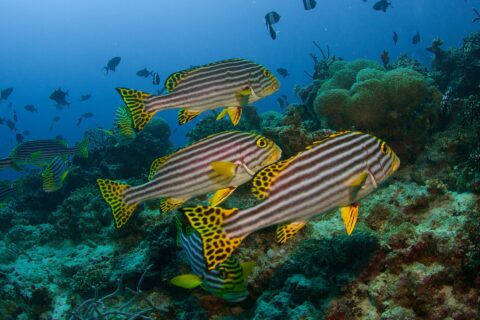
Kandooma Thila is a small pinnacle in South Malé Atoll, with its top at 12 or 13 meters and the sand at 35 or 40.
 MaldivesReef
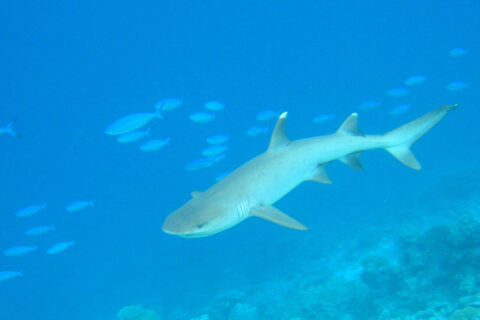
Kuda Rah Thila is a small coral block in the Dhigurah channel, in South Ari, with its top between 12 and 16 meters.
 MaldivesReef
Maaya Thila is an isolated pinnacle in the middle of North Ari, with its top between 6 and 12 meters.
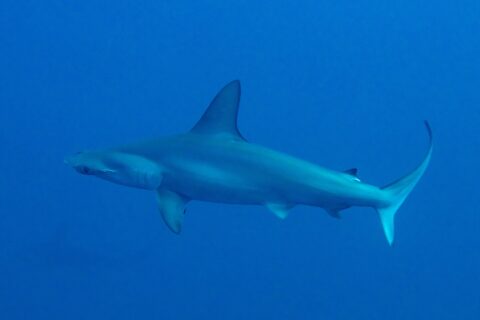 MaldivesPelagic
Rasdhoo Madivaru is the outer reef of Madivaru islet, and the site in the Maldives with the most scalloped hammerhead sightings over the year.
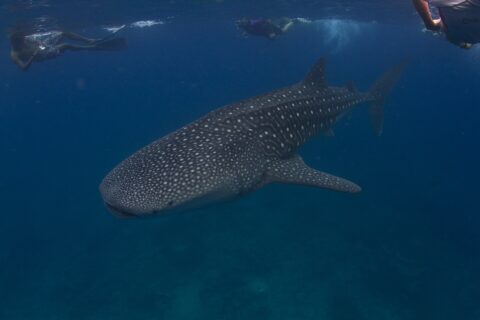 MaldivesPelagic
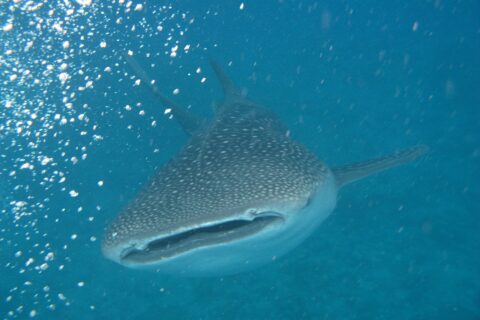
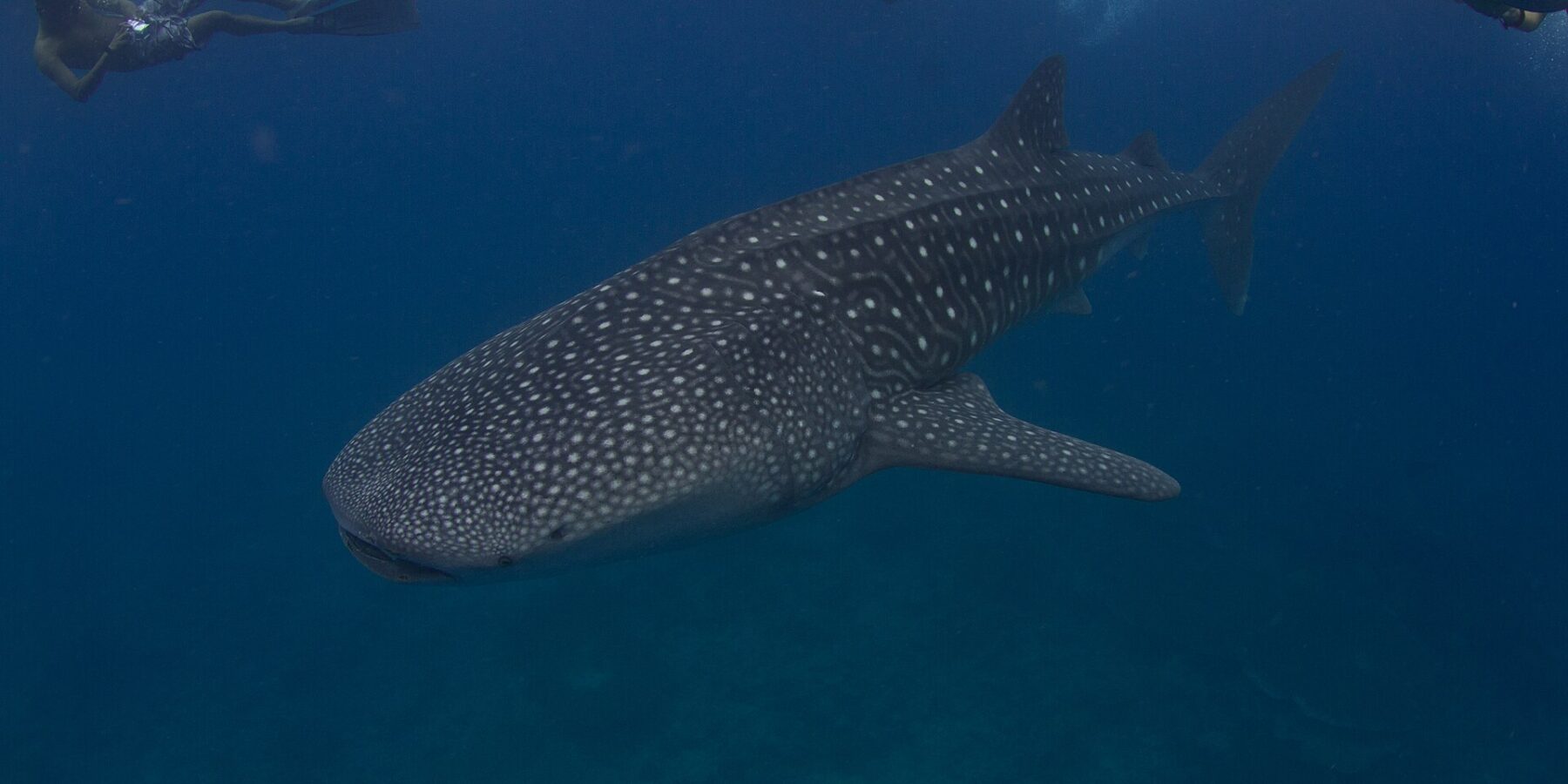
South Ari Atoll has been a marine protected area since 2009, and whale sharks are seen there all year along the outer reef.
In the Maldives, it is almost all reef, and you dive in the current. On every tide, the water flows into the atoll through the reef passes, then flows back out. On its way, it feeds the thilas, where gray reef sharks hold station facing the current. Tucked in at the edge of the pinnacle, you watch them without moving. Since 2010, the law has banned fishing them.
Near Malé, manta rays come to be cleaned at Lankan Manta Point. In South Ari, more than 700 whale sharks have been identified by their spots, and they come back year after year. You can get close to them without paying resort island prices, from a guesthouse on Dhigurah, the inhabited island on the edge of their protected area.
West of Malé, Ari draws more divers than any other atoll. Fish Head gathers 10 to 20 gray reef sharks at its tip. At night, 20 to 30 whitetip reef sharks hunt on top of Maaya Thila. These North Ari thilas call for Advanced and experience in current. You dive them on a liveaboard, or on day trips from the resort islands and the island of Ukulhas.
At Rasdhoo, a small atoll next to Ari, you wait for hammerheads in open water, between 25 and 30 meters, off Madivaru reef. In the protected area of South Ari Atoll, you head out from Dhigurah or Maamigili to look for whale sharks. From Dhigurah, the boat also reaches Kuda Rah Thila, where the current swirls around overhangs covered in sea fans. The outer reef of the protected area is fine from Open Water, but that thila and the dawn dive at Madivaru require Advanced.
In North Malé Atoll, you dive on the day you arrive, because the atoll surrounds the airport. From Hulhumalé, the neighboring island linked by a bridge, the boat takes 20 minutes to Banana Reef, and in calm seas, Open Water is enough. In South Malé, the passes have more current. Kandooma Thila, for Advanced divers only, gathers gray reef sharks, trevallies and eagle rays when that current flows out. For less than a resort island, you can stay on the inhabited island of Maafushi, 5 kilometers away.
The water varies little, from 28 to 30 °C. Reef sharks stay on the thilas in every season. Mantas and whale sharks, on the other hand, follow the plankton from one side of the atolls to the other.
From December to April, they tend to stay on the western sides, in Ari especially. The Rasdhoo hammerheads, rarer than twenty years ago, show up more often from January to April.
In May, the wind swings to the southwest and pushes the plankton onto the eastern sides until November. Visibility then drops to 15 or 25 meters, and the whale sharks move closer to Dhigurah. In South Ari, you meet them on 70 to 90% of trips depending on the season, and the best months run from August to November. From July to October, mantas and whale sharks also gather at Hanifaru, in Baa Atoll, which you visit mostly by liveaboard.
A typical dive liveaboard leaves Malé for seven nights, with three or four dives a day. The Best of Maldives route covers Rasdhoo, Ari, Vaavu and both Malé atolls. The week costs €2,032 to €3,680 depending on the boat, taxes and Nitrox included.
At Vilamendhoo, a resort island, the US$60 dive becomes US$77 with service and the 17% tourism VAT. The boat adds US$27 per dive. The Kandooma resort offers one dive a day from four nights, but the airport transfer costs about US$160 round trip.
The inhabited islands are cheaper, even though alcohol is not served there. On Dhigurah, three nights and five dives cost US$771 as a package, transfers included. A half day snorkeling with the whale sharks costs US$60 to US$120.
The law limits recreational diving to 30 meters, with no decompression diving and no solo diving. The dive center checks your card and, after three months without diving, makes you do a refresher dive. You do your safety stop under your own DSMB, because most dives end in the blue. After your last dive, wait at least 24 hours before flying.
To swim with the whale sharks, the South Ari protected area, SAMPA, requires a licensed guide for at most six swimmers. Keep at least 3 meters between you and the whale shark, 4 on the side of its tail, and do not touch it or use a flash.
France's Ministry of Foreign Affairs places the country under heightened vigilance and advises checking that dive centers are reputable. Recompression chambers exist, but only on some atolls.
Hotels, apartments and rooms around Rasdhoo, the starting point for dives at Rasdhoo Madivaru, with current prices.