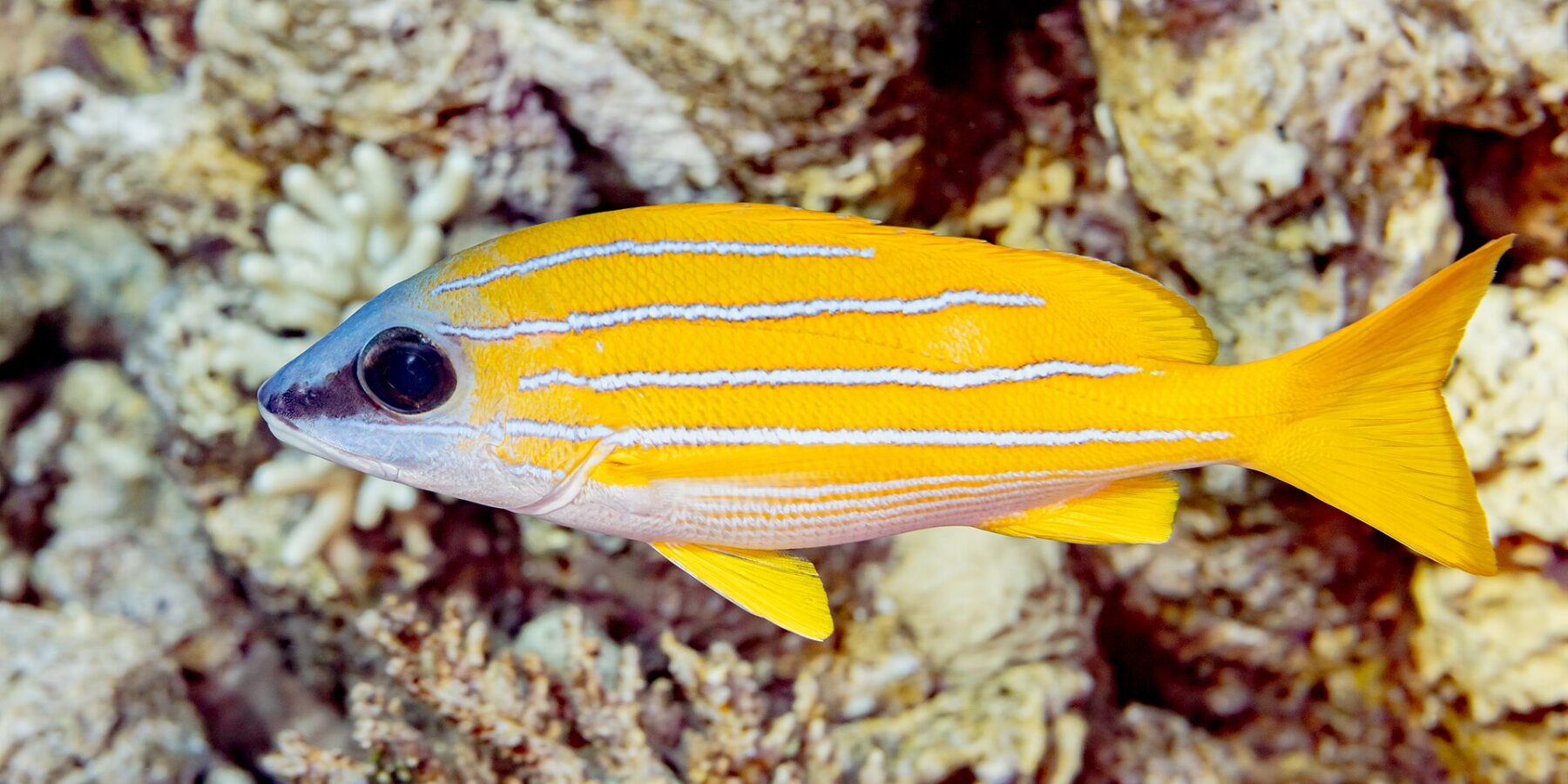
The bluestripe snapper is a small, bright yellow snapper with four blue lines, spending the day in tight schools around coral heads and under overhangs. The Maldives are full of them, and the big summer school forms at Ras Mohammed from June to August.
Where to dive to see the bluestripe snapper?
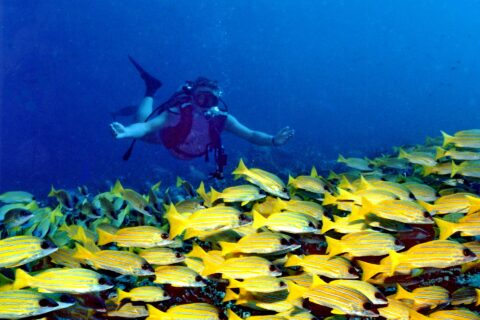
 MaldivesReef
Banana Reef
Malé atollsPeak season all year round: in yellow clouds in the caves and under the overhangs, between 10 and 25 meters
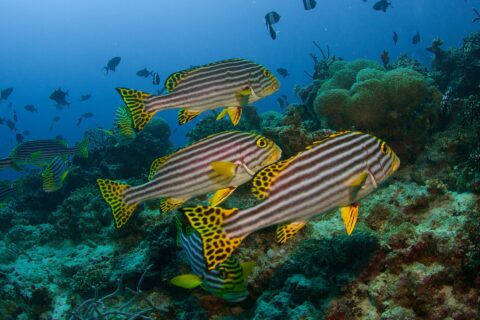
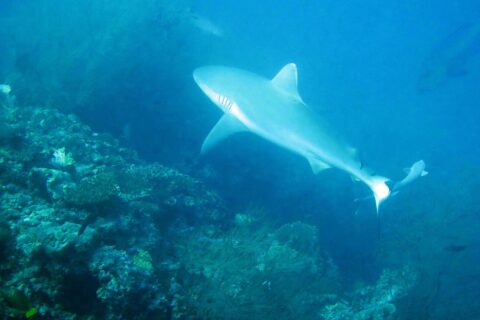 MaldivesReef
Fish Head (Mushimasmingili Thila)
Ari and Rasdhoo atollsPeak season all year round: in tight schools against the overhangs
 MaldivesReef
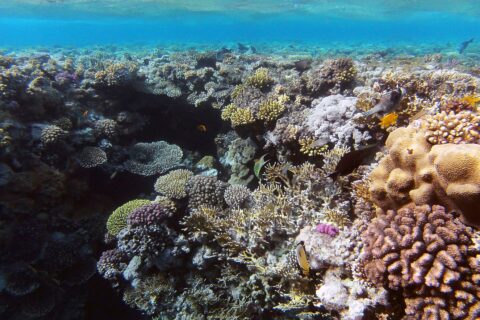
Kuda Rah Thila
Ari and Rasdhoo atollsPeak season all year round: in tight schools around the main block
 EgyptReef
Shark and Yolanda Reef, Ras Mohammed
Northern Red Sea, EgyptPeak season from June to August: the big summer school, from June to August
How do you identify a bluestripe snapper?
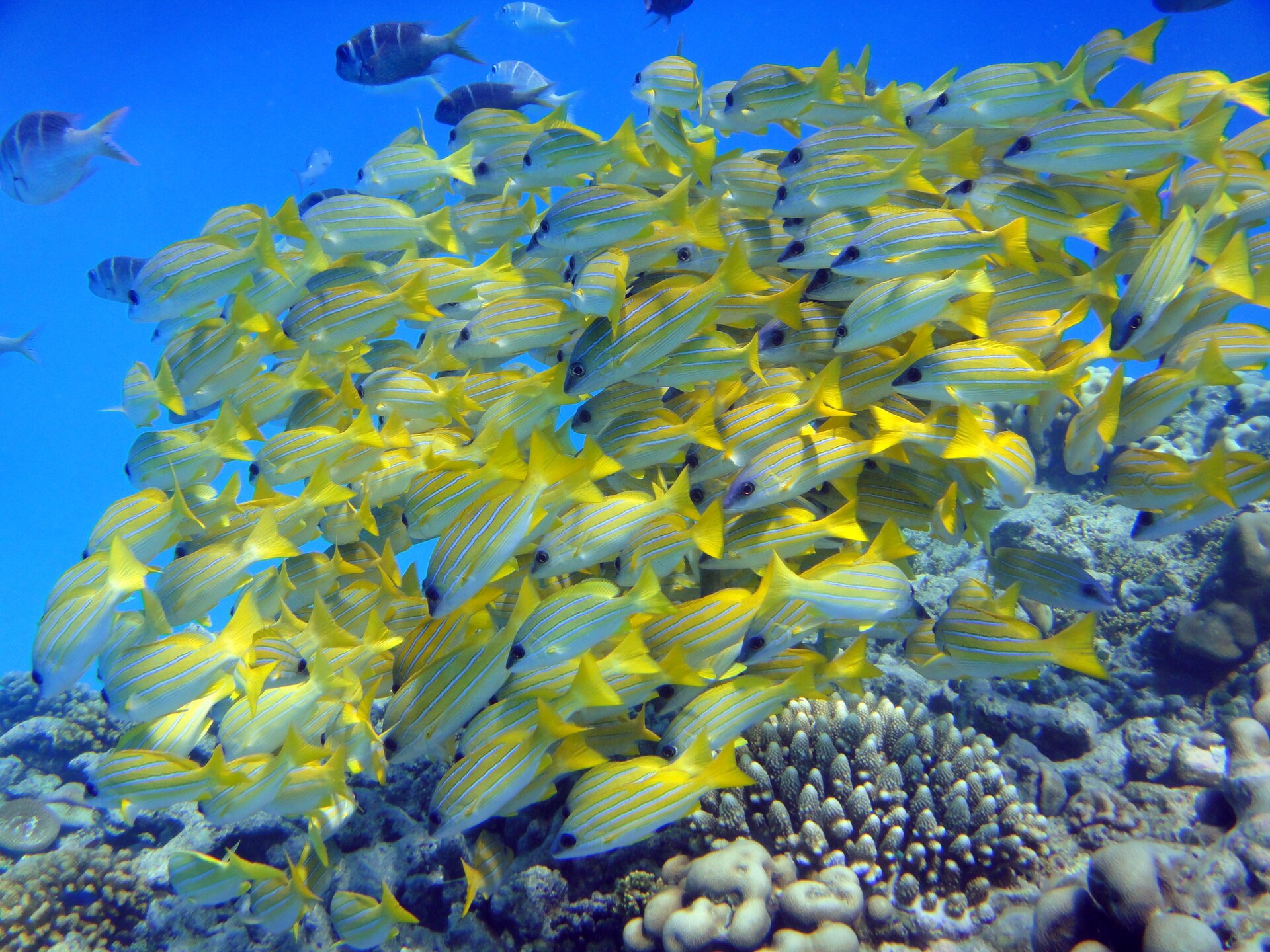
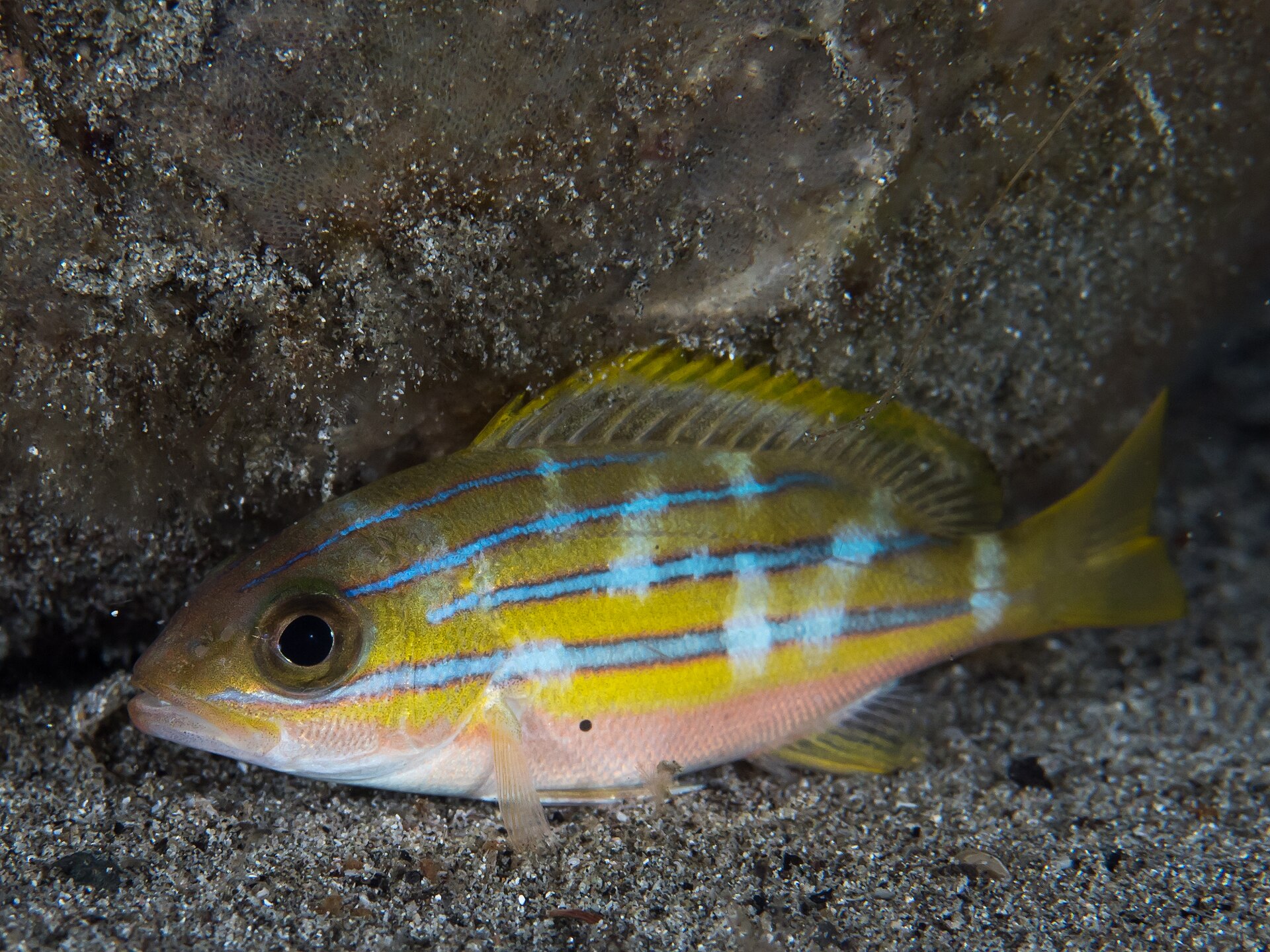
The bluestripe snapper is a small snapper with a streamlined body, 25 centimeters most often and 40 at most. The back and flanks are bright yellow, the belly white, and four bright blue lines run the full length of the flanks; the fins are yellow. Underwater, the blue-striped yellow cloud swaying under an overhang cannot be mistaken for anything else.
Bluestripe snapper in pictures
How does the bluestripe snapper live?
It lives on coral reefs across the Indo-Pacific, from the Red Sea and East Africa to the Marquesas and the Line Islands, and from southern Japan to Australia, in shallow lagoons as well as on outer slopes. It is usually found down to 60 meters, but it has been recorded at 180 meters in the Marquesas and 265 meters in the Red Sea. By day, it gathers in large schools around coral formations, caves and wrecks; at night, the fish scatter to hunt fish, shrimp, crabs, mantis shrimp, cephalopods and planktonic crustaceans, with a little algae. Juveniles grow up in seagrass beds. It matures from 20 to 25 centimeters, lives about six years and spawns all year round at low latitudes, with a peak in November and December in the Andaman Sea.
Where and when can you see bluestripe snapper?
In the Maldives, it is on every dive, all year round: at Banana Reef, in the Malé atolls, in yellow clouds in the caves and under the overhangs, between 10 and 25 meters; at Fish Head, in Ari Atoll, in tight schools against the overhangs; at Kuda Rah Thila, in tight schools around the main block, with the yellowback fusiliers. In Egypt, the big summer school forms on Shark and Yolanda Reef, at Ras Mohammed, from June to August, and can still be seen in May and September.
Why is the bluestripe snapper invasive in Hawaii?
The bluestripe snapper is listed as Least Concern on the IUCN Red List. Its most curious story takes place in Hawaii, where it did not exist: introduced in the 1950s, it colonized most of the islands in the archipelago and is now considered an invasive species there. In French Polynesia, it is called taape; it is also known as the common bluestripe snapper.
Our tip
Approach the school slowly, from the side, and stop two or three meters away: it tightens, turns on the spot and re-forms. Do not push it into the cave or under the overhang: that is where it shelters. For photos, get below it, the yellow school against the blue, with no direct flash into the cave.