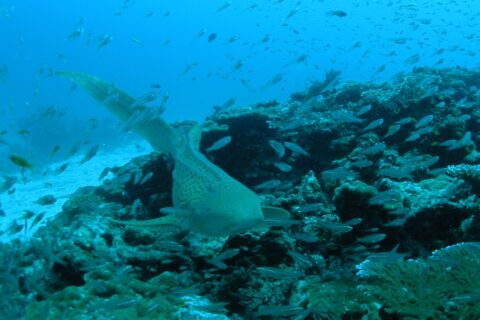
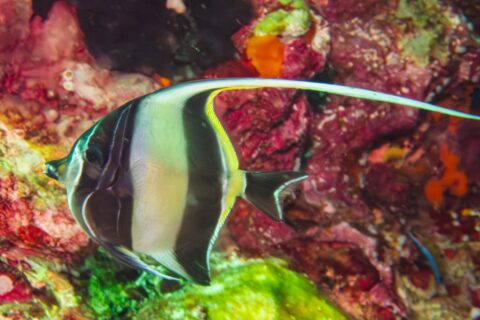
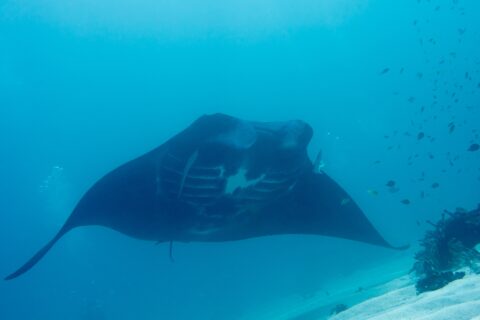
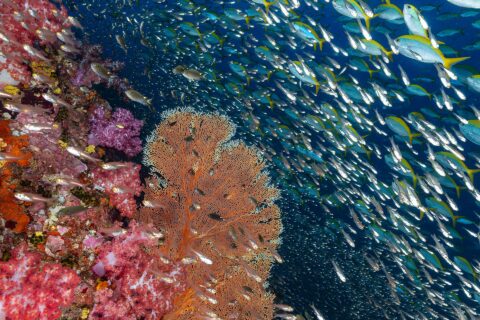
Thailand always has a sea to dive, because its two coasts do not get the monsoon at the same time. In the Andaman Sea, manta rays circle the pinnacles of Koh Tachai, and the whale shark passes Richelieu Rock from February to April. In the gulf, you find it again at Sail Rock, especially in May and August.
Why dive Thailand?
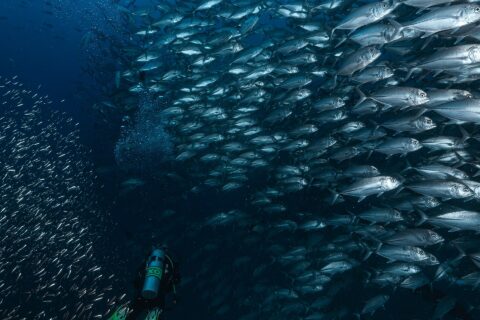
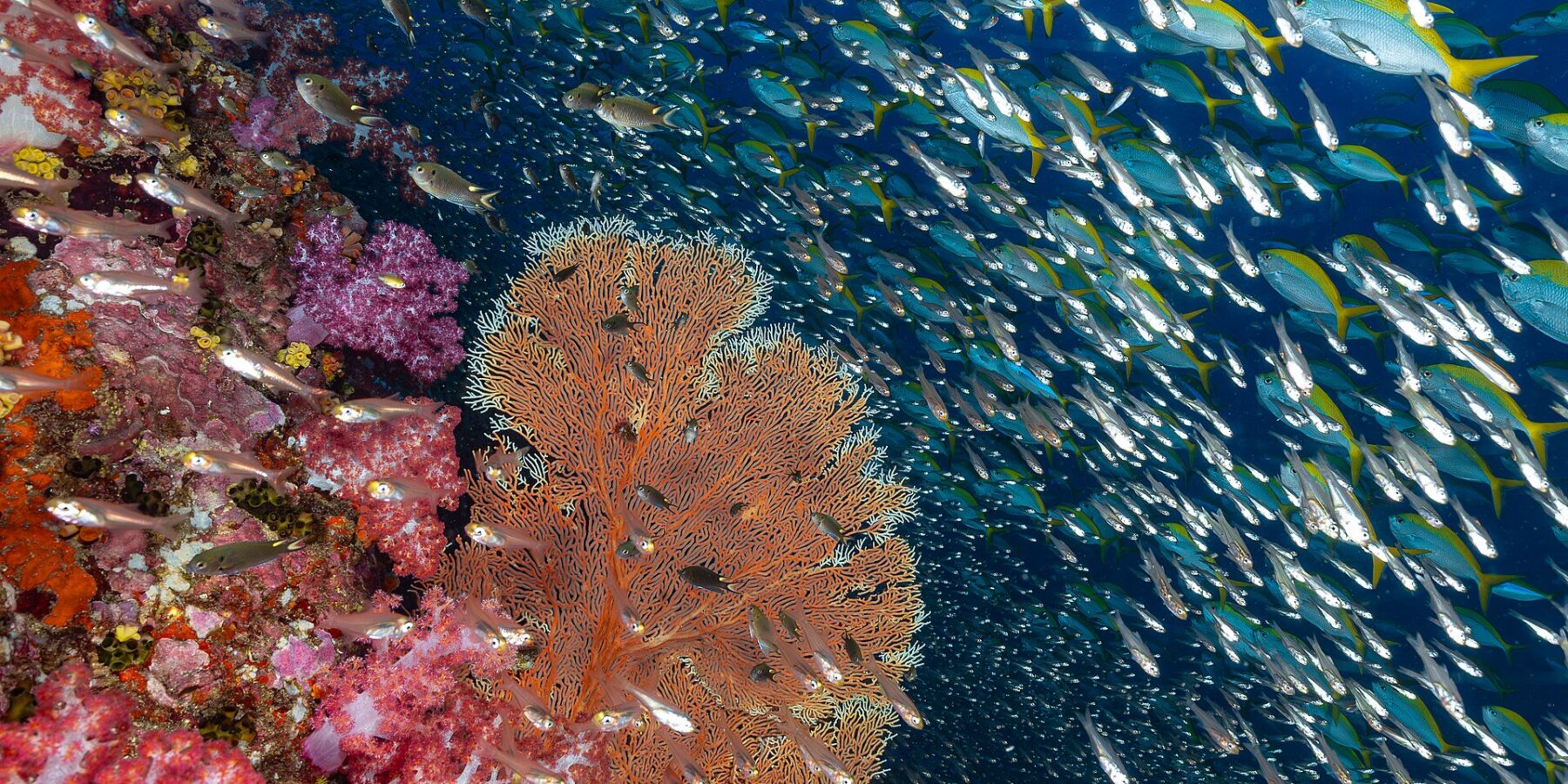
The Khao Lak boats head far offshore, to the granite pinnacles of the Andaman Sea. At Koh Tachai, trevallies and dogtooth tuna hunt by the hundreds in the current. Richelieu Rock hides seahorses and ghost pipefish in its soft corals.
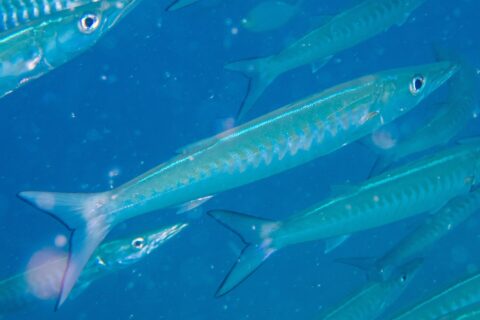
Koh Tao, in the gulf, lives off scuba diving, and its dive centers have the lowest prices in the country. Once you have your certification, you dive there with the schools of barracudas at Chumphon Pinnacle and Sail Rock.
Where should you dive in Thailand?
In the Andaman Sea, almost everything leaves from Khao Lak, on day trips as on liveaboards. In the Similan Islands, you weave through the granite maze of Elephant Head Rock, where whitetip reef sharks sleep under the boulders. The two pinnacles of Koh Tachai draw manta rays and schools of barracudas. Farther on, in Surin park, Richelieu Rock is the richest site in the country. The whale shark passes through, and harlequin shrimp live in pairs under its overhangs. All three call for Advanced because of the current, and Elephant Head Rock also because of the depth.
In the south, you leave from Koh Lanta for Hin Daeng and Hin Muang, offshore rocks covered in red and purple soft corals. The walls drop to 60 and 70 meters, and dive centers require 50 logged dives or a 30 meter certification. Manta rays come to the cleaning stations there, often several at a time.
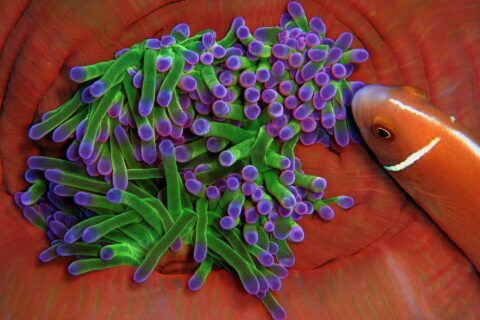
If you are a beginner, get your first certification on Koh Tao, in the Gulf of Thailand. With Open Water, you can already dive the island's sites and the top of Chumphon Pinnacle, covered in pink anemones, between 14 and 18 meters. At Sail Rock, you swim through the rock by a vertical chimney, between 5 and 18 meters. Dive centers recommend Advanced there, even though Open Water divers are allowed down to 18 meters.
When is the best time to dive Thailand?
From February to April, the whale shark and manta rays show up most at Richelieu Rock and Koh Tachai. After the full and new moons, the plankton rises and clouds the water, and the big animals arrive with it. The Hin Daeng mantas come earlier, in January and February.
Around Koh Tao, the whale shark passes from March to October, most often in May and August. Visibility there drops to 5 or 10 meters in November and December, when the northeast monsoon blows. On rough days, the dive centers cancel Sail Rock.
In October, it rains in the gulf, but you can still dive there. The Koh Lanta dive centers head back to Hin Daeng from October 15. Yet Mu Ko Lanta National Park lists itself as closed until November 15. Get the opening confirmed before you book.
How much does a dive trip to Thailand cost?
A four-night dive liveaboard links the Similans, Koh Tachai and Richelieu Rock. From one boat to another, it costs THB 24,000 to THB 28,000, for about fifteen dives.
Without a liveaboard, you sleep in Khao Lak, because overnight stays on the islands are banned. Richelieu Rock or Koh Tachai then cost THB 5,300 to THB 5,700 for two dives, with THB 700 in park fees and THB 500 for gear on top. Each dive thus costs more than on a liveaboard. The day boat only goes to Koh Tachai four days a week, while liveaboards stop there almost every day.
From Koh Lanta, a day at Hin Daeng costs THB 4,700, and the park adds THB 600. The cheapest is still Koh Tao, with ten dives for THB 9,000 to THB 10,000 and no park fees.
What do you need to know before diving in Thailand?
Since September 2026, you can enter visa-free only twice per calendar year. The TDAC card is free on tdac.immigration.go.th, and fake sites charge for it.
A DSMB is mandatory at Richelieu Rock, Hin Daeng and Hin Muang. Bring one for Koh Tachai too, where you surface in open water. In the parks, you risk a THB 100,000 fine if your sunscreen contains oxybenzone, octinoxate, 4-MBC or butylparaben.
The sharks you meet are small or harmless. The country's three shark bites since 2015 all involved swimmers, and none was fatal. France's Foreign Ministry advises against all travel to four southern provinces, far from the dive areas, and to a 50 kilometer strip along the Cambodian border.
 ThailandPelagic