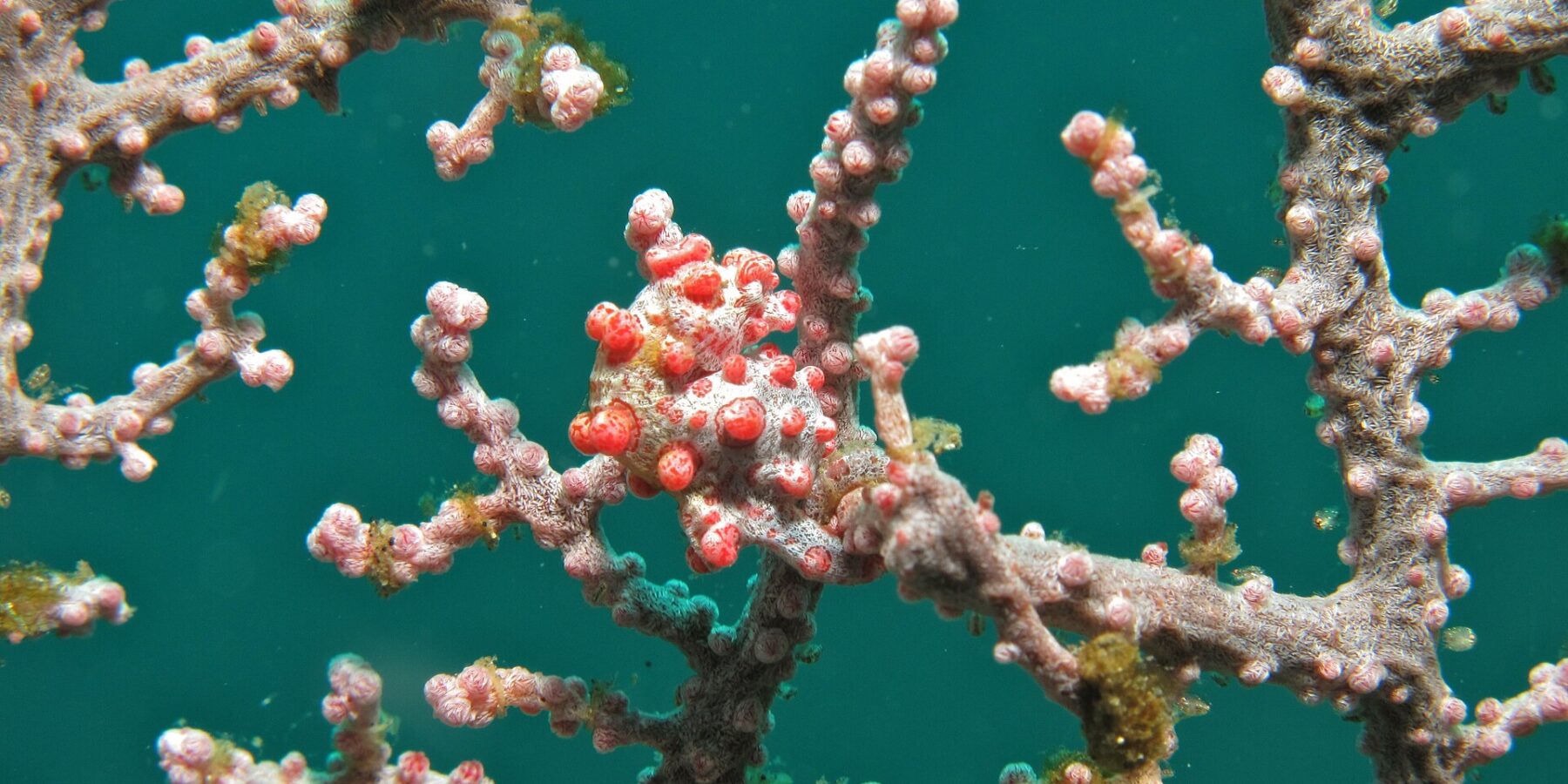
The pygmy seahorse grows to 2.4 centimeters at most and spends its life on a sea fan whose color it copies so well that it vanishes. It lives in Raja Ampat, Lembeh and Bunaken, between 16 and 40 meters, and only a guide who knows its sea fan can show it to you.
Where to dive to see the pygmy seahorse?
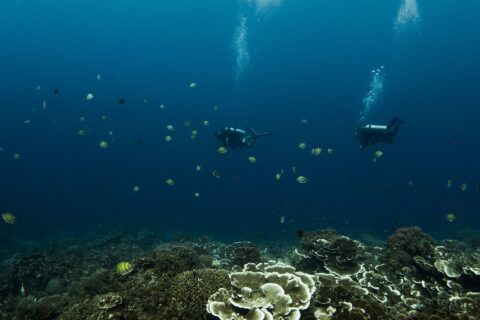
 PhilippinesReef
Apo Island
Visayas: Cebu, Bohol and NegrosCan be seen all year round: on the sea fans at Cogon Point, below 20 m
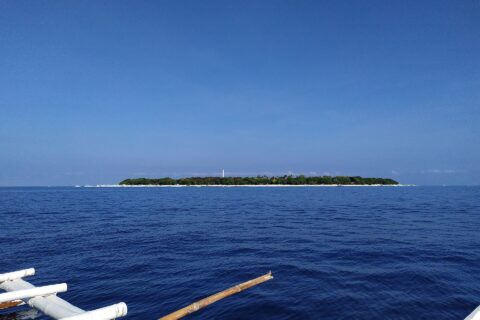 PhilippinesReef
Balicasag Island
Visayas: Cebu, Bohol and NegrosPeak season all year round: on the sea fans at Diver's Heaven and Current View Point
 IndonesiaPelagic
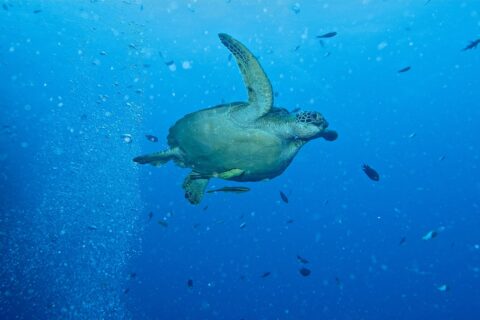
Blue Magic
Raja AmpatPeak season all year round: on the sea fans on top, pointed out by the guide
 IndonesiaReef
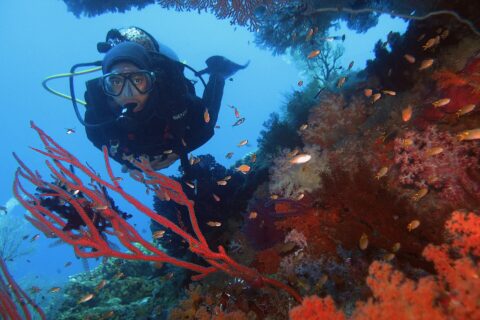
Bunaken, Lekuan walls
Sulawesi: Bunaken and LembehPeak season all year round: on the sea fans of the wall, pointed out by the guide
 IndonesiaReef
Cape Kri
Raja AmpatPeak season all year round: on the sea fans of the slope, pointed out by the guide
 IndonesiaReef
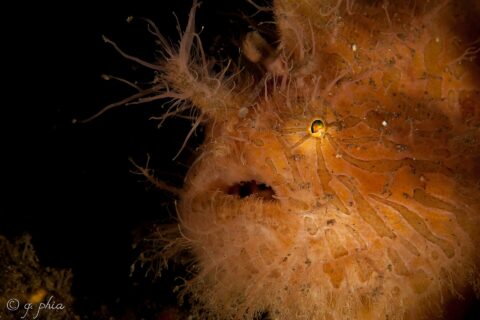
Lembeh Strait
Sulawesi: Bunaken and LembehPeak season all year round: on the sea fans of the strait's few coral slopes, especially at Nudi Retreat
 IndonesiaPelagic
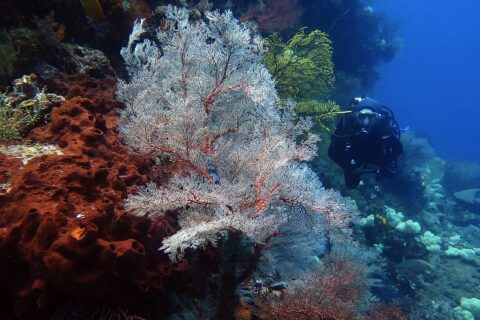
Magic Mountain (Misool)
Raja AmpatPeak season all year round: on the sea fans of the walls, around 25 m
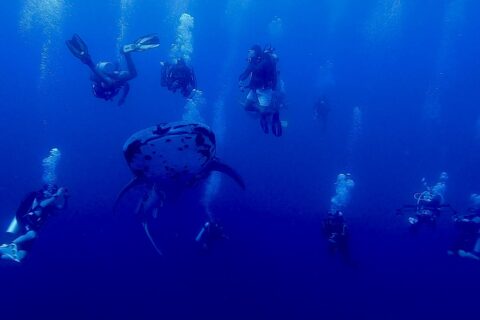 PhilippinesPelagic
Tubbataha Reef
PalawanPeak season from April to May: on the sea fans of Seafan Alley
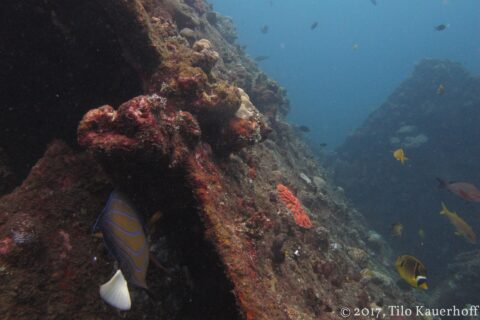 IndonesiaShore dive
USAT Liberty wreck
Bali and Nusa PenidaPeak season all year round: on the sea fans on the hull, between 12 and 25 m, pointed out by the guide
How do you identify a pygmy seahorse?
Bargibant's pygmy seahorse is one of the smallest seahorses known: 2.4 centimeters at most from head to tail tip, about the size of a fingernail. The snout is short, the eyes bulge, and the body is covered in bulbous growths that copy exactly the polyps of the sea fan it lives on; the prehensile tail stays wrapped around a branch. It comes in two color forms that follow the host: a gray-white body with red patterns and tubercles on red sea fans, a whitish body with yellow tubercles on yellow sea fans. To the naked eye it is impossible to tell apart from its perch. You spot it by the outline of its head in profile, and by the slight movement it makes to turn away from your light. Other pygmy seahorses, such as Hippocampus denise and Hippocampus pontohi, live in the same waters: Bargibant's is the stockiest and the only one with these large tubercles.
How does the pygmy seahorse live?
It spends its whole life on a single sea fan, Muricella plectana or Muricella paraplectana, between 16 and 40 meters deep, in the tropical waters of the central Indo-Pacific, from Indonesia and the Philippines to southern Japan, Australia and New Caledonia. It feeds on small crustaceans, drifting fish eggs and other plankton that it sucks in as they pass. As in all seahorses, the male carries the eggs: the female lays them in his brood pouch, whose walls are laced with capillaries that feed the embryos like a placenta, and the young come out fully formed and independent from birth. Several individuals, often a pair or a small group, share the same sea fan.
Where and when can you see pygmy seahorses in Indonesia?
It is there all year, wherever Muricella sea fans grow below 16 meters. In Raja Ampat, look on the sea fans of the Cape Kri slope and the top of Blue Magic, and on the walls of Magic Mountain in Misool. In North Sulawesi, it lives on the Lekuan walls of Bunaken and on the sea fans of the Lembeh Strait, at Nudi Retreat in particular. In Bali, it lives on the sea fans of the Liberty wreck's hull, between 12 and 25 meters. You won't find it on your own: guides know every inhabited sea fan and point the animal out with a stick, from a distance, so that everyone can spot it. A prescription mask or a small magnifying glass helps, and you stay just long enough for a photo or two before making room for the next diver.
Is the pygmy seahorse endangered?
The pygmy seahorse was discovered by chance: diver Georges Bargibant, who was collecting sea fans for the Nouméa aquarium in New Caledonia, found some clinging to a branch. René Catala, the aquarium's founder, proposed naming the species after him, and it was described in 1970. It has since been found throughout the Coral Triangle, but it is so discreet that its populations remain unknown: the IUCN lists it as Data Deficient, and CITES lists it, like all seahorses, in its Appendix II, which regulates trade. Its only real threat is the loss of its sea fans, to anchors, fins or trawl nets.
Our tip
Let the guide find it, then move in slowly, one person at a time, without ever touching the sea fan or making it sway. Two or three photos are enough: repeated flash stresses it and it turns its back to the lens, so a narrow-beam light works better. Watch your buoyancy, because one fin kick on the sea fan destroys its only shelter.