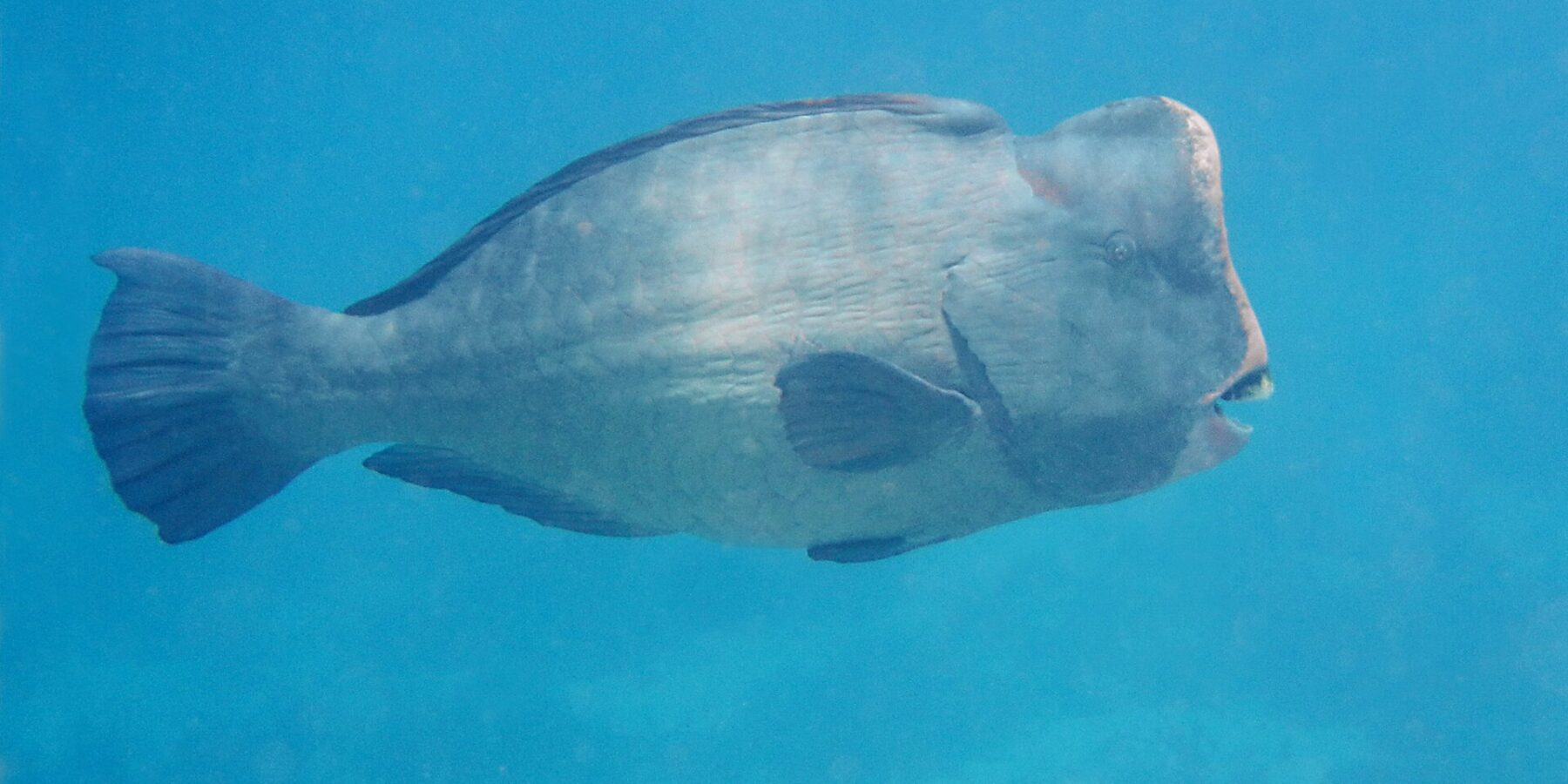
The bumphead parrotfish is the largest of the parrotfish, a coral grazer over a meter long with a bulging forehead that sleeps at night in caves and wrecks. You see it leave the USAT Liberty at dawn and pass in groups in Raja Ampat; listed as Vulnerable, it is caught at night while it sleeps.
Where to dive to see the bumphead parrotfish?
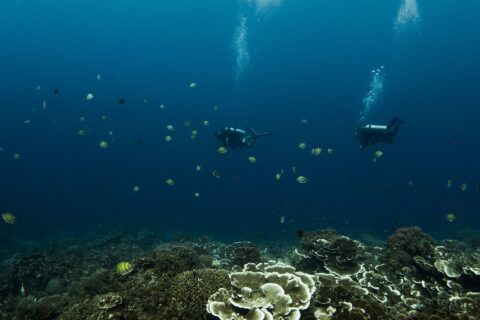
 PhilippinesReef
Apo Island
Visayas: Cebu, Bohol and NegrosCan be seen all year round: along the Chapel wall
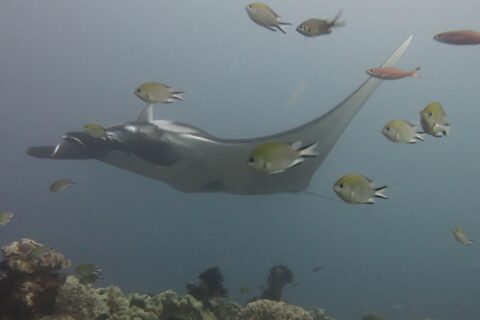
 IndonesiaPelagic
Blue Magic
Raja AmpatCan be seen all year round: passing over the plateau
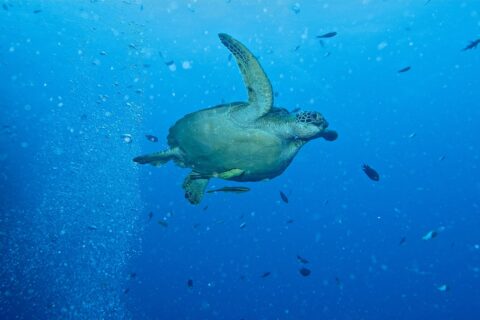 IndonesiaReef
Bunaken, Lekuan walls
Sulawesi: Bunaken and LembehCan be seen all year round: in small groups on the upper reef
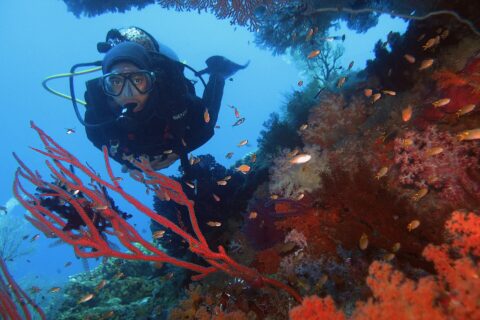 IndonesiaReef
Cape Kri
Raja AmpatCan be seen all year round: small groups passing over the plateau
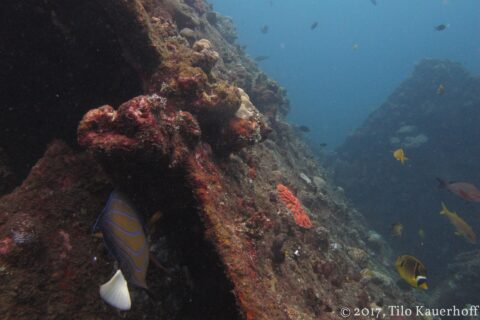 IndonesiaShore dive
USAT Liberty wreck
Bali and Nusa PenidaPeak season all year round: schooling at dawn: they sleep in the wreck and leave it at first light
How do you identify a bumphead parrotfish?
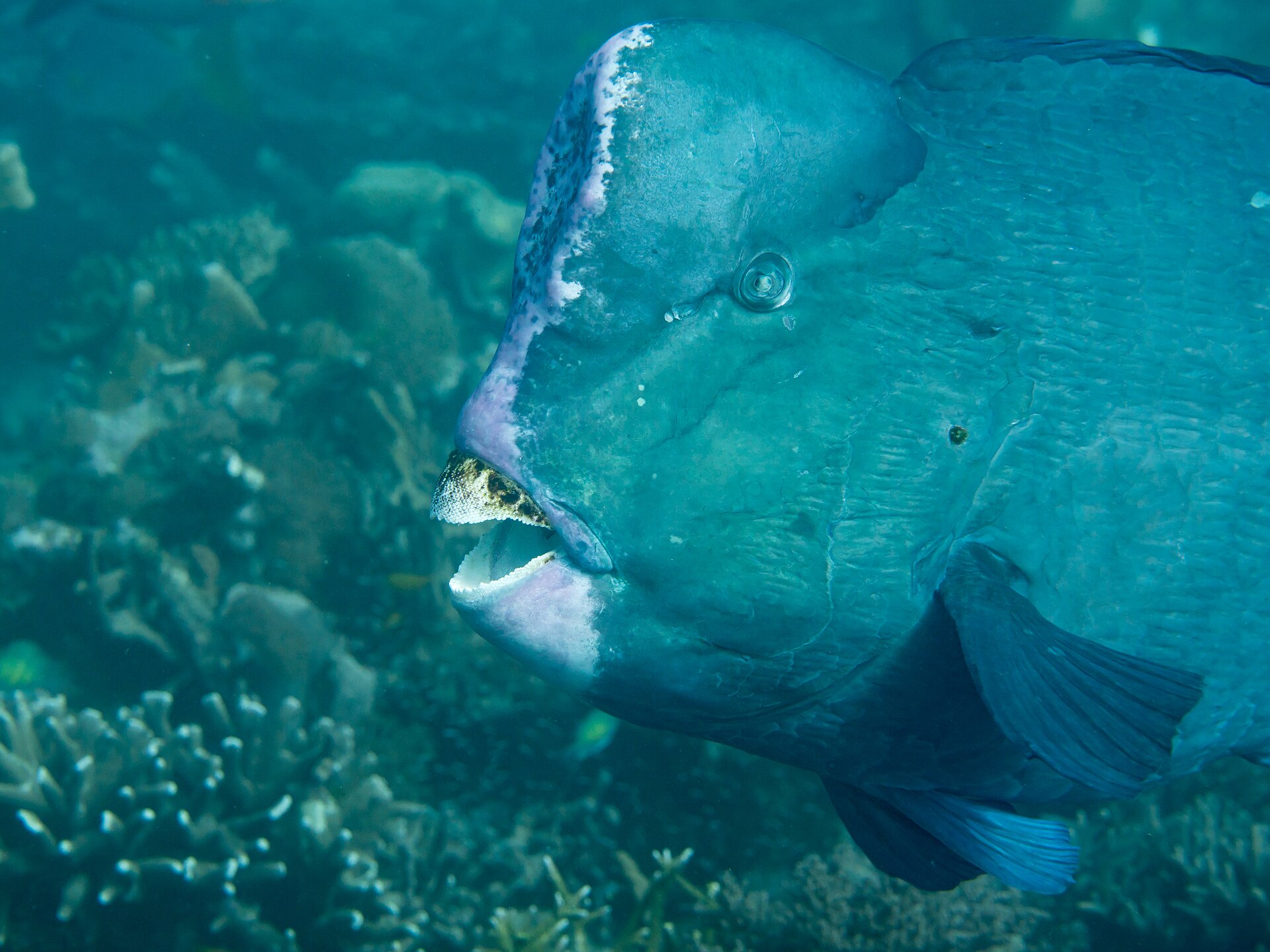
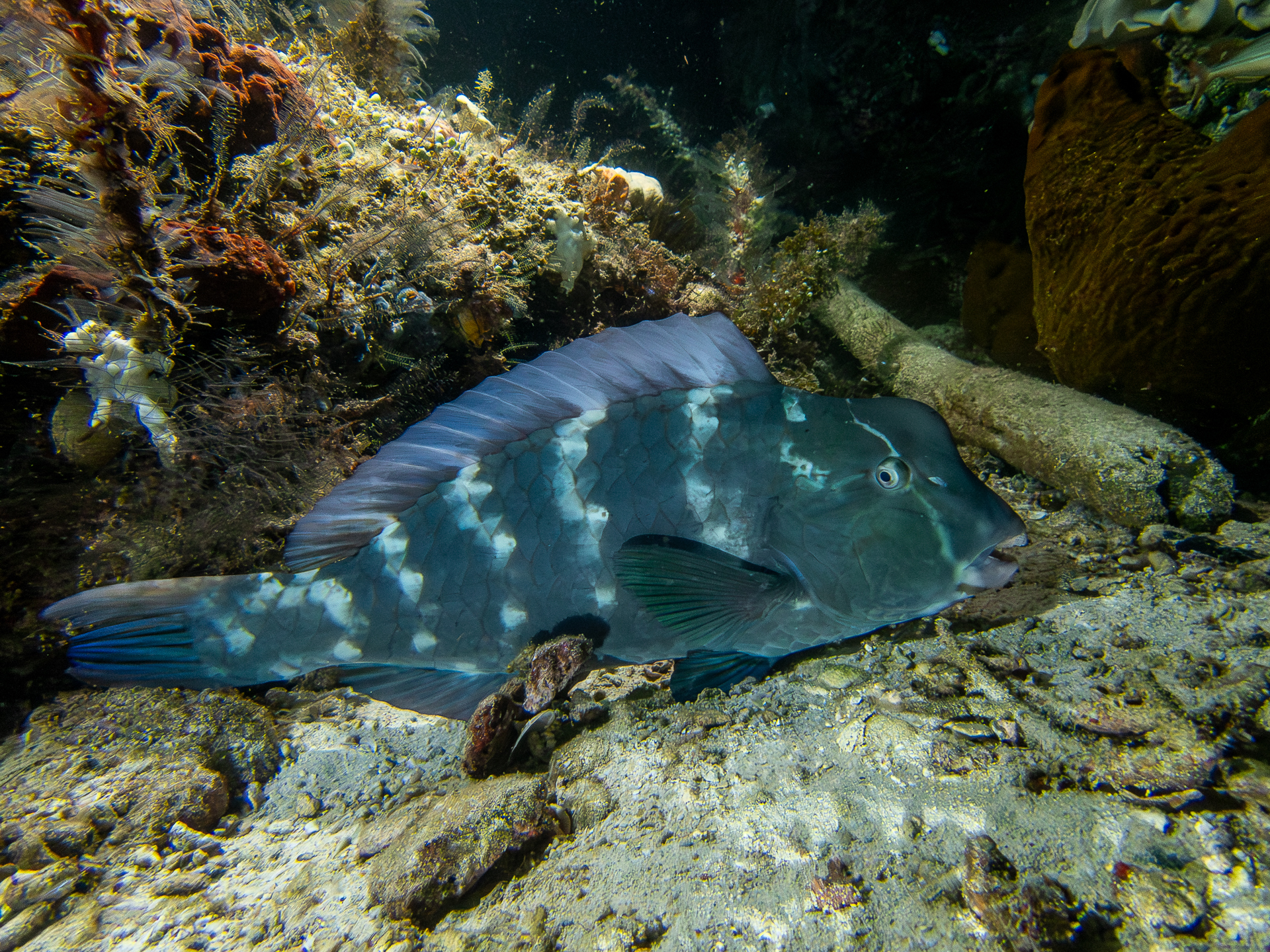
The bumphead parrotfish is the largest of the parrotfish and the only member of its genus: usually 70 centimeters, up to 1.30 meters and 46 kilos, and the largest ever reported reached 1.50 meters and 75 kilos. The head profile is vertical, and the adult has a fleshy hump on its forehead that gave it its name. The tooth plates are exposed, barely covered by the lips. The adult is a uniform dark green, with no color difference between males and females. The juvenile is dull gray, scattered with five vertical rows of white dots, and turns green as it grows.
Bumphead parrotfish in pictures
How does the bumphead parrotfish live?
It lives on Indo-Pacific reefs, from the Red Sea and East Africa to Samoa, and from southern Japan to the Great Barrier Reef, from the surface to 40 meters; juveniles grow up in lagoons, among branching corals and seagrass beds. It grazes on algae and live coral, which it breaks with its tooth plates, sometimes by ramming the coral head. Each adult takes in more than five tons of reef carbonate a year and passes it out as sand, which makes it one of the great agents of reef erosion. Social, it moves in small schools, sometimes of more than 75 fish, and sleeps in groups at night in caves, under overhangs and in wrecks. It grows slowly, lives up to 40 years and breeds late, spawning in open water at the edge of the outer reef wall, just before the new moon, at fixed gathering sites. Males fight ritual head-to-head battles.
Where and when can you see bumphead parrotfish in Indonesia and the Philippines?
The place to meet them is the USAT Liberty wreck, at Tulamben in Bali: bumphead parrotfish sleep in the wreck and leave it as a school at sunrise, all year. Elsewhere, you are more likely to see them passing through in small groups, all year: on the plateau of Blue Magic and Cape Kri, in Raja Ampat; on the reef top of the Lekuan walls, at Bunaken; along the Chapel wall, at Apo Island, in the Philippines.
Is the bumphead parrotfish endangered?
The bumphead parrotfish is listed as Vulnerable on the IUCN Red List. Its size, slow growth and habit of sleeping in groups make it an easy target: spearfishers and net fishers take whole schools at night while they sleep, and the juveniles' nurseries suffer from pollution and from logging that silts up the lagoons. American Samoa has banned spearfishing on scuba since 2001, Palau bans its export, and Wake, Johnston and Palmyra atolls protect it in their marine areas.
Our tip
Approach the school at an angle, without finning toward it: the bumphead parrotfish is shy and the group moves off at the first sudden movement. On the USAT Liberty, get in the water before sunrise to see it leave the wreck. Don't shine a light in its eyes and don't touch it if it is sleeping under an overhang.