The Lembeh Strait, between Sulawesi and Lembeh Island, is the capital of muck diving on black volcanic sand, with more than sixty sites. Guides find frogfish, mimic octopus and pygmy seahorses year-round, and mandarinfish put on their display at dusk.
Why dive the Lembeh Strait?
- The world capital of muck diving: more than sixty sites on black volcanic sand
- Hairy frogfish, mimic octopus, flamboyant cuttlefish, pygmy seahorses and dozens of nudibranchs
- Guides who find in one dive what you would search for all week elsewhere
- Year-round, no current, from Open Water level, ten minutes by boat from the resorts
- Night dives and the mandarinfish dive at dusk, the richest of the trip
The Lembeh Strait in pictures
What will you see at the Lembeh Strait?
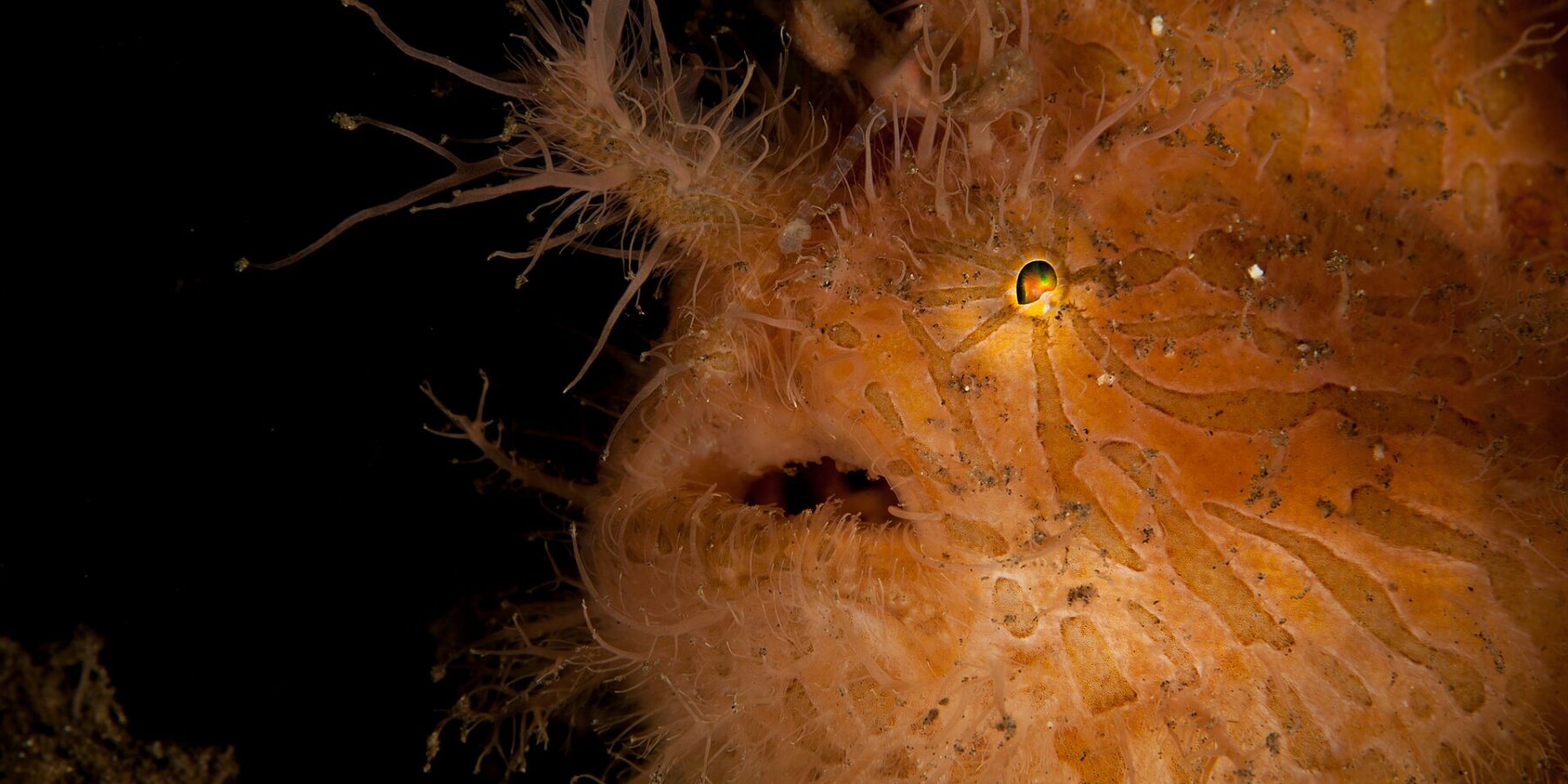
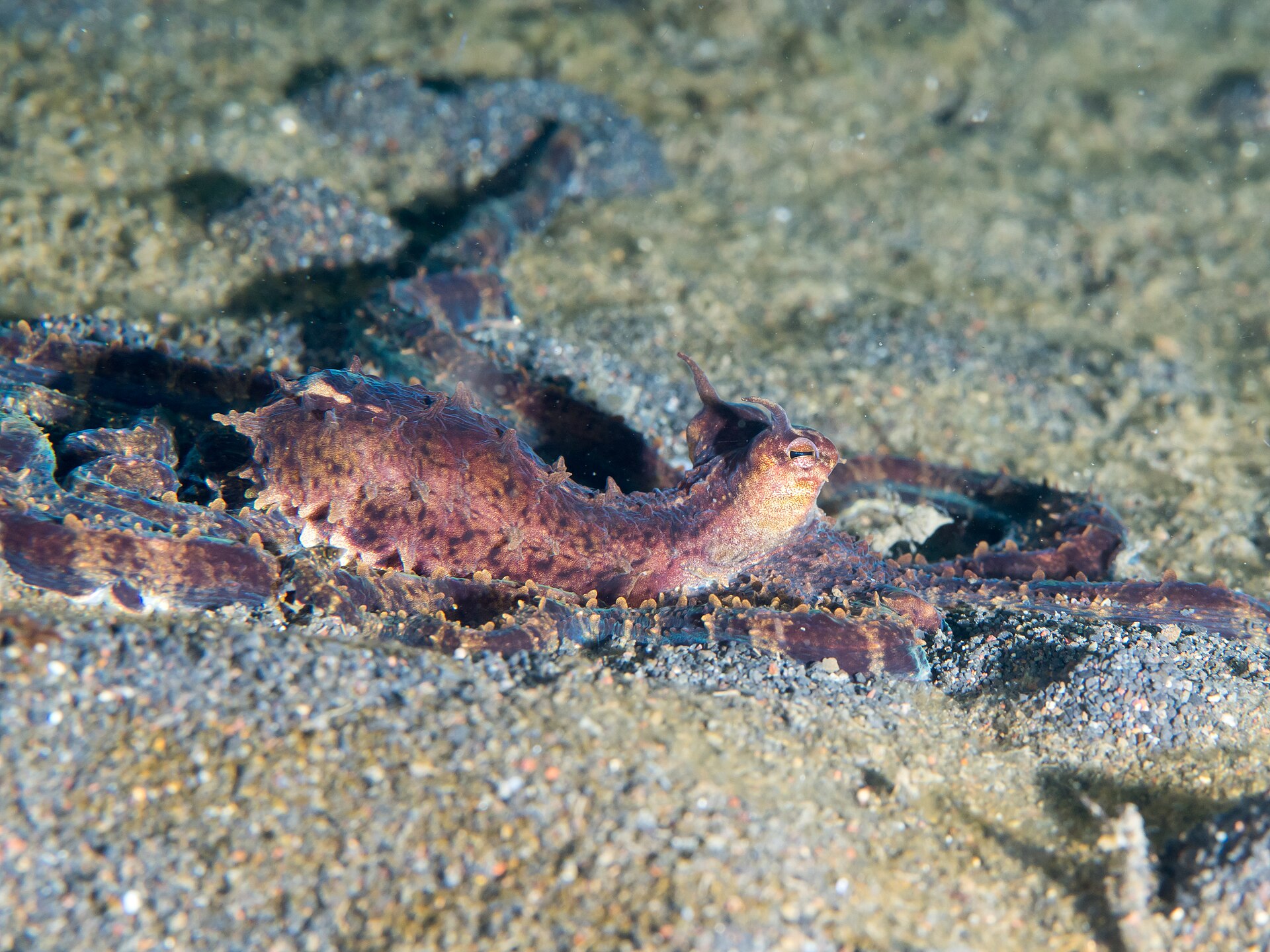
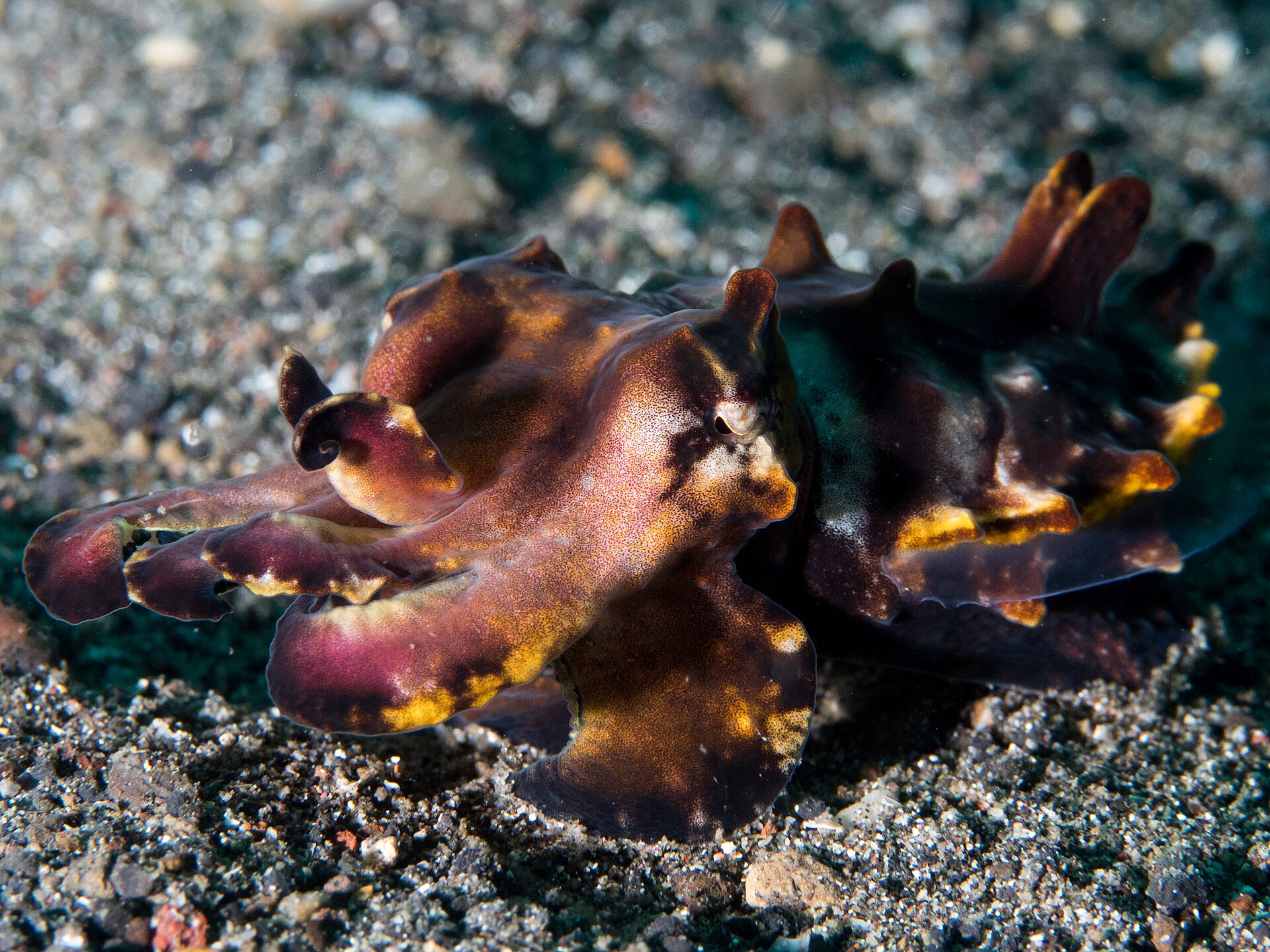
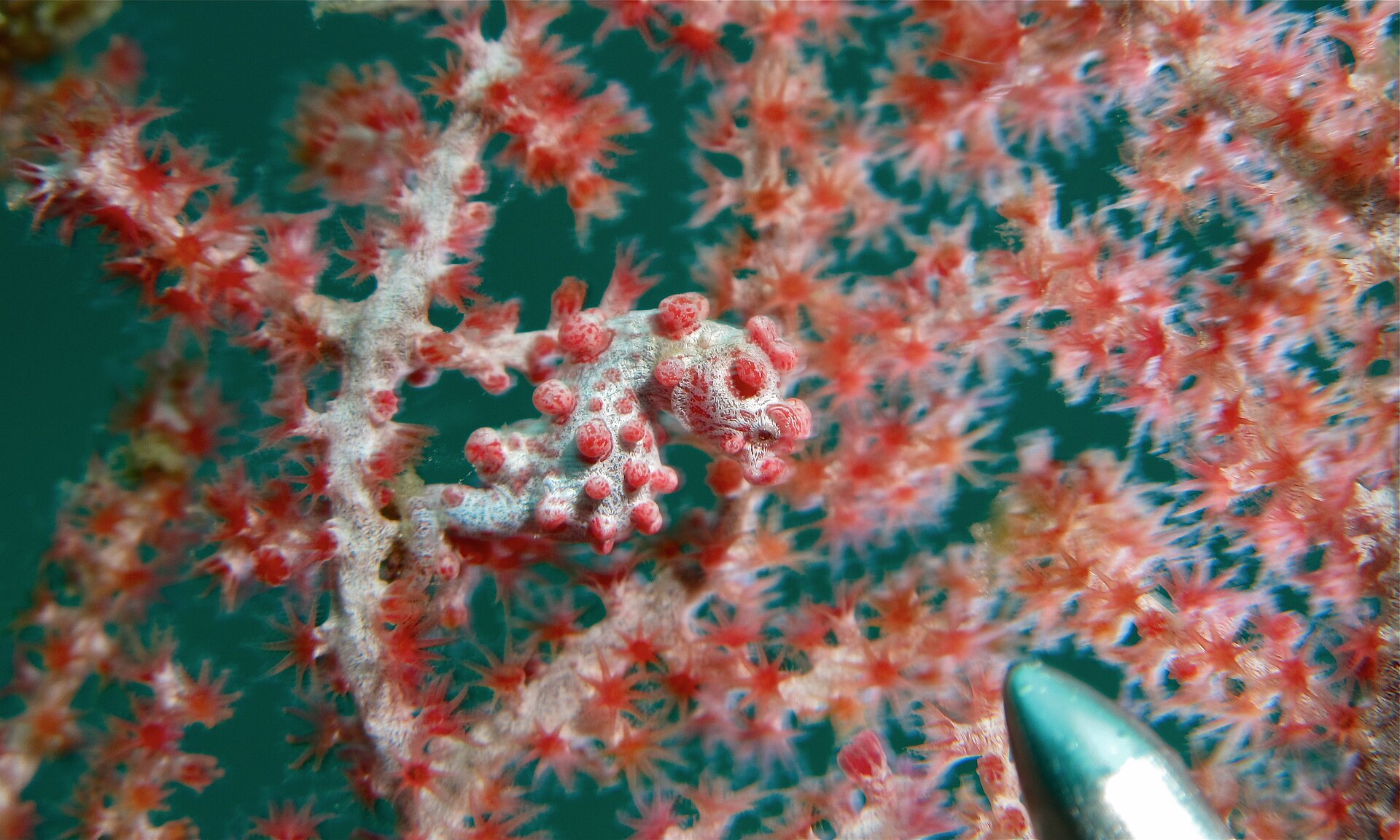
Lembeh looks like nowhere else. The bottom is black volcanic sand, scattered with rubble, a few boulders, jetties and a little coral, and it's precisely this barren setting that concentrates marine life you won't see anywhere else at such density. The hairy frogfish, covered in filaments and sitting on the sand with its lure raised, is the strait's emblem; other frogfish come in every color on the sponges. The mimic octopus and the wonderpus leave their burrows in the morning and evening; the flamboyant cuttlefish walks along the bottom with colors rippling across its body; nudibranchs, which made the site's reputation as early as the 1990s, number dozens of species per dive. Add pygmy seahorses on the sea fans of the few slopes, ghost pipefish in the crinoids, orangutan crabs, harlequin shrimp, mantis shrimp, ribbon eels, bluespotted ribbontail rays and, at dusk, mandarinfish displaying in the rubble. All these species are there year-round: the seasons change visibility and behavior, not the encounters.
| Species | J | F | M | A | M | J | J | A | S | O | N | D | Note |
|---|---|---|---|---|---|---|---|---|---|---|---|---|---|
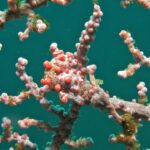 Pygmy seahorse | peak season | peak season | peak season | peak season | peak season | peak season | peak season | peak season | peak season | peak season | peak season | peak season | on the sea fans of the strait's few coral slopes, especially at Nudi Retreat |
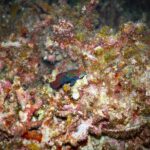 Mandarinfish | peak season | peak season | peak season | peak season | peak season | peak season | peak season | peak season | peak season | peak season | peak season | peak season | displaying at dusk in the coral rubble, on the dive centers' mandarin dive |
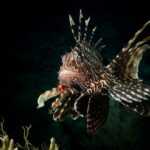 Lionfish | peak season | peak season | peak season | peak season | peak season | peak season | peak season | peak season | peak season | peak season | peak season | peak season | on isolated boulders and jetty pilings |
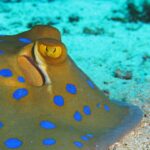 Bluespotted ribbontail ray | peak season | peak season | peak season | peak season | peak season | peak season | peak season | peak season | peak season | peak season | peak season | peak season | resting on the black sand |
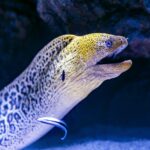 Giant moray | peak season | peak season | peak season | peak season | peak season | peak season | peak season | peak season | peak season | peak season | peak season | peak season | among the boulders and rubble, with ribbon eels |
| Frogfish, including the hairy frogfish | peak season | peak season | peak season | peak season | peak season | peak season | peak season | peak season | peak season | peak season | peak season | peak season | sitting on the sand or on sponges, year-round; the strait's emblem species |
| Mimic octopus and wonderpus | peak season | peak season | peak season | peak season | peak season | peak season | peak season | peak season | peak season | peak season | peak season | peak season | on bare sand, often shallower than 15 m, seen mostly in the morning and late in the day |
| Flamboyant cuttlefish | peak season | peak season | peak season | peak season | peak season | peak season | peak season | peak season | peak season | peak season | peak season | peak season | walks across the sand changing color; higher up the slopes in the warm months |
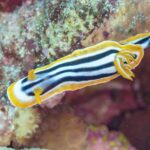 Nudibranchs | peak season | peak season | peak season | peak season | peak season | peak season | peak season | peak season | peak season | peak season | peak season | peak season | dozens of species per dive, the strait's original specialty |
| Crustaceans: orangutan crabs, harlequin shrimp, mantis shrimp | peak season | peak season | peak season | peak season | peak season | peak season | peak season | peak season | peak season | peak season | peak season | peak season | in anemones, under rubble and in burrows in the sand |
| Ghost pipefish, pipefish and other syngnathids | peak season | peak season | peak season | peak season | peak season | peak season | peak season | peak season | peak season | peak season | peak season | peak season | in crinoids and algae; look for them with your guide |
peak seasonpossiblerare
What is diving like at the Lembeh Strait?
The sites in the strait are slopes of black sand and rubble that start at the shore and descend gently; most of the action is between 5 and 25 m, and the most sought-after subjects, octopus and cuttlefish, often stay shallower than 15 m. Current is light to moderate, the sites are sheltered, and visibility runs from 10 to 20 m and doesn't matter: you dive slowly, a few centimeters off the bottom, behind a guide who searches and points. Open Water is enough, but perfect buoyancy is essential, and dive centers run a checkout dive on arrival. The water, 25 to 29°C depending on the season, calls for a 3 to 5 mm wetsuit for long, motionless dives. The jetty pilings, the few coral slopes and the walls on the Lembeh shore add more classic dives, and night dives are done on the same sites, at shallow depth.
When to dive the Lembeh Strait?
idealgoodnot recommended
The strait can be dived year-round, and the animals don't migrate. The dry season, March to October, brings calm seas and the most stable conditions; visibility is best from October to December, between 15 and 20 m, and drops to around ten meters during the December to February rains, which hardly matters on a dive where you're looking at things twenty centimeters away. The water holds at 28 to 29°C from October to March and drops to 25 or 26°C in July and August, one or two degrees below Bunaken, on the other side of the peninsula: these cooler months bring some species, cuttlefish above all, toward the top of the slopes, and photographers love them for it. Night dives are productive in every season. July to September is the busiest period, and the resorts, which are small, book up several months ahead.
How to get to the Lembeh Strait?
The Lembeh Strait separates Lembeh Island from the Sulawesi coast, behind the port of Bitung, at the foot of the Tangkoko volcano. From Manado airport, served from Jakarta and Bali, it's 60 to 90 minutes by road to Bitung and then ten minutes by boat to the resorts, which sit on both shores facing their sites. Two Fish Divers Lembeh sells a single dive for IDR 900,000, the two morning dives for IDR 1,650,000, a third dive for IDR 750,000 and a night or mandarin dive for IDR 900,000, tank, boat and guide included; its full-board cottages cost IDR 1,000,000 to 1,100,000 per person per night. Divers Lodge Lembeh charges €25 for a day dive and €35 for a night dive, at May 15, 2026 rates; Lembeh Resort, more upscale, charges US$59 per dive on air and US$66 on Nitrox. Two Fish links its Lembeh and Bunaken resorts in three hours by boat and road, so you can combine macro and walls.
Stay in Bitung
Where to stay near the Lembeh Strait?
Hotels, apartments and rooms around Bitung, with current prices.
Why is the sand black in the Lembeh Strait?
The strait is lined with volcanoes, led by Tangkoko north of Bitung, and its bottom is made of their ash: a fine black sand that absorbs light and against which every animal stands out, for those who know how to look. There is no big reef to shelter life, so life has adapted to the bare bottom: extreme camouflage, burrows, mimicry, poisons and warning colors. This is where the first macro photography expeditions began, in the 1990s, around nudibranchs, and where muck diving, diving in the muck, became a discipline in its own right. Today, resorts line both shores, and the guides, trained to search rather than show off a reef, are the place's real treasure.
What is a typical day of diving in Lembeh?
The boat leaves after breakfast for two morning dives at two sites, a few minutes from the resort, and returns for lunch. You dive in single file behind the guide, usually shallower than 15 m, stopping at each subject the guide points out: a frogfish on a sponge, an octopus in its hole, a shrimp in an anemone, a pipefish in a crinoid. The afternoon brings a third dive, then, at dusk, the mandarin dive: you settle in front of a pile of coral rubble and wait, light dimmed, for the mandarinfish to rise and display in pairs. At night, the same sites change residents: cuttlefish, octopus, crabs, shrimp and sleeping fish, and the fluorescence of the corals under a blue light.
How do you shoot macro in the Lembeh Strait?
Lembeh is a macro destination, and photographers come for five days or more. A 60 or 100 mm macro lens, a strobe with a diffuser, a focus light and, for the smallest subjects, a diopter are all you need; in low visibility, work as close to the subject as possible to limit particles in the beam. Avoid stirring up the bottom, touch and move nothing, and share the subject: guides rotate divers in front of each animal. For video, a continuous light and slow movements give better results than a quick approach that sends the octopus back into its hole.
Our tip
Bring a macro lens and a focus light. Keep your fins off the sand: one kick raises a cloud that ruins everyone's photo. Book the dusk mandarinfish dive and a night dive.
Other dive sites nearby
 IndonesiaReef
Bunaken, Lekuan walls
Sulawesi: Bunaken and Lembeh IndonesiaReef
Cape Kri
Raja Ampat IndonesiaPelagic