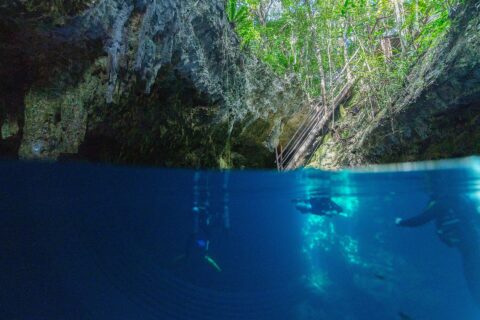
Mexico is the land of cenotes, the jungle sinkholes where scuba diving takes you under the rock. At Dos Ojos, you enter Sac Actun, the longest underwater cave system in the world. On the Pacific side, the young sea lions of Los Islotes nibble your fins, and the giant mantas of Socorro glide above you.
Why dive Mexico?
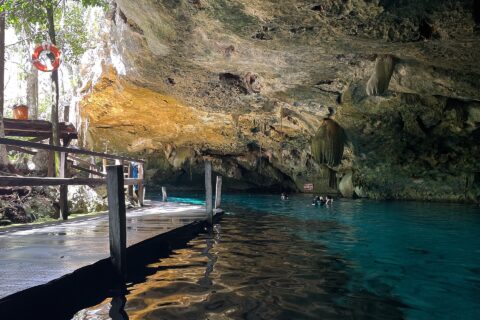
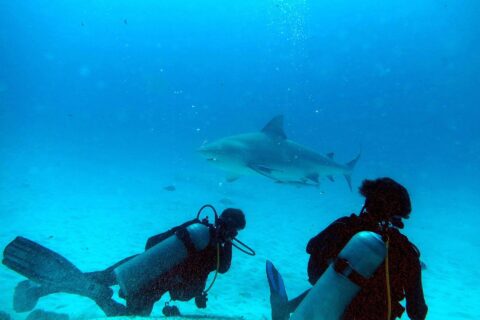
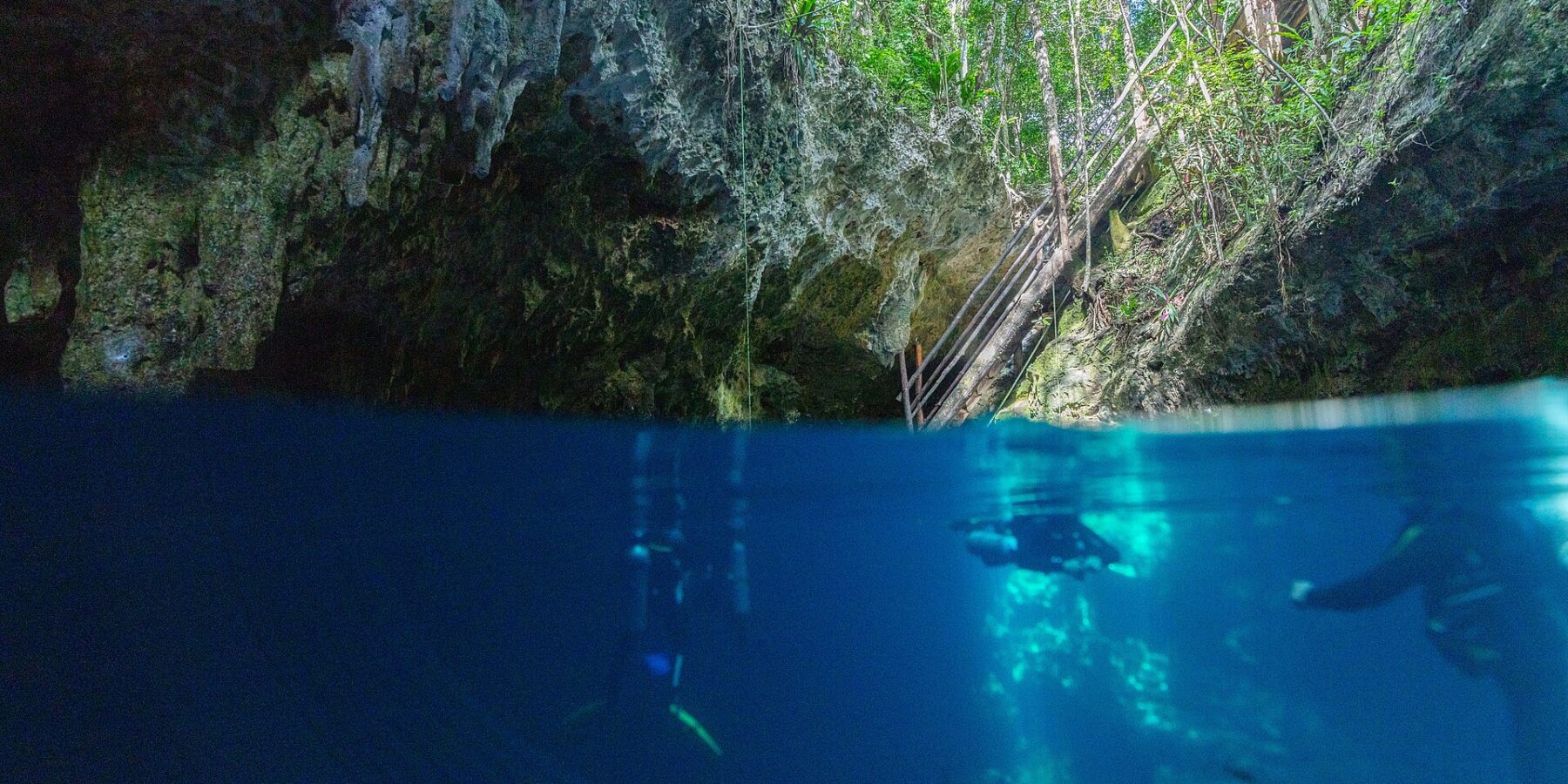
At Dos Ojos cenote, you walk down a staircase in the middle of the jungle and enter the flooded passages behind a guide trained in cave diving. Open Water is enough, because you stay where daylight reaches, along a permanently fixed guideline. On the same coast, bull sharks 2 to 3 meters long return every winter off the beach at Playa del Carmen.
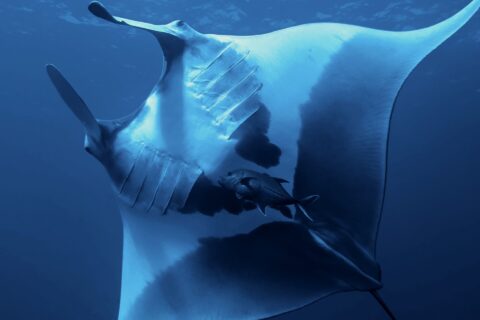
The groupers of Cabo Pulmo have grown back to the size of a diver since the village fishermen won a national park. At Socorro, the oceanic mantas of the El Boiler pinnacle stay around you for twenty to thirty minutes. They live in the archipelago, which is also closed to fishing.
Where should you dive in Mexico?
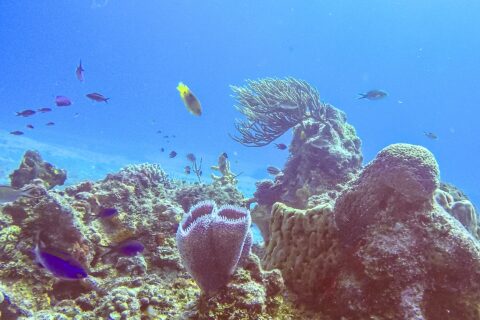
In the Yucatán, stay in Playa del Carmen, where bull sharks gather from November to March. An hour's drive away, Dos Ojos cenote is made for a first cavern dive, at less than 10 meters. With Advanced, you descend into the neighboring cenote, The Pit, to 30 or 40 meters, where a cloud of hydrogen sulfide hangs like fog. After 35 to 45 minutes on the ferry, you are in Cozumel, where the current carries you along the reef. On Palancar Reef, the section called Gardens suits even beginners. Santa Rosa Wall, deeper, is for Advanced divers only.
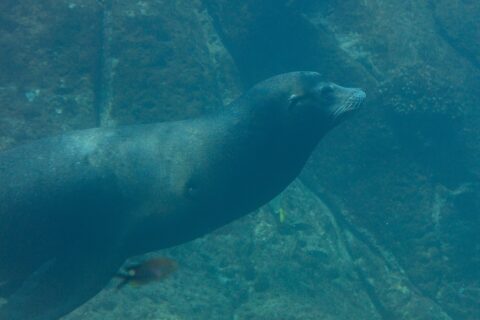
From La Paz, in the Sea of Cortez, a small boat reaches the sea lions of Los Islotes in 45 minutes. There is no current, and Open Water is enough, as on most sites at Cabo Pulmo, farther south. There, you swim through tornadoes of jacks, and bull sharks circle the El Vencedor wreck, mostly between late summer and December.
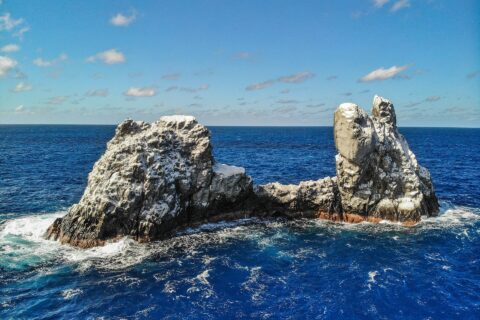
You can only reach Socorro by liveaboard, after a 24 to 36 hour crossing from Cabo San Lucas. The park requires Advanced. The mantas come to be cleaned at El Boiler, at San Benedicto. At Roca Partida, an isolated rock in the current, dozens of whitetip reef sharks sleep in the hollows of the wall. Hammerheads pass in schools in the blue.
When is the best time to dive Mexico?
From December to February, bull sharks are most numerous at Playa del Carmen. In Cozumel, eagle rays then cruise along the walls, where visibility often exceeds 30 meters. The sea, though, only calms down in spring. From April to October, sargassum washes up on the mainland, without reaching the cenotes or the west coast of Cozumel. The cenotes are brightest in summer, when the sun is high.
At Socorro, you hear humpback whales singing on every dive from late January to early April, but the water is at its coldest. For mantas, aim for April and May, or November to January.
Los Islotes closes from June to the end of August, when the sea lions breed. From September to November, that year's pups are at their most playful. In winter, plankton clouds the water off La Paz, and you snorkel with the bay's whale sharks.
How much does a dive trip to Mexico cost?
On land, some Cozumel dive centers charge the national park wristband separately, about €11 a day. For the cenotes, a fee of about €44 covers The Pit and Dos Ojos, and it is not always included in the price. A bull shark trip costs about €105 for two dives without bait. The baited dive costs €175, and the sharks then pass a meter from you.
For a dive liveaboard to Socorro, the cheapest boats start at US$323 a day. On the Nautilus Explorer, park fees and transfers are included. Tips add another US$500, Nitrox US$120 and the port tax US$35.
What do you need to know before diving in Mexico?
In the cenotes, you carry two lights, and your last dive must be less than a year old. Bring a 5 millimeter wetsuit, because even at 25 °C, the water chills you fast when you move little.
The bull shark dive requires Advanced, but Phantom Divers accepts Open Water divers with twenty logged dives. Winter wind sometimes cancels it, so book it early in your stay. Cozumel's park bans gloves and sunscreen with chemical filters.
At Los Islotes, you let the sea lions come to you without touching them. During whale season, Socorro calls for a hood and a 5 to 7 millimeter wetsuit. Most boats require dive insurance. In case of an accident, the nearest hyperbaric chamber is in Cabo San Lucas, more than a day's sailing away.
 MexicoReef