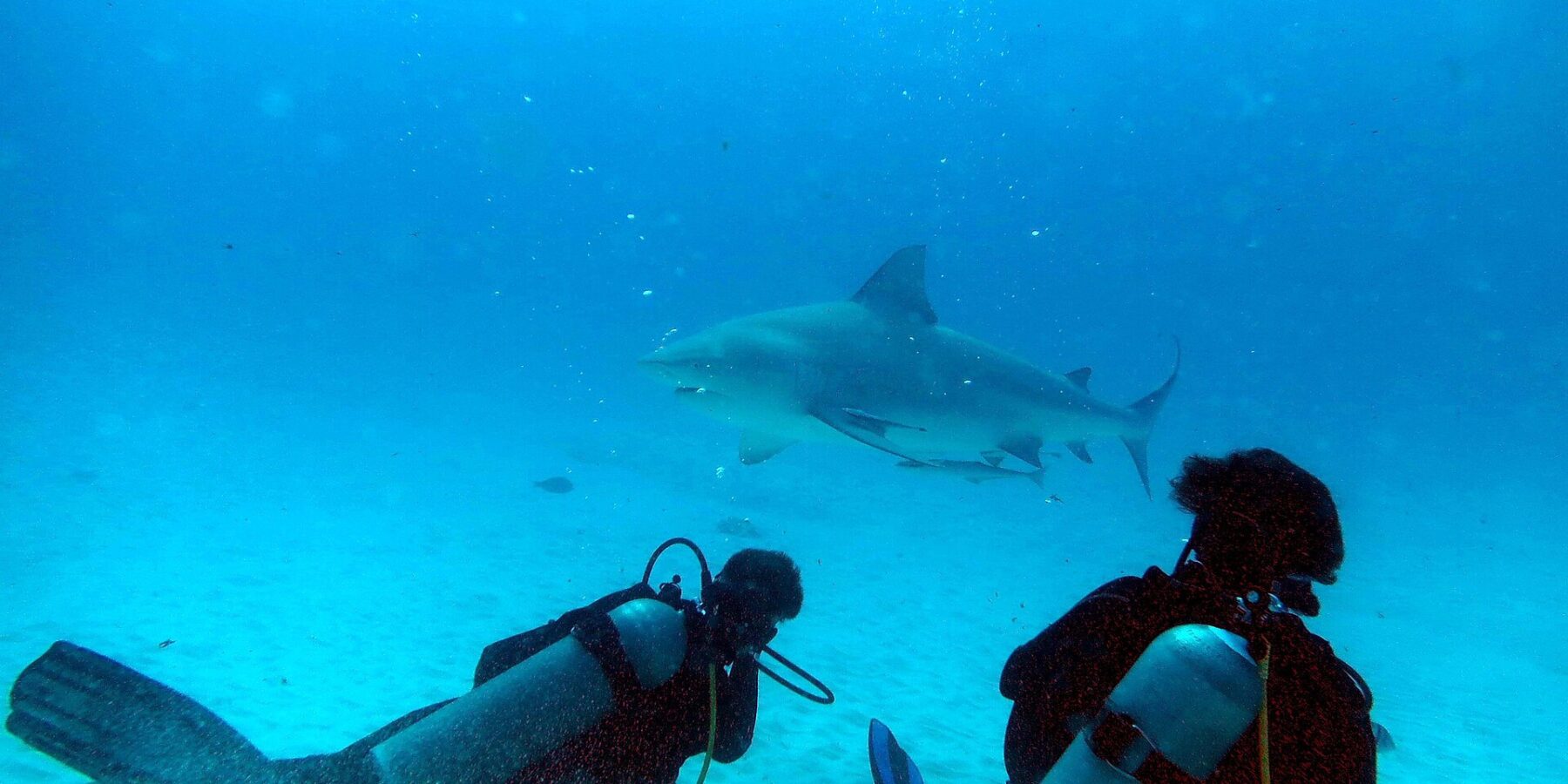
The Playa del Carmen bull sharks are females, often pregnant, that gather on the sand at 18 to 25 meters from November to March. You watch them while kneeling on the bottom for 45 minutes, with or without bait. Dive centers ask for Advanced or twenty dives.
Why dive the Playa del Carmen bull sharks?
- Bull sharks of 2 to 3 meters a few meters from divers, from November to March
- Mostly females, some of them carrying pups
- A static, supervised dive, open to Advanced divers or anyone with twenty dives
- A choice between the baited encounter and the no-feeding version
- A site a few minutes from the beach, an hour from Cancún airport
The dive site on the map
Base: Playa del Carmen, 3 km as the crow flies.
See nearby dive sites on the mapThe Playa del Carmen bull sharks in pictures
What will you see at the Playa del Carmen bull sharks?
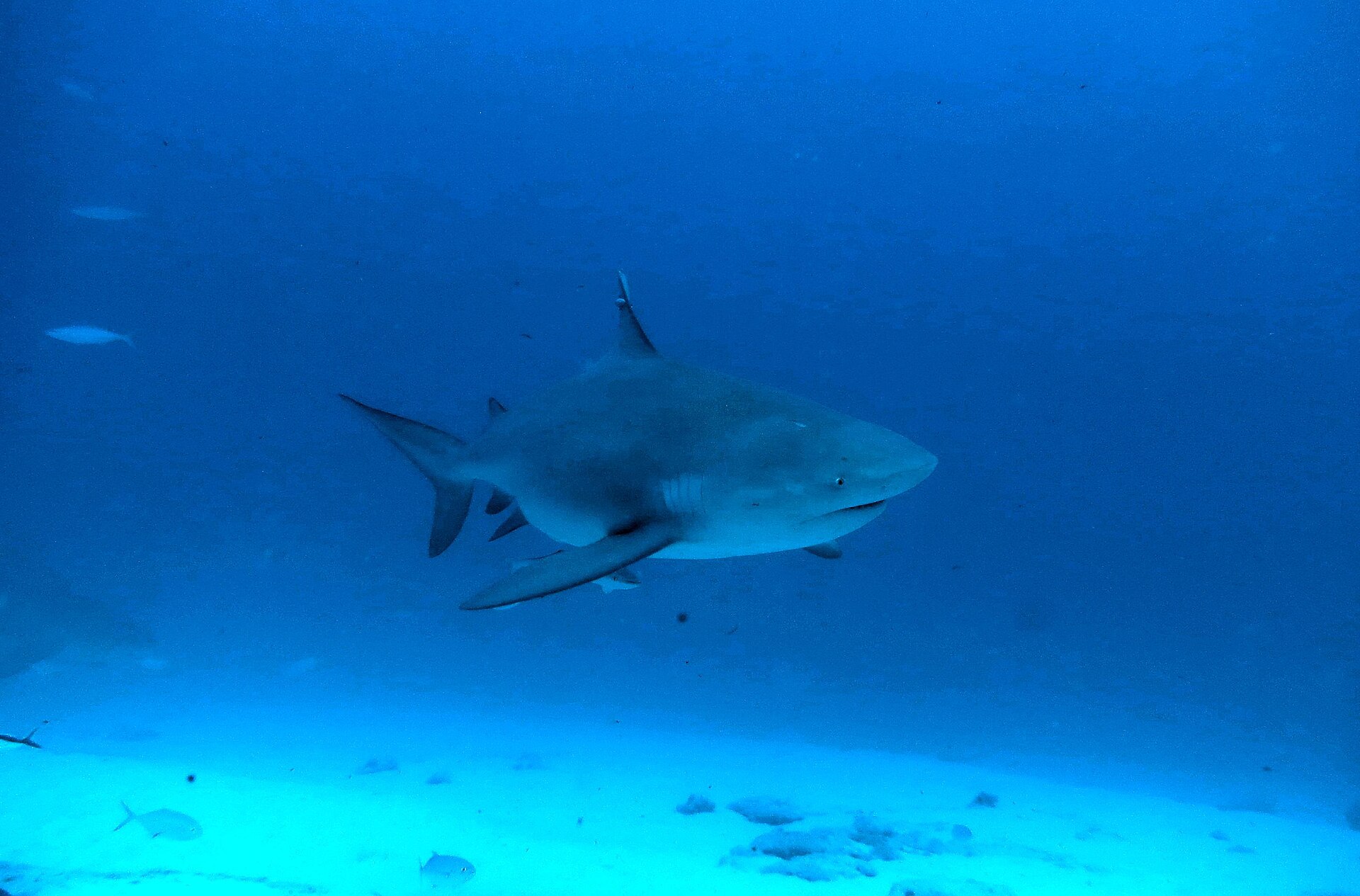
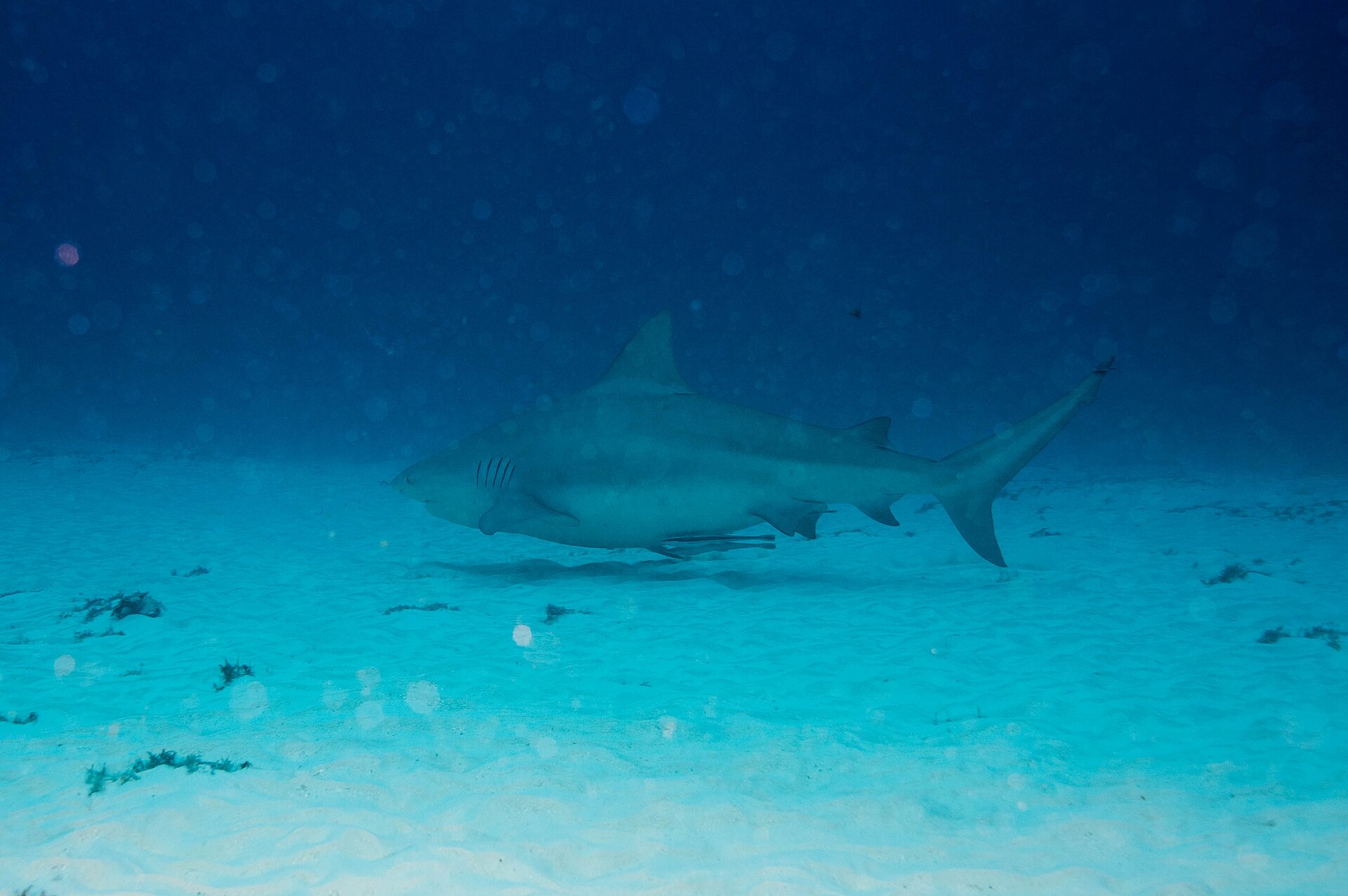
The site is sand at 18 to 25 meters, with bull sharks circling divers in winter, from a few animals to around ten depending on the day. Almost all are females of 2 to 3 meters, and some of them are carrying pups: ultrasounds done on site, on free-swimming animals, have shown embryos in several of them. They arrive when the water drops below 26 °C, in November, and leave in March for the lagoons and estuaries where they give birth. The same individuals come back year after year, recognized by their scars and fins, and a photo catalog tracks them. Around them are remoras, jacks taking advantage of the bait, stingrays on the sand, and on the nearby Playa reefs, at 10 to 20 meters, turtles, groupers, spiny lobsters and schools of grunts.
| Species | J | F | M | A | M | J | J | A | S | O | N | D | Note |
|---|---|---|---|---|---|---|---|---|---|---|---|---|---|
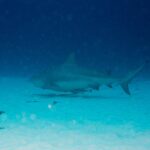 Bull shark | peak season | peak season | peak season | rare | rare | rare | rare | rare | rare | rare | peak season | peak season | females, often pregnant, from November to March, peaking from December to February |
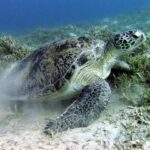 Green turtle | possible | possible | possible | possible | possible | possible | possible | possible | possible | possible | possible | possible | on the reefs near Playa, during the reef dive |
| Southern stingrays | peak season | peak season | peak season | peak season | peak season | peak season | peak season | peak season | peak season | peak season | peak season | peak season | on the sand around the sites, year-round |
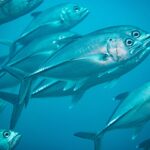 Bigeye trevally | peak season | peak season | peak season | possible | possible | possible | possible | possible | possible | possible | peak season | peak season | around the bait box and sticking close to the sharks |
| Remoras | peak season | peak season | peak season | possible | possible | possible | possible | possible | possible | possible | peak season | peak season | around the bait box and stuck to the sharks |
| Groupers, spiny lobsters and grunt schools | peak season | peak season | peak season | peak season | peak season | peak season | peak season | peak season | peak season | peak season | peak season | peak season | on the Playa reefs, at 10 to 20 meters |
peak seasonpossiblerare
What is diving like at the Playa del Carmen bull sharks?
The bottom is a flat sand plateau: 18 meters for the unbaited dive, done as a gentle drift, and 24 meters for the baited dive, which is static. The group descends along a line, kneels in a row on the sand and stays put; the guide opens the bait box, and the sharks circle, pass in front of the divers and come back. The current is usually weak, but sometimes it picks up and the dive turns into a drift over the sand. What matters most is elsewhere: stay in your spot, never swim toward a shark, keep your hands close to your body and watch your air, because 45 minutes at 24 meters empties a tank fast. Phantom Divers asks for Advanced or twenty dives, Koox Diving for Advanced, and it limits you to one deep dive with the sharks per trip.
When to dive the Playa del Carmen bull sharks?
idealgoodnot recommended
The shark season runs from November to March, peaking from December to February: the females arrive as the water cools below 26 °C and leave in spring. Out of season, the dive is not sold, and dive centers pull it as soon as the sharks become scarce. The water is 26 to 27 °C from December to March; bring a 3 or 5 millimeter wetsuit, because you stay still on the bottom for three quarters of an hour. Visibility holds at 15 to 30 meters. The nortes, the winter north winds, cloud the water and get trips canceled for a day or two. The rest of the year, Playa del Carmen dives its reefs and works mostly as a base for the cenotes and for Cozumel, across the channel.
How to get to the Playa del Carmen bull sharks?
The sites are off the beach at Playa del Carmen, a few minutes by boat south of the Cozumel ferry pier; you board from the sand, tank on your back. Phantom Divers, the first dive center to offer these dives, sells the baited encounter, Bull Shark Encounter, for MXN 3,560, about €175, and the unbaited version, Bull Shark Discovery, two dives for MXN 2,180, plus MXN 440 for equipment rental; the package of one shark dive and one reef dive costs MXN 4,420. Koox Diving, with no feeding, charges US$249 to US$459 depending on the departure city, Playa del Carmen, Tulum, Cancún or Puerto Aventuras, gear and Nitrox included. Pro Dive International adds the trip to its packages for US$69, one shark dive and one reef dive. Playa del Carmen is an hour's drive from Cancún airport, which has a direct flight from Paris in 11 hours 20 minutes, and the town has its own hyperbaric chamber.
Stay in Playa del Carmen
Where to find a dive guide in the Playa del Carmen bull sharks?
Guided tours you can book online, ranked by number of reviews. These are affiliate links: if you book, you support us at no extra cost.

 Viator
Bull Shark Extreme - 1tank /Only for Certified Divers
4.8 (11 reviews)View and bookWhere to stay near the Playa del Carmen bull sharks?
Hotels, apartments and rooms around Playa del Carmen, with current prices.
Why do bull sharks come to Playa del Carmen?
The Playa del Carmen bull sharks have been studied for years by the biologists of Pelagios Kakunja, with acoustic and satellite tags, hormone tests and underwater ultrasounds. The picture that emerges is a gathering of adult females, which come to spend the winter on these shallow sands when the water cools, some of them pregnant, before heading back to their pupping grounds. A photo catalog kept with the dive centers recognizes individuals from one season to the next. The Saving Our Sharks association, funded by a share of every dive, and the bull shark festival held every year in Playa have made these animals a local cause: fishermen, dive centers and authorities work together so that the sharks remain a living resource rather than a catch.
Should you choose a baited or unbaited bull shark dive?
Two approaches coexist in Playa. The baited dive is static, at 24 meters: divers kneel in a line, the guide opens a box of fish, and the sharks come within one or two meters for the whole dive. The unbaited dive is a gentle drift at 18 meters, over the same sand: the sharks pass farther away and for less time, and four or five encounters in a dive is a good day, but you are watching their natural behavior. Our take: if it is your first bull shark, the unbaited version is enough to understand the animal; if you are coming for photos, the baited version is the only one that brings them close. Either way, the rule is the same: you do not move, you do not reach out, and you go up when the guide decides.
What should you know about bull sharks before diving Playa del Carmen?
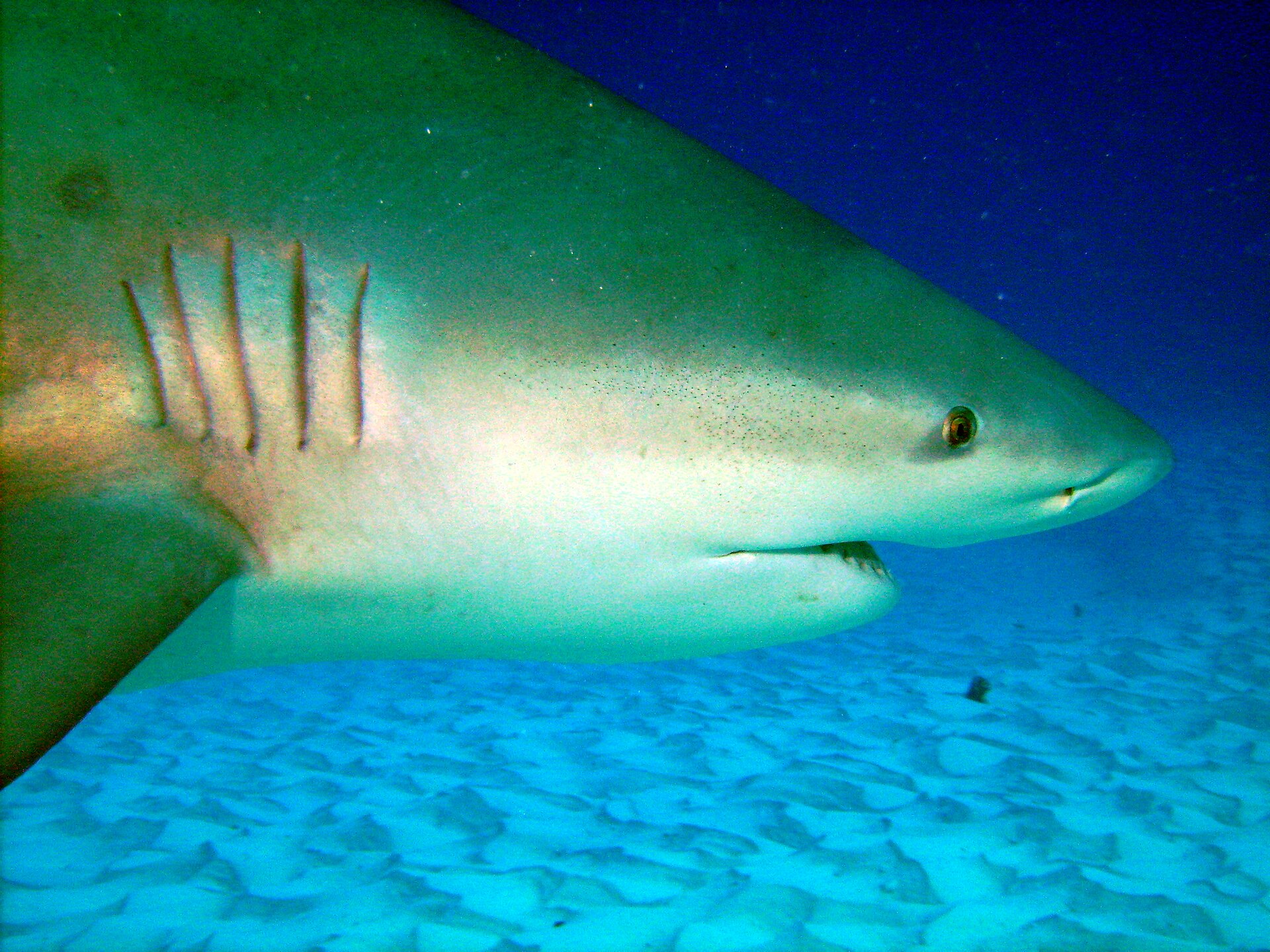
Carcharhinus leucas is a stocky shark, gray above and white below, with a short, broad snout that earns it its name. Females average 2.40 meters and 130 kg, and the largest exceed 3 meters. It is the only large shark that lives as comfortably in fresh water as in the sea, and it has been found thousands of kilometers up the Amazon and the Mississippi. Pound for pound, its jaw is the most powerful measured in any shark, and it is one of the three species most often involved in accidents with swimmers, in murky, shallow water. The IUCN lists it as Vulnerable. For a diver kneeling still on the Playa sand, at 24 meters, in clear water, the encounter is calm: the females circle, watch and move off. The danger is not in the dive but in how it is done, which is why the dive centers' rules of conduct are not up for debate.
Our tip
Come from December to February, when the sharks are most numerous, and book early in your stay in case a blow cancels trips. Without bait, the sharks pass at a distance; with bait, at one meter. Bring a 5 mm wetsuit: 45 minutes on your knees is a long time.
Other dive sites nearby
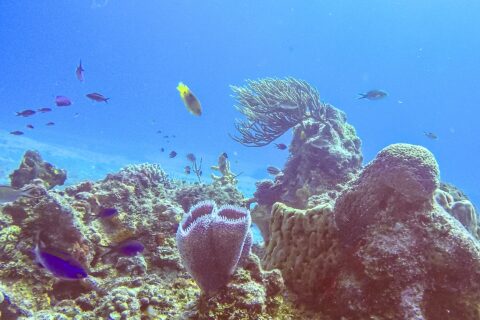
 MexicoWall
Santa Rosa Wall
Yucatán and the Caribbean: Cozumel, cenotes, Playa del Carmen MexicoReef
Palancar Reef
Yucatán and the Caribbean: Cozumel, cenotes, Playa del Carmen MexicoCave or cenote