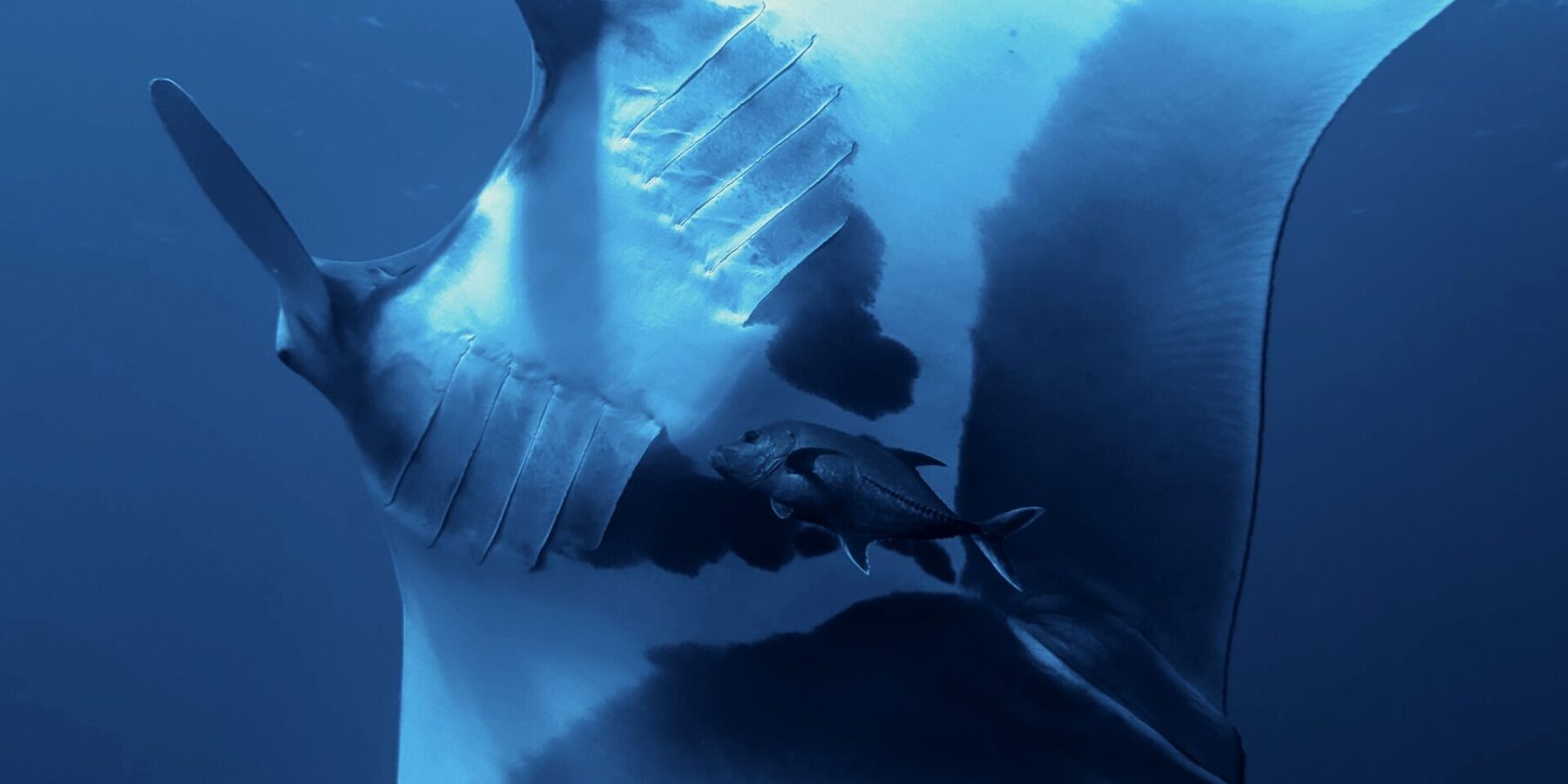
El Boiler is a pinnacle off San Benedicto, in the Revillagigedo Islands, rising from 45 meters to a few meters below the surface. Oceanic manta rays, six to seven meters across, glide above divers for tens of minutes. You dive it on a liveaboard from November to May.
Why dive El Boiler?
- The best oceanic manta encounter in the world: animals six to seven meters across that stay with divers for twenty to thirty minutes
- An isolated pinnacle rising from 45 meters to 4 to 10 meters below the surface, covered in black coral and sea fans
- Resident silky sharks, Galapagos sharks, whitetips, and bottlenose dolphins up close
- Humpback whale song underwater from January to March
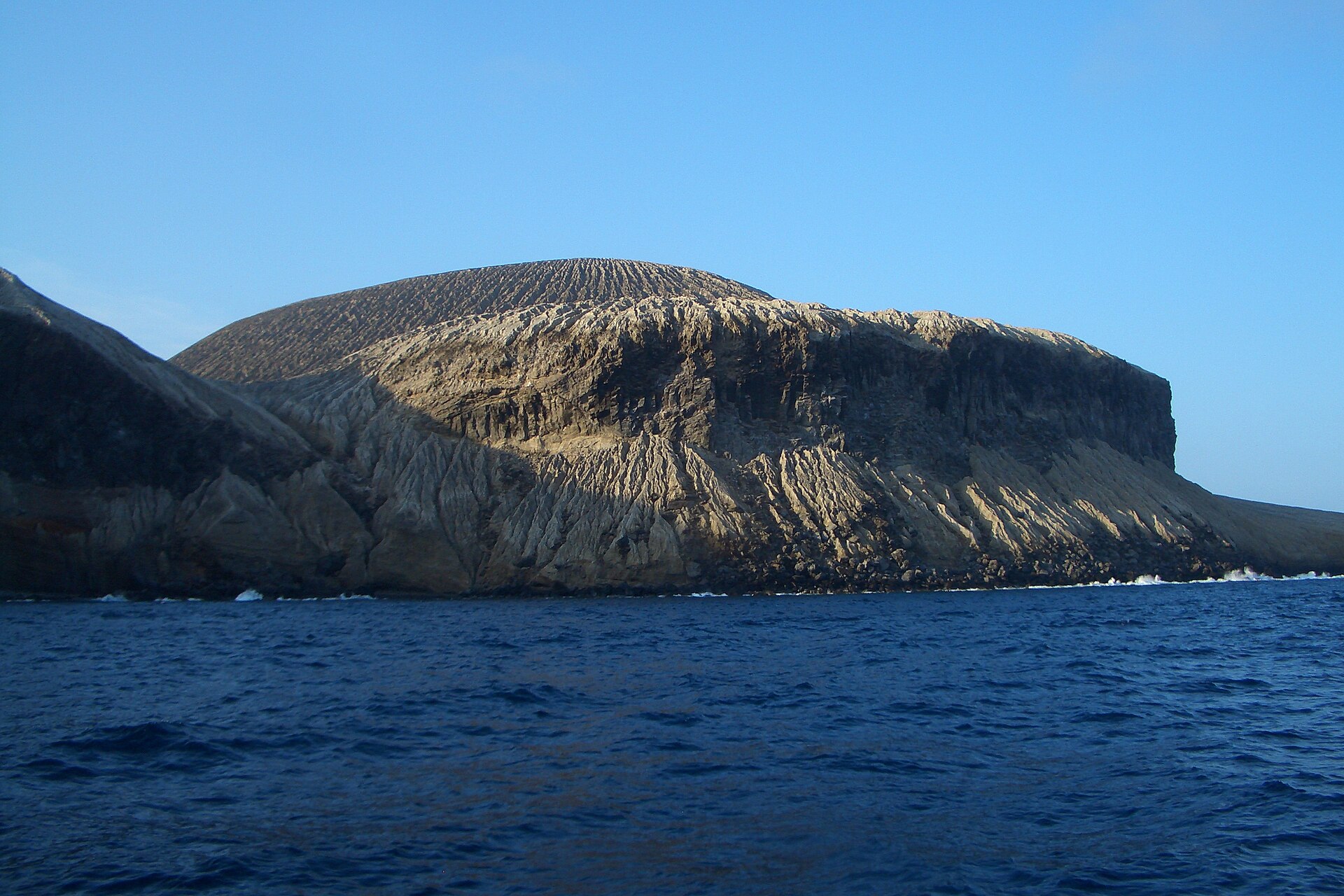
- San Benedicto Island itself, a volcano born in 1952, seen from the boat
The dive site on the map
Base: San José del Cabo, 432 km as the crow flies.
See nearby dive sites on the mapEl Boiler in pictures
What will you see at El Boiler?
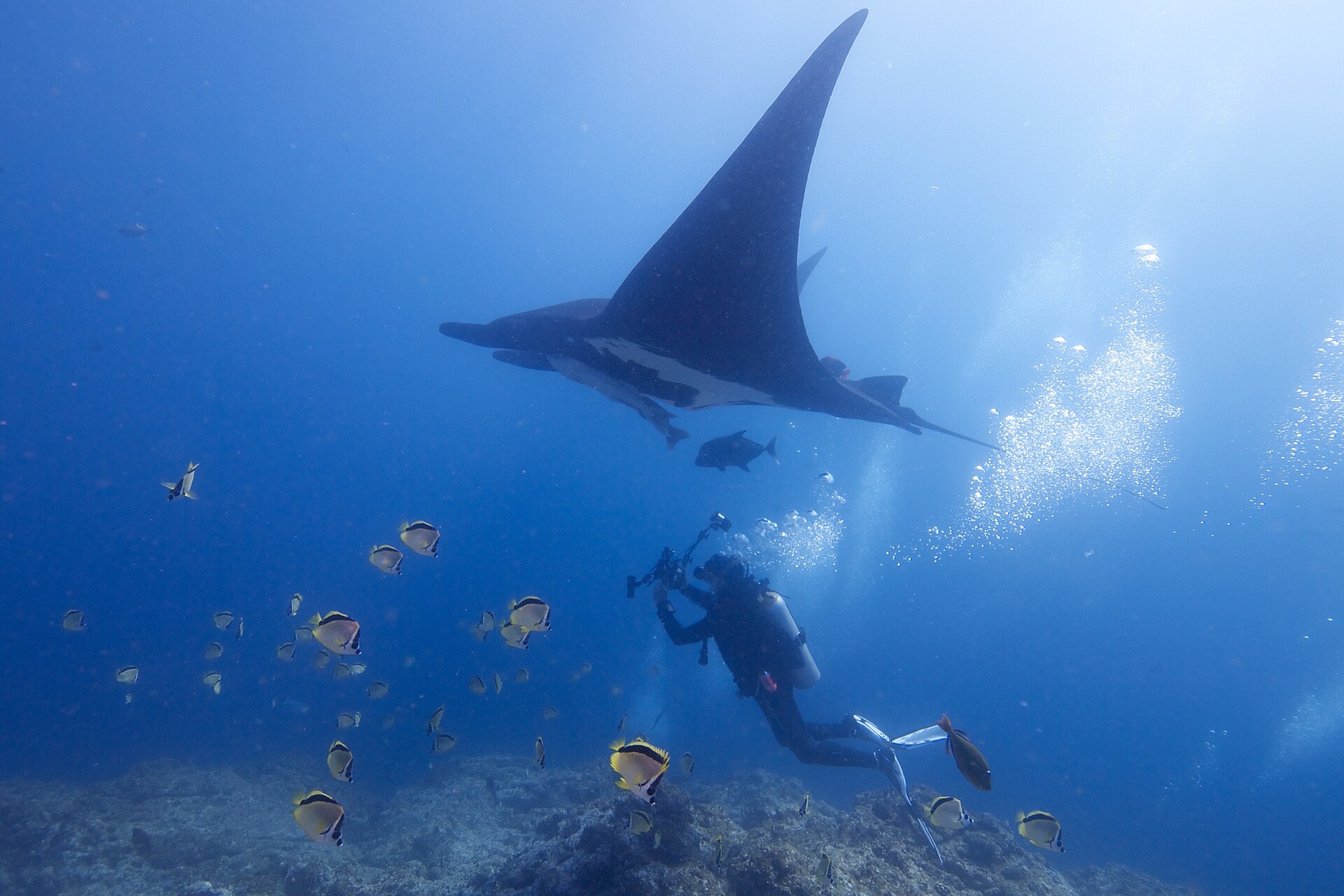
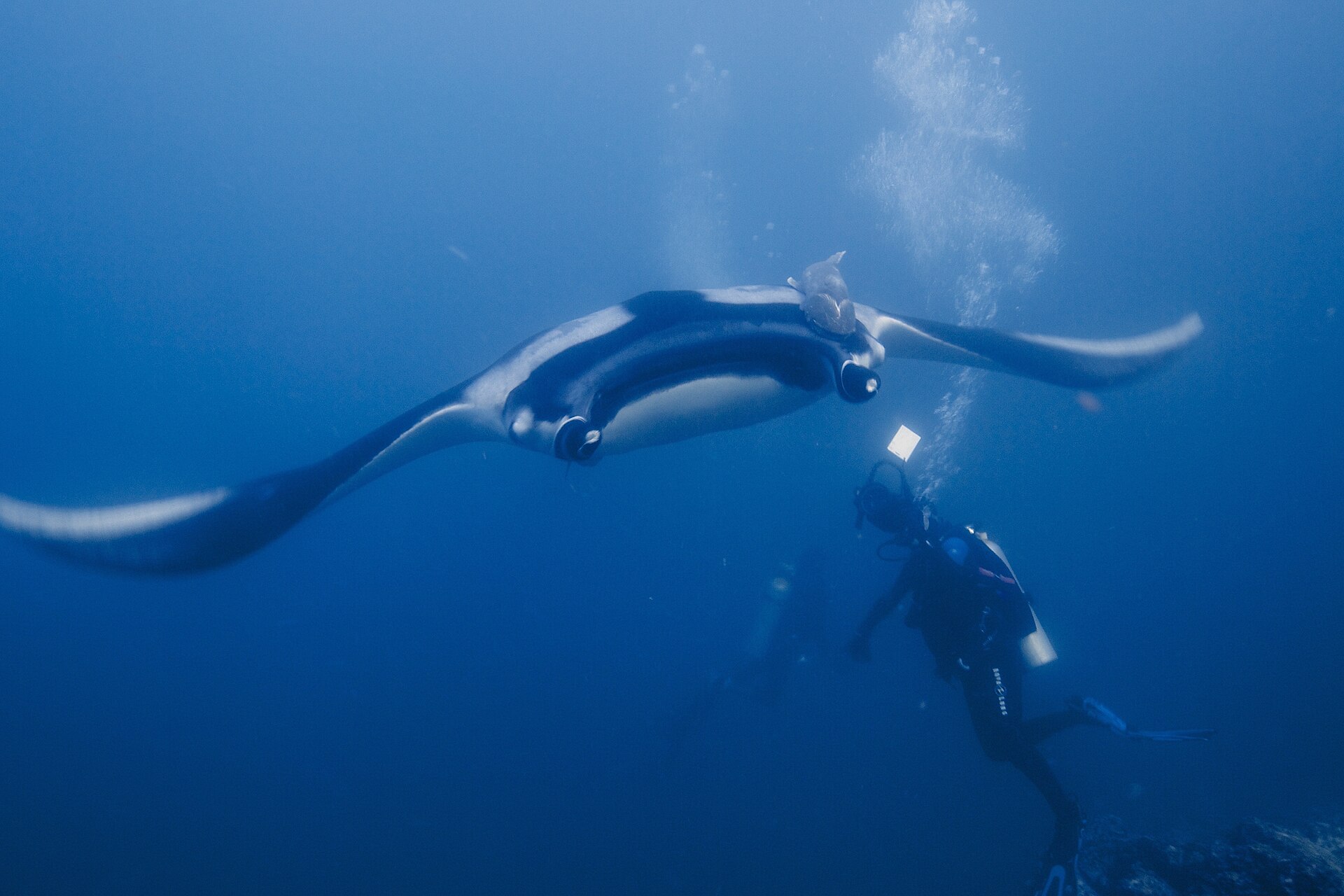
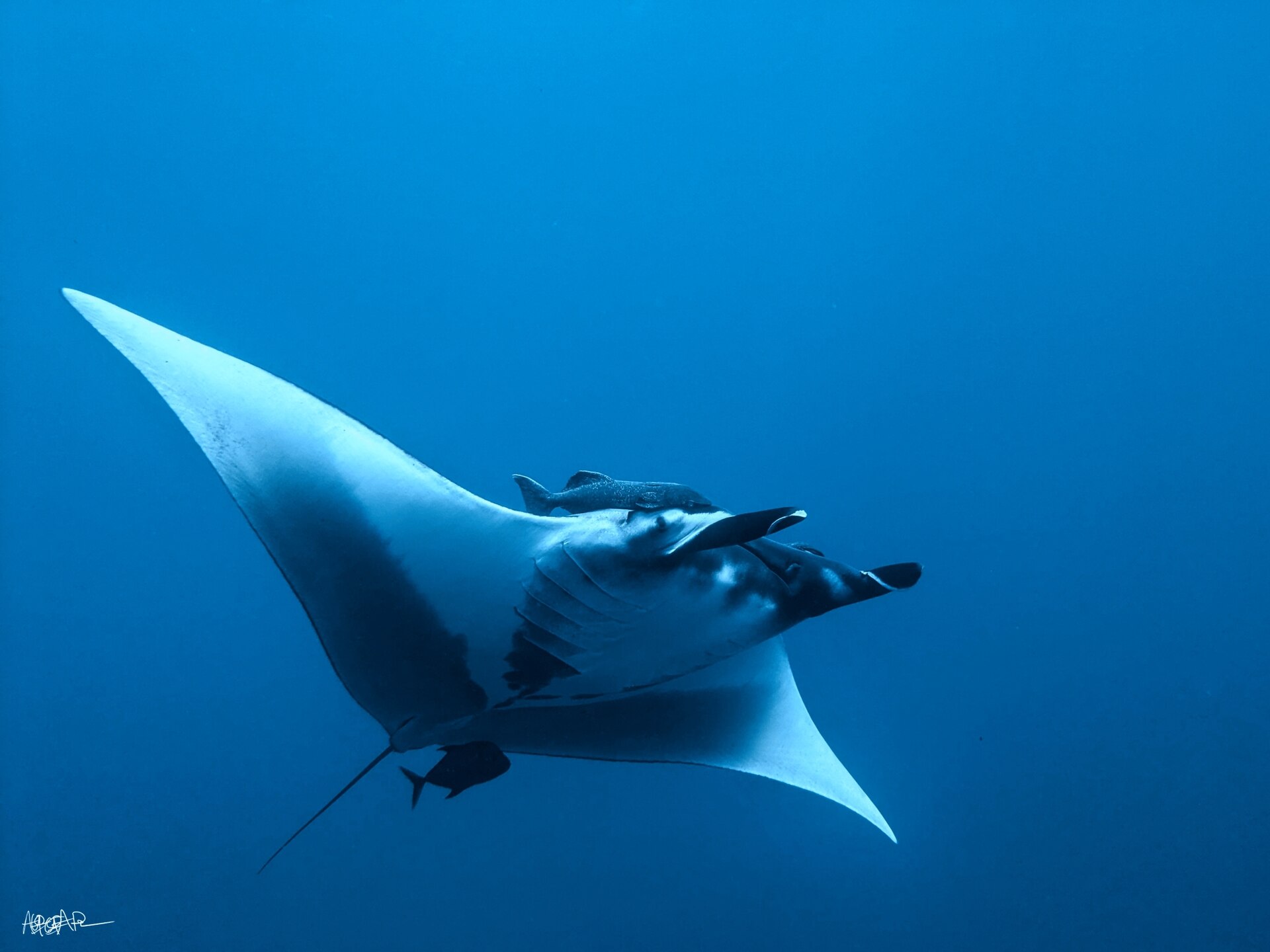
The mantas make the site's reputation. The archipelago's resident population of oceanic manta rays, studied for decades, with many individuals named, uses the pinnacle as a cleaning station. Between 25 and 30 meters, endemic Clarion angelfish and wrasses pick off their parasites; then the mantas, six to seven meters across, come to glide above divers, turn, come back and let the bubbles massage them, sometimes for twenty or thirty minutes. Some are melanistic, entirely black. The resident silky sharks gather around the moored boat and patrol the pinnacle with Galapagos sharks and whitetips. Schooling hammerheads are more likely at The Canyon, south of the island, and the rarer tiger sharks at Punta Tosca, on Socorro. Schools of yellowfin tuna and rainbow runners cross the blue, bottlenose dolphins come up close, and from January to March you dive surrounded by humpback whale song. The pinnacle itself carries black coral, sea fans and reef fish.
| Species | J | F | M | A | M | J | J | A | S | O | N | D | Note |
|---|---|---|---|---|---|---|---|---|---|---|---|---|---|
 Oceanic manta ray | peak season | peak season | peak season | peak season | peak season | possible | rare | rare | rare | rare | peak season | peak season | resident population, at the cleaning station between 25 and 30 meters, best from November to January and from April to May |
 Silky shark | peak season | peak season | peak season | peak season | peak season | possible | rare | rare | rare | rare | peak season | peak season | residents, in numbers around the moored boat and on the pinnacle |
 Scalloped hammerhead | possible | possible | possible | possible | possible | possible | rare | rare | rare | rare | possible | possible | schools mostly at The Canyon, south of the island, sometimes off the Boiler |
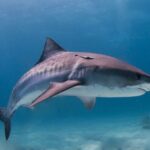 Tiger shark | possible | possible | possible | possible | possible | possible | rare | rare | rare | rare | possible | possible | seen at San Benedicto, more regular at Punta Tosca, on Socorro |
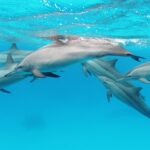 Spinner dolphin | possible | possible | possible | possible | possible | possible | rare | rare | rare | rare | possible | possible | bottlenose dolphins visit the pinnacle and approach divers; spinner dolphins are seen from the boat |
| Galapagos and whitetip reef sharks | peak season | peak season | peak season | peak season | peak season | possible | rare | rare | rare | rare | peak season | peak season | patrol around the pinnacle all season |
| Humpback whales | peak season | peak season | peak season | possible | rare | rare | rare | rare | rare | rare | rare | possible | song audible underwater from January to March, occasional encounters |
| Yellowfin tuna | possible | possible | possible | possible | peak season | peak season | rare | rare | rare | rare | possible | possible | schooling in the blue, more numerous in May and June |
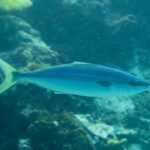 Rainbow runner | possible | possible | possible | possible | peak season | peak season | rare | rare | rare | rare | possible | possible | schooling in the blue, more numerous in May and June |
| Clarion angelfish | peak season | peak season | peak season | peak season | peak season | peak season | rare | rare | rare | rare | peak season | peak season | endemic, they clean the mantas on the pinnacle |
peak seasonpossiblerare
What is diving like at El Boiler?
El Boiler is an isolated pinnacle off the west coast of San Benedicto. You spot it from the surface by the swell boiling over its top. It rises from a 45 to 50 meter bottom to 4 to 10 meters below the surface. You avoid the summit, pounded by surge, and pick your depth to circle the pinnacle: most of the action is between 10 and 30 meters, with the cleaning station around 25 to 30. The current is moderate to strong and varies from one dive to the next, and the site is exposed, sometimes with chop at the surface. You descend and ascend along the pinnacle, keep enough air to get back to it, and finish the dive in open water under the tender. Thermoclines drop the water to 21 to 23 °C. The park requires Advanced Open Water, and you need drift and blue-water experience; seasickness and cold are the real enemies of the week. When the Boiler boils too hard, boats fall back on The Canyon, south of the island.
When to dive El Boiler?
idealgoodnot recommended
The liveaboard season runs from November to June, with its core from November to May. From late January to early April, the water is at its coldest, 21 to 23 °C, and it is humpback whale time, as they winter in the archipelago: you hear them on every dive and sometimes see them. From November to January, then in April and May, the water warms back up to 23 to 26 °C, and mantas and sharks are at their best; May and June add tuna and other pelagics. Visibility hovers around 30 meters, from 25 to 40, and sometimes drops to 15 to 20 meters in November and December on some sites. From July to October there are no trips: it is Pacific hurricane season and the sea is rough. Thermoclines bring the temperature down to 21 °C even in the warm season, and the crossing from Cabo San Lucas can be bumpy.
How to get to El Boiler?
Everything happens by liveaboard from Cabo San Lucas, a 24 to 36 hour crossing from San Benedicto, often the first island on the route. Solmar V sells eight nights with five days of diving, three to four dives a day, for US$5,250 to US$5,750 per person depending on the cabin, for the January 13, 2026 departure. The Nautilus Explorer, through Diventures, sells nine days from May 26 to June 3, 2026 for US$4,980 to US$6,680, park fee and transfers included, with Nitrox at US$120, tips at US$500 and port tax at US$35 on top. The cheapest boats start at US$323 a day; Rocio del Mar, Nautilus Belle Amie, Nautilus Under Sea, Quino del Mar and Valentina also run the route. The Revillagigedo National Park fee, MXN 3,622 per dive day since January 1, 2025 and MXN 3,760 for the 2026 season, is collected by the boat. You reach Los Cabos airport, in San José del Cabo, via Mexico City or the United States.
Stay in San José del Cabo
Where to stay near El Boiler?
Hotels, apartments and rooms around San José del Cabo, with current prices.
What happened to San Benedicto in 1952?
San Benedicto, the third-largest island in the archipelago, 4.8 kilometers by 2.4, with no fresh water and no inhabitants, entered history on August 1, 1952. At around 8:30 a.m., Bárcena volcano erupted, pyroclastic flows swept the island, and ash and pumice buried everything under three meters. The San Benedicto rock wren, an endemic bird, went extinct that morning, at 9 a.m., in front of observers who had stayed offshore: one of the few extinctions dated to the hour. Seabirds came back to nest as early as the spring of 1953; today the 332-meter cone of Bárcena, streaked with gullies, towers over the anchorage. The archipelago, a biosphere reserve since 1994 and a World Heritage Site since 2016, has been protected since November 2017 by the largest marine national park in North America, 150,000 square kilometers with no fishing. Five years later, fishing activity there had dropped by more than 80%.
How do you dive with the mantas at El Boiler?
The rule is not to chase: the mantas are too fast, and they decide. You descend along the pinnacle, settle between 15 and 25 meters, a little away from the other divers, and wait. When a manta arrives, it passes overhead, comes back, stops above the bubbles, drops down to the cleaning station to be inspected by the angelfish, then rises again. Encounters often last twenty to thirty minutes, and the same animal comes back several times during the dive. No touching, no blocking its path, no chasing. Silky sharks, curious and sometimes pushy, join the safety stop under the boat: keep the group tight and watch them come. Each boat coordinates its dives with the park rangers, and only one group dives the site at a time.
What other sites will you dive on a Socorro trip?
A Socorro liveaboard links San Benedicto, Socorro and Roca Partida; Clarión, 290 kilometers farther, is almost never visited. At San Benedicto, The Canyon, to the south, is plan B when the Boiler is boiling: silky, Galapagos and schooling hammerhead sharks, and mantas too. On Socorro, Cabo Pearce, a finger of lava reaching out into the current, mixes mantas, bottlenose dolphins and hammerheads. Roca O'Neal, known as Hammerhead Central, lines up hammerheads over a plateau at 10 to 12 meters, and Punta Tosca is the site for dolphins, humpback whales and tiger sharks. Roca Partida, about a hundred kilometers to the west, closes or opens the week depending on the weather.
Our tip
Stay between 15 and 25 meters, away from the group, and keep still: the mantas come to you. Save enough air to get back to the pinnacle, because the offshore current carries you away fast. From January to April, bring a 5 to 7 mm wetsuit with a hood.
Other dive sites nearby
 MexicoPelagic
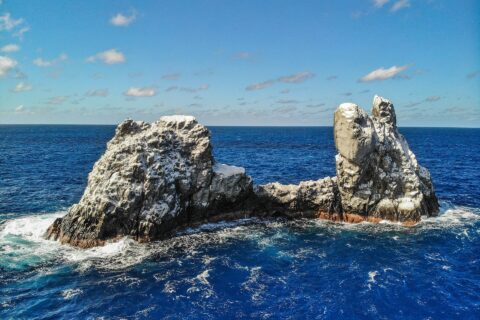
Roca Partida
Revillagigedo Islands (Socorro) MexicoReef
Cabo Pulmo
Sea of Cortez: La Paz and Cabo Pulmo MexicoReef