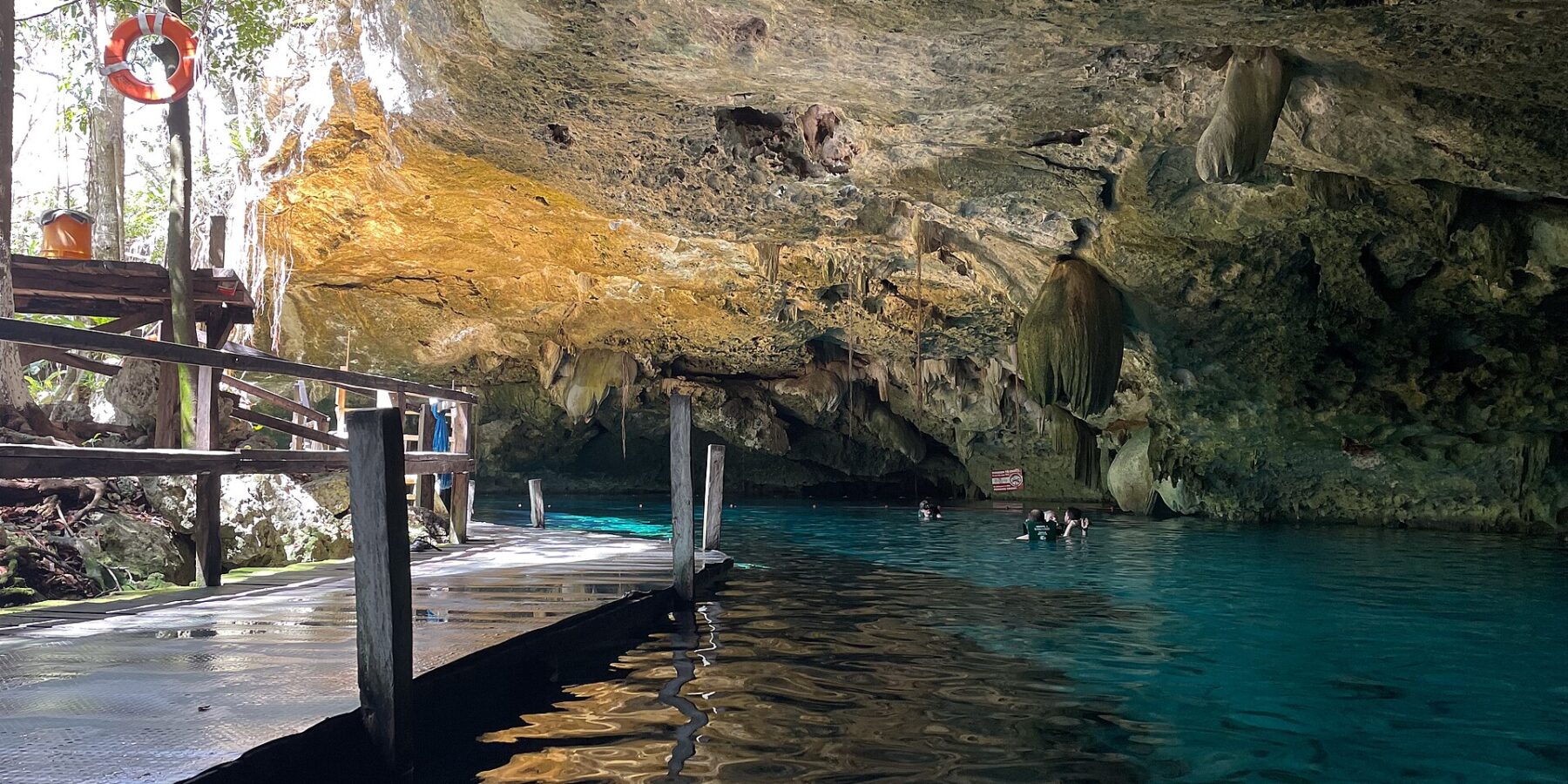
Dos Ojos Cenote, 20 minutes north of Tulum, opens its two eyes of water onto 82 kilometers of flooded passages. You follow two cavern routes shallower than 10 meters, in perfectly clear 25 °C water. It is the go-to cenote for a first overhead dive, open to Open Water divers.
Why dive Dos Ojos?
- The go-to cenote for a first overhead dive, under 10 meters, open to Open Water divers
- Two routes: Barbie, 515 meters of line in the light, and Bat Cave, 312 meters, darker, with a bat dome
- 25 °C water year-round, so clear you feel like you are flying between the stalactites
- A way into the Sac Actun system: 82 kilometers of passages for Dos Ojos alone, now linked to the longest underwater cave system in the world
- 20 minutes from Tulum, easy to pair with The Pit on the same day
Dos Ojos in pictures
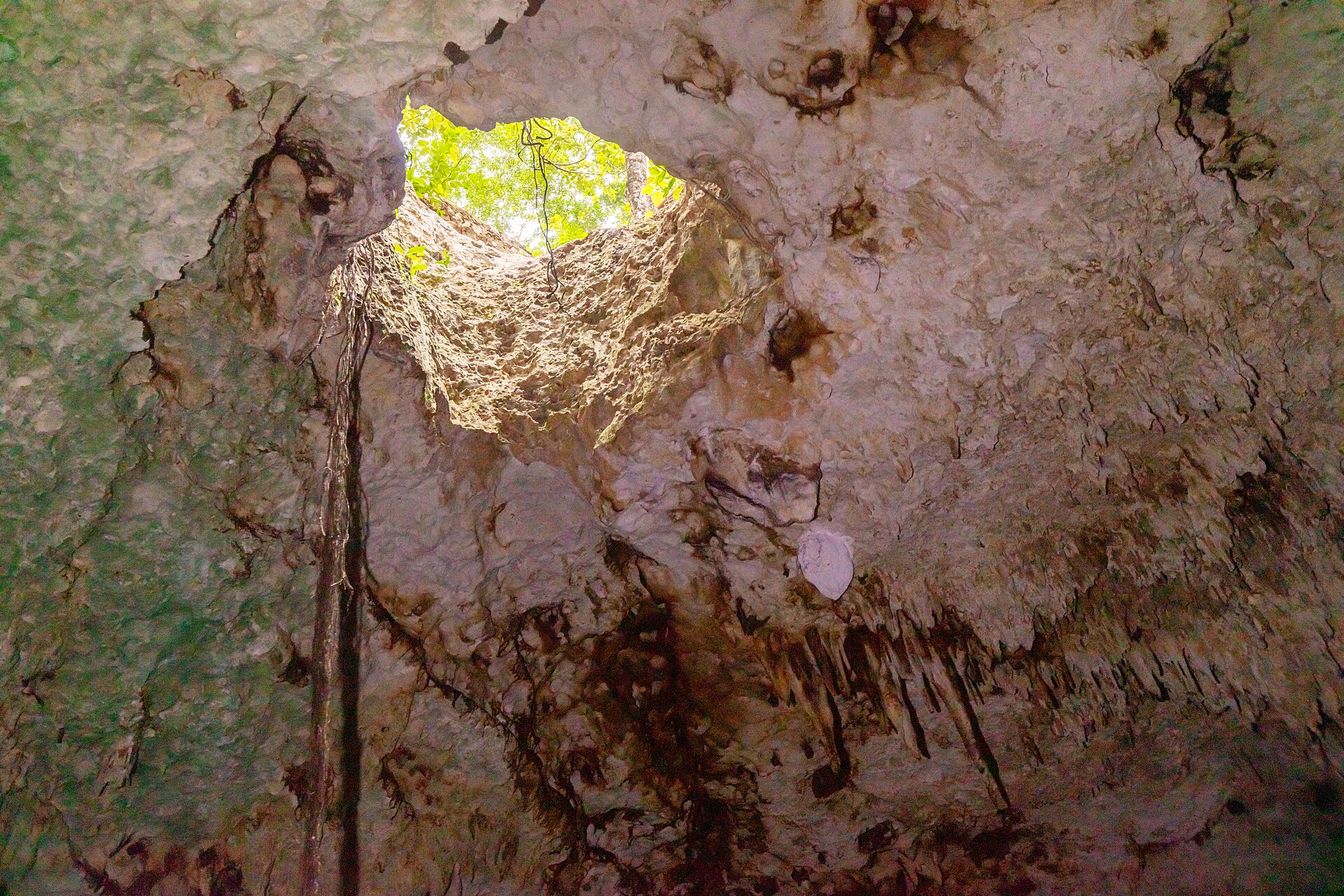
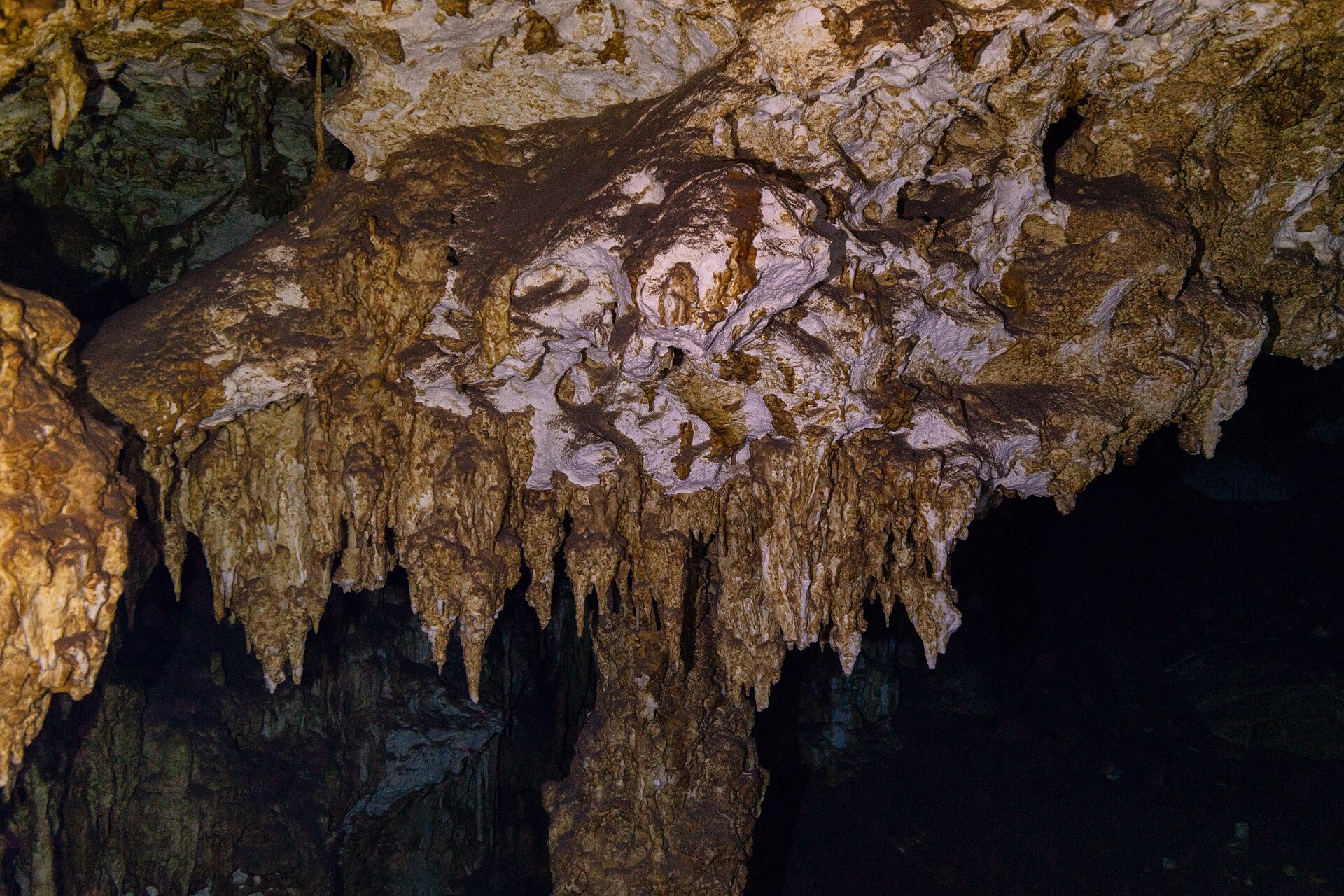
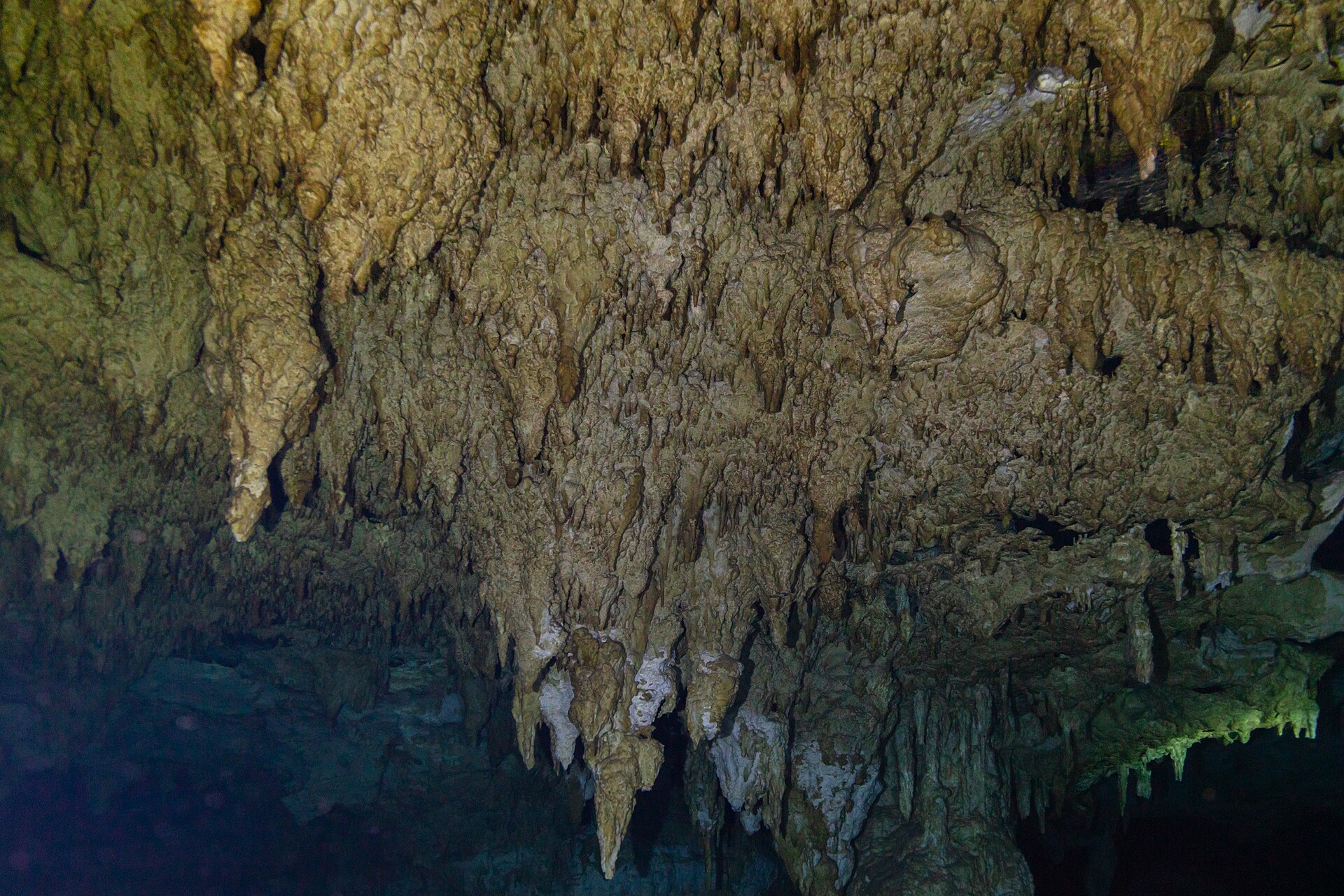
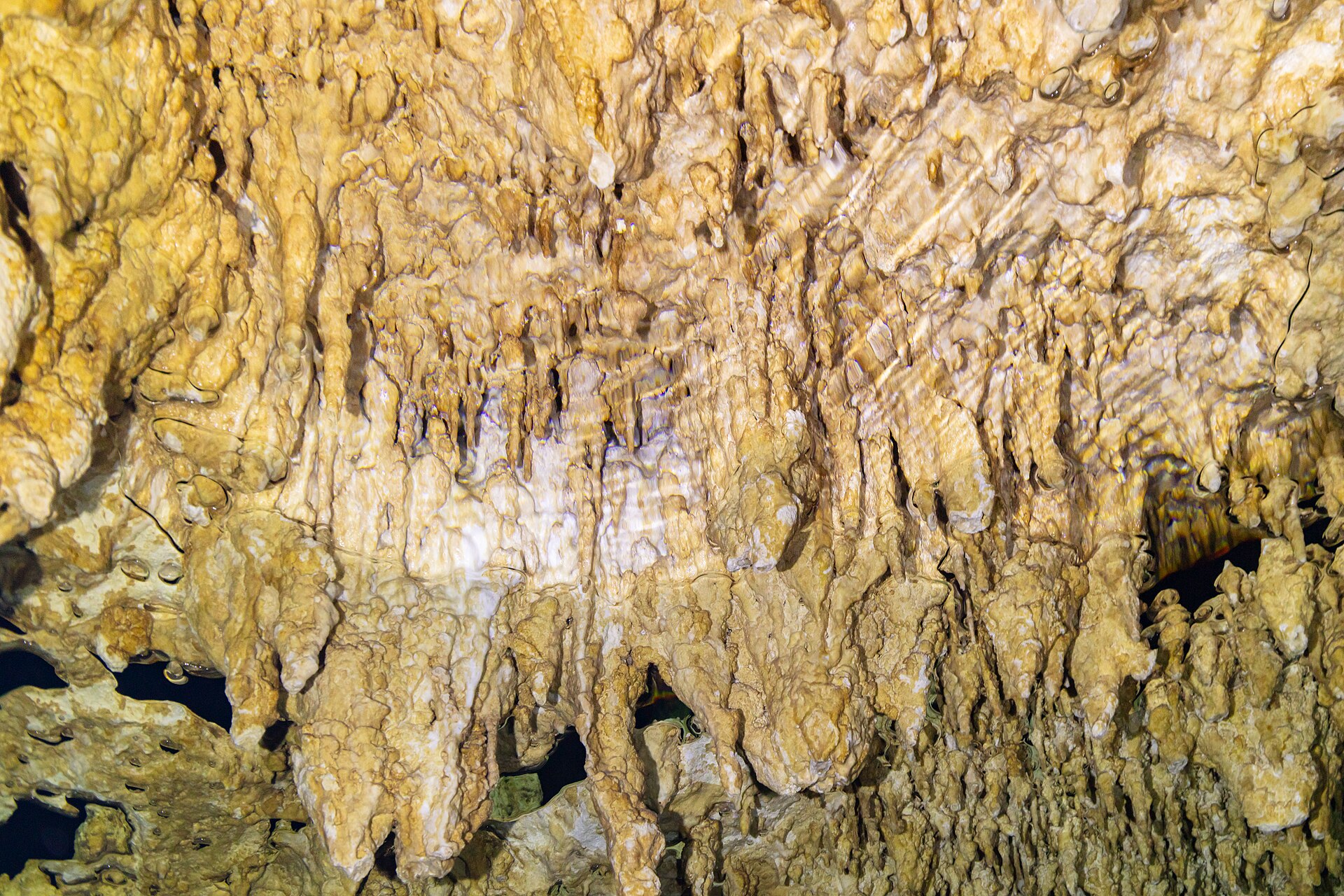
What will you see at Dos Ojos?
You don't come to Dos Ojos for the wildlife: life here is discreet, and the rock plays the lead role. Small freshwater fish, mostly mollies under ten centimeters long, swim in the lit zone of the two eyes, and at least two species of freshwater shrimp cling to the walls. In the Bat Cave dome, where you surface halfway through the dive, hundreds of bats flit under the ceiling. The real show is mineral. Stalactites, stalagmites, columns and draperies formed when the passages were dry, during the ice ages. Fossil corals and shells are set in the limestone. Sunlight falls in beams through the openings into water filtered by the rock, so clear that visibility is limited only by the reach of the light. The system is anchialine: it connects to the sea, and tracer tests have shown that its water flows toward the Xel-Ha lagoon.
| Species | J | F | M | A | M | J | J | A | S | O | N | D | Note |
|---|---|---|---|---|---|---|---|---|---|---|---|---|---|
| Freshwater fish and mollies | peak season | peak season | peak season | peak season | peak season | peak season | peak season | peak season | peak season | peak season | peak season | peak season | small fish under 10 centimeters in the lit zone of the two eyes |
| Freshwater shrimp | peak season | peak season | peak season | peak season | peak season | peak season | peak season | peak season | peak season | peak season | peak season | peak season | at least two species, on the walls and in the dark corners |
| Bats | peak season | peak season | peak season | peak season | peak season | peak season | peak season | peak season | peak season | peak season | peak season | peak season | by the hundreds in the air dome of Bat Cave, where you surface halfway through the dive |
peak seasonpossiblerare
What is diving like at Dos Ojos?
Both cavern routes stay shallower than 10 meters, mostly between 5 and 7 meters, in the zone where daylight remains visible. The Barbie line, 515 meters, loops toward the west eye, bathed in light. It is named after a doll attacked by a plastic crocodile, hung halfway along. The Bat Cave line, 312 meters, heads left toward an air dome full of bats; it is darker and tighter. The main line, gold and four millimeters thick, stays within arm's reach; the secondary lines, white and thinner, tell you that you have left the route. The guide, trained in cave diving, takes four divers at most, counts the lights and applies the rule of thirds. There is no current and visibility exceeds 30 meters, but the floor is fine silt that a single fin kick will stir up: half your usual weight, frog kick, horizontal trim. Open Water is enough, but you need solid buoyancy, and this is the place to test yourself for claustrophobia before The Pit.
When to dive Dos Ojos?
idealgoodnot recommended
You can dive Dos Ojos year-round: the water is 25 °C in every season, there is no current or swell, and the Caribbean summer hurricanes, from June to November, only close the park on storm days. Light makes the difference: it is at its best around midday, when the sun is high above the eyes, and in the summer months. The site gets around a hundred visitors a day, divers and swimmers, so dive centers leave at 8 a.m. to dive before the crowds. Bring a 5 millimeter wetsuit, because 45 minutes in 25 °C water without sun, barely moving, will chill you. From December to March, it is easy to pair a morning here with the Playa del Carmen bull sharks, an hour's drive away.
How to get to Dos Ojos?
Dos Ojos Park is 20 minutes north of Tulum, west of Highway 307, at the end of a jungle track, with parking, a wooden staircase and an entry platform. Dive centers from Tulum, Playa del Carmen and Akumal run day trips there. Mexico Kan Tours, in Tulum, sells the two Dos Ojos dives, Barbie and Bat Cave, for US$205, including entry, full equipment and transport from the dive center, with a minimum of two divers or a US$50 surcharge, and a full day at The Pit and Dos Ojos for US$215. Scuba Tulum offers The Pit and Dos Ojos, two or three dives, for US$140, or US$130 from three divers, equipment and light included, plus the MXN 900 park entry fee charged since January 17, 2025. Wild Playa, in Playa del Carmen, charges MXN 3,900 for a day at The Pit and Dos Ojos, including entry, private guide, equipment, light, meal and transport, with a MXN 300 fee for large cameras. Scuba Libre, in Playa del Carmen, takes four divers per guide, from age 15. Tulum is two hours from Cancún airport, Playa del Carmen one hour.
Stay in Tulum
Where to find a dive guide in Dos Ojos?
Guided tours you can book online, ranked by number of reviews. These are affiliate links: if you book, you support us at no extra cost.

 Viator
Dos Ojos Cenote Dive: Barbie Line & Bat Cave - 2 Dives
5.0 (500 reviews)View and book Viator
2 cenote divings (including one deep diving) for advanced divers in Tulum
5.0 (187 reviews)View and book Viator
Private Full-Day Cenote Diving Experience 2 Dives with Lunch
5.0 (173 reviews)View and book Viator
Amazing beginner dive in Tulum cenote (or refresher dive)
5.0 (117 reviews)View and book Viator
Go for 2 dives in cenote Dos ojos for certified divers
5.0 (90 reviews)View and book Viator
2 tanks Cenote Diving Adventure in Tulum for Certified Divers
4.9 (78 reviews)View and bookWhere to stay near Dos Ojos?
Hotels, apartments and rooms around Tulum, with current prices.
How did divers map 82 kilometers of passages at Dos Ojos?
Dos Ojos, two eyes, is a pair of neighboring cenotes that open onto the same large cavern zone, like two eyes onto the underground world. Diving exploration started here in November 1987 and is still going: 82 kilometers of surveyed passages, 28 entrances, and a maximum depth of 119 meters reached at The Pit, discovered in 1996 from the main entrance, 1,500 meters away. Long ranked among the three longest underwater cave systems in the world, Dos Ojos was connected to Sistema Sac Actun by a dry passage in 2012, then underwater in January 2018, and is now part of it: together they form the longest known underwater cave network. The site was a set for the IMAX film Journey Into Amazing Caves in 2002, for the Planet Earth series in 2006, and for scenes of the film The Cave in 2005. In November 2010, freediver Carlos Coste swam 150 meters there on a single breath, a world record.
Why does the cavern briefing at Dos Ojos matter?
It all starts in front of the park's signboards, before you head down the stairs. The guide explains the line: the main one is gold, the secondary ones white and thinner, and when you see a white one, you have left the route. You stay within arm's reach of the line and never lose sight of it. Losing the line is the leading cause of fatal accidents in cave diving, entanglement the second, and strap fins or dangling gauges get caught in it. Everyone carries two lights, with the main one on the whole time, because the guide counts lights, not divers. Air is managed by the rule of thirds. You carry half the weight you would use in the sea, so you can swim flat, fins up above head level, with a frog kick, without touching the formations or stirring up the silt. Four divers per guide, no more. And if anyone pushes you beyond the cavern zone without a cave certification, say no.
Cavern or cave diving: what can you do at Dos Ojos?
Cavern diving is recreational diving: you stay in the zone where daylight is visible, with no obstacle between you and the surface, less than 60 meters from the exit, 40 for some agencies, and shallower than 20 meters, 30 for others, with standard gear. Beyond that it is cave diving, which is technical: a cave diver certification, a dedicated configuration, sometimes trimix and decompression stops. At Dos Ojos, Barbie and Bat Cave are cavern routes; the 82 kilometers that open up behind them are reserved for trained and equipped cave divers. The Pit, three kilometers away, is a case of its own: an open shaft where you descend to 30 or 40 meters in full light, and it requires Advanced.
Our tip
Dive Dos Ojos before The Pit if it is your first cavern. Ask for Barbie on the first dive for the light, then Bat Cave. Bring a 5 mm wetsuit: even at 25 °C, you get cold fast without sun.
Other dive sites nearby
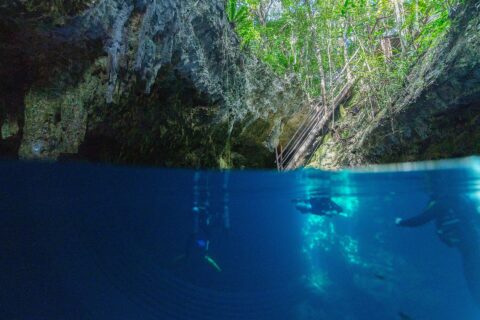
 MexicoCave or cenote
The Pit Cenote
Yucatán and the Caribbean: Cozumel, cenotes, Playa del Carmen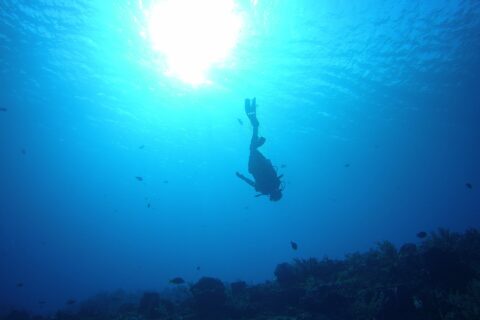 MexicoReef
Palancar Reef
Yucatán and the Caribbean: Cozumel, cenotes, Playa del Carmen MexicoWall