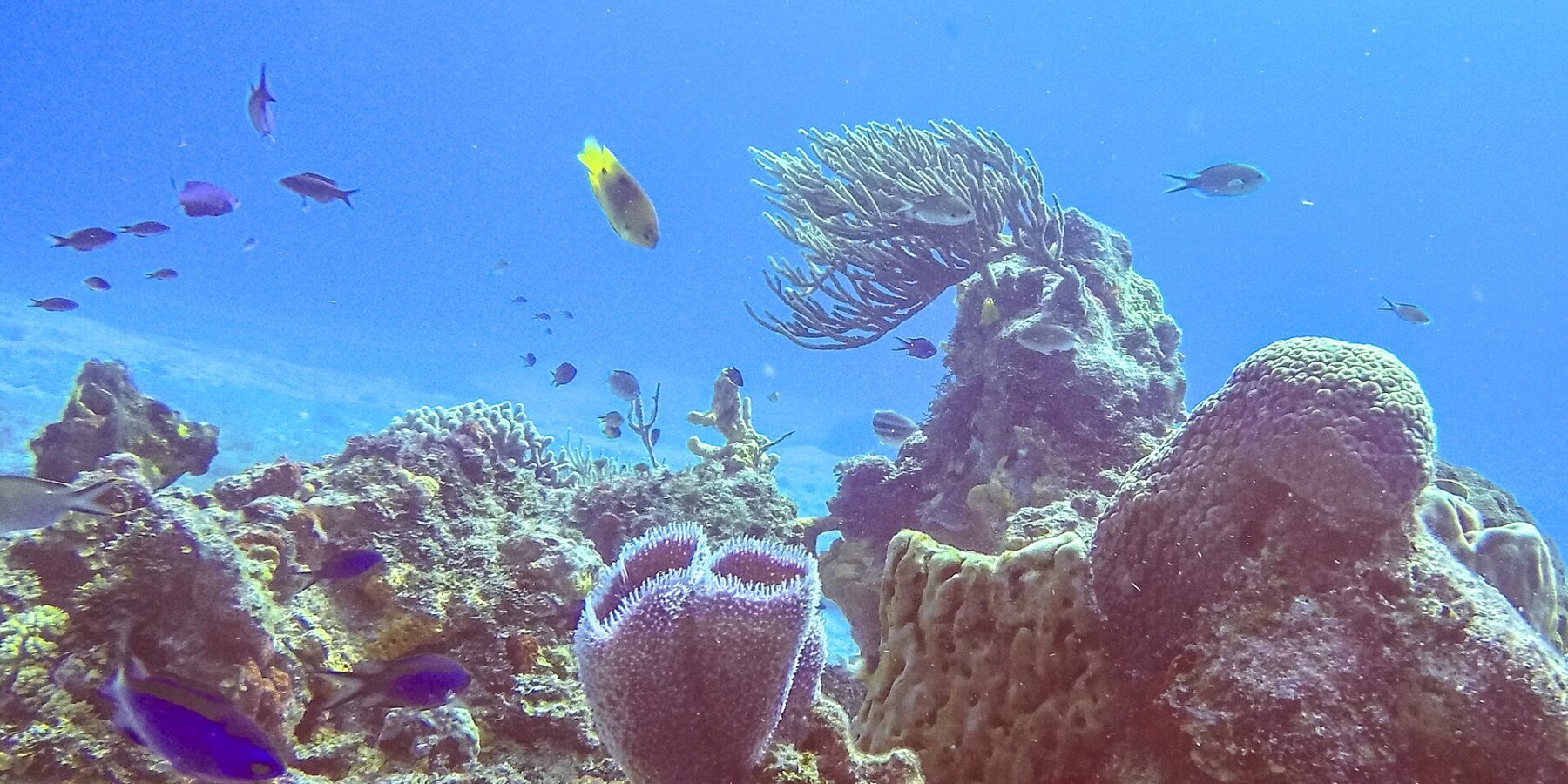
Santa Rosa Wall is the classic Cozumel wall: a sand plateau at 15 meters tips over into the blue, and the current turns every dive into a drift. You meet turtles, black groupers and, in winter, eagle rays. The site requires Advanced.
Why dive Santa Rosa Wall?
- A near-vertical wall that starts at 15 meters and drops well beyond 40
- Tunnels and chimneys that cut through the reef crest, especially in the northern part
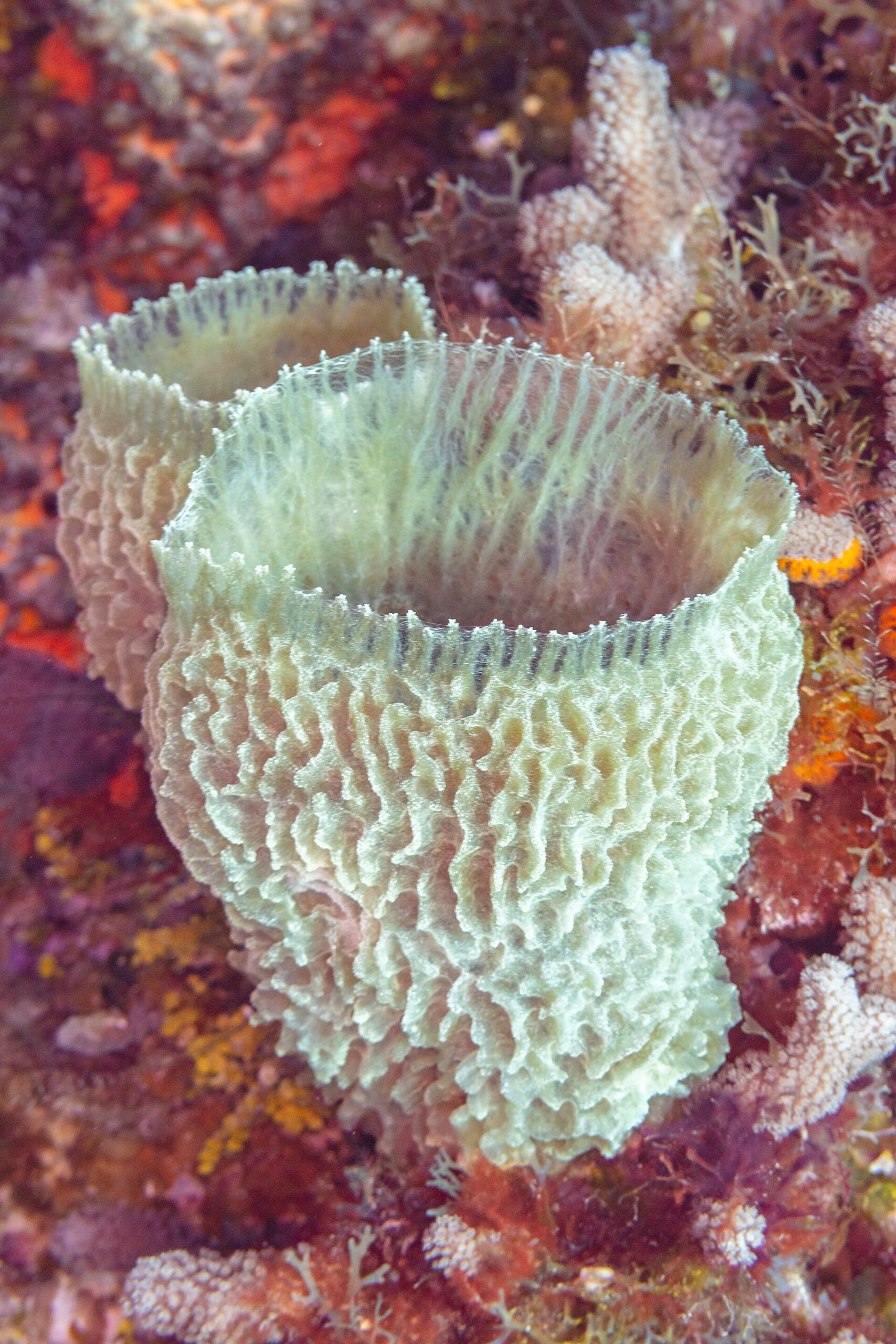
- Barrel sponges, azure vase sponges and overhangs covered in orange and purple growth
- Hawksbill turtles, black groupers, bigeye trevally, and eagle rays in winter
- A site you can pair with Palancar, Paso del Cedral or Colombia in the same morning
Santa Rosa Wall in pictures
What will you see at Santa Rosa Wall?
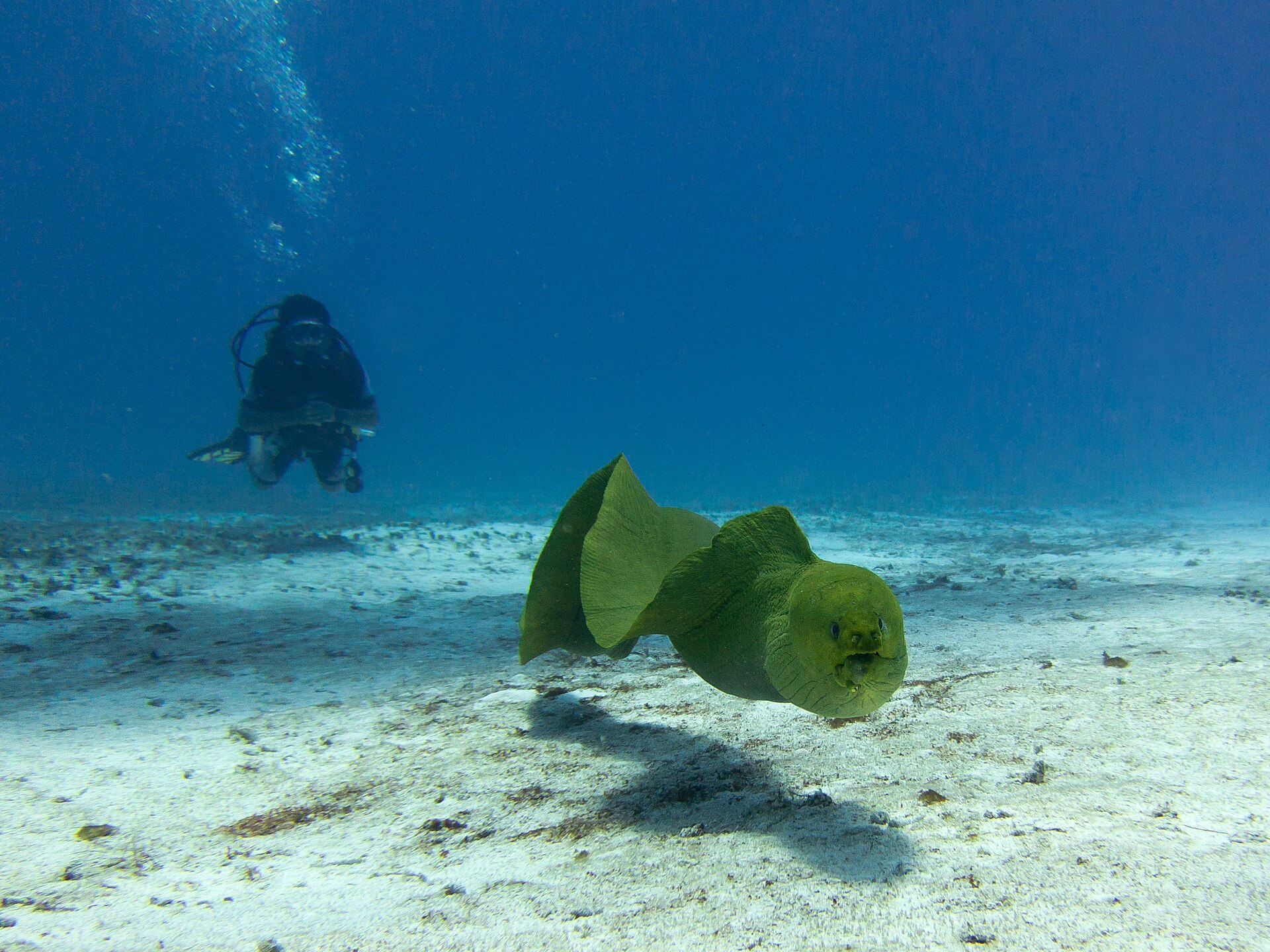
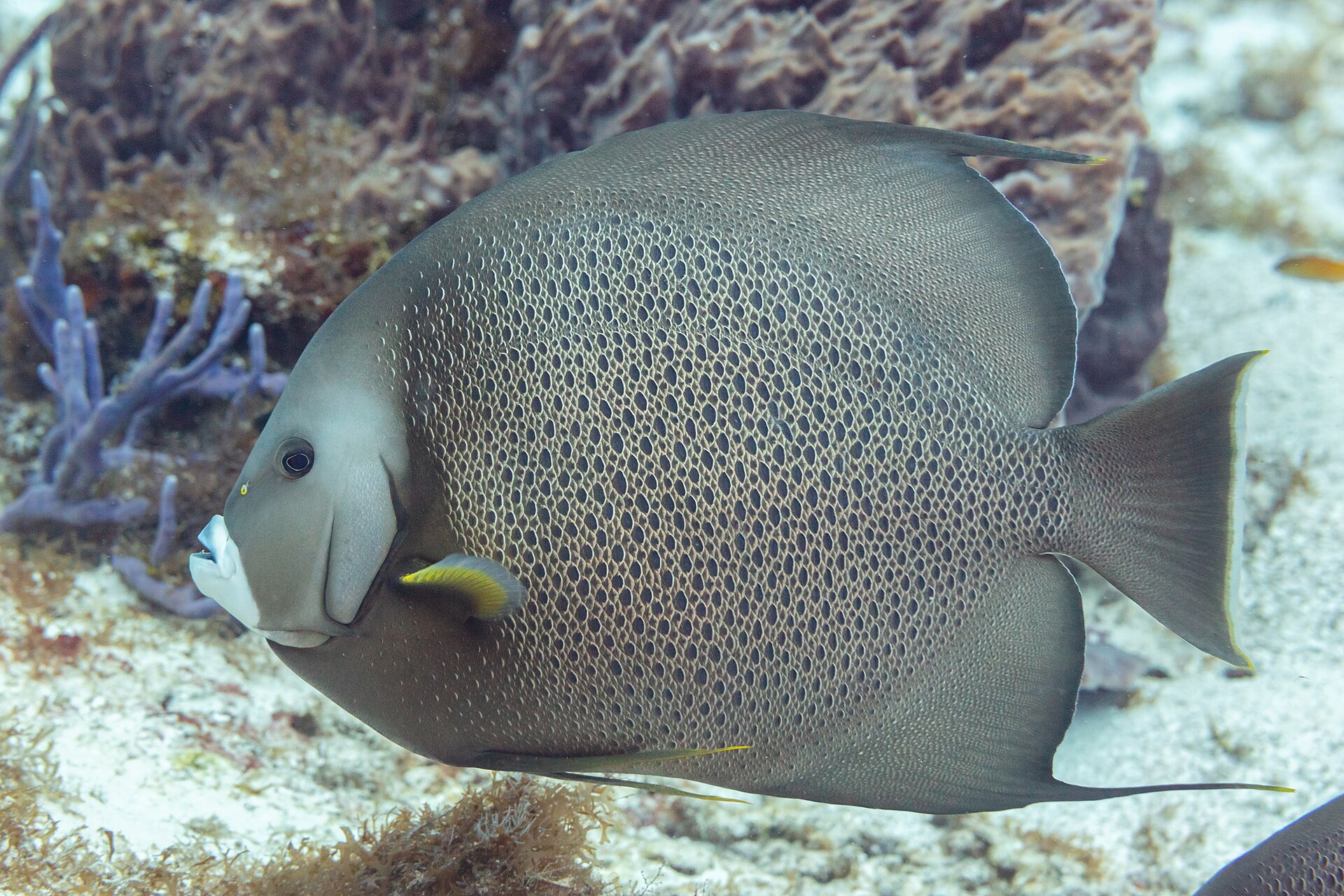
Santa Rosa Wall is carpeted with sponges: giant barrels, purple ropes, azure vases and orange tubes under the overhangs, with sea fans and leaf corals that feed in the current. Black groupers, green morays, spiny lobsters and gray angelfish keep to the tunnels and ledges; hawksbill turtles graze on the sponges at the top of the wall, and green turtles cross the sand plateau. In the blue, along the wall, bigeye trevally and barracudas circle, and from December to March eagle rays cruise along the drop-off in formation. A nurse shark sometimes sleeps on a ledge. There is no shortage of small subjects on the walls: cleaner shrimp, blennies, arrow crabs and, if you search under the ledges, Cozumel's splendid toadfish.
| Species | J | F | M | A | M | J | J | A | S | O | N | D | Note |
|---|---|---|---|---|---|---|---|---|---|---|---|---|---|
 Hawksbill turtle | peak season | peak season | peak season | peak season | peak season | peak season | peak season | peak season | peak season | peak season | peak season | peak season | on the sponges at the top of the wall |
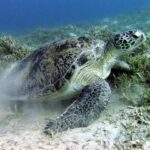 Green turtle | possible | possible | possible | possible | possible | possible | possible | possible | possible | possible | possible | possible | passing over the sand plateau |
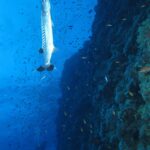 Great barracuda | possible | possible | possible | possible | possible | possible | possible | possible | possible | possible | possible | possible | in the blue, along the wall |
| Eagle rays | peak season | peak season | peak season | possible | rare | rare | rare | rare | rare | rare | possible | peak season | in formation along the wall, from December to March |
| Black groupers | peak season | peak season | peak season | peak season | peak season | peak season | peak season | peak season | peak season | peak season | peak season | peak season | under the overhangs and in the tunnels |
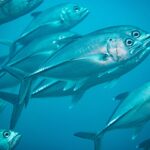 Bigeye trevally | possible | possible | possible | possible | possible | possible | possible | possible | possible | possible | possible | possible | schooling off the wall |
| Green morays and spiny lobsters | peak season | peak season | peak season | peak season | peak season | peak season | peak season | peak season | peak season | peak season | peak season | peak season | in the cracks and overhangs |
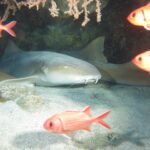 Nurse shark | possible | possible | possible | possible | possible | possible | possible | possible | possible | possible | possible | possible | asleep on a ledge, now and then |
peak seasonpossiblerare
What is diving like at Santa Rosa Wall?
The site starts on a plateau of sand and coral heads at around 15 meters, at the edge of which the wall drops almost vertically well beyond 40 meters. You dive between 15 and 30 meters along the wall, with tunnels that cut through the reef crest back to the plateau, overhangs and chimneys; the northern part is the most broken up. The current, moderate to strong and unpredictable, flows north: you descend fast, drift without fighting, and the boat follows. Visibility is 25 to 35 meters. Advanced is required, for the depth, the current and the overhead swim-throughs, and a surface marker buoy is essential for the open-water ascent. Experienced Open Water divers stay at the top of the wall, around 18 meters, with their guide.
When to dive Santa Rosa Wall?
idealgoodnot recommended
You can dive the wall year-round, and the only real variable is the weather. From December to March, the water is 26 to 27 °C, visibility is at its highest, often 30 meters or more, and eagle rays pass in formation: it is Santa Rosa's season for photographers. From April to June, 28 °C and calm seas bring the best conditions of the year. From July to October, the water reaches 29 °C, but hurricane season, from June to November, brings days when the port is closed, especially in September and October. Sargassum from the mainland, from April to October, does not reach Cozumel's west coast. A shorty is enough in summer and a 3 millimeter wetsuit in winter, a bit more if you feel the cold: dives on the wall are long and effortless.
How to get to Santa Rosa Wall?
Santa Rosa is on the southwest coast of Cozumel, between Yucab and Paso del Cedral, about twenty minutes by boat from San Miguel and less from the coastal hotels. Dive centers schedule it as the first dive of the morning, because of the depth, and follow with a shallower reef. Two boat dives cost US$130 at Blue Note Scuba plus US$15 for the park, and US$115 to US$135 at Dive Paradise or ScubaTony, with the wristband included at the latter. The national park wristband is MXN 225 a day in 2026, and a night dive costs US$85 to US$90. You reach Cozumel by ferry from Playa del Carmen, every thirty minutes, with a 35 to 45 minute crossing at MXN 320 to MXN 335 one way, or through its airport. Cancún, an hour's drive from Playa del Carmen, has a direct flight from Paris in 11 hours 20 minutes. The island has two hyperbaric chambers.
Stay in Cozumel
Where to find a dive guide in Santa Rosa Wall?
Guided tours you can book online, ranked by number of reviews. These are affiliate links: if you book, you support us at no extra cost.

 Viator
Discover Scuba Diving in Cozumel Paradise Reef
5.0 (837 reviews)View and book Viator
Cozumel Exploratory Scuba Diving at Chankanaab with Beach Access
5.0 (360 reviews)View and book Viator
2 Tank Morning Dive: Scuba Diving in Cozumel
4.9 (166 reviews)View and book Viator
Private Discover Scuba Diving in Cozumel for First-Time Divers
5.0 (149 reviews)View and book Viator
2 dives in Cozumel (for certified divers only)
4.5 (149 reviews)View and book Viator
Cozumel Scuba Diving
4.8 (107 reviews)View and bookWhere to stay near Santa Rosa Wall?
Hotels, apartments and rooms around Cozumel, with current prices.
What makes Santa Rosa Wall the signature wall dive of Cozumel?
Santa Rosa is Cozumel's benchmark wall: the fringing reef of the west coast stops abruptly on a sand plateau at around 15 meters, and the wall plunges vertically, streaked with cracks, chimneys and tunnels that run right through it. Below 40 meters, the wall continues into the dark, beyond the reach of recreational divers. The northern part is the most broken up, with the longest tunnels and the deepest overhangs; toward the south, the wall softens and joins the Paso del Cedral reefs. Barrel sponges, some taller than a diver, and overhangs covered in orange and purple growth set the scene; the blue, on the other side, does the rest.
What is a typical dive on Santa Rosa Wall like?
You enter at the south end of the site, descend straight to the plateau, then to the edge of the wall. You drift north at 20 or 25 meters, with the wall on your left, entering the tunnels the guide points out: some go down before coming back up, others come out on the plateau among the sea fans. A third of the way through the dive, you gradually rise to the top of the wall, around 15 meters, where the turtles graze, then finish on the plateau before sending up your SMB and doing the safety stop in open water, with the boat above. The dive lasts forty-five to sixty minutes, depending on the current and your air, and the site is often the high point of the week for divers who are not after big animals.
What can you dive near Santa Rosa Wall: Paso del Cedral, Colombia, Punta Sur?
Santa Rosa pairs well with the other sites in the south of the island. Paso del Cedral, just to the south, is a long, low reef at 10 to 18 meters, with schools of grunts and snappers and almost always a turtle. Colombia, farther south, has a deep wall and pinnacles, plus a shallow section, Colombia Shallows, for the second dive. Punta Sur, at the southern tip of the island, holds Cozumel's best-known swim-through, Devil's Throat, a tunnel that drops to 28 meters and comes out on the wall at 40: it is a dive for experienced Advanced divers, current and depth included, and dive centers only offer it to a small group.
Our tip
Head straight for the edge of the wall and drift at 20 or 25 meters. In the tunnels, watch your computer, as they drop quickly toward 30 meters. Keep an eye on the blue, where the eagle rays come from.
Other dive sites nearby
 MexicoReef
Palancar Reef
Yucatán and the Caribbean: Cozumel, cenotes, Playa del Carmen MexicoPelagic
Playa del Carmen bull sharks
Yucatán and the Caribbean: Cozumel, cenotes, Playa del Carmen MexicoCave or cenote