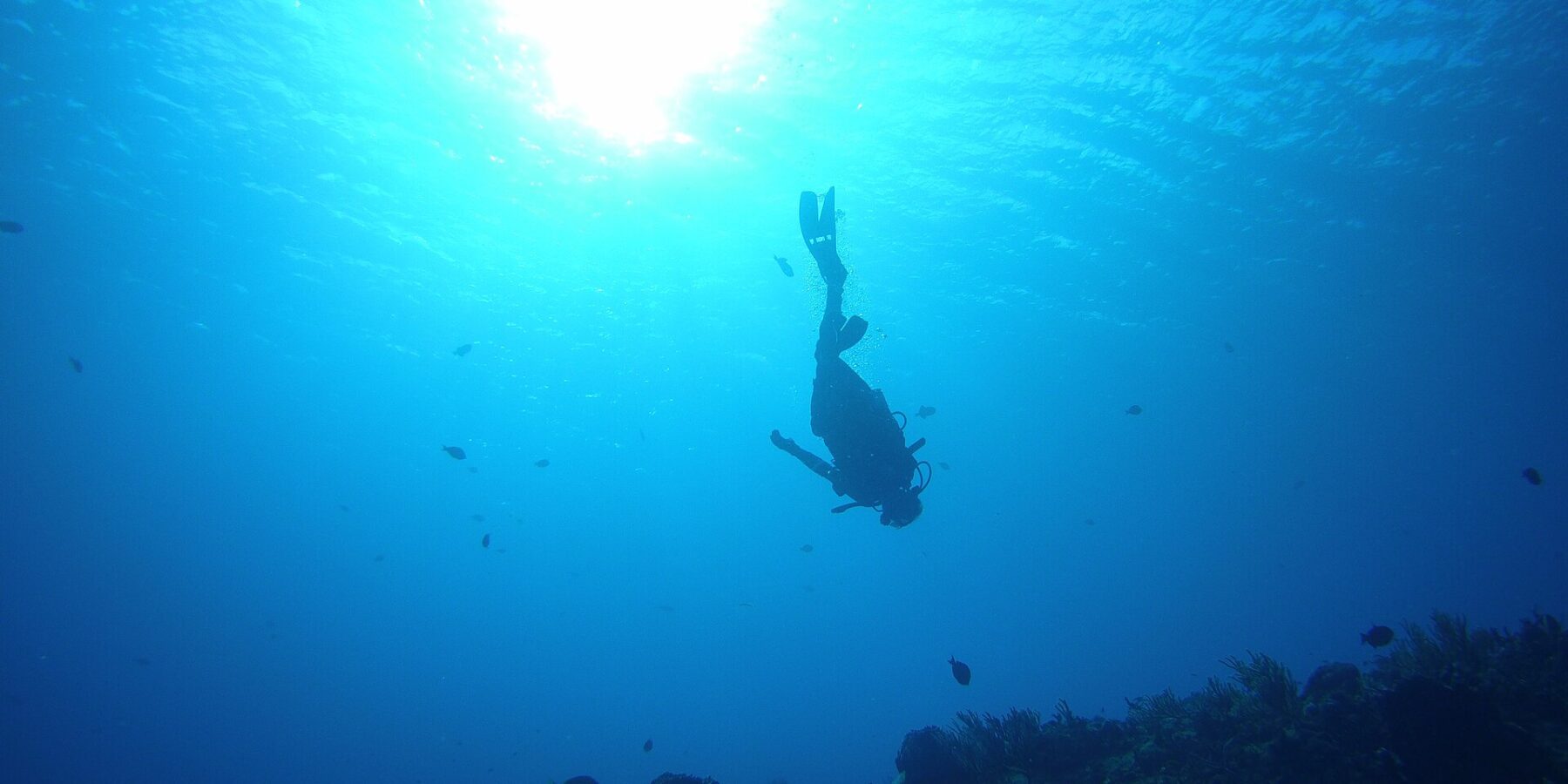
Palancar Reef is a five-kilometer reef off southwest Cozumel, cut into canyons, tunnels and pinnacles that you explore on a drift dive, from 6 to 34 meters. It is the best-known site in the Mexican Caribbean, and turtles pass by on almost every dive. Its gardens suit beginners, its caves Advanced divers.
Why dive Palancar?
- Five kilometers of coral canyons, tunnels and pinnacles, from 6 to 34 meters
- Four sections for every level: Gardens for beginners, Caves and Horseshoe for Advanced divers
- Hawksbill and green turtles on almost every dive, eagle rays from December to March
- Visibility of 25 to 35 meters year-round in 26 to 29 °C water
- The splendid toadfish, endemic to Cozumel, under the ledges
Palancar in pictures
What will you see at Palancar?
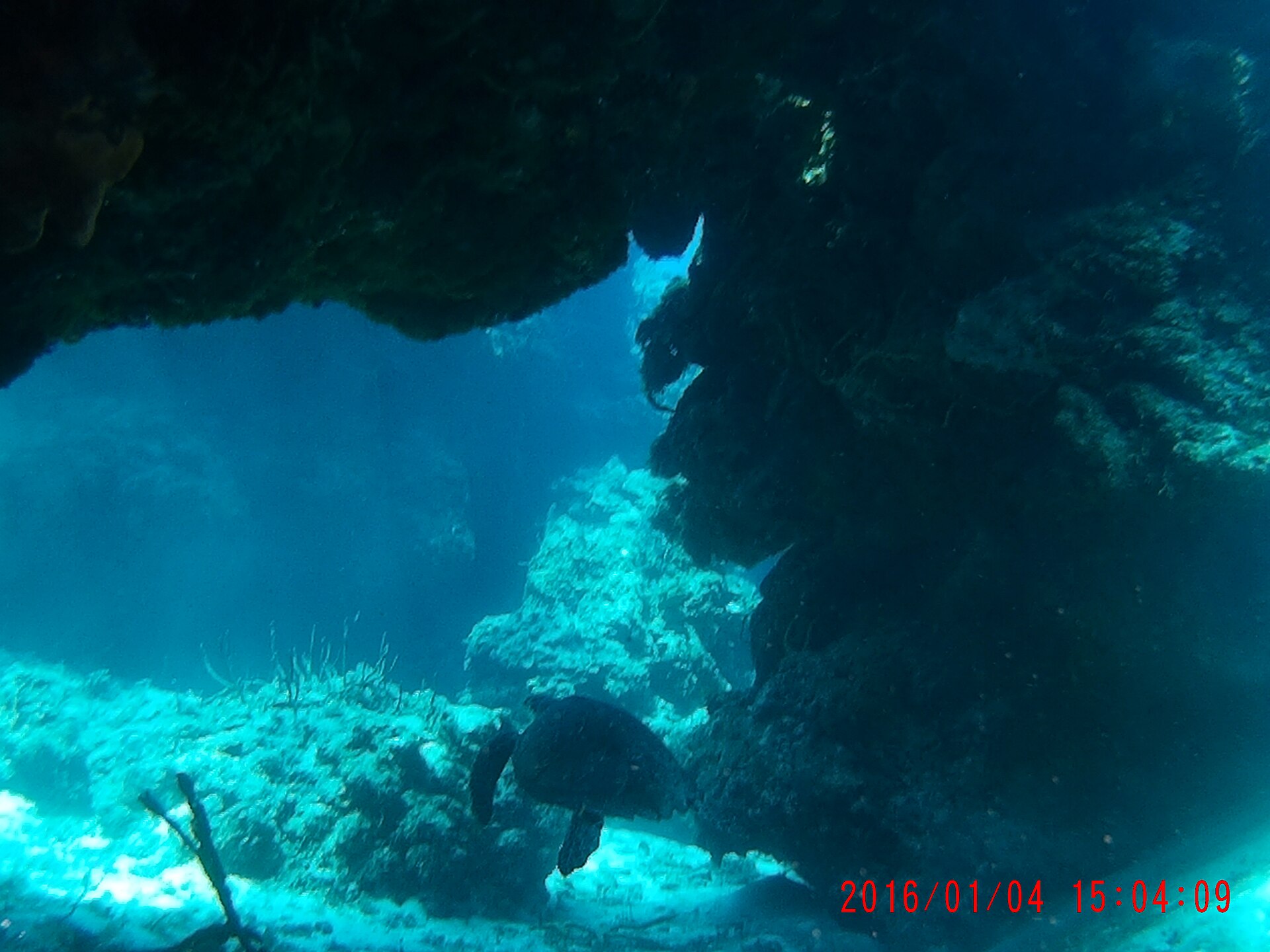
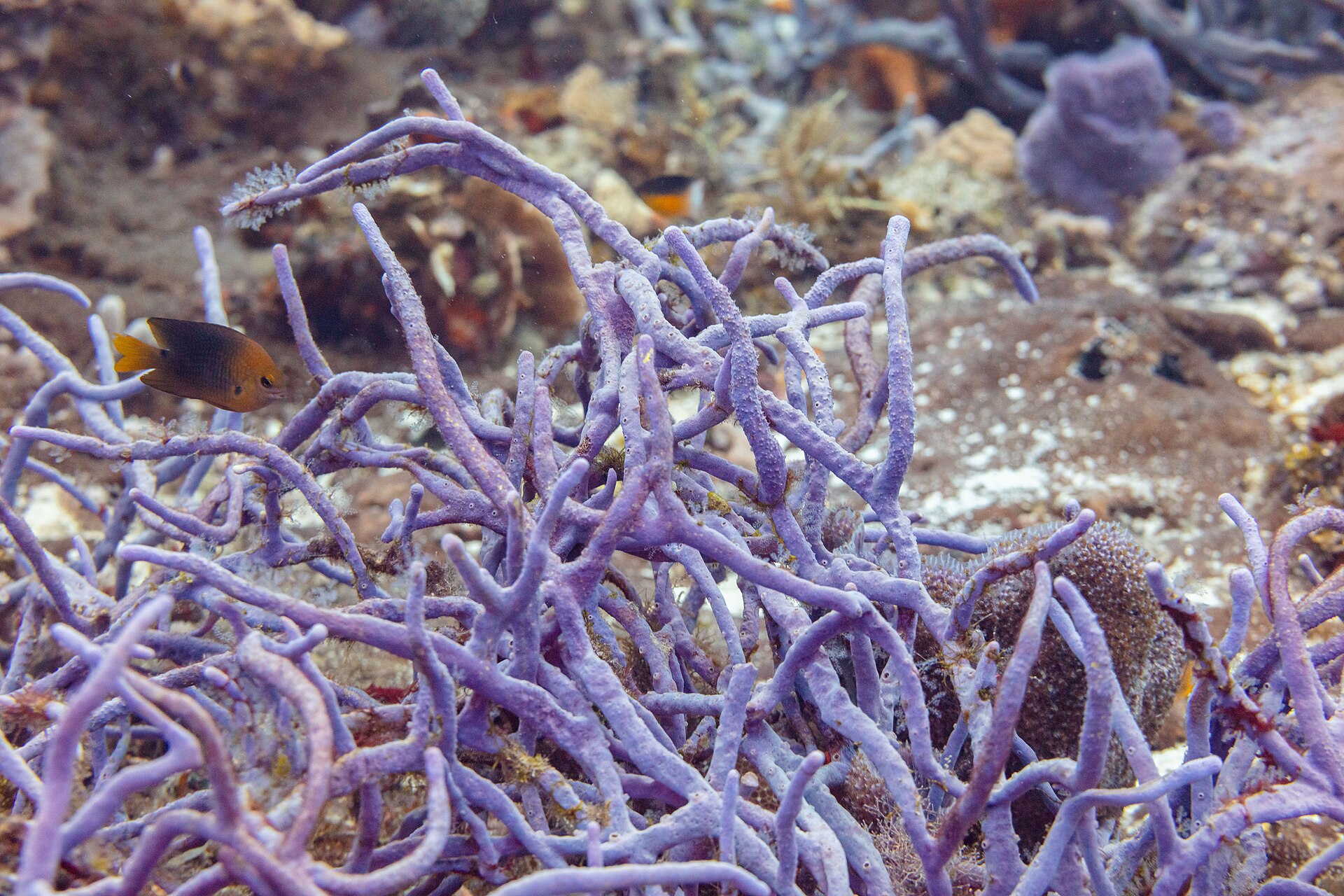
Palancar is a reef of hard coral and sponges: star and brain corals, sea fans and sea plumes on the ridges, barrel sponges and purple rope sponges in the canyons, azure vase sponges on the walls. Groupers, gray and French angelfish, green morays and spiny lobsters live in the passages; stingrays settle on the sand at the exits, and now and then a nurse shark sleeps under an overhang. Hawksbill and green turtles turn up on almost every dive, grazing on the sponges without a care for the bubbles. In the blue, above the pinnacles, barracudas, jacks and, from December to March, eagle rays go by. Cozumel also has a species of its own: the splendid toadfish, yellow with black stripes, which you look for with a light under the ledges, and which you sometimes hear grunting before you see it.
| Species | J | F | M | A | M | J | J | A | S | O | N | D | Note |
|---|---|---|---|---|---|---|---|---|---|---|---|---|---|
 Hawksbill turtle | peak season | peak season | peak season | peak season | peak season | peak season | peak season | peak season | peak season | peak season | peak season | peak season | on the sponges in the canyons, on almost every dive |
 Green turtle | possible | possible | possible | possible | possible | possible | possible | possible | possible | possible | possible | possible | passing over the sand and the top of the reef |
 Great barracuda | possible | possible | possible | possible | possible | possible | possible | possible | possible | possible | possible | possible | hanging still in the blue above the pinnacles |
| Eagle rays | peak season | peak season | peak season | possible | rare | rare | rare | rare | rare | rare | possible | peak season | in formation along the wall, from December to March |
| Splendid toadfish | peak season | peak season | peak season | peak season | peak season | peak season | peak season | peak season | peak season | peak season | peak season | peak season | endemic to Cozumel, under the ledges, look for it with a light |
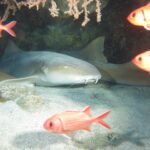 Nurse shark | possible | possible | possible | possible | possible | possible | possible | possible | possible | possible | possible | possible | asleep under the overhangs of Caves and Bricks |
| Groupers and angelfish | peak season | peak season | peak season | peak season | peak season | peak season | peak season | peak season | peak season | peak season | peak season | peak season | residents of the tunnels and canyons |
peak seasonpossiblerare
What is diving like at Palancar?
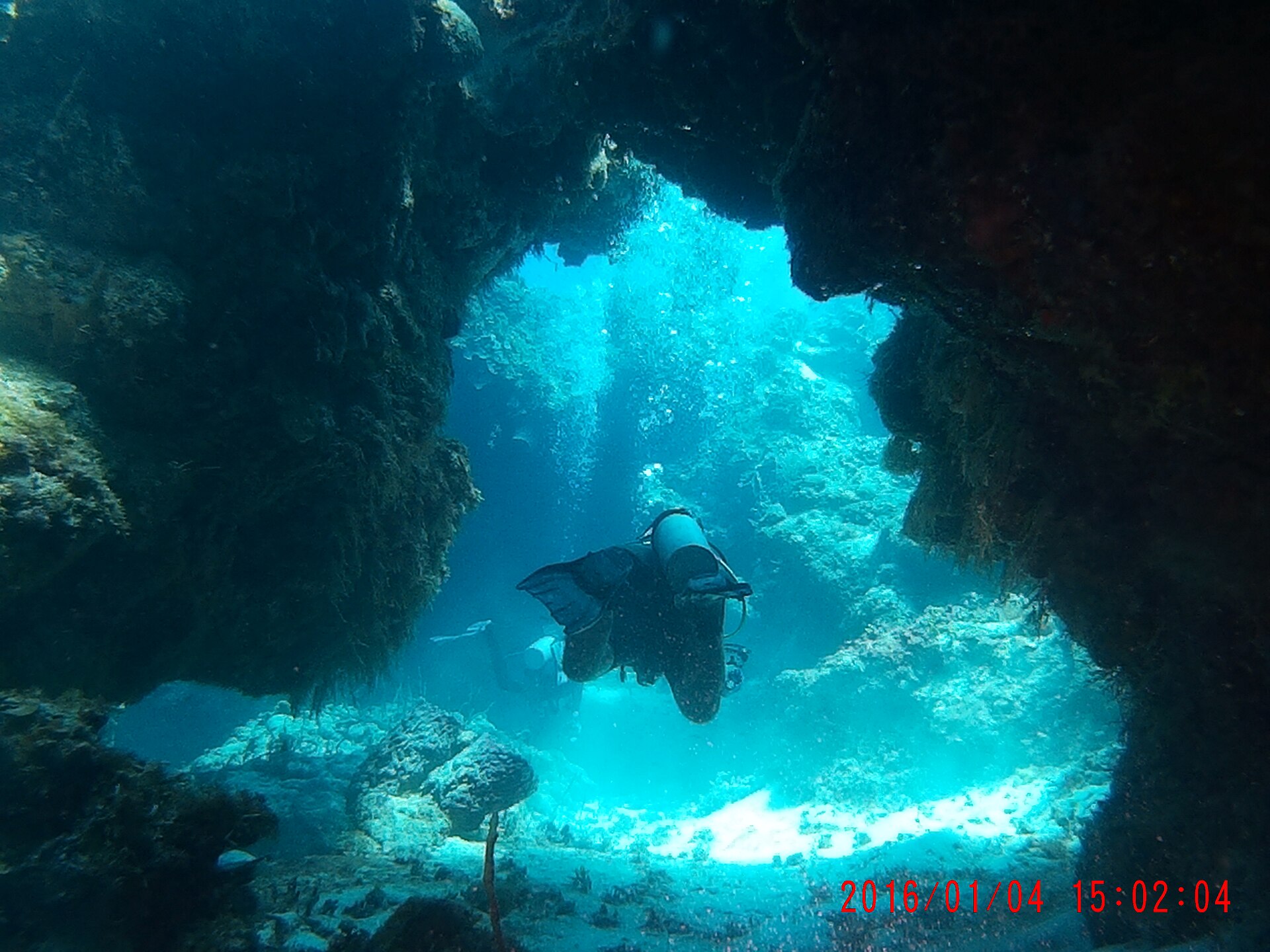
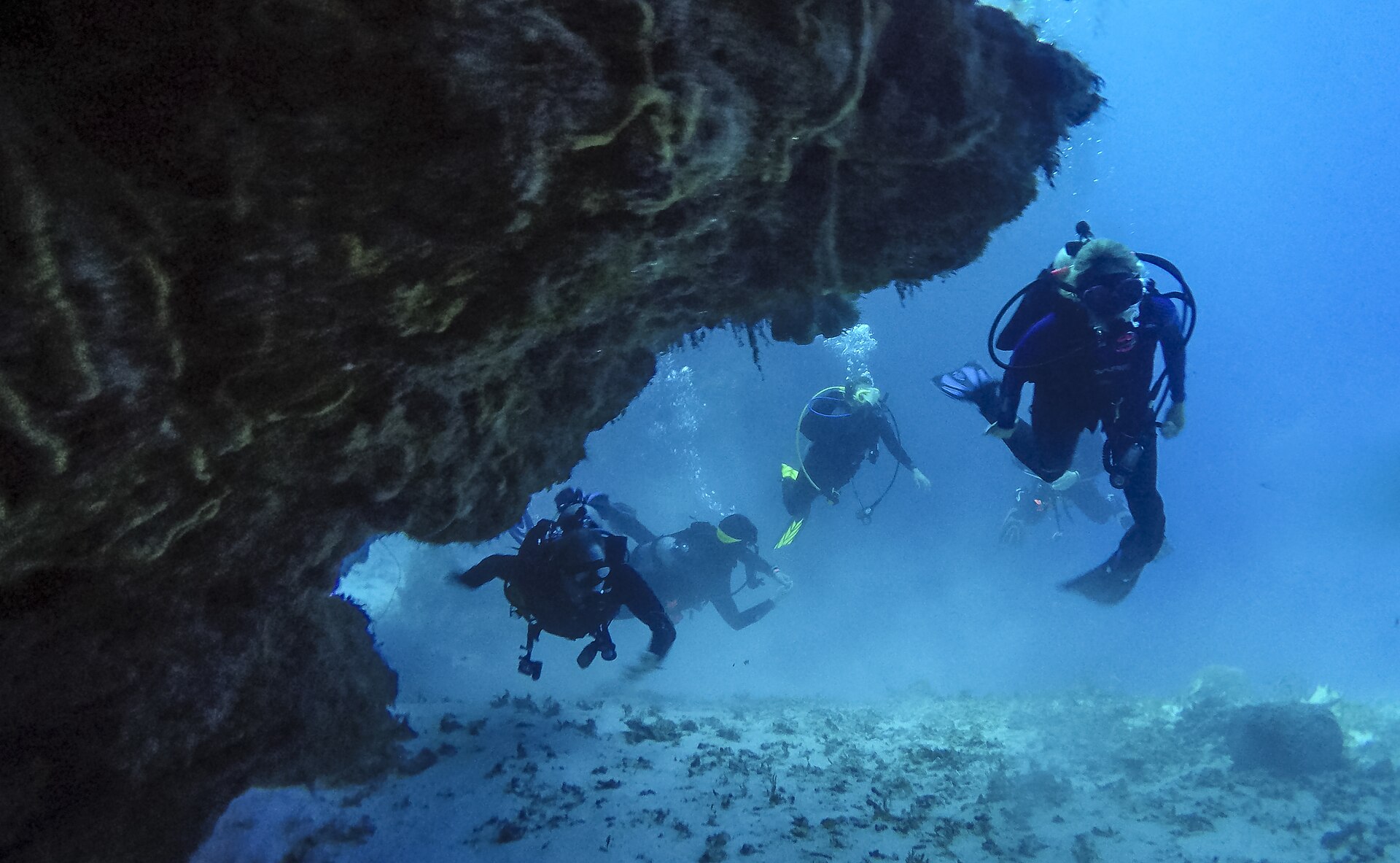
The reef stretches for more than five kilometers, running north to south, between 6 and 34 meters, and you dive it in sections. Gardens, in the north, is the shallowest, with its ridge at 10 meters and its sand canyons. Caves has tunnels that bring you up from 25 meters toward the plateau. Horseshoe is an amphitheater of pinnacles rising from 30 meters to 6 meters below the surface. Bricks, in the south, opens up three kilometers of caverns, overhangs and sea fans. Current is the rule in Cozumel: weak or absent in the shelter of the canyons, it picks up at the points and pushes north, hence the drift, with the boat following the group. Visibility is 25 to 35 meters. Open Water is fine for Gardens; you need Advanced and solid buoyancy for Caves and Horseshoe, where you pass under coral arches in single file.
When to dive Palancar?
idealgoodnot recommended
You can dive Palancar year-round. The water is 26 to 27 °C from December to March, when visibility is at its best, often over 30 meters, and eagle rays cruise along the walls; a 3 millimeter wetsuit is enough. From April to June, the water warms to 28 °C and the sea is calm: it is the best time for everyone. From July to October, at 29 °C, the dives are the easiest, but it is hurricane season, with the heaviest rain in September and October, and the port authority closes the harbor a few days a year. Sargassum, from April to October, washes up on the island's east coast and on the mainland, not on the west coast reefs. Cruise ships unload mostly in winter, so dive boats leave early to keep the sites to themselves.
How to get to Palancar?
Palancar is off southwest Cozumel, 20 to 40 minutes by boat from the San Miguel marinas and the coastal hotels, depending on where you leave from. Dive centers head out in the morning for two dives, Palancar or Santa Rosa as the first deep dive, then a shallower reef, and pick up their divers at the hotel piers. Two boat dives cost US$135 at ScubaTony, park wristband included, US$130 at Blue Note Scuba plus US$15 for the park, and US$115 to US$135 at Dive Paradise. The national park wristband is MXN 225 a day in 2026; Nitrox costs US$16 for two tanks at ScubaTony, and full equipment US$40 a day at Blue Note. You reach Cozumel by ferry from Playa del Carmen, every thirty minutes, with a 35 to 45 minute crossing at MXN 320 to MXN 335 one way, or through its airport via Mexico City or the United States. Cancún, with its direct flight from Paris, is an hour's drive from Playa del Carmen. The island has two hyperbaric chambers, at the international hospital and at Costamed.
Stay in Cozumel
Where to find a dive guide in Palancar?
Guided tours you can book online, ranked by number of reviews. These are affiliate links: if you book, you support us at no extra cost.

 Viator
Discover Scuba Diving in Cozumel Paradise Reef
5.0 (837 reviews)View and book Viator
Cozumel Exploratory Scuba Diving at Chankanaab with Beach Access
5.0 (360 reviews)View and book Viator
2 Tank Morning Dive: Scuba Diving in Cozumel
4.9 (166 reviews)View and book Viator
Private Discover Scuba Diving in Cozumel for First-Time Divers
5.0 (149 reviews)View and book Viator
2 dives in Cozumel (for certified divers only)
4.5 (149 reviews)View and book Viator
Cozumel Scuba Diving
4.8 (107 reviews)View and bookWhere to stay near Palancar?
Hotels, apartments and rooms around Cozumel, with current prices.
Is Palancar Reef part of the Mesoamerican Reef?
Cozumel sits on the edge of the Mesoamerican Reef, the second-largest reef system in the world, which runs for 1,100 kilometers from Isla Contoy, north of the Yucatán, to the Bay Islands of Honduras. Arrecifes de Cozumel National Park, created on July 19, 1996, protects 120 square kilometers of reef south of the international pier, down to Punta Sur and a stretch of the east coast, and reaches down to the 100-meter depth contour. It holds more than a thousand marine species, shallow and mesophotic reefs, loggerhead and hawksbill turtles, and the splendid toadfish, found nowhere else. It has been a Ramsar wetland since 2005. In 2019, the park closed several reefs, Palancar included, from October 7 to December 15, to assess the state of the coral and give it a break: pressure from cruise ships and divers is the island's constant issue.
Gardens, Caves, Horseshoe or Bricks: which Palancar site should you dive?
A typical Palancar dive starts with a descent to the sand, at around 15 to 20 meters. The guide then leads the group into the canyons that cut across the reef, between coral pinnacles rising to within 10 meters of the surface, with short tunnels and arches that you swim through one after the other. At Gardens, the canyons are wide, the white sand reflects the light and turtles graze on the sponges: it is the first dive for Open Water divers in Cozumel. At Caves, the tunnels are longer and darker; you enter at around 25 meters and come out on the plateau, and a light is recommended. At Horseshoe, a bowl of pinnacles opens onto the blue, and that is where you watch the eagle rays go by. Bricks, in the south, strings together caverns, overhangs and deep sea fans to the edge of the park.
How do you drift dive in Cozumel?
The Cozumel current comes from the south and runs up the west coast; its strength changes from one day to the next and sometimes between two dives. Boats do not drop anchor: the group descends together, drifts with the guide and surfaces under a surface marker buoy that the captain follows from above. So you have to stay together, keep the guide in sight, keep your SMB within reach and not fight the current when it speeds up at the points. In the canyons and tunnels, buoyancy is what counts: an overweighted diver breaks coral there, and the park bans gloves so that no one grabs the reef. Dive centers refuse deep dives to divers without Advanced, and it is a good rule.
Our tip
Do Palancar Caves or Horseshoe as your first dive, and save Gardens for the second. Leave early, before the cruise ship passengers. Use little weight and tuck in your gauges before the tunnels, because one badly placed fin kick breaks coral.
Other dive sites nearby
 MexicoWall
Santa Rosa Wall
Yucatán and the Caribbean: Cozumel, cenotes, Playa del Carmen MexicoPelagic
Playa del Carmen bull sharks
Yucatán and the Caribbean: Cozumel, cenotes, Playa del Carmen MexicoCave or cenote