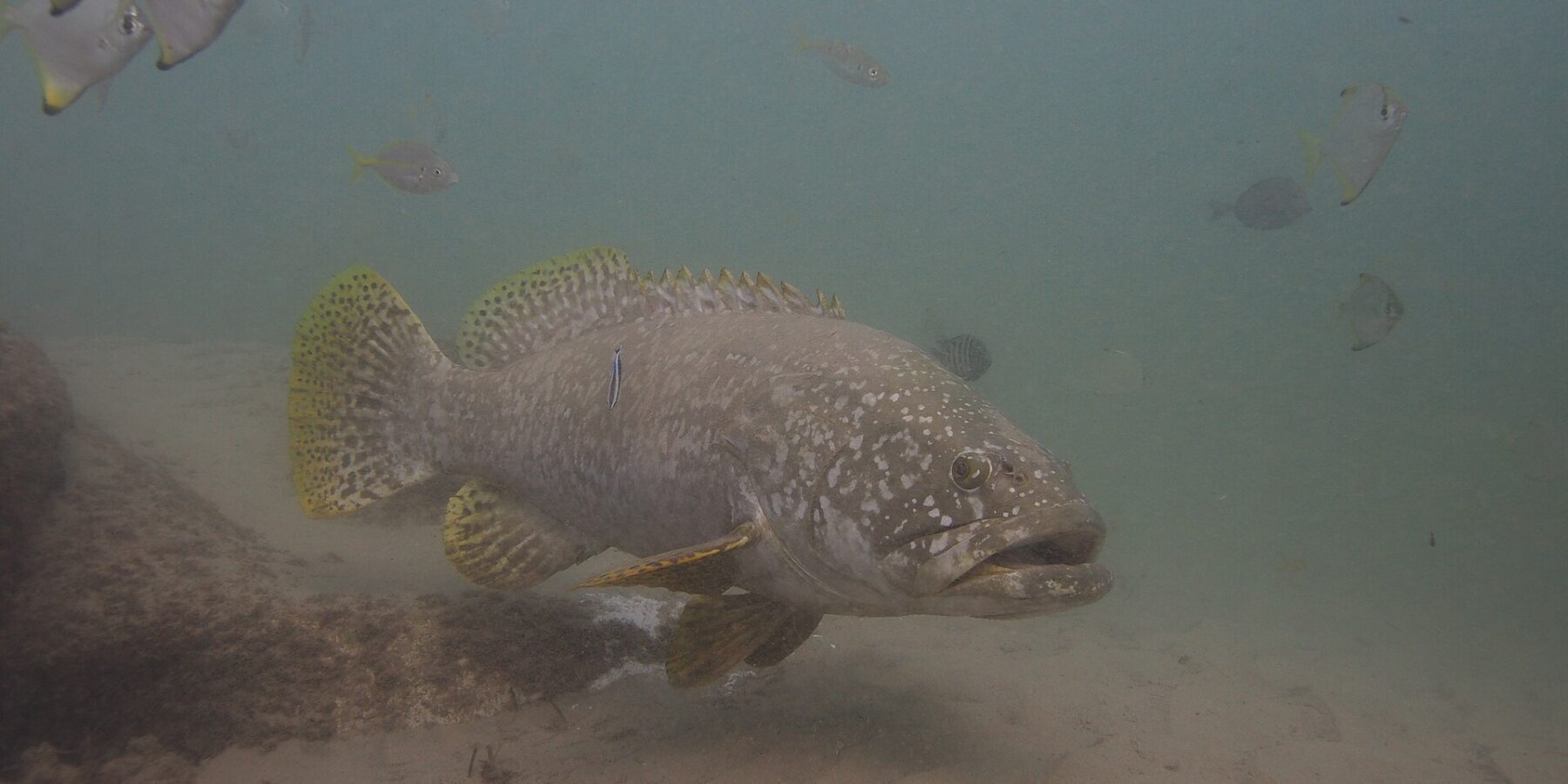
The giant grouper is the largest bony fish on coral reefs: up to 2.70 meters and 400 kilos. Mottled gray-brown with thick lips, it stays deep in caves and under overhangs all year, at both Banana Reef and Chumphon Pinnacle.
Where to dive to see the giant grouper?
 Maldives
 Thailand
How do you identify a giant grouper?
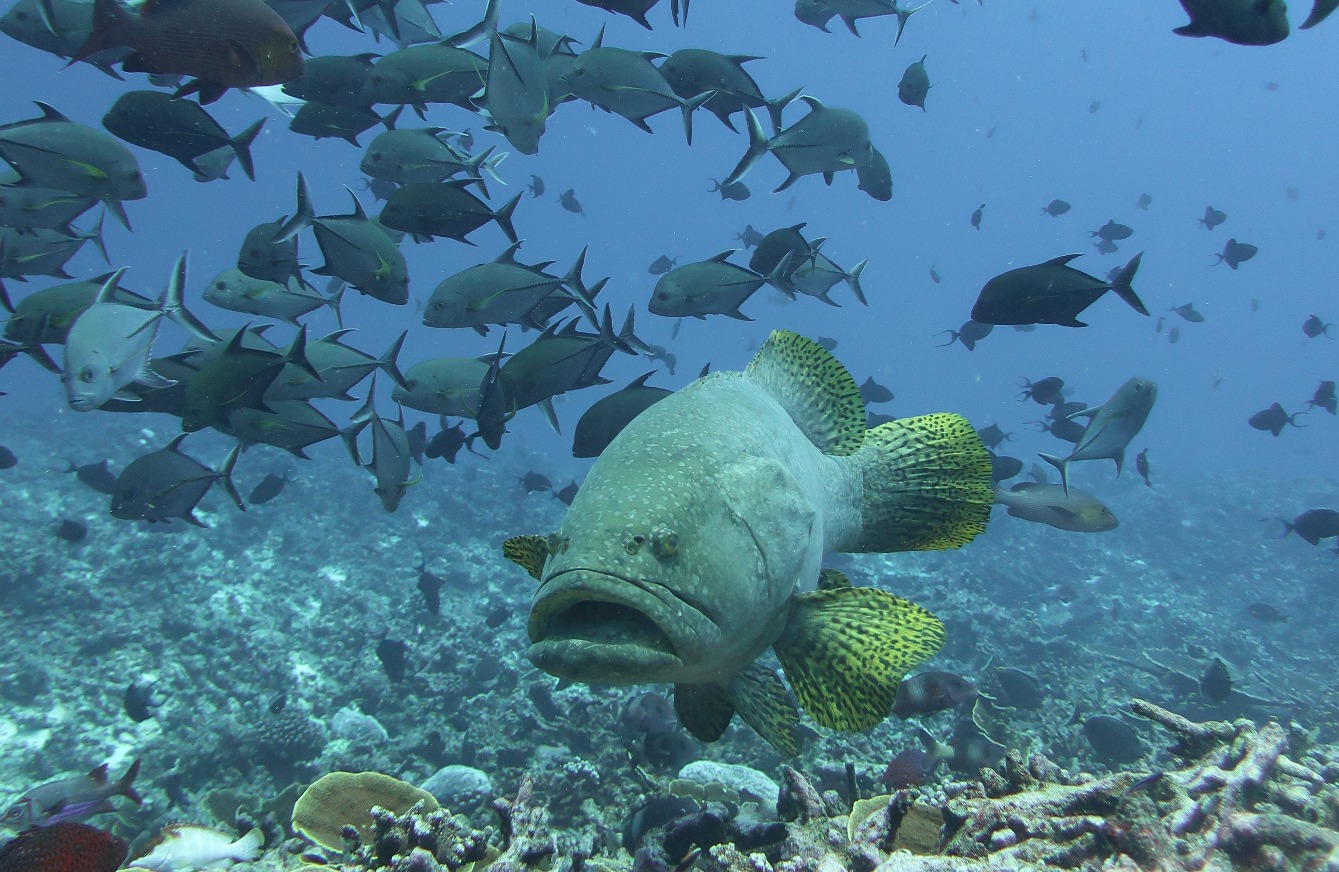
The giant grouper, Epinephelus lanceolatus, is the largest bony fish on coral reefs: up to 2.70 meters and 400 kilos, although most adults measure around 1.80 meters. The body is massive and stocky, the mouth wide with fleshy lips, the eyes small, the tail rounded. The adult is gray-brown to gray-green, mottled with darker blotches; its fins, darker or yellowish, are scattered with black dots, and the head has small pale dots. The juvenile looks nothing like it: it is yellow with broad, irregular dark bands and dark spots on the fins. Unlike the potato grouper, the adult has no large, round, well-separated spots on a pale background: its coat is a dark marbling.
Giant grouper in pictures
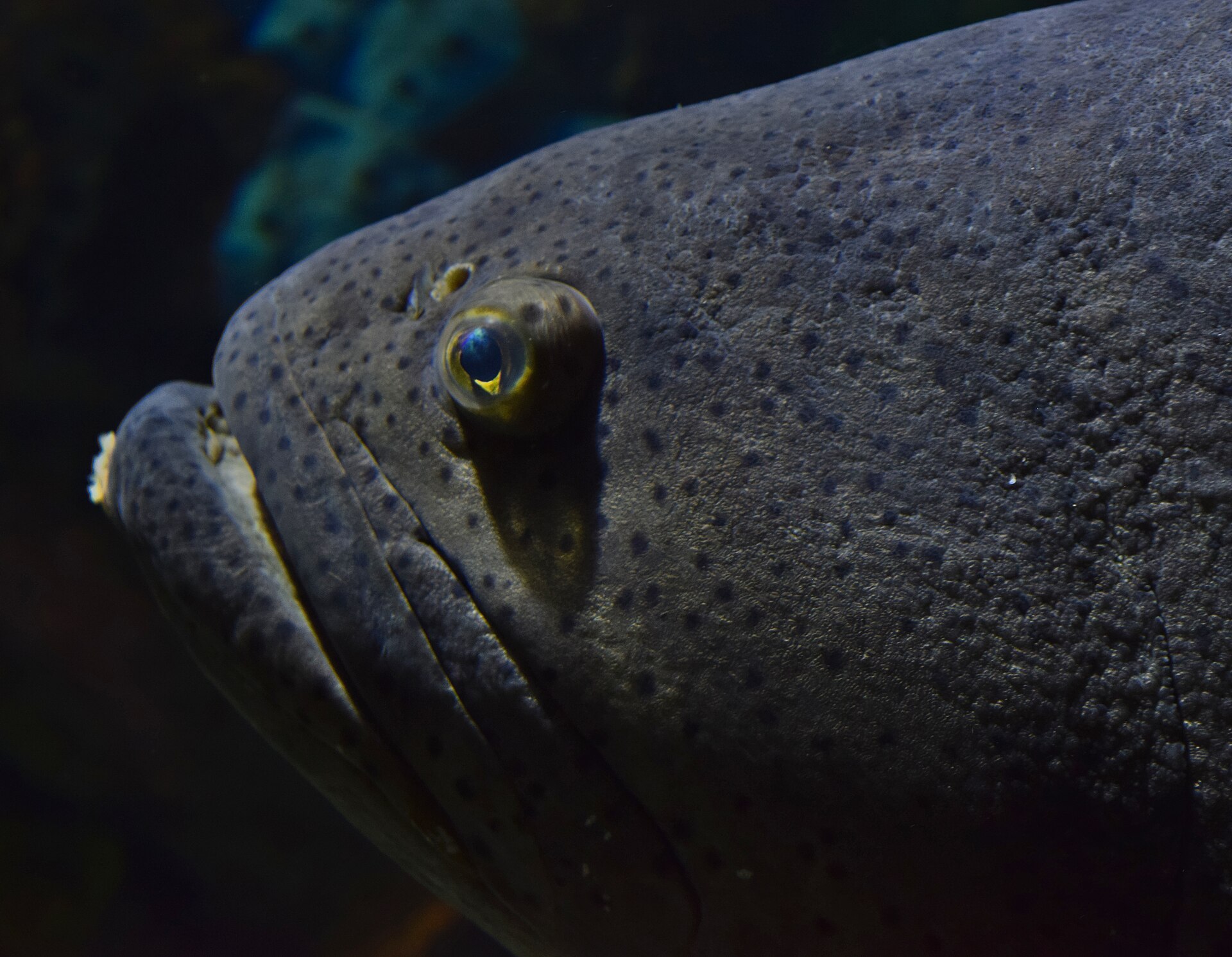
How does the giant grouper live?
Solitary and long-lived, the giant grouper lives on reefs, usually between the surface and 50 meters, sometimes down to 200 meters. It likes caves, overhangs and wrecks, and also visits estuaries and murky water over muddy bottoms. It is an opportunistic ambush hunter that swallows its prey whole: spiny lobsters and other crustaceans, fish, small sharks and rays, young turtles and mollusks. A hermaphrodite, it starts life as a female and can become male. Adults gather to spawn in open water, following the moon, for about seven days. The discreet juveniles are rarely seen. The species ranges across the whole Indo-Pacific, from the Red Sea to South Africa and as far as Hawaii and the Pitcairn Islands, and from southern Japan to Australia.
Where and when can you see giant groupers in the Maldives and Thailand?
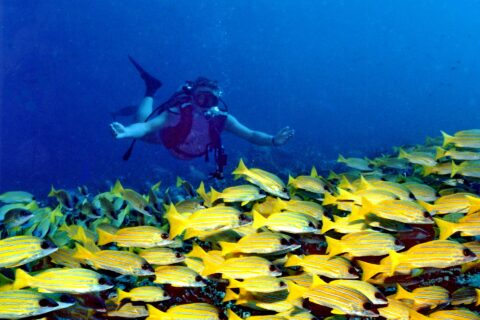
On our dive sites, you look for the giant grouper in the shadows, all year round. In the Maldives, at Banana Reef in Malé Atoll, it stays deep in the caves and under the overhangs, between 10 and 25 meters, with bluestripe snappers, sweetlips, morays and spiny lobsters: you need a light to find it. In Thailand, at Chumphon Pinnacle off Koh Tao, it holds the overhangs and crevices at the foot of the pinnacle, around 30 meters, where the standard dive goes down to see it before spiraling back up along the walls.
Is the giant grouper endangered?
The giant grouper has become rare across much of its range because of overfishing, and the IUCN lists it as Data Deficient: there are not enough figures to assess its risk of extinction. Curious, it often comes very close to divers. It is not known to be dangerous, even though attacks on humans by very large individuals have been reported, never confirmed: watch it come, without feeding or touching it.
Our tip
Look for it with a light at the back of caves and under overhangs: at both Banana Reef and Chumphon Pinnacle, that is where it stays. Wait at the entrance rather than following it inside, so it always has a way out. Don't give it anything and don't touch it, even when it comes right up to your mask.