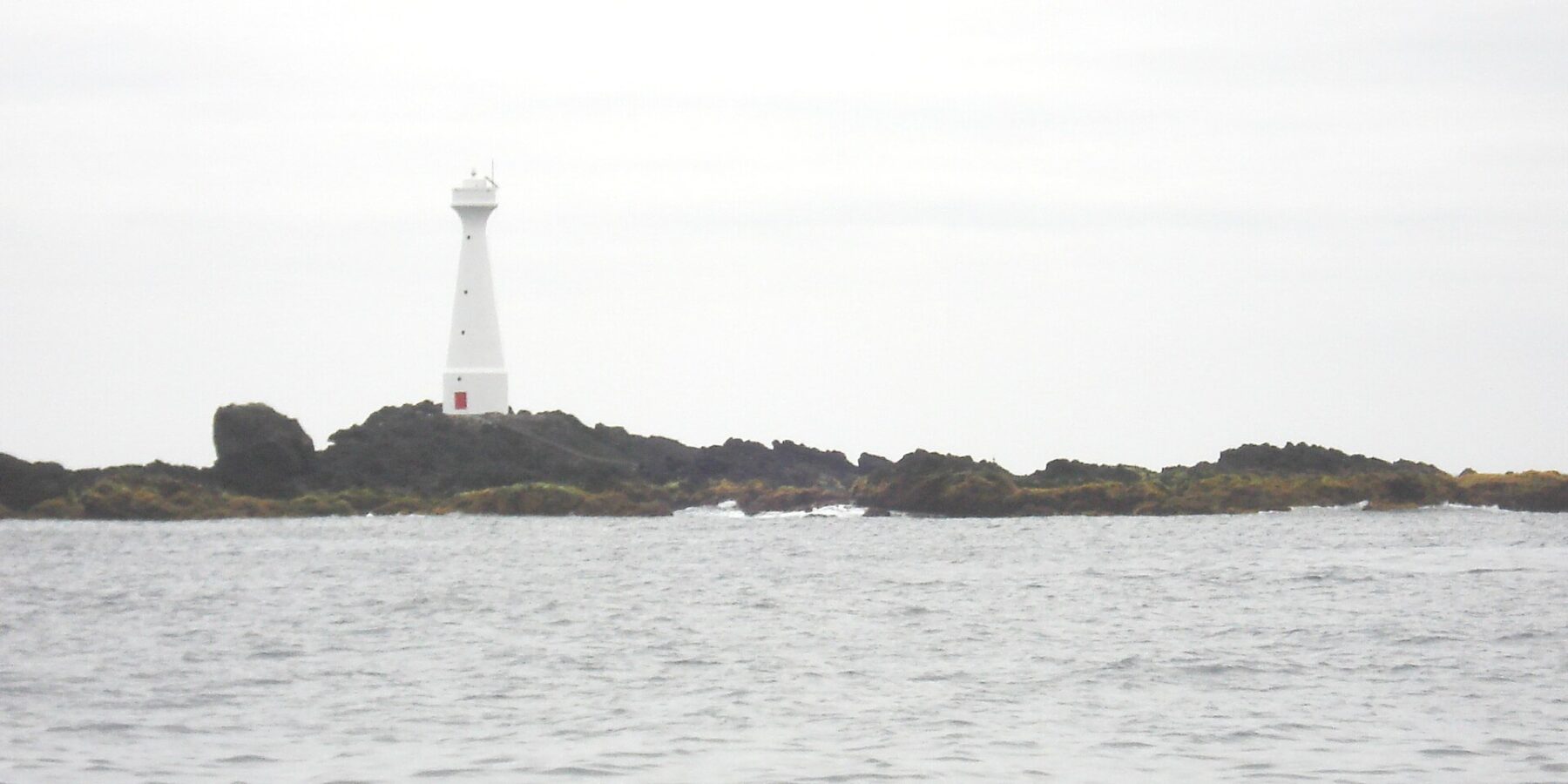
The Formigas and Dollabarat form an isolated rocky bank 43 km from Santa Maria, a nature reserve since 1988, where you meet bold groupers, tuna, barracuda and mobulas in the clearest water in the archipelago. Vila do Porto is 70 minutes away by RIB.
Why dive the Formigas and Dollabarat?
- A nature reserve since 1988, closed to fishing, and a Ramsar site since 2008
- An isolated reef in the open sea, 70 minutes from Santa Maria, in the clearest water in the Azores
- Bold dusky groupers, schools of tuna, wahoo and yellowmouth barracuda
- Mobulas and, more rarely, oceanic manta rays, hammerheads and Galapagos sharks
- Two sites in one day: the Formigas walls and the Dollabarat plateau, with its top at 5 m
The dive site on the map
Base: Vila do Porto (Santa Maria), 49 km as the crow flies.
See nearby dive sites on the mapThe Formigas and Dollabarat in pictures
What will you see at the Formigas and Dollabarat?
On the bottom, dusky groupers hold the walls and let you get close; they share the rock with the island grouper, the Azores' own grouper, and the barred hogfish. Above, the current brings in schools: skipjack, bigeye tuna, wahoo, Atlantic bonito, yellowmouth barracuda and white trevally, plus clouds of sea chubs and gray triggerfish that you can see from the boat along with the amberjacks. Mobulas pass off the walls, less regularly than at Ambrósio, and the oceanic manta ray sometimes shows up, huge and alone. The smooth hammerhead and the Galapagos shark are possible but not frequent; the whale shark is among the bank's migrants. On the deep walls, black coral forms real colonies at around 15 m on the east side of Dollabarat, and kelp forests cover the bottom between 45 and 60 m. The ride from Santa Maria often comes with sperm whales, pilot whales, loggerhead turtles and seabirds, sometimes orcas.
| Species | J | F | M | A | M | J | J | A | S | O | N | D | Note |
|---|---|---|---|---|---|---|---|---|---|---|---|---|---|
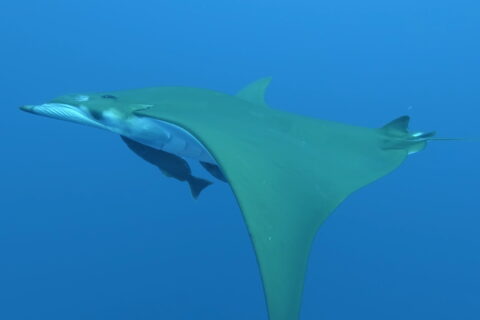
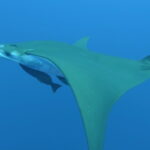 Sicklefin devil ray | rare | rare | rare | rare | rare | possible | peak season | peak season | peak season | possible | rare | rare | passing off the walls, less regular than at Ambrósio |
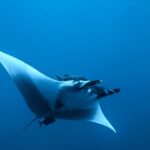 Oceanic manta ray | rare | rare | rare | rare | rare | possible | possible | possible | possible | possible | rare | rare | rare, alone, in open water above the bank |
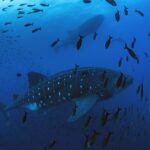 Whale shark | rare | rare | rare | rare | rare | rare | possible | possible | possible | rare | rare | rare | among the migrants recorded on the bank; an exceptional encounter |
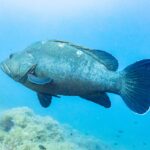 Dusky grouper | possible | possible | possible | possible | possible | peak season | peak season | peak season | peak season | peak season | possible | possible | on the walls and boulders, unafraid, with the island grouper and the barred hogfish |
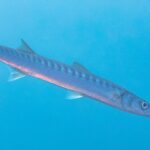 Yellowmouth barracuda | rare | rare | rare | rare | possible | peak season | peak season | peak season | peak season | peak season | possible | rare | schooling in the current, with white trevally and amberjacks |
| Tuna, wahoo and bonito | rare | rare | rare | rare | possible | peak season | peak season | peak season | peak season | peak season | possible | rare | skipjack, bigeye tuna, wahoo and Atlantic bonito hunting in the blue |
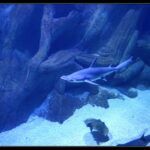 Smooth hammerhead | rare | rare | rare | rare | rare | possible | possible | possible | possible | possible | rare | rare | Sphyrna zygaena, possible in open water, like the Galapagos shark |
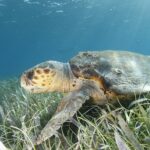 Loggerhead turtle | rare | rare | rare | rare | possible | possible | possible | possible | possible | possible | rare | rare | at the surface during the ride, with sperm whales, pilot whales and seabirds |
peak seasonpossiblerare
What is diving like at the Formigas and Dollabarat?
Two dives in one day, on two sites. At the Formigas, the tour of the islets runs at an average depth of 20 m, with vertical walls on the east side of the main islet, boulders on the north side, a small shoal at 8 m fifty meters south of the lighthouse, and the Olympia wreck, to the southwest, between 30 and 50 m; the walls drop to 60 or 70 m. At Dollabarat, the top rises to between 3 and 5 m below the surface, gullies cut into it at 8 to 10 m, then the reef drops toward 20 or 30 m; you mostly stay around 20 m, 50 m at most. The current is moderate to strong, swell is common, and there is no shelter within 70 minutes: dive centers keep this trip for experienced divers, Advanced Open Water at minimum, comfortable in current and in open water. In return, the water is the clearest in the Azores: 20 to 40 m visibility, sometimes more.
When to dive the Formigas and Dollabarat?
idealgoodnot recommended
The Formigas and Dollabarat are dived on day trips, on the open sea, more than an hour from the nearest shelter: the boat only goes in calm seas, and the trip is decided the day before. The Santa Maria dive centers open from June to October, and July to September is when the sea allows the most days. The water is 20 °C in June, 22 °C in July, 23 °C in August and September and 22 °C in October; a 5 mm wetsuit suits midsummer, 7 mm the two ends of the season. In winter, from November to May, the water drops to 16 or 17 °C and no dive center goes out. No species has its own season here: groupers, pelagic schools and mobulas are seen throughout the trips, from one end of summer to the other. Plan a week on the island to have a real chance of going, between two dives at Ambrósio.
How to get to the Formigas and Dollabarat?
The reserve lies 43 km northeast of Santa Maria, 70 minutes by RIB from the Vila do Porto marina; you can also come from São Miguel, in two hours from Vila Franca do Campo and two and a half hours from Ponta Delgada. Haliotis Santa Maria sells the Dollabarat and Formigas day, two dives with tanks, weights, guide, boat and a light meal, for €199; the same day snorkeling costs €169, and full gear rents for €39 a day. At Mantamaria, in the same marina, the 2026 price list charges €112 for logistics on top of two package dives, €108 for the pair, so about €220 for the day. Santa Maria airport is 5 km from Vila do Porto: SATA Air Açores flies from Ponta Delgada, Azores Airlines from Lisbon. From Paris, Azores Airlines reaches Ponta Delgada nonstop in four hours, three times a week, and the inter-island flight to Santa Maria then takes less than an hour.
Stay in Vila do Porto (Santa Maria)
Where to stay near the Formigas and Dollabarat?
Hotels, apartments and rooms around Vila do Porto (Santa Maria), with current prices.
What is the story of the Formigas, from a Basque shipwreck to a 36-day lighthouse?
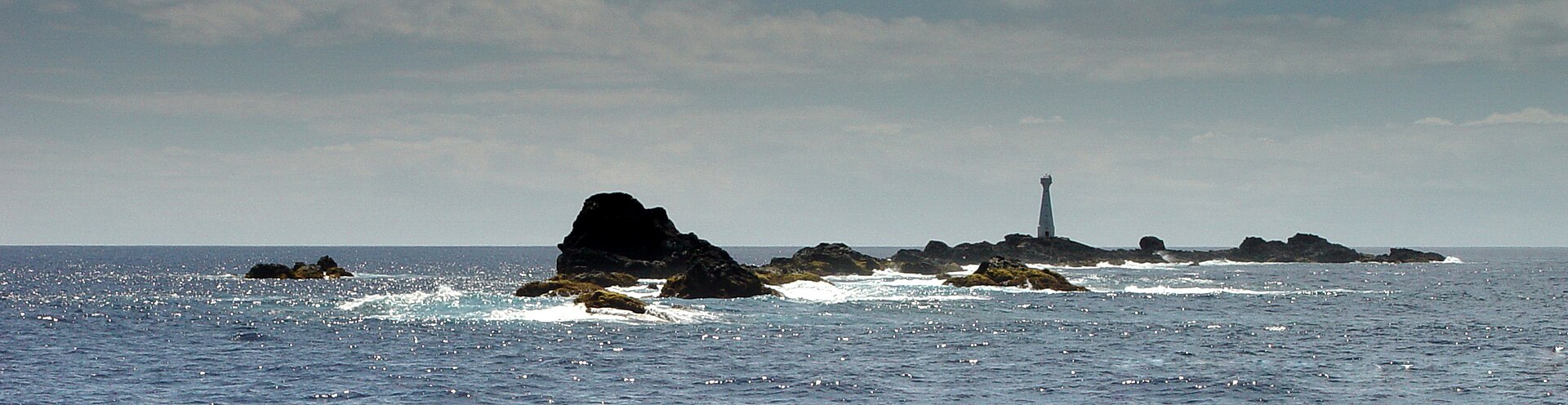
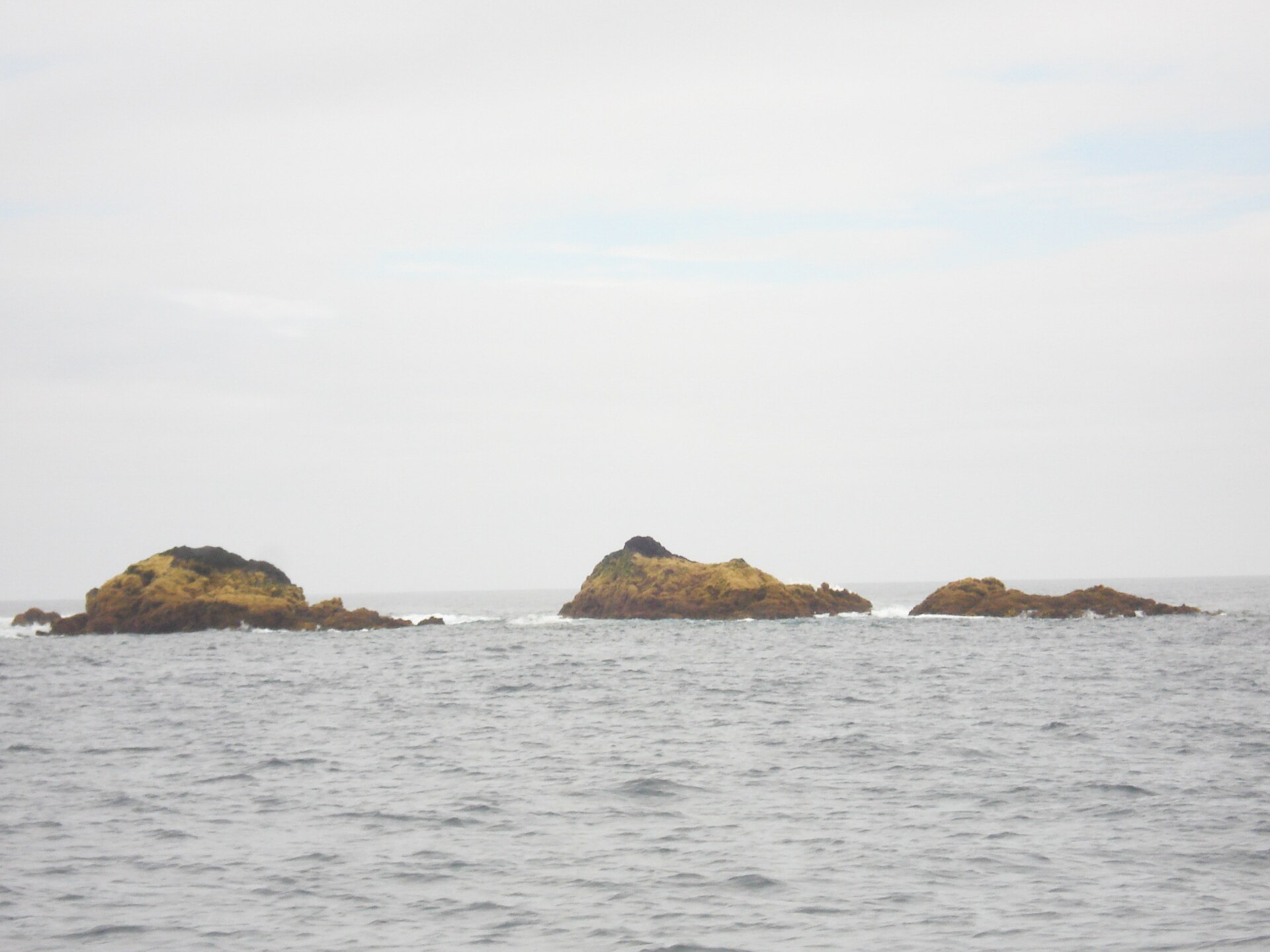
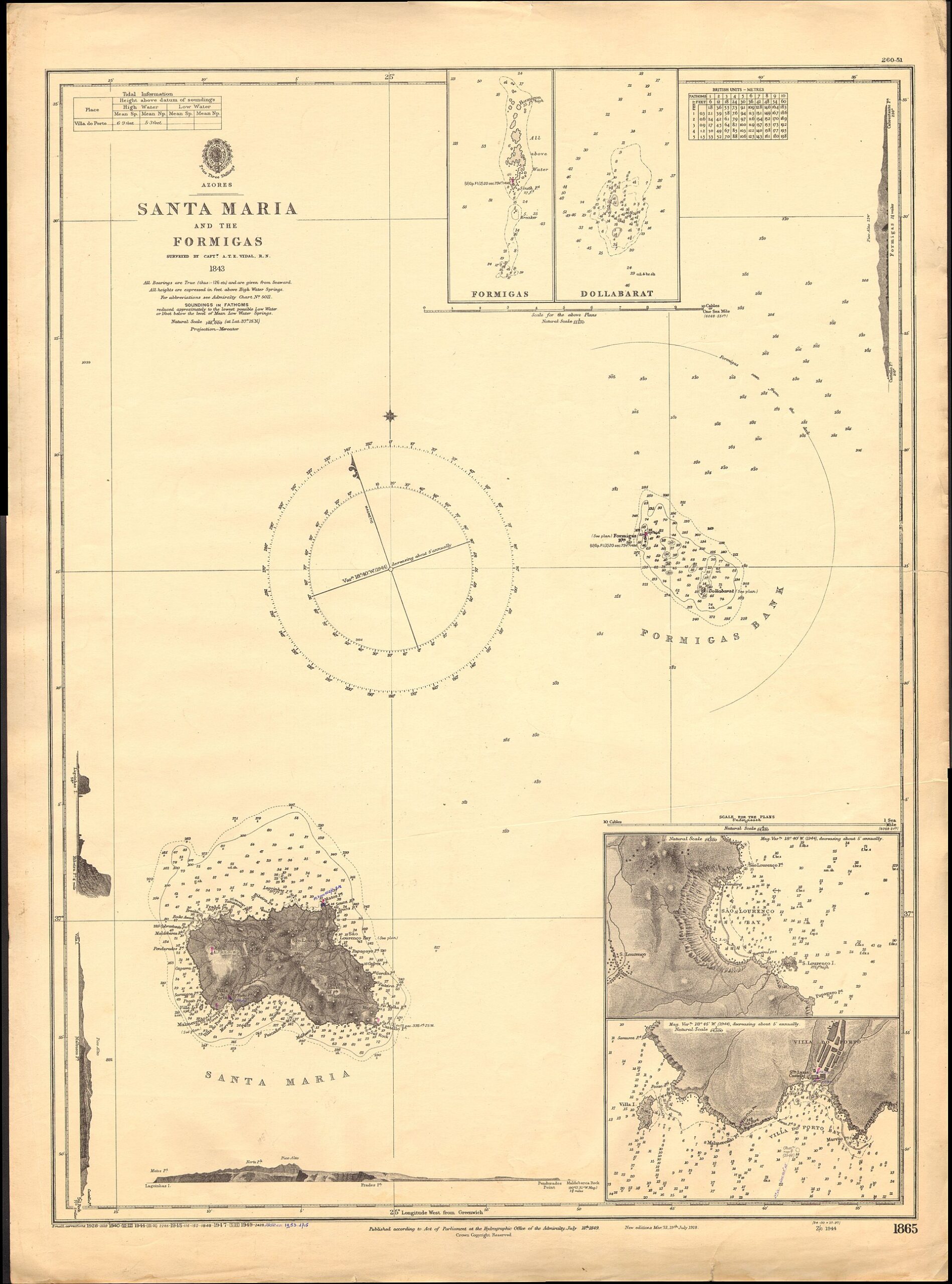
Portuguese navigators reported the Formigas as early as 1431: rocks barely above water, halfway between Santa Maria and nothing. The neighboring reef is named after Pierre Dollabarat, the Basque captain of the Maria de Sebourre, who discovered it on March 7, 1788 by wrecking on it. Both are part of the same underwater volcano, whose cone is bounded by the Formigas to the northwest and Dollabarat to the southeast, five kilometers away: basalts about four million years old, capped with fossil-bearing limestone sediments four to six million years old. The bank stretches 13 km long and 5.5 km wide; the islets above water cover only 9,000 m², and the highest, Formigão, rises to 11 m. The Italian ship Corsaro dredged there in 1886, then Prince Albert I of Monaco's Princesse Alice in 1895. The lighthouse, a 19 m white stone tower with its light at 22 m and a range of 12 nautical miles, was built in the summer of 1948 in 36 days; in heavy seas, the waves wash over it.
What are the two dives of a Formigas and Dollabarat day?
The first dive is usually at the Formigas. You descend along the vertical walls on the east side of the main islet, where dusky groupers come to see who is arriving, then follow the boulders on the north side, in blue water that lets you see the boat from 30 m. Experienced divers can aim for the Olympia wreck, southwest of the islets, between 30 and 50 m, or the small shoal at 8 m just south of the lighthouse. The second dive is at Dollabarat, five kilometers to the southeast: a plateau whose top comes close to the surface, cut by gullies at 8 to 10 m, then dropping toward 20 or 30 m. That is where the schools pass, yellowmouth barracuda, trevally, tuna and wahoo, and where the mobulas show up, sometimes a manta. In between, the boat serves the meal, and cetaceans often drop by during the surface interval.
What has protected the Formigas and Dollabarat since 1988?
The Formigas have been protected since April 4, 1988, by a regional decree that made the islets a nature reserve; the boundaries were set in 1990, and the reserve, reclassified in 2003 with its marine area, covers 35.42 km², from the shoreline down to more than 1,700 m. Since June 16, 2008, the Ilhéus das Formigas e Recife Dollabarat complex has also been a Ramsar site, number 1804, and a Natura 2000 site. All forms of fishing are banned, as are spearfishing and any collecting; a Portuguese Navy vessel based in Ponta Delgada patrols the area regularly. Diving there needs no individual permit, and isolation does the rest: far from any harbor, exposed to swell and current, the bank only sees a few boats a week in the good season, and its wildlife fears no one.
Our tip
Book as soon as you arrive and keep a week on the island: the trip is confirmed the day before. Do the Olympia wreck, between 30 and 50 m, as your first dive, and the Dollabarat plateau afterward.
Other dive sites nearby
 AzoresPelagic
Ambrósio
Santa Maria AzoresReef
Ilhéus da Madalena
Pico and Faial AzoresReef