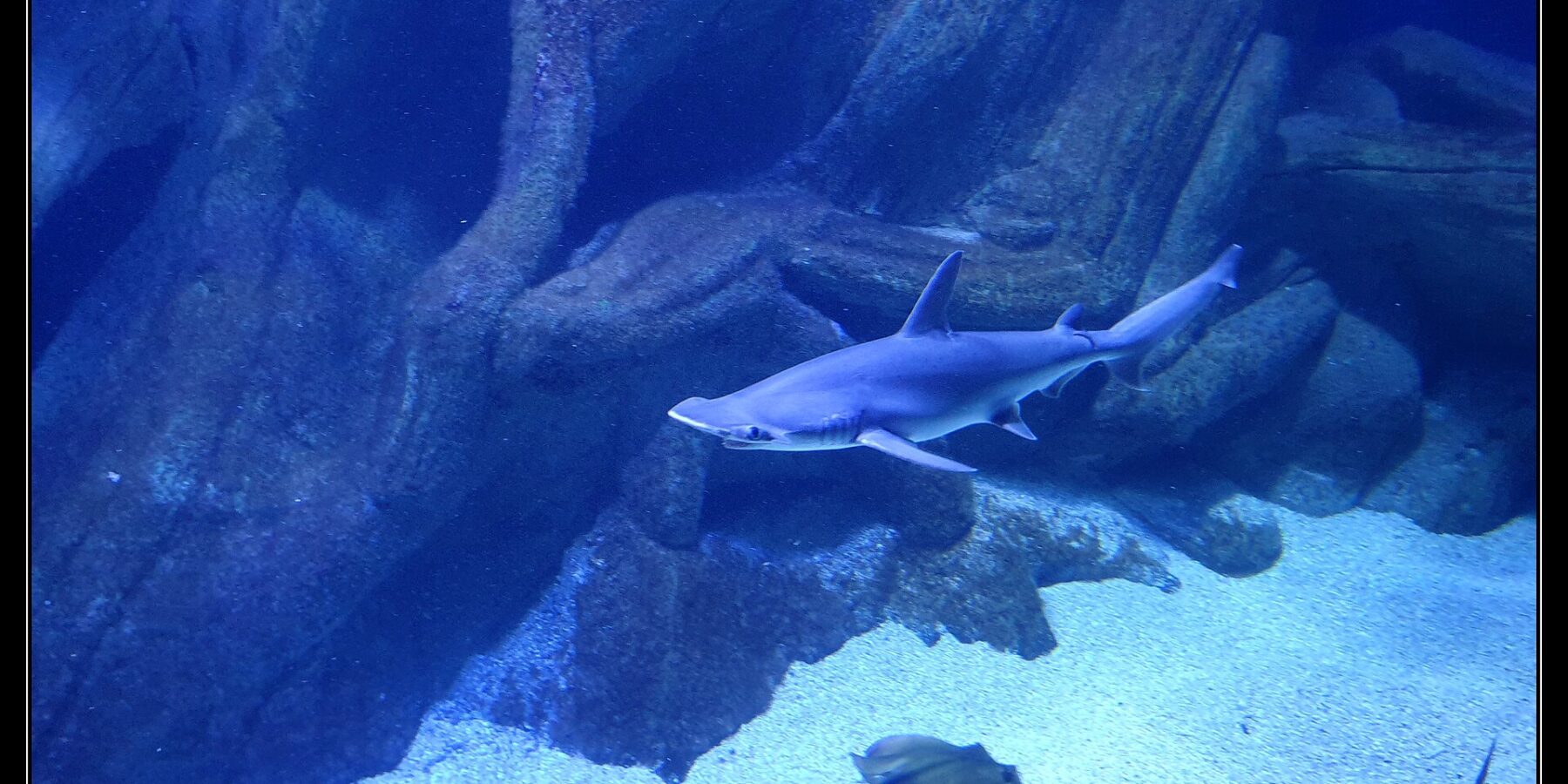
The smooth hammerhead lives in the most temperate waters of its family and is recognized by the front edge of its head, rounded and without a notch. You may come across it in open water in the Azores, at Formigas and Dollabarat, from June to October, though encounters are not frequent. Listed as Vulnerable, it usually measures 2.50 to 3.50 meters.
Where to dive to see the smooth hammerhead?
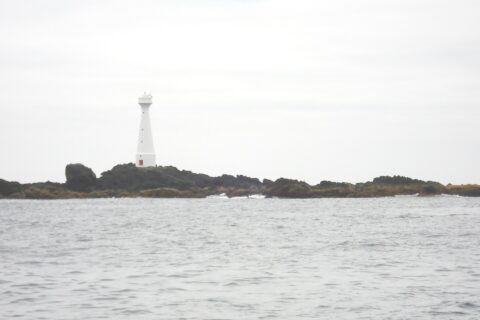
 Azores
How do you identify a smooth hammerhead?
The smooth hammerhead has the head of its family, flattened and stretched into a hammer, with an eye at each end. What sets it apart is the front edge of this hammer: it forms a smooth curve, without the central notch of the scalloped hammerhead and the great hammerhead. The back is dark gray-brown to olive, the belly white, and the underside of the pectoral fins is often black-tipped. The first dorsal fin is fairly tall and sickle-shaped, with a rounded tip; the pectoral and pelvic fins have an almost straight rear edge. It usually measures 2.50 to 3.50 meters and reaches 5 meters and 400 kilos at most.
Smooth hammerhead in pictures
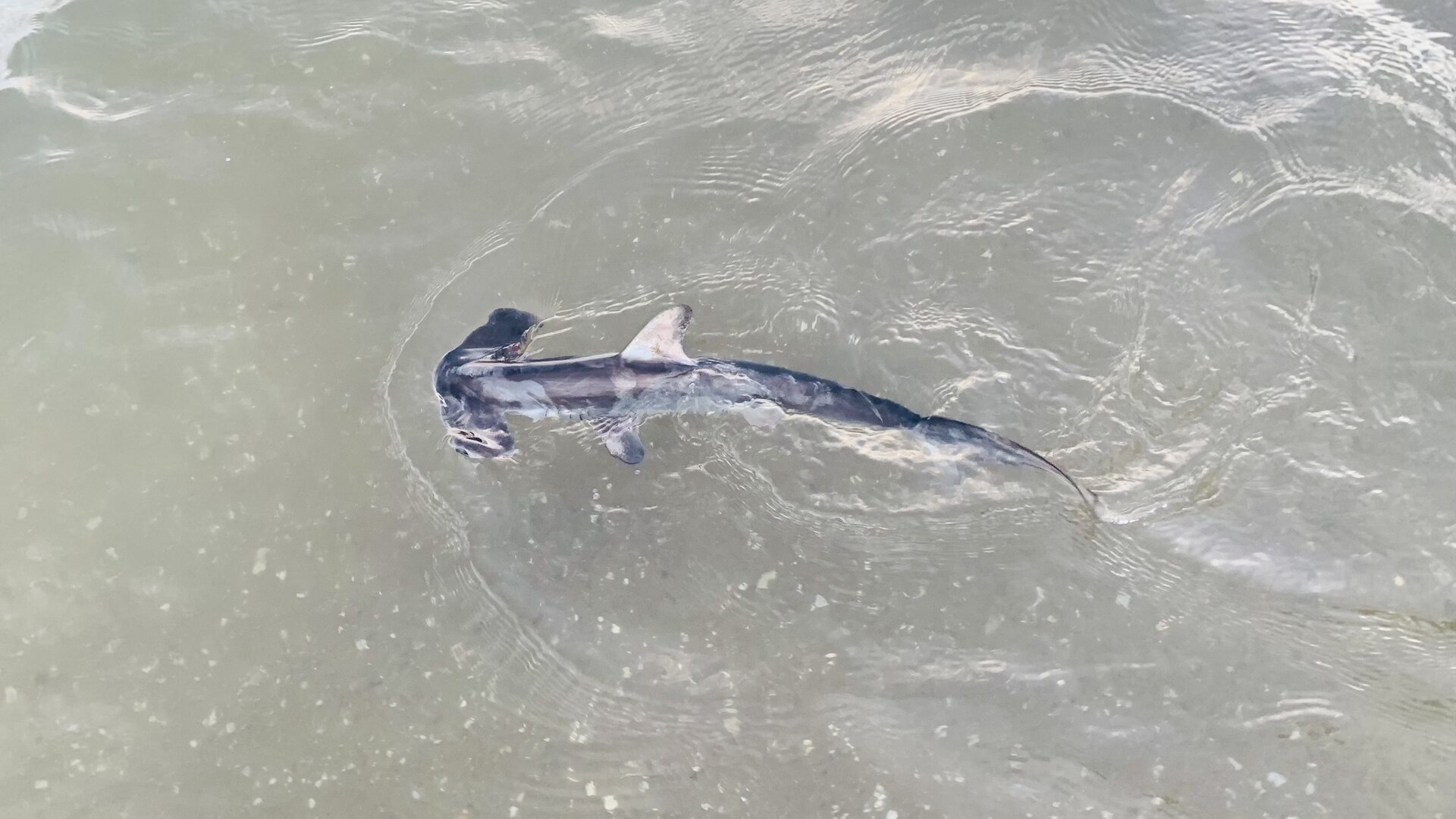
How does the smooth hammerhead live?
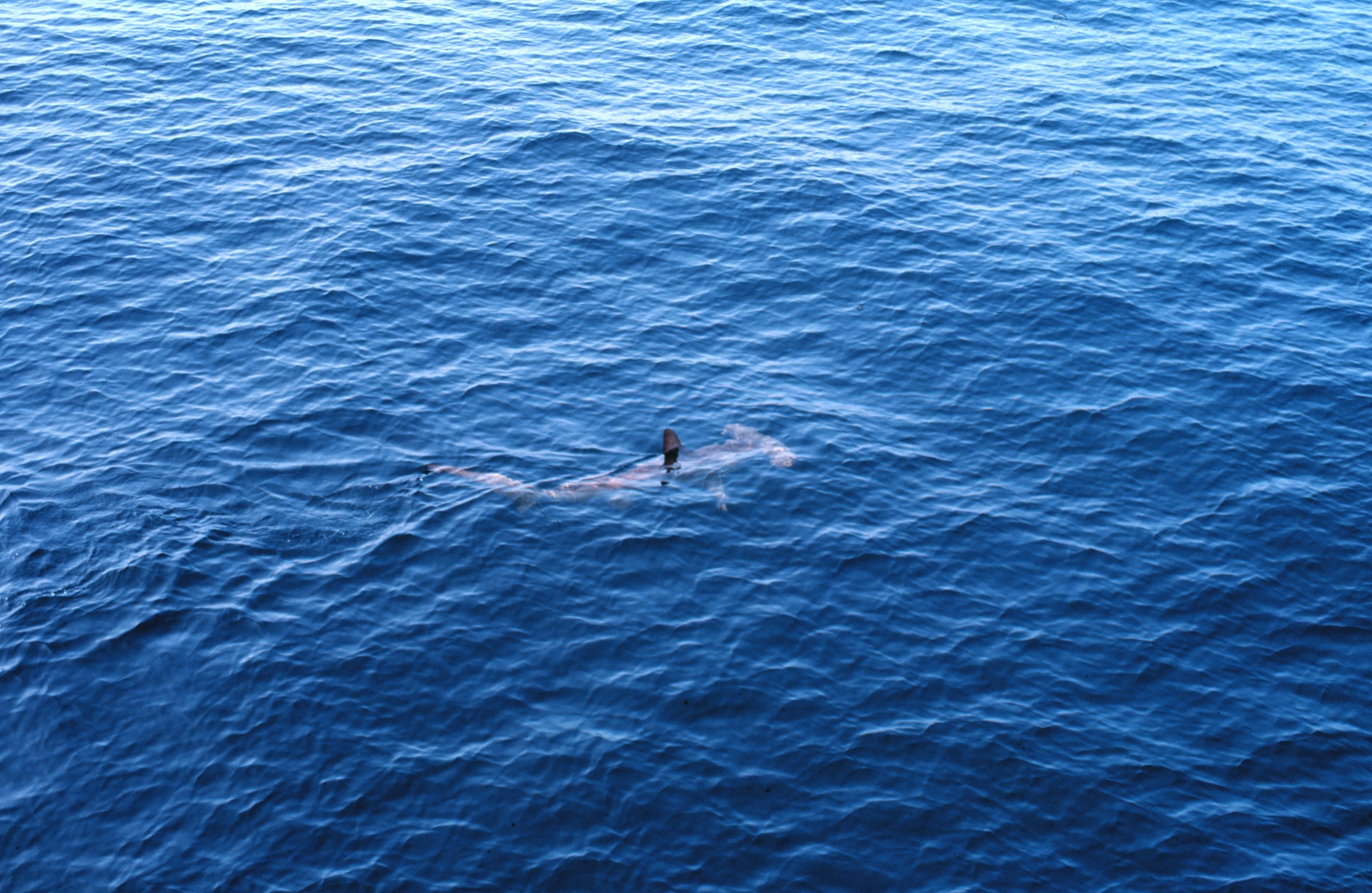
It is the most temperate of the hammerheads. It lives in all warm and temperate seas, from the coast to the open ocean; in the Atlantic, it ranges from Nova Scotia to Argentina and from Ireland to the Mediterranean. It usually stays shallower than 20 meters and goes down to 200 meters. In summer, it moves up to high latitudes; juveniles then migrate in schools of more than a hundred, while adults travel alone or in small groups. It hunts bony fish, smaller sharks, cephalopods and above all rays. Stingrays are its favorite prey, and 95 stingray spines were counted in the mouth of a single individual. The female is viviparous and gives birth to 20 to 50 pups after ten to eleven months of gestation.
Where and when can you see smooth hammerheads?
Among the dive sites we cover, the smooth hammerhead is only listed in the Azores, at Formigas and Dollabarat, the reserve off Santa Maria. It is possible there from June to October, in open water, like the Galapagos shark, without being frequent. This is also the site's diving season, best from July to September, in the clearest water of the archipelago. Watch for it in the blue throughout the dive, among the dusky groupers, the schools of tuna and barracuda and the mobula rays that made the reserve's reputation.
Is the smooth hammerhead endangered?
Its fins are among the most prized for shark fin soup, and its meat is sold fresh, dried, salted or smoked; many fisheries also take it as bycatch, in every ocean. The species remains fairly common, but the IUCN lists it as Vulnerable, and since 2013 it has been on CITES Appendix II, which regulates its international trade. For humans, it is considered potentially dangerous because of its size, but recorded attacks by large hammerheads, all species combined, are rare and none has been fatal. Its liking for temperate waters also limits encounters with swimmers.
Our tip
At the Formigas, keep an eye on the blue throughout the dive: it may pass in open water, like the Galapagos shark. If it approaches, stay grouped and still, without kicking toward it or following it into the blue. Don't make it the goal of your trip: encounters remain rare, and the reserve is worth it first for its groupers, its schools of tuna and its mobula rays.