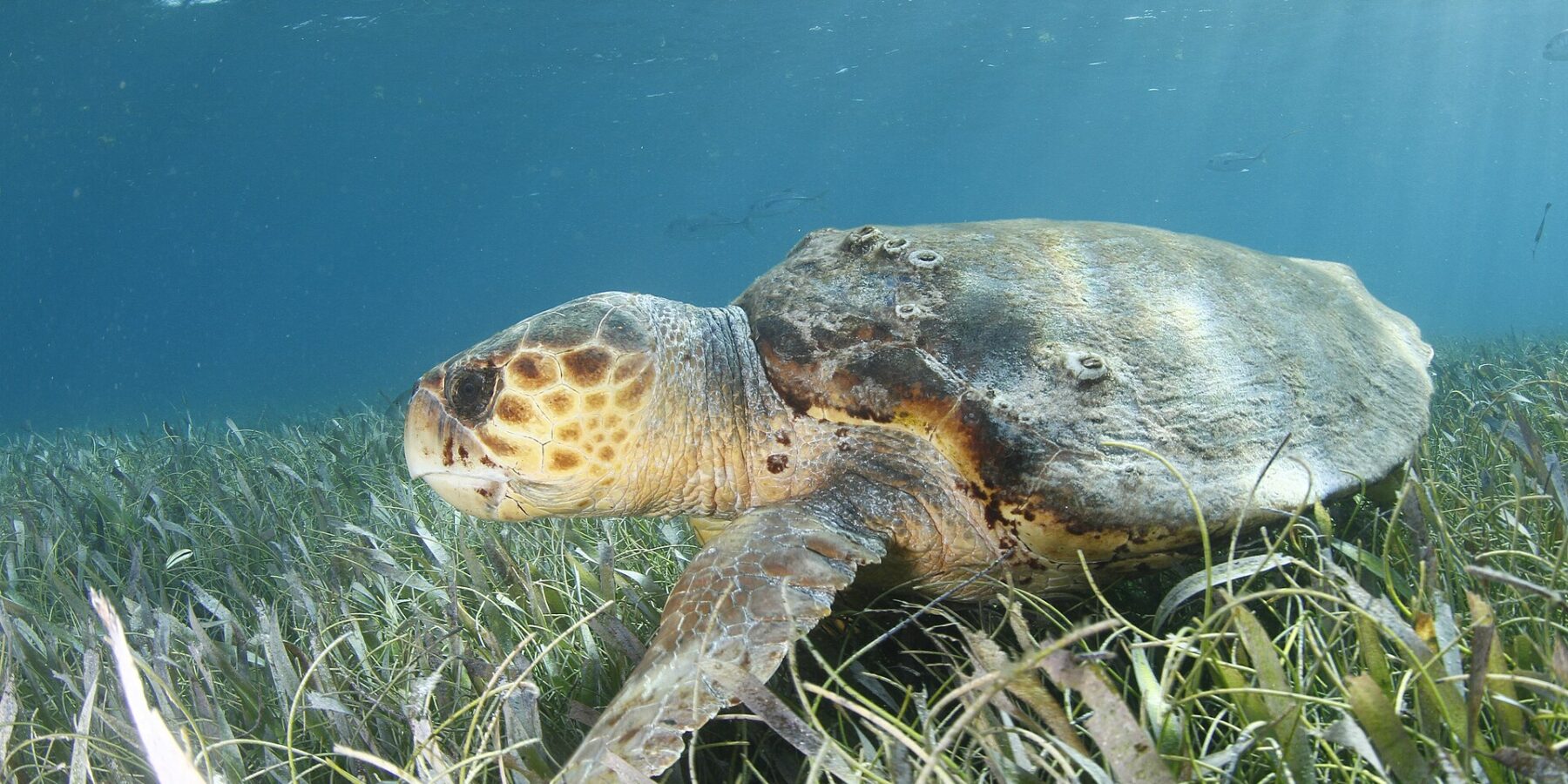
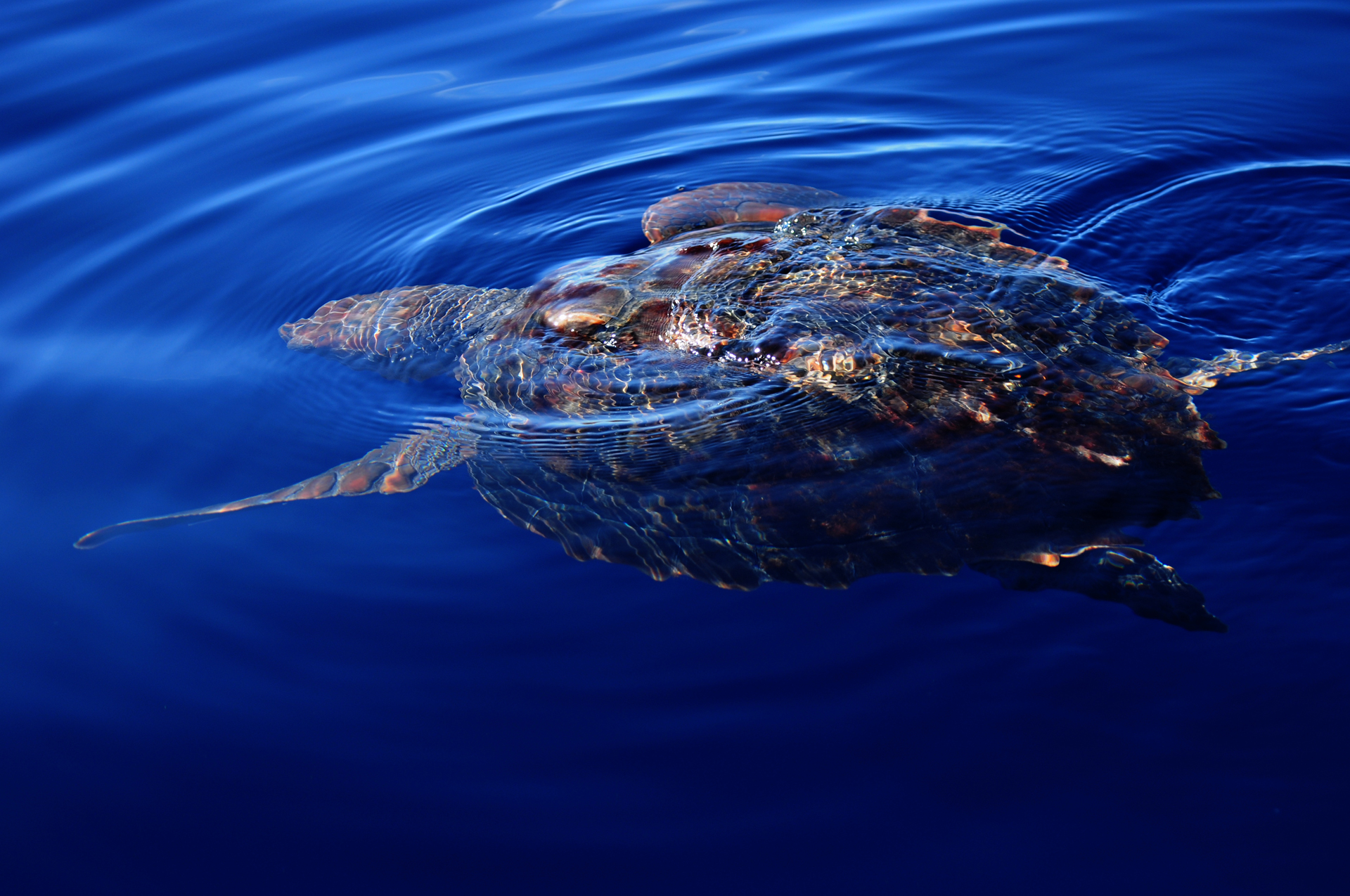
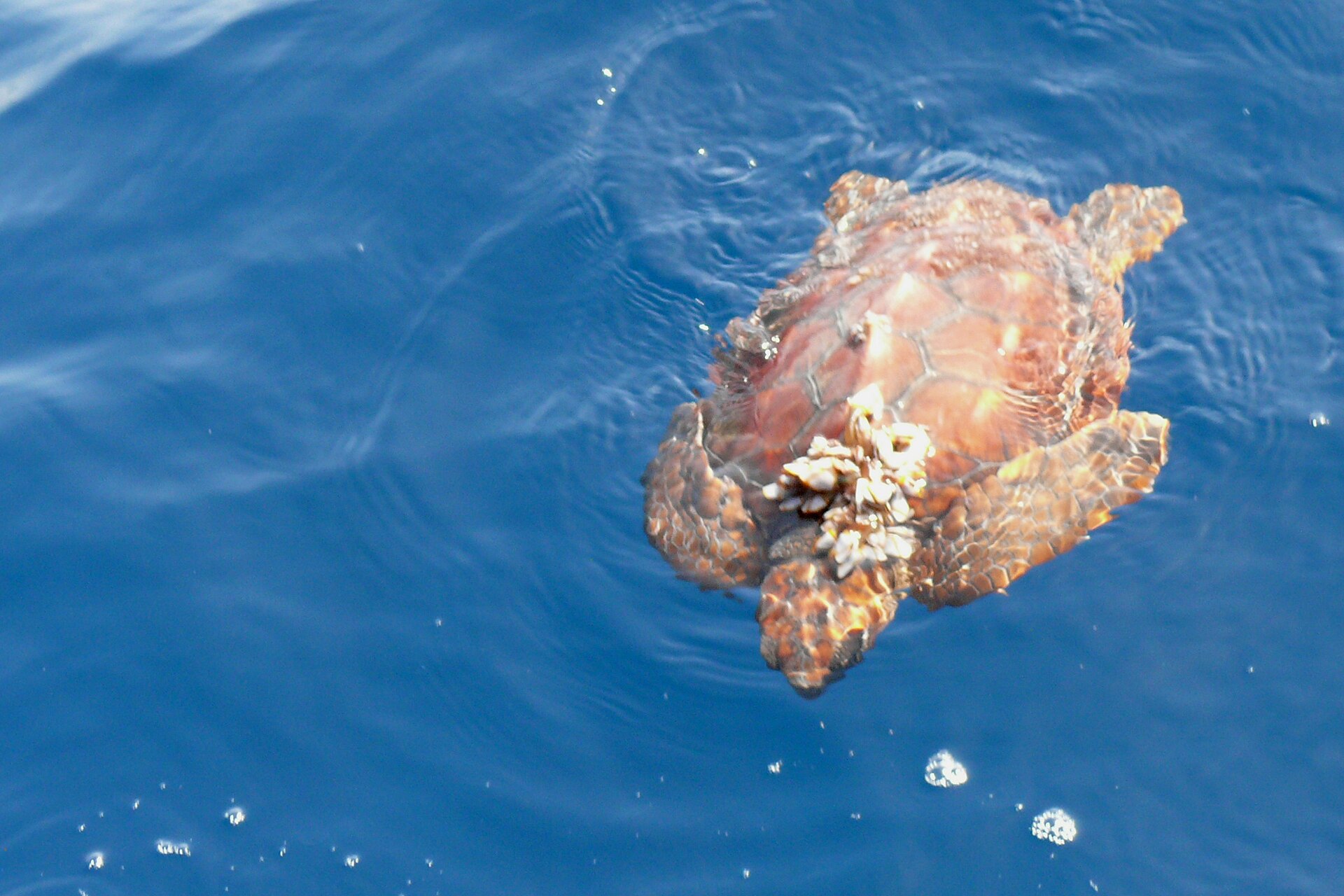
The loggerhead turtle is known by its massive head and red-brown shell, and weighs 80 to 200 kg as an adult. In the Azores, you mostly see it at the surface from the boat, from May to October; most are young turtles born in the southeastern United States.
Where to dive to see the loggerhead turtle?
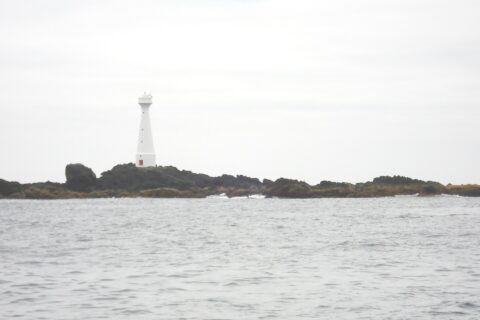
 Azores
How do you identify a loggerhead turtle?
You recognize the loggerhead turtle first by its head, massive and very wide, armed with powerful jaws that crush shellfish. Its shell is red-brown, its plastron pale yellow. On the back, five pairs of costal scutes border the five vertebral scutes along the midline, and two pairs of prefrontal scales cover the top of the snout, between the eyes. The green turtle and the hawksbill, which you meet more often on reefs, have only four pairs of costal scutes. Adults measure 70 to 95 centimeters of shell and weigh 80 to 200 kg, 135 kg on average; the juveniles that live off the Azores measure 18 to 60 centimeters.
Loggerhead turtle in pictures
How does the loggerhead turtle live?
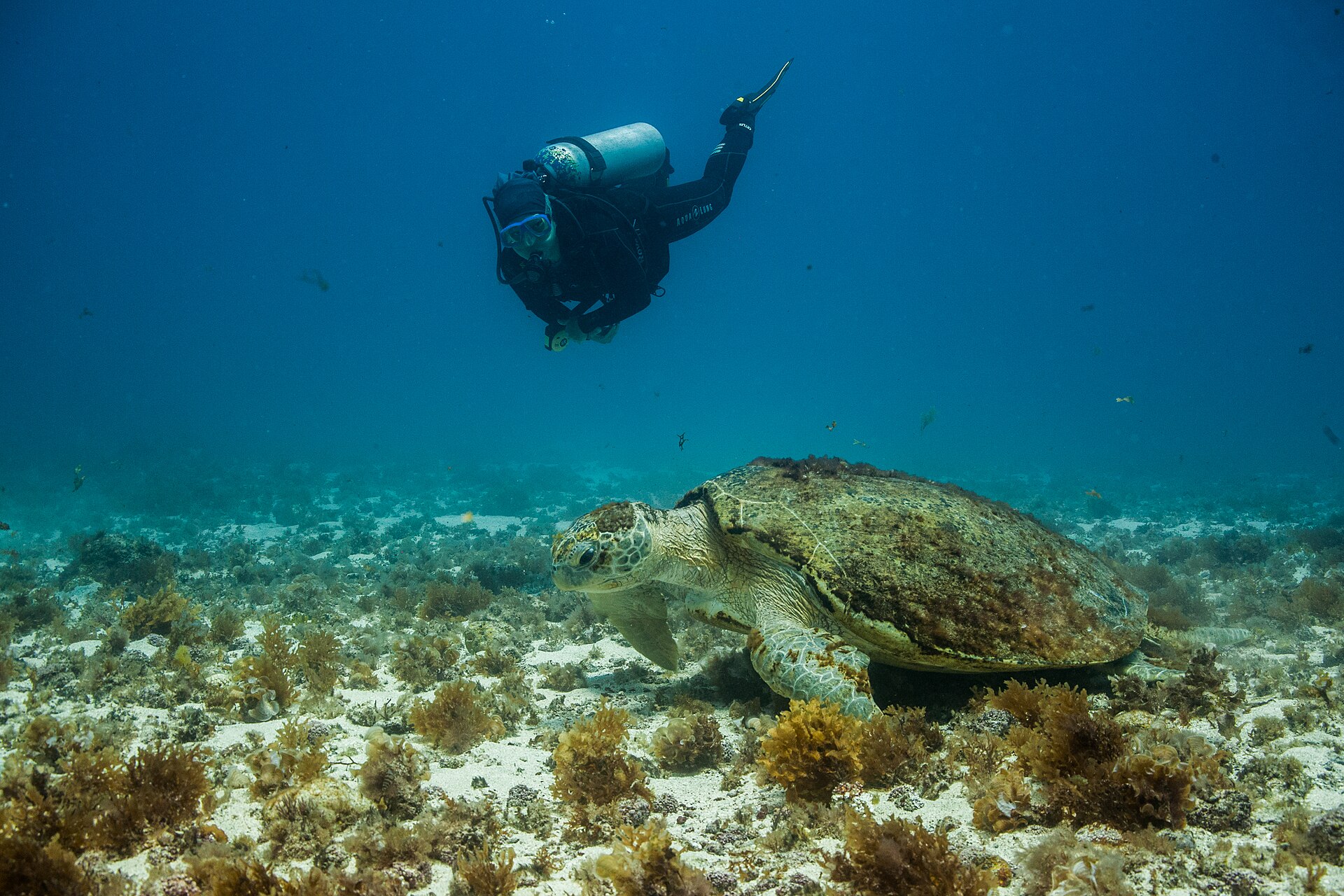
The loggerhead lives in the Atlantic, the Indian Ocean, the Pacific and the Mediterranean. Its life begins with a long journey. In the North Atlantic, the hatchlings, most of them born on the beaches of the southeastern United States, head offshore and drift with the currents, swimming a little, to the waters of the Mid-Atlantic Ridge around the Azores. They spend about ten years there in the open ocean, feeding near the surface on jellyfish and other gelatinous organisms, before moving to the coasts. Adults are omnivorous and eat mostly bottom invertebrates, mollusks and crustaceans, which they crush with their jaws. Females first nest between 17 and 33 years of age, laying about a hundred eggs per clutch and nearly four clutches per season; the temperature of the sand sets the sex of the hatchlings, males at 28 °C, females at 32 °C. The loggerhead lives 47 to 67 years in the wild.
Where and when can you see loggerhead turtles?
On our dive sites, you meet the loggerhead in the Azores, mostly at the surface and from the boat. At Formigas and Dollabarat, the reserve off Santa Maria, you see it from May to October during the crossing, along with sperm whales, pilot whales and seabirds. The channel between Faial and Pico, which surrounds the Ilhéus da Madalena and Baixa do Sul, is a Natura 2000 site for it and for the bottlenose dolphin, and you can spot it from the boat between Madalena and the Baixa do Sul reef. In Mexico, the Cozumel Reefs National Park, where Palancar is dived, also lists it among its species, along with the hawksbill turtle.
Is the loggerhead turtle threatened?
The loggerhead is listed as Vulnerable on the IUCN Red List and in Appendix I of CITES, which bans its international trade. Its main threats are drowning on longlines and in gillnets, swallowing plastic, the loss of nesting beaches and predation on nests and hatchlings. The Azores loggerheads are mostly young turtles in their oceanic phase, born on the other side of the Atlantic: they link the nesting beaches of Florida and the southeastern United States to the waters of the archipelago.
Our tip
On the way to Formigas or in the Pico channel, watch the surface: a reddish-brown shell breaking the surface is often a loggerhead. If the boat approaches, ask the skipper to slow down at a distance and let it dive on its own. In the water, do not touch it, do not feed it and never position yourself above it when it comes up to breathe.