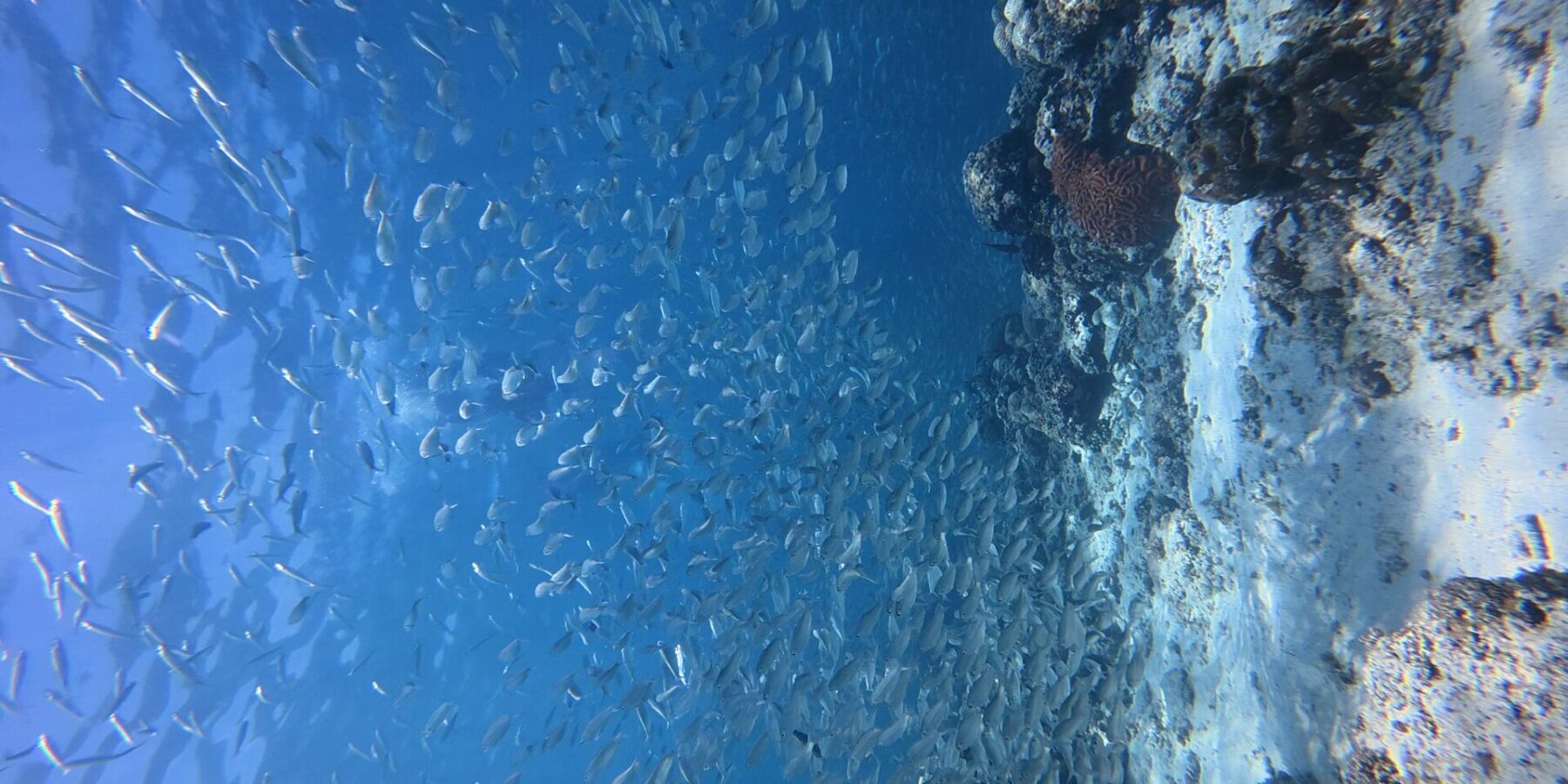
The Moalboal sardine run gathers several million fish into a shifting curtain, 20 or 30 m from Panagsama Beach. It's there year-round, between the surface and 18 m, you reach it from the shore with snorkel gear or a tank, and turtles pass by on almost every dive.
Why dive the Moalboal sardine run?
- Several million sardines year-round, 20 or 30 m from the beach, between the surface and 18 m
- Reachable from the shore, no boat needed: with snorkel gear from the first meter, on scuba from Open Water
- Sea turtles on almost every dive, on the reef flat and the top of the wall
- Water from 26.6°C in February to 29.4°C in October; a 3 mm wetsuit is enough
- Guided shore dive for PHP 1,400 or 1,500, fee included, at OSP Dive Center
The Moalboal sardine run in pictures
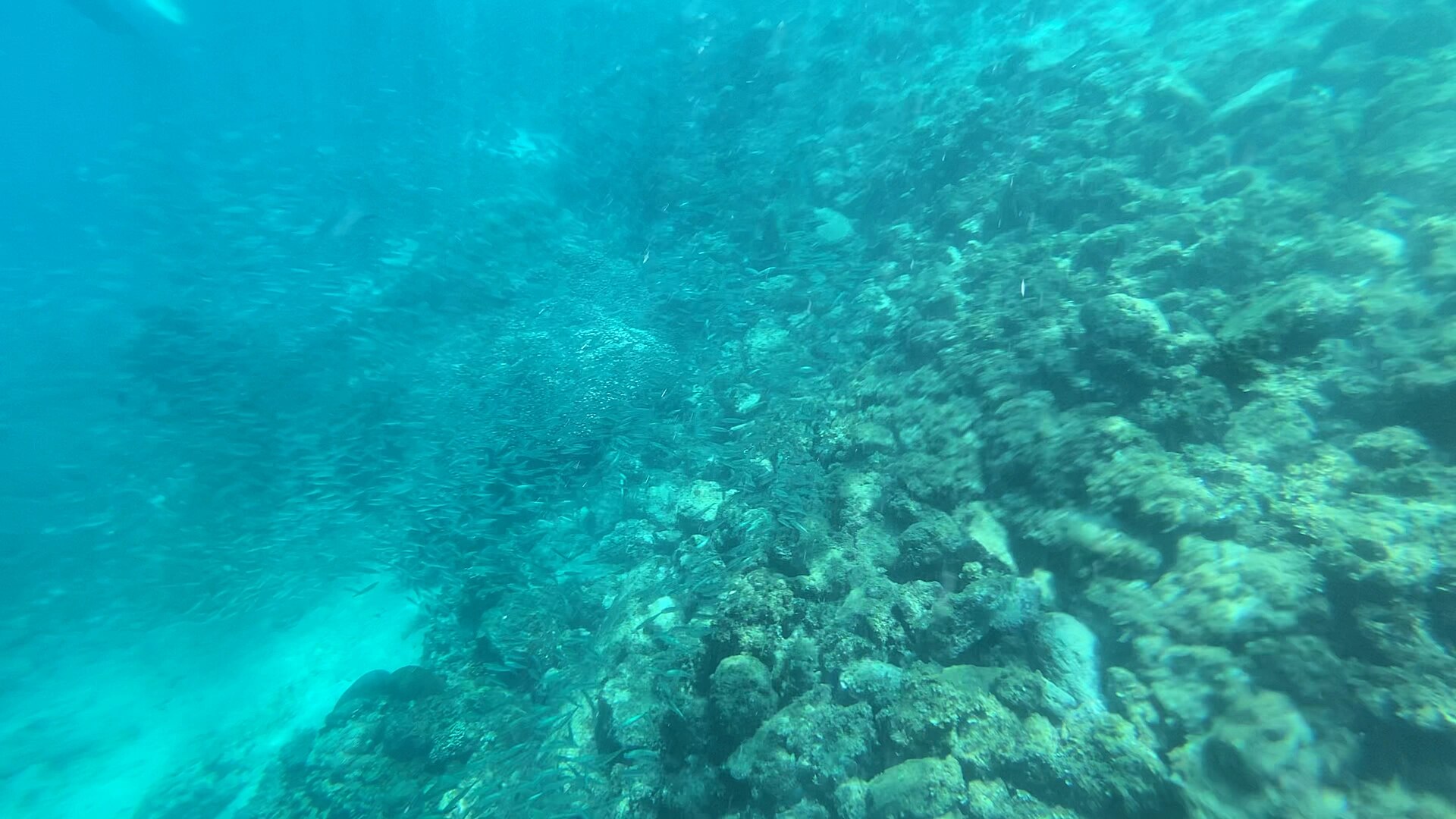
What will you see at the Moalboal sardine run?
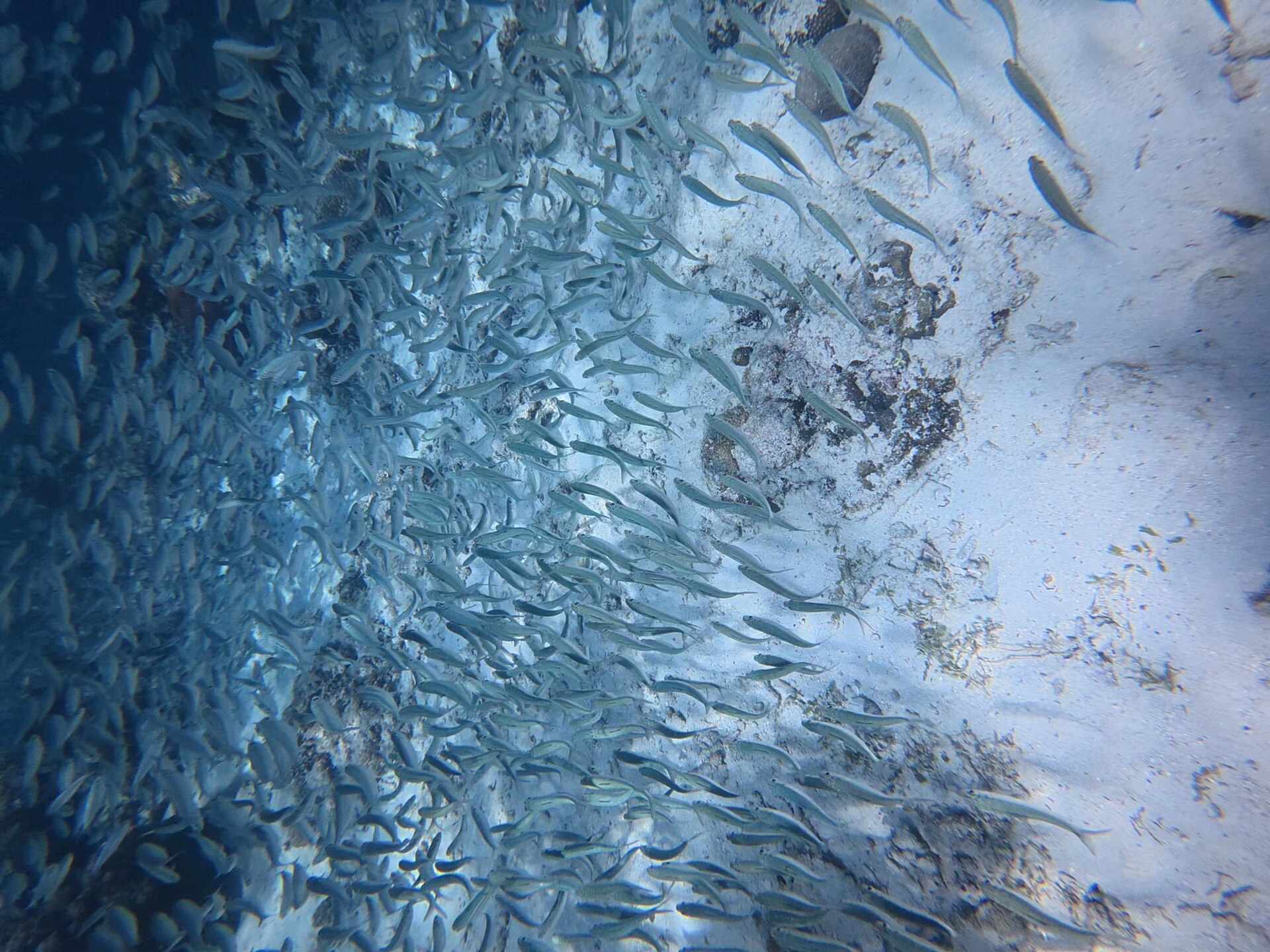
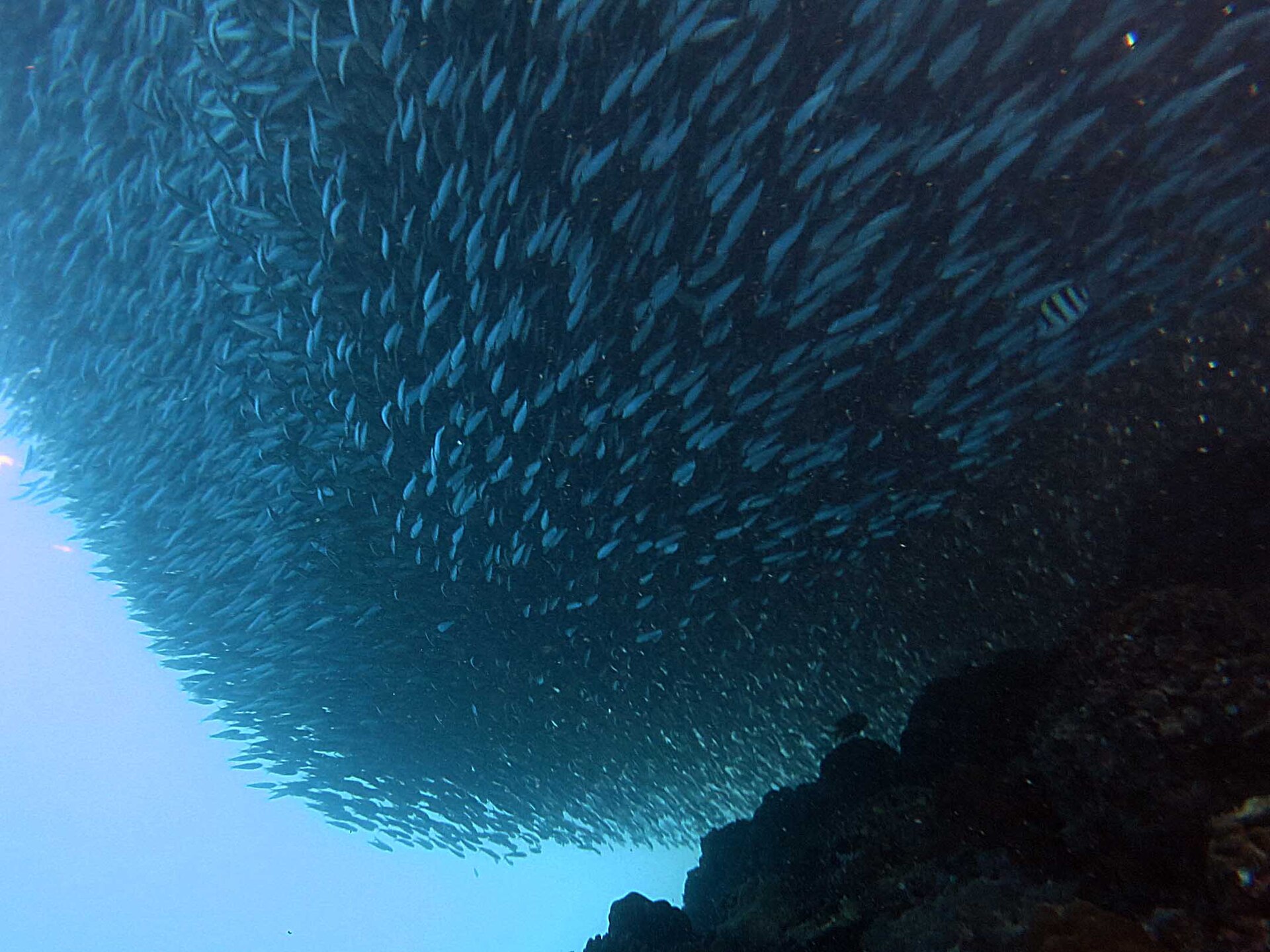
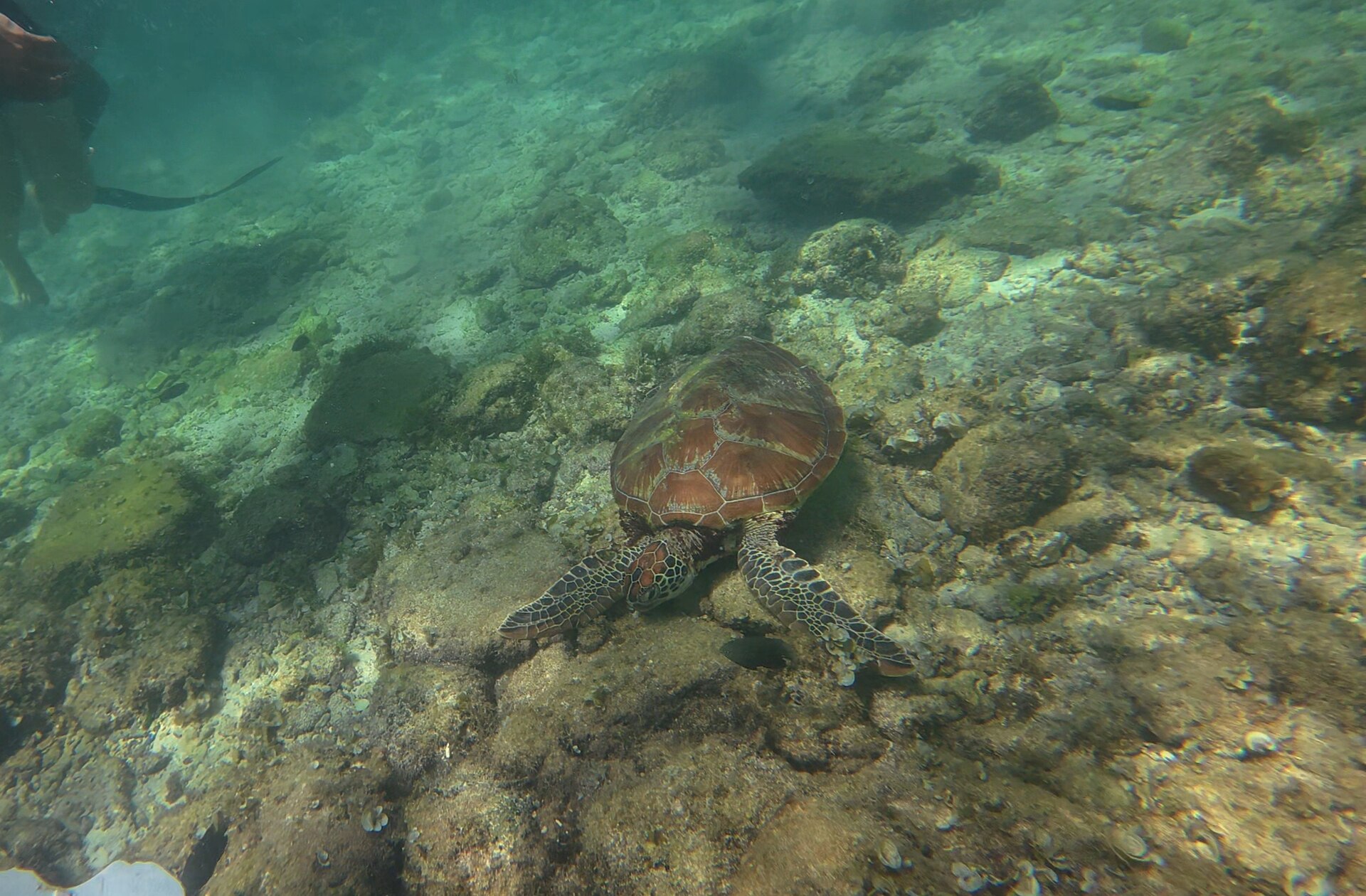
The school is the reason to come: several million sardines packed into a shifting curtain, 20 or 30 m from the beach, between the surface and 18 m. It opens in front of the diver and closes behind; when mackerel and tuna attack, it bursts into silver sprays and then tightens back into a ball. Trevally and barracuda patrol the edge, and a whale shark sometimes passes in the blue, though no one can promise it. Sea turtles graze the reef flat and join almost every dive. The neighboring reef, in front of the Cebu Seaview a few steps south, holds the macro: frogfish, ghost pipefish, blue-ringed octopus, flying gurnards, sea snakes, and at dusk the mandarinfish display in the branching corals at the edge of the reef flat. Dive centers don't name the species in the school; the autumn strandings on the beach, like the one on November 3, 2024, involved Indian oil sardines.
| Species | J | F | M | A | M | J | J | A | S | O | N | D | Note |
|---|---|---|---|---|---|---|---|---|---|---|---|---|---|
| Sardine run | peak season | peak season | peak season | peak season | peak season | peak season | peak season | peak season | peak season | peak season | peak season | peak season | several million fish, year-round, 20 or 30 m from shore, between the surface and 18 m |
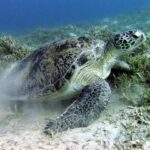 Green turtle | peak season | peak season | peak season | peak season | peak season | peak season | peak season | peak season | peak season | peak season | peak season | peak season | on the reef flat and the top of the wall, on almost every dive |
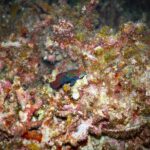 Mandarinfish | peak season | peak season | peak season | peak season | peak season | peak season | peak season | peak season | peak season | peak season | peak season | peak season | at dusk in the branching corals of the neighboring reef, in front of the Cebu Seaview, a few steps south |
| Mackerel and tuna | peak season | peak season | peak season | peak season | peak season | peak season | peak season | peak season | peak season | peak season | peak season | peak season | they hunt through the school and make it burst apart |
| Barracuda | possible | possible | possible | possible | possible | possible | possible | possible | possible | possible | possible | possible | patrolling the edge of the school and the reefs of the peninsula |
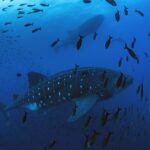 Whale shark | possible | possible | possible | possible | possible | possible | possible | possible | possible | possible | possible | possible | passing through, rare: no promises |
peak seasonpossiblerare
What is diving like at the Moalboal sardine run?
Everything happens on the wall. The reef flat, 0.5 to 3 m deep, ends about thirty meters from the beach, and the slope immediately drops to 30 m and beyond. The school holds in open water in front of this wall, between 3 and 18 m: the dive stays above 20 m, and the wall that continues below isn't the point. The current is usually light, sometimes noticeable and invisible from the beach; when it runs, the guide drifts with it toward the ball. Visibility runs from 15 to 30 m depending on the season. Dive centers require Open Water and a minimum age of 12; a supervised try dive is possible, and with snorkel gear you see the school from the first meter. Watch your buoyancy as you cross the drop-off: the bottom vanishes all at once. No lifeguard on the beach, boats outside the marked lanes, a crowd at the surface at peak hours: never go in alone, and drop a few meters to escape the fin kicks.
When to dive the Moalboal sardine run?
idealgoodnot recommended
The school is there year-round: it doesn't migrate, it just moves a few dozen meters along the coast. The dry season, December to May, gives the best visibility, 20 to 30 m, and a flat sea; November is already much the same. From June to October, the rains cloud the water a little without stopping shore dives, and Moalboal lies south of the usual typhoon track: a few days of bad weather, rarely more. The water drops to an average of 26.6°C in February, sometimes 25°C, and rises to 29.4°C in October; a 3 mm wetsuit is enough. Crowds follow the dry season: from November to May, the surface above the school fills with fins from mid-morning, and the site stays very busy even in low season. So the time of day matters more than the month: between 6 and 8 a.m., the sardines are close to shore and divers are few.
How to get to the Moalboal sardine run?
Moalboal is three hours by road southwest of Cebu City; a private transfer from Mactan-Cebu airport takes 3 hours 30 minutes and costs about PHP 3,200. The dive centers line the Panagsama Beach waterfront: Savedra Dive Center, Neptune Diving Resort, OSP Dive Center, and Cebu Fun Divers at the Cebu Seaview, a little to the south. You enter from the shore, through the Panagsama Road access just before the bend in the waterfront, or by the old jetty to the south; thirty meters of swimming and you're on the wall. Some dive centers go by boat, one or two minutes, as the ball moves around. At OSP Dive Center, on the 2026 price list, a guided shore dive with weights and gear costs PHP 1,500 (€21), PHP 1,400 with your own gear, and a boat dive PHP 2,000, the PHP 100 diver fee included. Swimmers and freedivers pay the environmental fee at the beach booth, PHP 100 in practice against an official rate of PHP 25, and keep the receipt on them. Prices checked on October 14, 2026.
Stay in Moalboal
Where to stay near the Moalboal sardine run?
Hotels, apartments and rooms around Moalboal, with current prices.
How did the Moalboal sardine run end up off the beach?
The Moalboal school first belonged to Pescador Island, the islet off the peninsula. It then wavered between Pescador and Ronda before settling in front of Panagsama Beach, within finning distance of the shore. What keeps it there is the layout of the site: a steep wall that serves as an escape route, plankton-rich currents and large predators rare enough that the mass doesn't scatter. Rumors of its disappearance come back regularly and are always denied by the dive centers, which dive in it every day. On November 3, 2024, a "sardine rush" pushed Indian oil sardines right up onto the sand at Panagsama, a phenomenon known from September to November: the regional fisheries office specified that it affected neither the underwater school nor the diving. On May 15, 2026, a 50-year-old tourist who went snorkeling alone drowned off the beach: the site is easy, but it isn't risk-free.
How do you dive the Moalboal sardine run?
You enter the water through the Panagsama Road access or a dive center's entry point and cross the reef flat, 0.5 to 3 m of corals, butterflyfish and damselfish. Thirty meters farther, the bottom drops away. The school is there, in open water in front of the wall, sometimes right at the surface, sometimes between 10 and 20 m when the water warms up. You approach slowly: the curtain opens, wraps around the diver and closes behind. A mackerel or a tuna launches an attack and the whole mass changes shape in a second, then re-forms. The northern part of the school hangs over a reef poor in coral but rich in rare critters; the return is along the wall, for the corals and the macro. At dusk, you head a few steps south, in front of the Cebu Seaview, for mandarinfish, ghost pipefish, winged scorpionfish and blue-ringed octopus.
How do you photograph the Moalboal sardine run?
The morning light is low and the water a little murkier, but between 6 and 8 a.m. the school is close to shore and no one is swimming above it; later, the sun lights the curtain from above and the surface fills with fins. The right setup is backlighting: get under the school and frame toward the surface, with the sardines cut out in silver against the blue. Don't swim into the mass to make it burst; let it come and part on its own. Photograph the reef-flat turtles from a distance: a municipal ordinance bans touching them, and they bite when disturbed. Local underwater photographers hire out by the day on the beach, for anyone who wants to leave with images without bringing a housing.
Our tip
Get in the water before 7 a.m.: the school is close to shore and the beach is empty. Never go alone: there's no lifeguard, and the bottom drops to 30 m thirty meters from the beach. Let the school come to you.
Other dive sites nearby
 PhilippinesReef
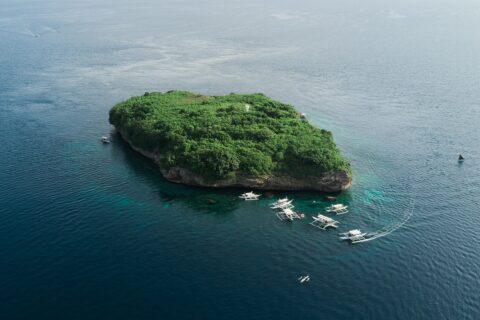
Pescador Island
Visayas: Cebu, Bohol and Negros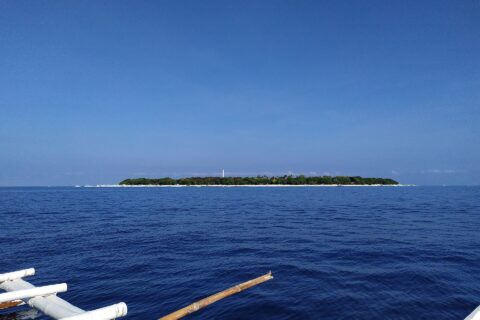 PhilippinesReef
Balicasag Island
Visayas: Cebu, Bohol and Negros PhilippinesReef