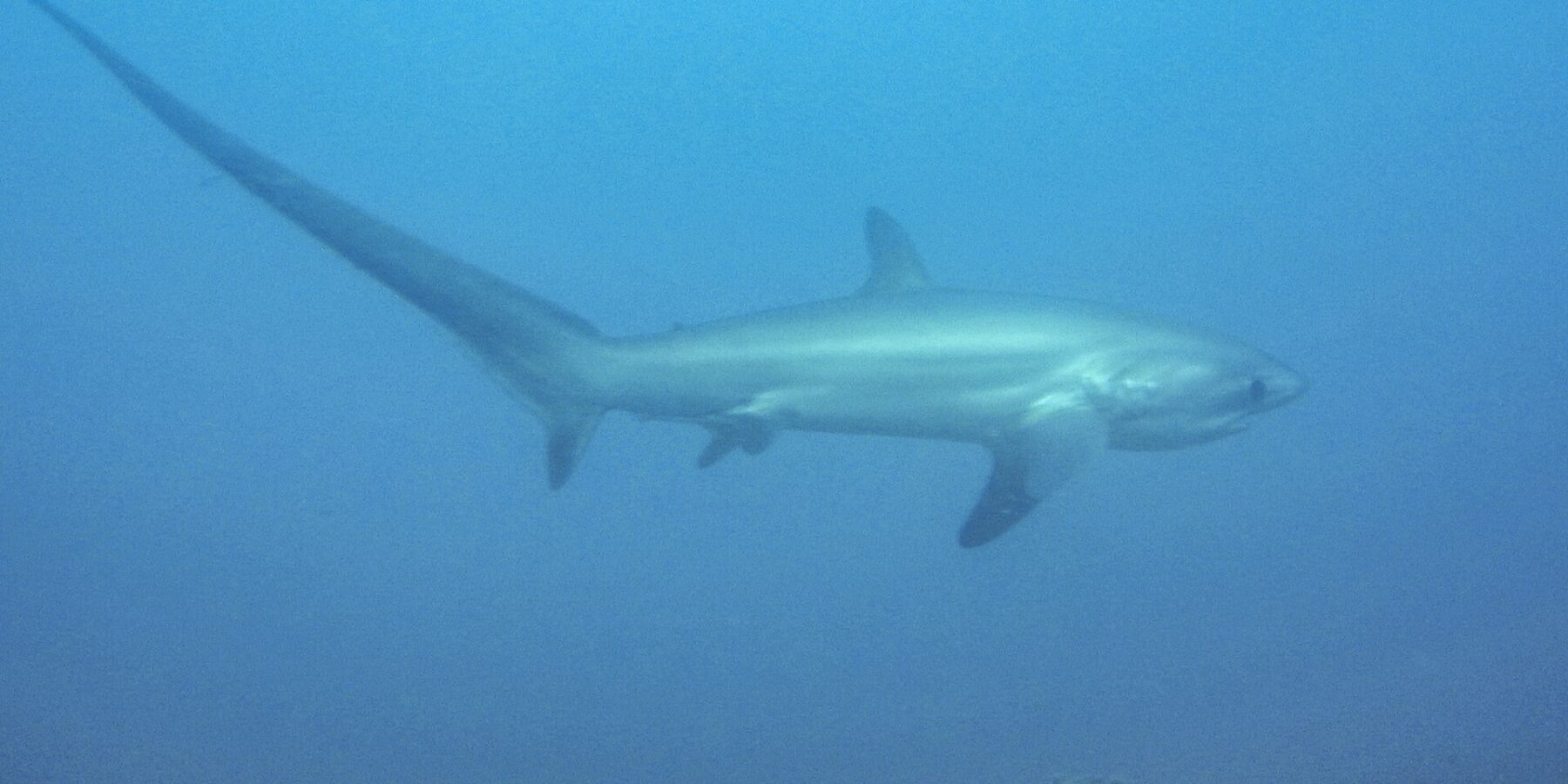
Monad Shoal and Kimud Shoal are two shoals off Malapascua where pelagic thresher sharks rise at dawn to be cleaned. Since 2022, the sharks have left Monad for Kimud Shoal, where they're seen more than nine mornings out of ten, and the Bounty Beach boats leave around 5 a.m.
Why dive Monad Shoal and Kimud Shoal?
- Pelagic thresher sharks at dawn, more than nine mornings out of ten, on the Kimud Shoal cleaning stations between 12 and 22 m
- A short, well-organized dive: departure around 5 a.m., 45 minutes by boat, two dives behind the ropes, back for breakfast
- Hammerheads in February and March at Kimud Shoal, tiger sharks at Monad Shoal since 2022
- The Philippines' first shark and ray sanctuary, patrolled by former fishermen
- In the evening, the mandarinfish display on the Lighthouse reef, at 6 m
Monad Shoal and Kimud Shoal in pictures
What will you see at Monad Shoal and Kimud Shoal?
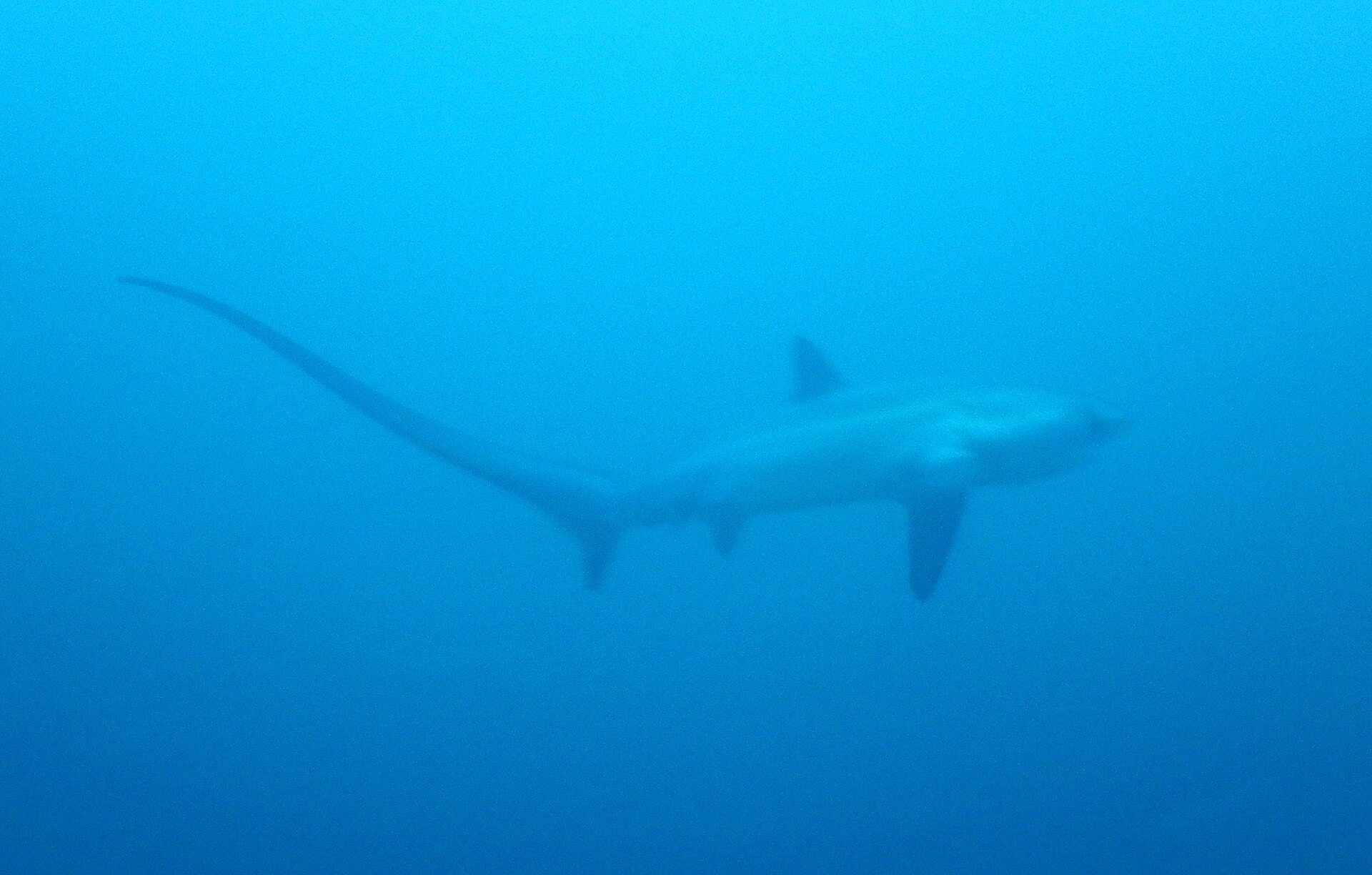
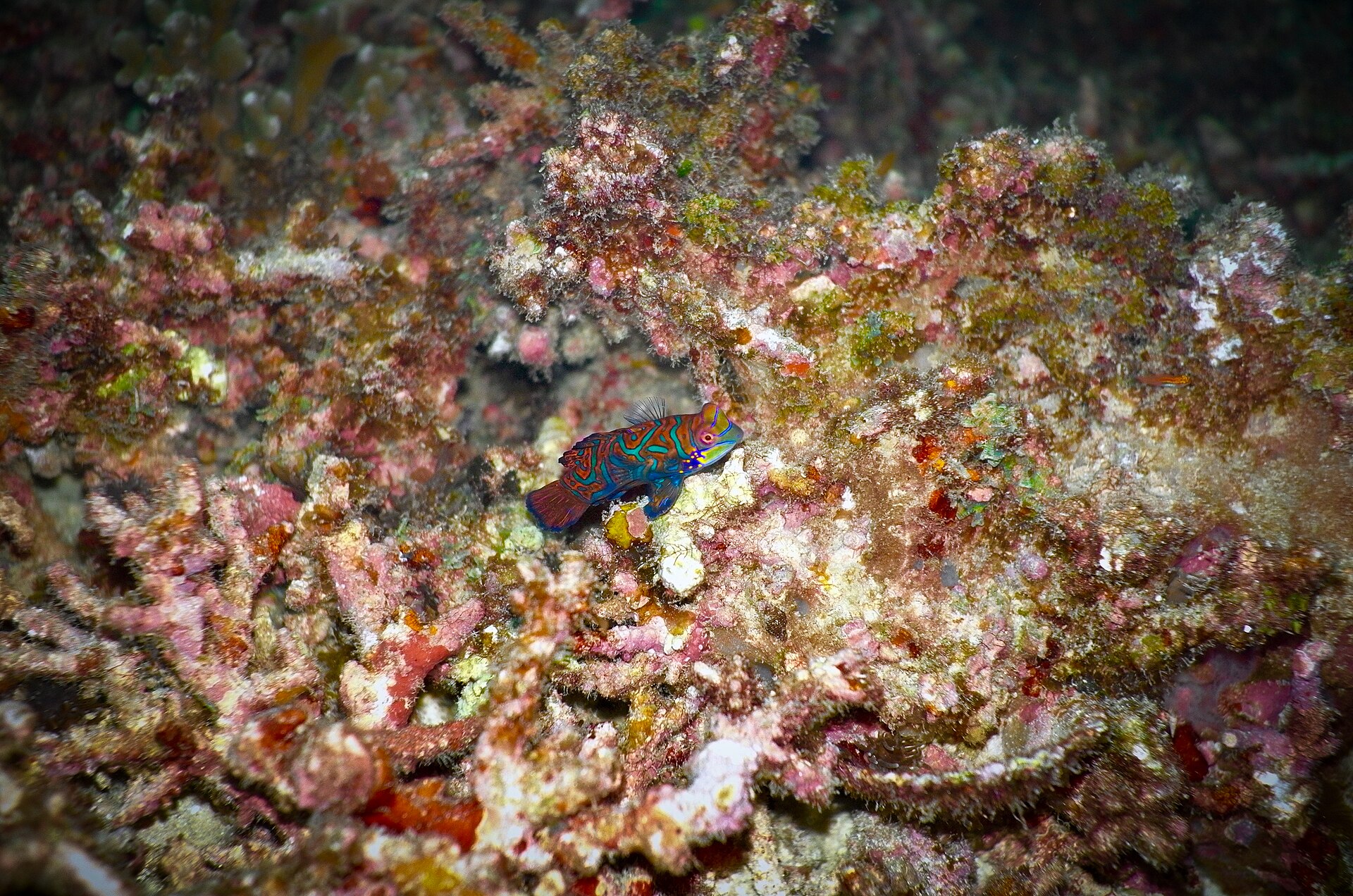
The pelagic thresher shark is the reason to come: a three-meter shark, half of it tail, that lives between the surface and 150 m and rises to the plateau at dawn to have its parasites removed by the reef's cleaner fish. At Kimud Shoal, it's seen more than nine mornings out of ten, year-round, sometimes a few meters from the ropes. In February and March, schools of scalloped hammerheads pass in the blue off the same plateau. At Monad Shoal, it's now tiger sharks that occupy the stations, seen about once a week. Around Malapascua, Gato Island has whitetip reef sharks asleep in its caves and the highest density of banded sea kraits in the country; the Lighthouse reef, between 5 and 10 m, puts on the mandarinfish display every evening around 6 p.m. Day and night dives add cuttlefish, seahorses, nudibranchs, frogfish and schools of striped catfish on the sand.
| Species | J | F | M | A | M | J | J | A | S | O | N | D | Note |
|---|---|---|---|---|---|---|---|---|---|---|---|---|---|
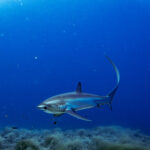 Pelagic thresher shark | peak season | peak season | peak season | peak season | peak season | peak season | peak season | peak season | peak season | peak season | peak season | peak season | at dawn on the Kimud Shoal cleaning stations, more than nine mornings out of ten |
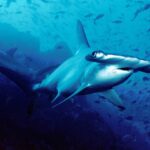 Scalloped hammerhead | rare | peak season | peak season | possible | rare | rare | rare | rare | rare | rare | rare | rare | schooling in the blue off Kimud Shoal, in February and March |
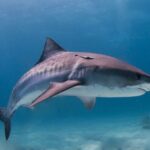 Tiger shark | possible | possible | possible | possible | possible | possible | possible | possible | possible | possible | possible | possible | on Monad Shoal since 2022, seen about once a week |
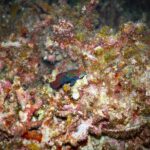 Mandarinfish | peak season | peak season | peak season | peak season | peak season | peak season | peak season | peak season | peak season | peak season | peak season | peak season | mating display around 6 p.m. on the Lighthouse reef, between 5 and 10 m |
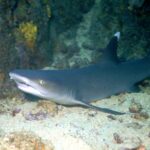 Whitetip reef shark | peak season | peak season | peak season | peak season | peak season | peak season | peak season | peak season | peak season | peak season | peak season | peak season | asleep in the caves of Gato Island |
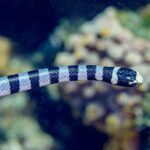 Banded sea krait | peak season | peak season | peak season | peak season | peak season | peak season | peak season | peak season | peak season | peak season | peak season | peak season | the sea snakes of Gato Island, the highest density in the country |
peak seasonpossiblerare
What is diving like at Monad Shoal and Kimud Shoal?
Kimud Shoal is a seamount whose plateau tops out at 12 m; the cleaning stations range from 12 to 22 m and the flanks drop to around 200 m. Monad Shoal, its big brother, has a plateau from 15 to 25 m, cleaning stations around 30 m and a wall that drops to 250 m: it's a deeper dive, now reserved for tiger sharks. Current is usually moderate on the plateau but can pick up at the edge, and visibility runs from 10 to 25 m depending on the season. The dive is at dawn, in low light, as a group behind the ropes: neutral buoyancy, no contact with the bottom, no flash. Dive centers require Advanced Open Water for the divemaster-led trip; an Open Water diver goes with an instructor, after a buoyancy workshop that has been mandatory since December 2025, and Nitrox 32 usefully extends your time on the plateau.
When to dive Monad Shoal and Kimud Shoal?
idealgoodnot recommended
The thresher sharks are there year-round, and the sea makes the season. From January to May, in the dry season, the crossing to Kimud Shoal is short and visibility holds at 15 to 25 m, at its clearest in March and April. From June to October, the southwest monsoon and typhoons bring rain, 10 to 15 m visibility and canceled trips on some days. From November to February, the amihan, the northeast wind, makes the banca ride uncomfortable without stopping it. The water is coolest from December to February, 25 to 27°C, and warmest from April to June, 28 to 30°C. Hammerheads show up at Kimud Shoal mostly in February and March; the mandarinfish display every evening, a little more around the full moon. The island, devastated by Typhoon Haiyan in November 2013, has rebuilt: dive centers rarely close, but a typhoon announced by the PAGASA weather service still means two or three days without boats.
How to get to Monad Shoal and Kimud Shoal?
Malapascua is a two-kilometer islet off the northern tip of Cebu. From Mactan-Cebu airport, the Ceres bus leaves from the Cebu City north terminal for Maya port, 4 to 5 hours and PHP 220 to 300 (3 hours 30 minutes by van), then a banca crosses in 30 minutes for PHP 200; an environmental fee of PHP 120 to 140 is paid at the port. The dive centers line Bounty Beach. At Thresher Shark Divers, the two-dive trip to Kimud Shoal costs PHP 5,000 for an Advanced diver, plus PHP 600 in park fees and PHP 700 for fuel, so PHP 6,300 (€90) without gear and PHP 7,100 with; an Open Water diver pays PHP 8,900 all in, with an instructor. Day dives are PHP 2,500 each (PHP 2,300 from ten dives), gear PHP 400 per dive, and the other centers on the beach charge between PHP 1,650 and 2,100 per dive, gear included. Prices checked on October 13, 2026, as posted by Thresher Shark Divers until December 1, 2026.
Stay in Malapascua
Where to stay near Monad Shoal and Kimud Shoal?
Hotels, apartments and rooms around Malapascua, with current prices.
Why did the thresher sharks move from Monad Shoal to Kimud Shoal?
Monad Shoal and Kimud Shoal are two seamounts in the Visayan Sea, 8 and 15 km east of Malapascua and 7 km apart. Their tops form plateaus between 12 and 25 m, and their flanks plunge to 200 and 250 m: it's from these depths that pelagic thresher sharks rise at dawn to have their parasites removed by cleaner fish. Monad Shoal made the island's reputation: fishermen used to see the sharks jumping there, the first dive center started selling the dive in the late 1990s, and for twenty years it was the only place in the world where you could reliably see the species at recreational depths.
Between 2020 and 2022, the thresher sharks left Monad Shoal for Kimud Shoal. Tiger sharks settled on the old site, and the threshers, which have nothing to gain from rubbing shoulders with a bigger predator, moved their grooming to the neighboring plateau. Since 2022, Malapascua's dive centers have run the dawn trip to Kimud Shoal; Monad Shoal is still dived, deeper, for the tiger shark, seen about once a week.
How does the dawn thresher shark dive work, minute by minute?
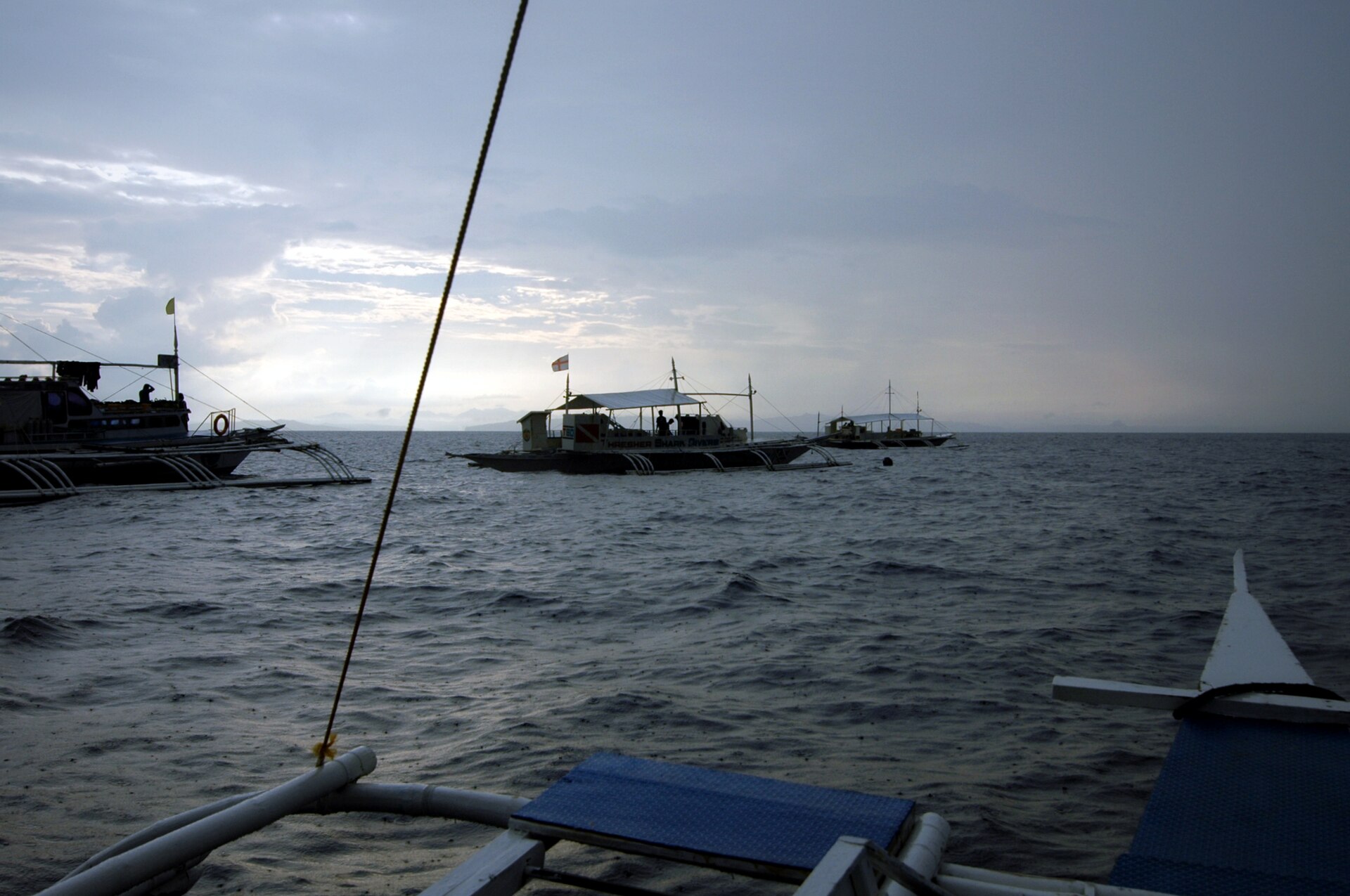
Meet at the dive center between 4:30 and 5:30 a.m., depending on the tide and season. The banca takes 45 minutes to an hour to reach Kimud Shoal. You descend the mooring line to the plateau at 12 m, and the guide settles the group behind a rope stretched between concrete blocks, facing the cleaning station, between 12 and 22 m. Then you wait, motionless, neutrally buoyant. The shark comes out of the gloom, circles above the station, lets the cleaner fish approach, leaves and comes back. Encounters last from a few seconds to several minutes; a diver who moves forward or switches on a video light scares it off for everyone. Two dives follow on the same plateau, with a surface interval on board, and the boat is back on Bounty Beach for breakfast.
Who protects Monad Shoal, and how do divers pay for it?
Monad Shoal has been a municipal marine protected area since 2002, 184 hectares with a 500 m buffer zone, where all fishing is banned. In 2010, several dive centers created the Malapascua Marine Protection Fund, financed by a contribution from every diver, to pay for patrols: former fishermen trained as Bantay Dagat, the sea wardens, watch over the shoal from three small boats and a patrol boat provided by the province of Cebu in 2015. That same year, Monad Shoal and Gato Island became the Philippines' first shark and ray sanctuary, and the province banned the capture and trade of all shark and ray species in its waters. The sanctuary fees, PHP 300 a day, and the Kimud Shoal fee, PHP 100, are collected by the dive centers and passed on to the municipalities.
What else can you dive from Malapascua: Gato, Kalanggaman and the Lighthouse?
Gato Island, an hour away by banca, is a rock pierced by a 30 m tunnel that runs through the island, with dives between 5 and 24 m: whitetip reef sharks asleep in the caves, plenty of banded sea kraits, cuttlefish and nudibranchs on the walls. Kalanggaman, two hours to the east, is a white sandbar sitting on a wall that drops beyond 200 m; the island costs PHP 1,000 for the day. The Lighthouse reef, at the northwestern tip of Malapascua, is dived at dusk, between 5 and 10 m: around 6 p.m., the mandarinfish come out of the branching corals for their mating display, a show of a few minutes that you watch without white light. Night dives on the island's reefs round out the program: schools of striped catfish, hermit crabs, zebra crabs on fire urchins.
Our tip
Book on your first evening and go to bed early: the sharks head back down as the sun rises. Take Nitrox and stay still behind the rope; that's how a thresher ends up passing two meters away. Keep a day for Gato Island.
Other dive sites nearby
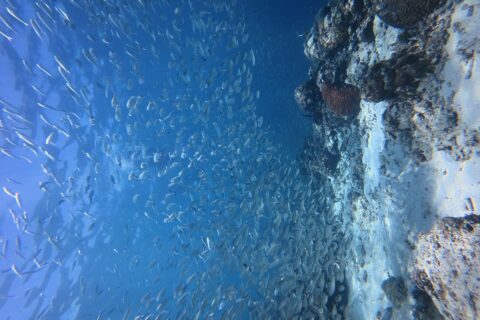
 PhilippinesShore dive
Moalboal sardine run
Visayas: Cebu, Bohol and Negros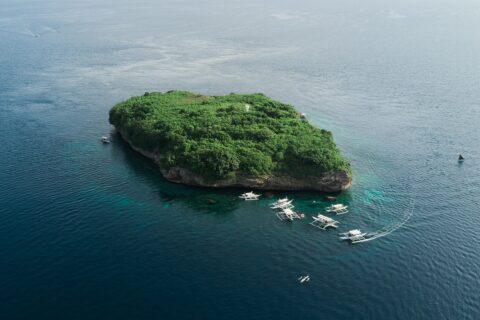 PhilippinesReef
Pescador Island
Visayas: Cebu, Bohol and Negros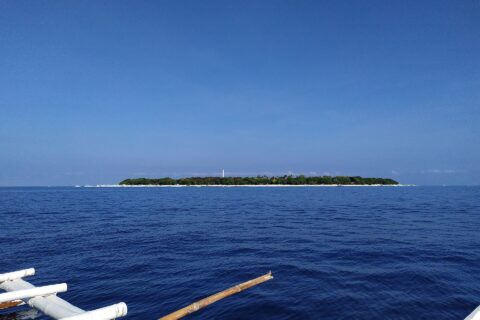 PhilippinesReef