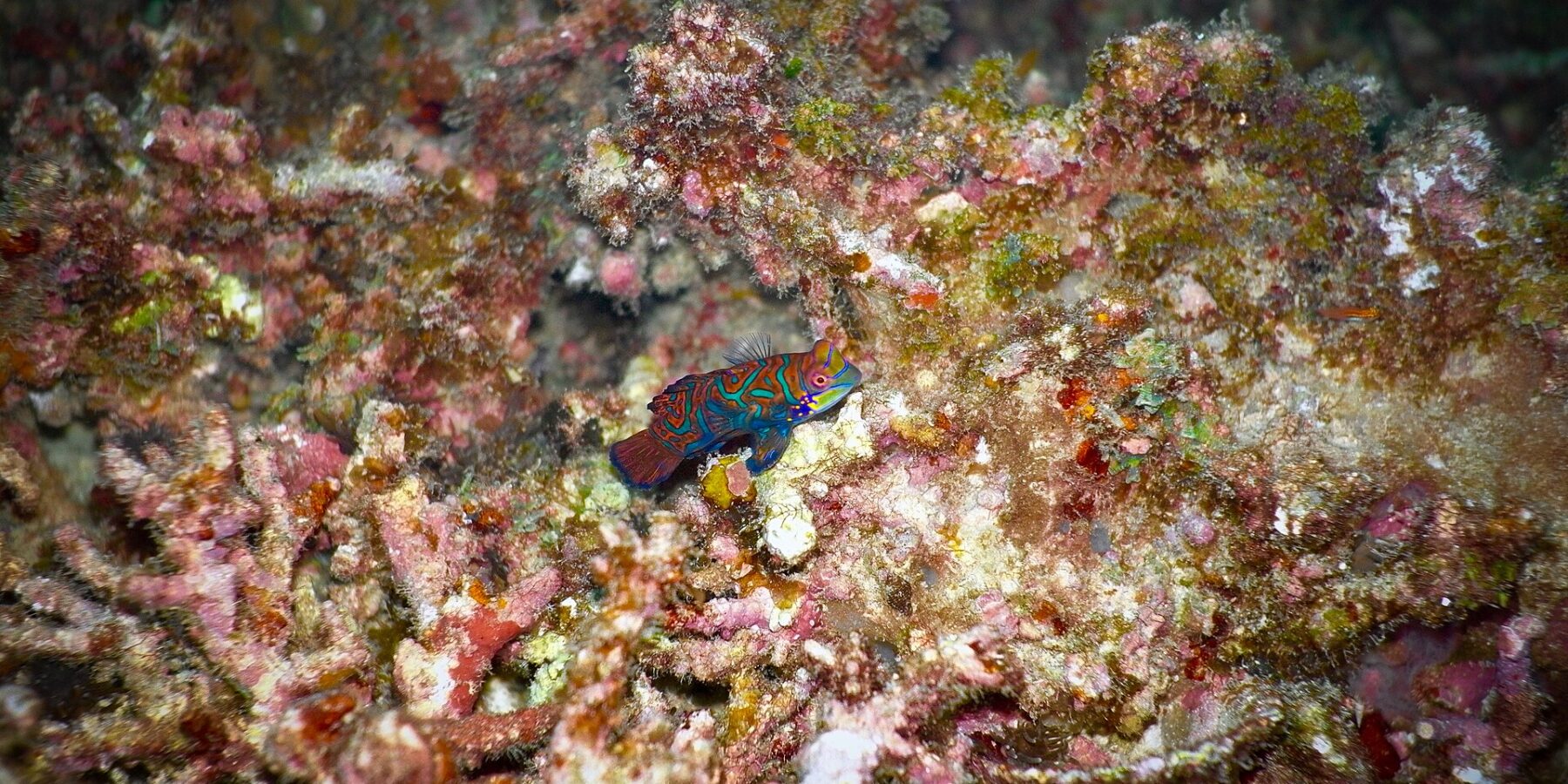
The mandarinfish is a small dragonet, 7 centimeters at most, bright blue with orange stripes, that hides by day in the branching corals of western Pacific lagoons. At sunset, pairs rise belly to belly to spawn. You watch for this mating dance at dusk, in Malapascua and Moalboal.
Where to dive to see the Mandarinfish?

 PhilippinesWreck
Coron wrecks
PalawanPeak season all year round: at dusk on the East Tangat Gunboat, between 3 and 19 m
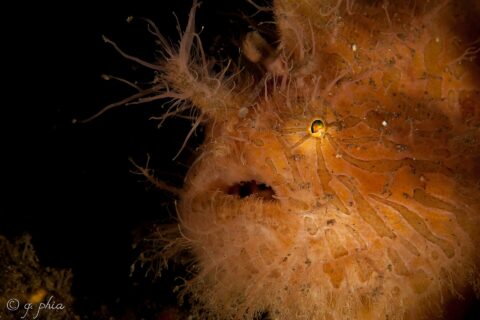
 IndonesiaReef
Lembeh Strait
Sulawesi: Bunaken and LembehPeak season all year round: displaying at dusk in the coral rubble, on the dive centers' mandarin dive
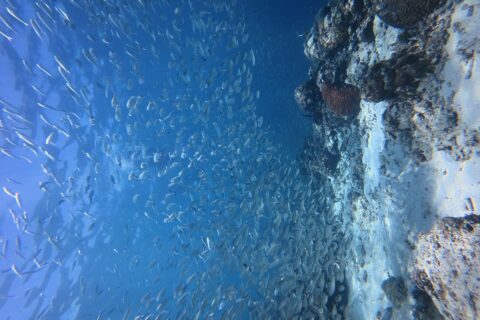 PhilippinesShore dive
Moalboal sardine run
Visayas: Cebu, Bohol and NegrosPeak season all year round: at dusk in the branching corals of the neighboring reef, in front of the Cebu Seaview, a few steps south
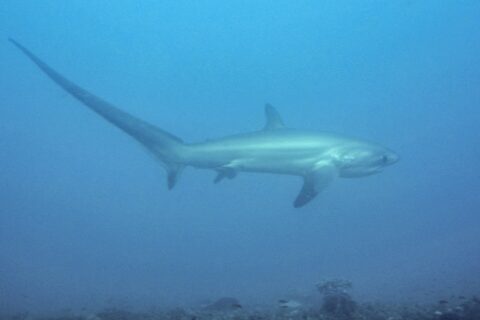 PhilippinesPelagic
Monad Shoal and Kimud Shoal
Visayas: Cebu, Bohol and NegrosPeak season all year round: mating display around 6 p.m. on the Lighthouse reef, between 5 and 10 m
How do you identify a mandarinfish?
The mandarinfish is a dragonet, from the family Callionymidae, described in 1927 by the American ichthyologist Albert Herre, who worked in the Philippines. It measures 6 centimeters on average, 7 at most. The body is long, almost cylindrical, and has no scales: a thin skin covered in a thick, bitter, foul-smelling mucus that keeps parasites out and repels predators. Its bright colors are, in that sense, a warning. The base color is bright blue, streaked with wavy orange stripes; the face is blue-green with blue stripes, the eyes red with a black pupil, the dorsal fin orange and blue. This blue is unique. In almost all vertebrates, blue is an optical effect of purine crystals, whereas the mandarinfish and its cousin Synchiropus picturatus are the only two species known to make it with a cellular pigment, the cyanophore, described in 1995. You tell the male by the first spine of his dorsal fin, almost twice as tall as the female's: laid flat, it reaches the tail. The large fins it spreads on the bottom, easily taken for its pectorals, are its pelvic fins: it walks on them. The mouth is tiny and protrusible. A few rare individuals have a red base color.
How does the mandarinfish live?
It lives in the sheltered lagoons and inshore reefs of the western Pacific, from the Ryukyu Islands to Australia, by way of the Philippines, Palau and Indonesia, between 1 and 18 meters, on silty bottoms scattered with coral and rubble. It lives in small groups on a tiny patch, often about ten square meters of branching coral, Acropora and Pocillopora, which it threads through and hides in by day. It feeds nonstop, picking small prey out of the coral: copepods, polychaete worms, small gastropods, amphipods, fish eggs, ostracods. It is slow, and common within its range, yet almost invisible because of its size and its life on the bottom; it shuns light. Spawning happens at sunset, every day of the year. The females wait on the reef, choose a male and settle on his pelvic fin; the pair then rises belly to belly about a meter above the coral, releases eggs and sperm into open water and drops straight back down. A female spawns at most once a night, a male up to eight times, with different partners. A single spawning can hold up to 200 eggs, which drift in open water.
Where and when can you see mandarinfish in the Philippines?
All year round, and always at dusk. In Malapascua, the site is Lighthouse Reef, at the northwest tip of the island: coral gardens and rubble on rock between 7 and 10 meters, where a dozen boats arrive at sunset and spread out their groups, each on its own patch of coral. You wait about three quarters of an hour, lights off, then on red once it gets dark, before the pairs rise. Tiger tail seahorses live in the same spot. At Thresher Shark Divers, a single dive costs PHP 2,875 in 2026, plus a PHP 350 night surcharge and a PHP 300 marine park fee per day. In Moalboal, the house reef at Magic Island, 60 meters from shore, between 5 and 16 meters, is the surest place to find it, as a shore dive, in gullies between large coral heads. The reef at Cebu Seaview, south of Panagsama, has them too, visible on night dives from 6:30 p.m. Elsewhere in the archipelago, Anilao and Dauin have their own mandarinfish dives, and in Coron Bay, it performs its mating dance on the East Tangat gunboat. Outside the Philippines, the Lembeh Strait and Wakatobi, in Indonesia, run the same dive.
Is the mandarinfish endangered?
The mandarinfish has been listed as Least Concern by the IUCN since its assessment of October 12, 2018: it breeds fast, its population can double in less than fifteen months, and its vulnerability to fishing is low. It is still in high demand in the aquarium trade, caught in the Philippines and Indonesia, sometimes with cyanide, even though it adapts poorly to captivity. Many individuals refuse any food but live copepods and amphipods and starve, and males fight each other to the death in a tank. It is now bred in captivity. Its real threat is the decline of the branching corals that shelter it, damaged by bleaching. Underwater, you watch it without touching it, without repeated flashes and without white light: that is the price of the mating dance.
Our tip
Pick a dive center that reaches the site early to place the group above an active patch of coral, settle motionless on the sand or rubble without touching the coral, and wait: spawning lasts only a few seconds, at dusk. Turn off your light or switch it to red. Mandarinfish flee white light, and a beam switched on all at once sends the male back into the coral. In Malapascua, don't schedule the mandarinfish dive the night before a 5 a.m. departure for the thresher sharks.