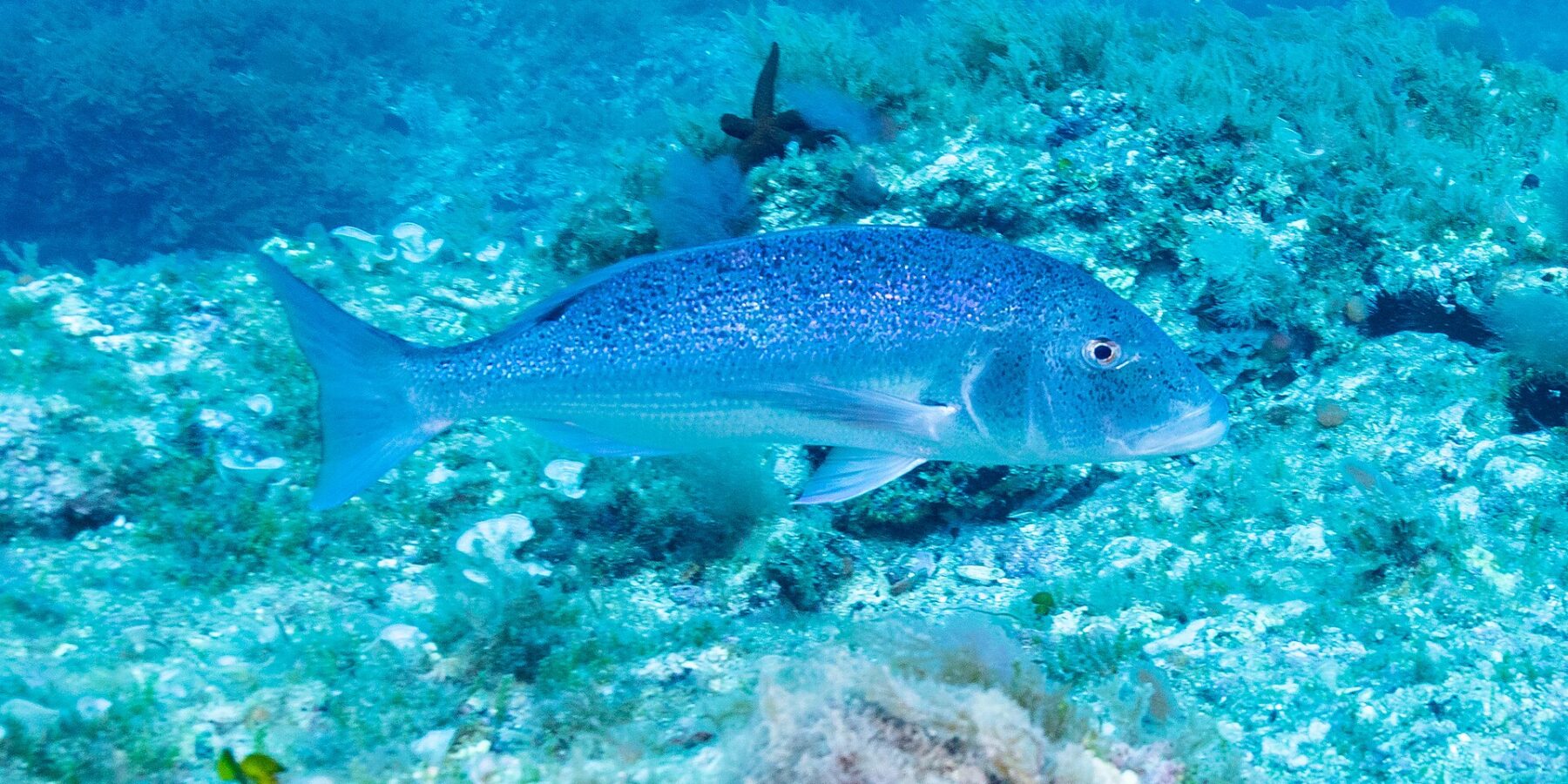
The common dentex is the large predator of Mediterranean rocks, a bluish-gray fish with pink glints, up to one meter long, armed with white canines. It hunts alone in the current, often with amberjacks. Listed as Vulnerable by the IUCN, it is seen mostly from May to October at La Gabinière and Mérouville.
Where to dive to see the common dentex?
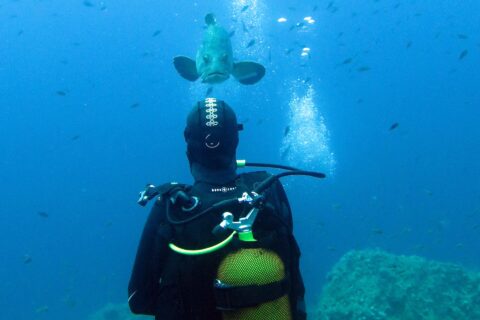
 FranceWall
La Gabinière (Port-Cros)
French Mediterranean: Riviera, Provence and CorsicaPeak season from May to October: hunting in the current with amberjacks and leerfish
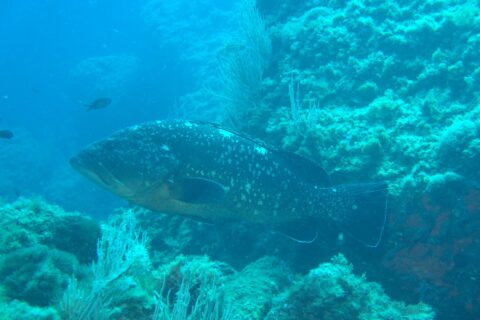 FranceReef
Mérouville (Lavezzi Islands)
French Mediterranean: Riviera, Provence and CorsicaPeak season from May to October: hunting above the boulders, with leerfish
How do you identify a common dentex?
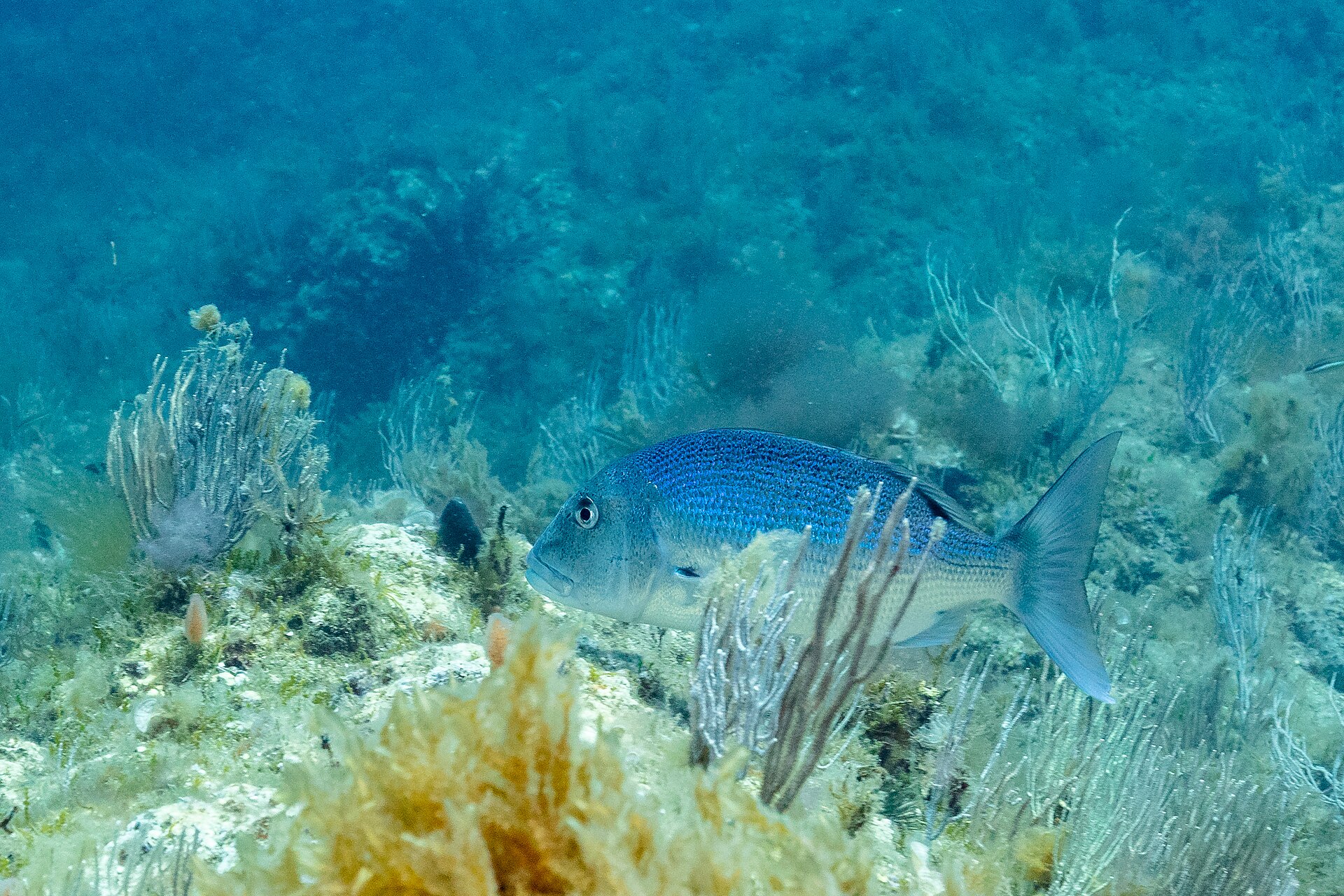
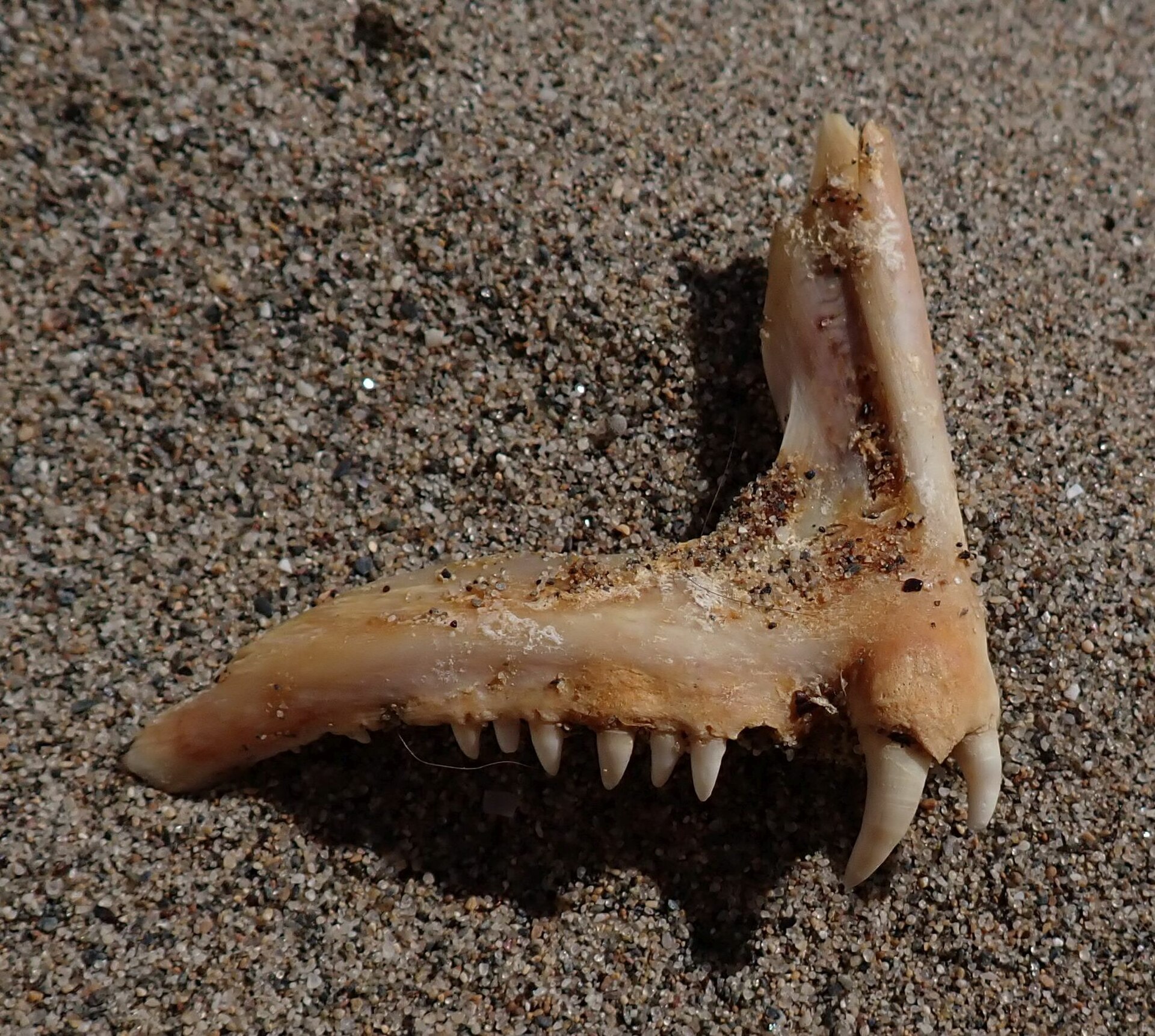
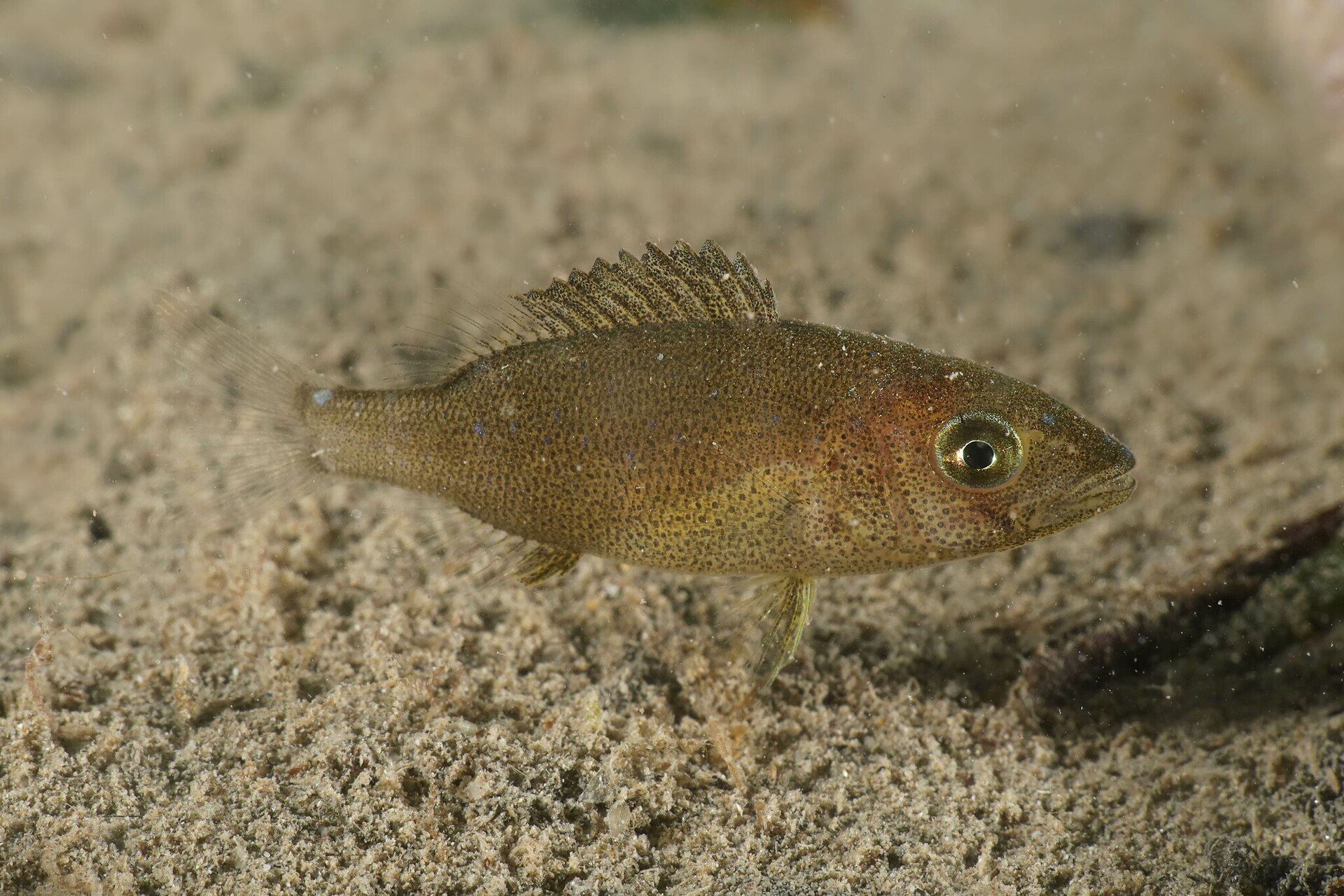
The common dentex is a sparid, from the seabream family, but it is a predator of a good size: usually 50 centimeters, up to one meter and 14.3 kilos. The body is oval and compressed, the head profile rounded in adults, almost straight in juveniles and slightly humped in the largest fish. Its coloring changes with age: gray spotted with black on the back and upper flanks in juveniles, it turns pink at maturity, then bluish gray in old fish, whose spots fade. The mouth carries several rows of canine-shaped teeth, the most developed at the front, with two pointed white canines clearly visible at the front of the lower jaw. The dorsal fin has 11 spines.
Common dentex in pictures
How do common dentex live?
It lives throughout the Mediterranean and into the western Black Sea, and in the northeastern Atlantic from the Bay of Biscay to Mauritania, including the Canaries and Madeira. A benthopelagic fish, it frequents hard bottoms, rock and boulder fields, down to 200 meters, but it is most common between 15 and 50 meters, near the coast, where it hunts above shallows and along walls. It is an active predator of fish, mollusks and cephalopods; juveniles eat zooplankton. Adults are solitary most of the year and only gather for a few weeks in spring to spawn, from March to June, especially in May; juveniles, on the other hand, live in schools. Maturity comes between 2 and 4 years; most fish have a fixed sex, but hermaphrodites have been observed.
Where and when can you see common dentex in France?
On our two sites, the common dentex is seen year-round, with a main season from May to October. At La Gabinière, in Port-Cros National Park, it hunts in the current alongside amberjacks and leerfish. At Mérouville, near the Lavezzi Islands, it passes over the boulders on the hunt, with leerfish. The encounter happens in the blue, at the edge of the rock, and doesn't last: it arrives fast, inspects and leaves.
Is the common dentex endangered?
Slow-growing, large and sought after, the common dentex is a prize catch for sport fishing as well as for bottom trawls, lines, traps and sometimes trammel nets. The IUCN lists it as Vulnerable: its population declined by more than 30% over three generations, or 36 years, up to 2009. The reserves where fishing is banned, Port-Cros and the Lavezzi Islands, are the places where you see it best.
Our tip
Watch for it in the current, at the edge of the wall or above the boulders, where the amberjacks and leerfish pass: it appears, turns and vanishes. Stay along the rock without chasing it into the blue, and it often comes back. From May to October, your chances are best on our two sites.