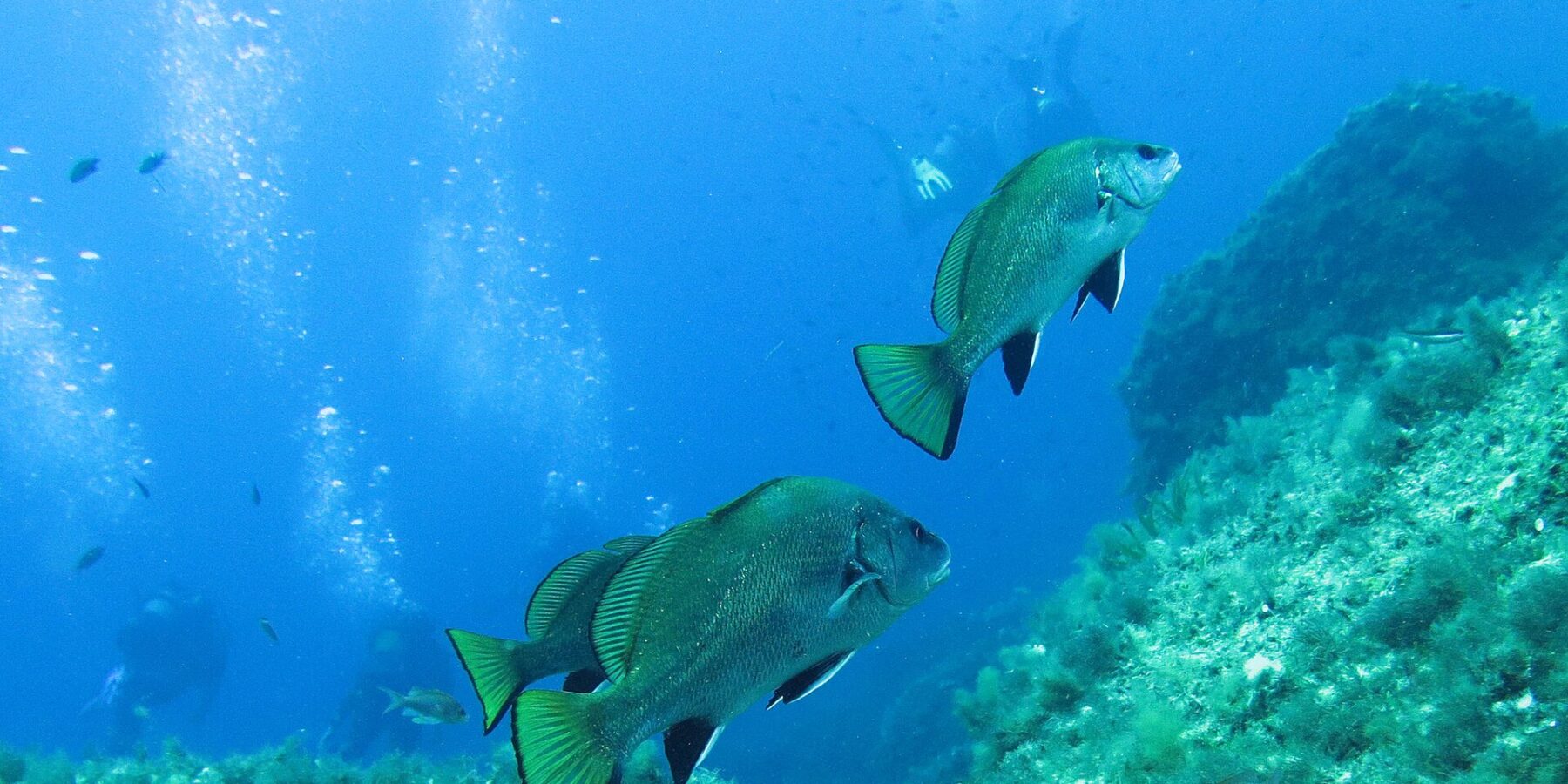
The brown meagre is the dark, humpbacked fish of Mediterranean crevices, 30 to 40 centimeters long, that lives in small groups under overhangs. Overfished by spearfishing and nets, it is Near Threatened and under a moratorium in France. You can see it year-round at La Gabinière and Mérouville.
Where to dive to see the brown meagre?
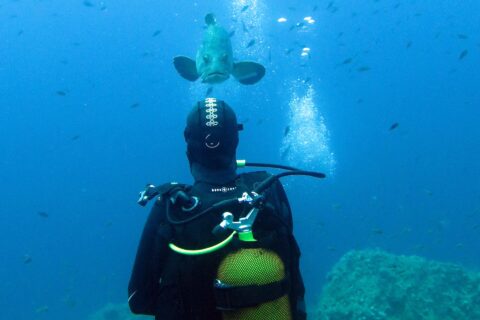
 FranceWall
La Gabinière (Port-Cros)
French Mediterranean: Riviera, Provence and CorsicaPeak season all year round: in groups in the crevices and under the overhangs
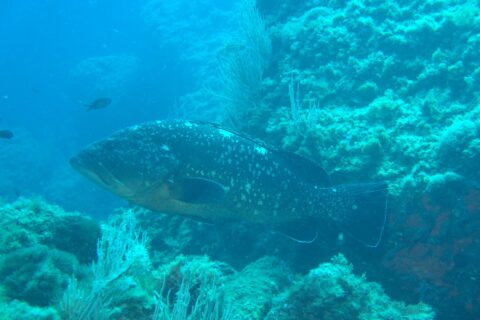 FranceReef
Mérouville (Lavezzi Islands)
French Mediterranean: Riviera, Provence and CorsicaPeak season all year round: in the granite crevices
How do you identify a brown meagre?
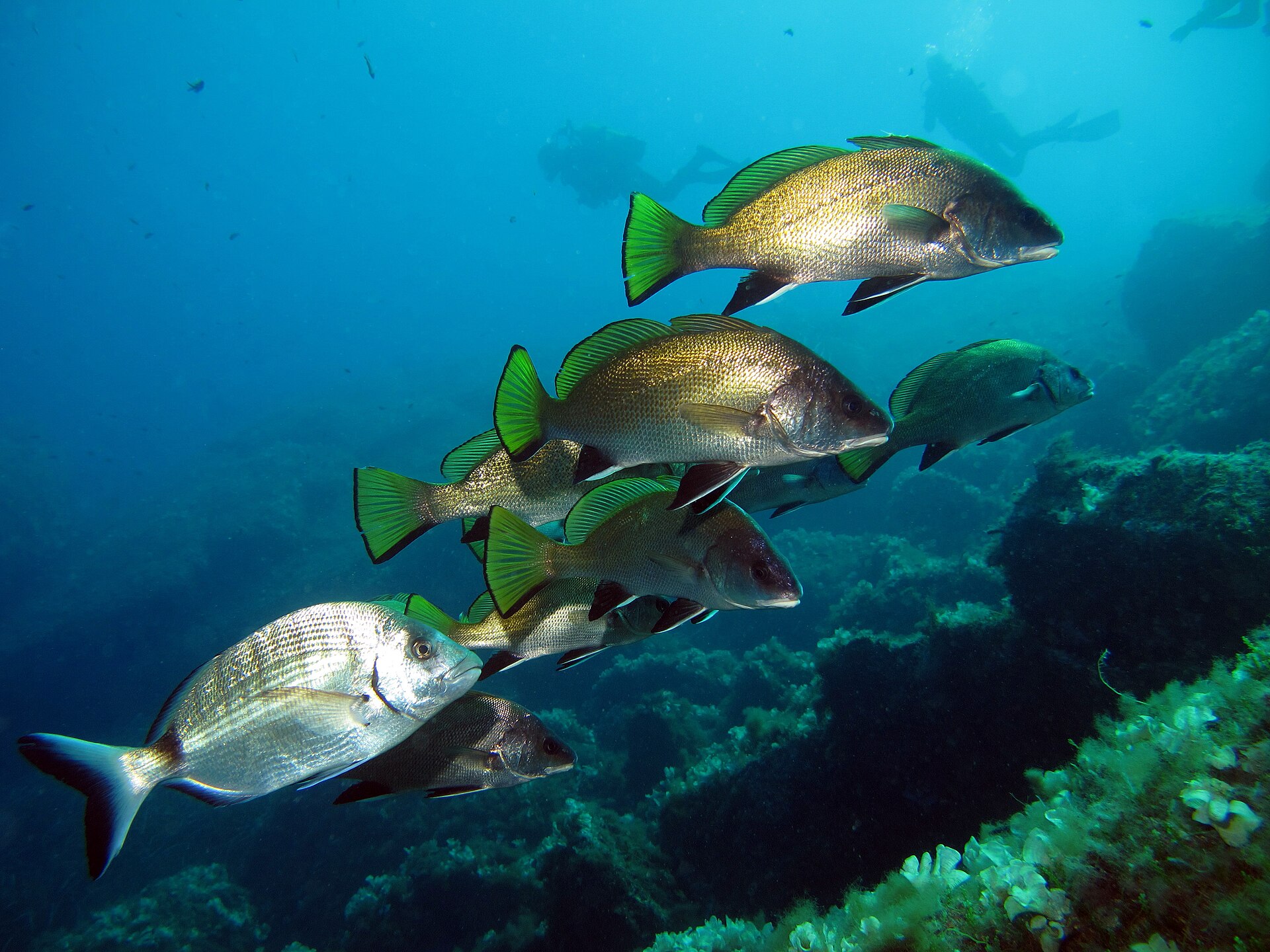
The brown meagre, also called the corb, is a drum of rocky coasts, from the family Sciaenidae, compact and deep-bodied: a compressed body, a strongly arched back, a flat belly, and a small, low-set, almost horizontal mouth with no chin barbel, lined with brush-like teeth. Its coloring is dark brown to gray, with metallic or golden glints; the anal and pelvic fins are black, edged in white at the front, the dorsal and tail fins yellow, edged in black, and the tail is square-cut. It usually measures 30 to 40 centimeters, up to 70. In the water, what strikes you is its calm: perfect buoyancy, movement without apparent effort, a group hanging in the shade of a rock.
Brown meagre in pictures
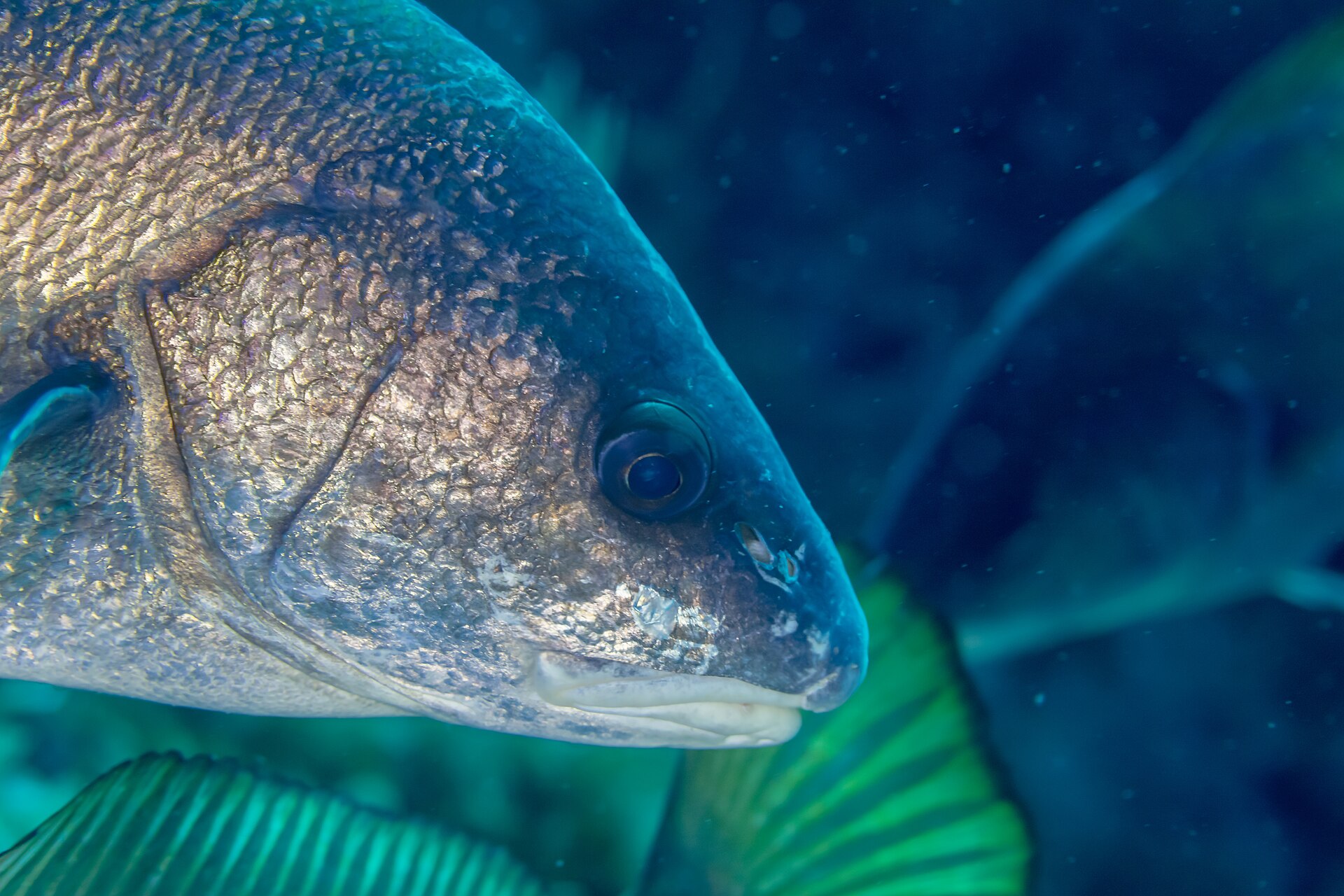
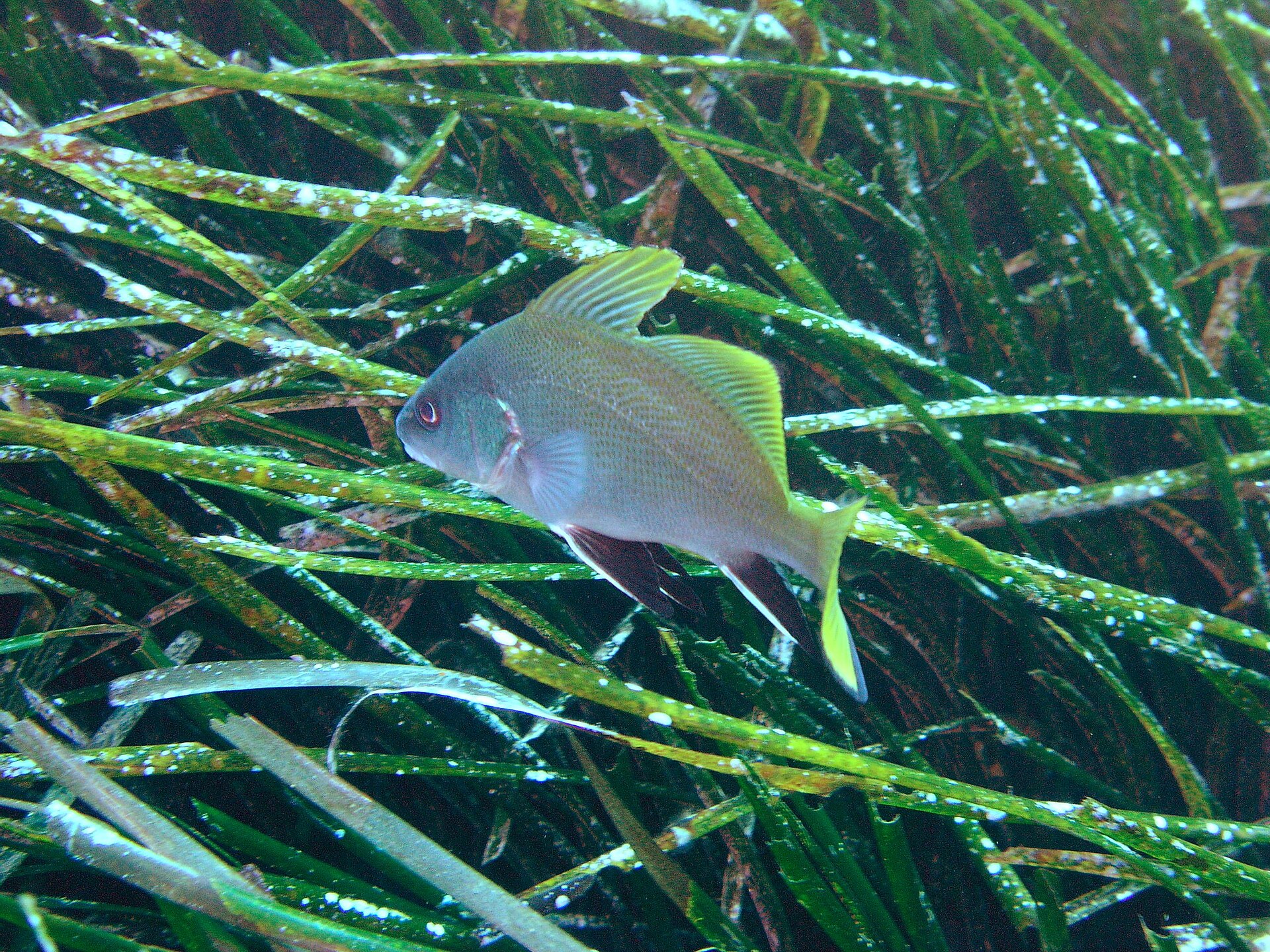
How do brown meagre live?
It lives in the Mediterranean, the Black Sea and the Sea of Azov, and in the Atlantic from the English Channel to Senegal, on rocky and sandy inshore bottoms, between 1 and 200 meters, where it frequents caves and crevices; juveniles enter estuaries. A resident fish, it forms small groups that spend the day sheltering by a rock and become active at night to eat small fish and crustaceans. It contracts the muscles of its swim bladder to make sounds, and its hearing is excellent. It breeds from March to August in the Mediterranean, in aggregations near estuaries, and can live 31 years.
Where and when can you see brown meagre in France?
It is resident year-round in the two reserves on our map. At La Gabinière, in Port-Cros National Park, brown meagre gather in groups in the crevices and under the overhangs. At Mérouville, near the Lavezzi Islands, they occupy the cracks in the granite. Look for a motionless shadow at the back of a fissure and move in without sudden gestures: the group stays put.
Is the brown meagre endangered?
Overfished by spearfishing and by nets, trammel nets and gillnets, especially during its spawning aggregations, the brown meagre has declined by 70% in 25 years in the eastern Mediterranean and by 30 to 50% across the whole Mediterranean. The IUCN lists it as Near Threatened worldwide and Vulnerable in the Mediterranean. In France, spearfishing for it has been under a moratorium since 2013; in Corsica, the orders of December 22, 2023 extended it for ten years, along with groupers. Its groups in the reserves are the result of this protection, and the best argument for keeping it.
Our tip
Approach the crevice slowly, without finning toward the group, and the fish will stay hovering in front of you. Don't shine your light straight in their faces and don't push them to the back of their shelter. The groups at La Gabinière and Mérouville exist because hunting is banned there: watch them, don't follow them.