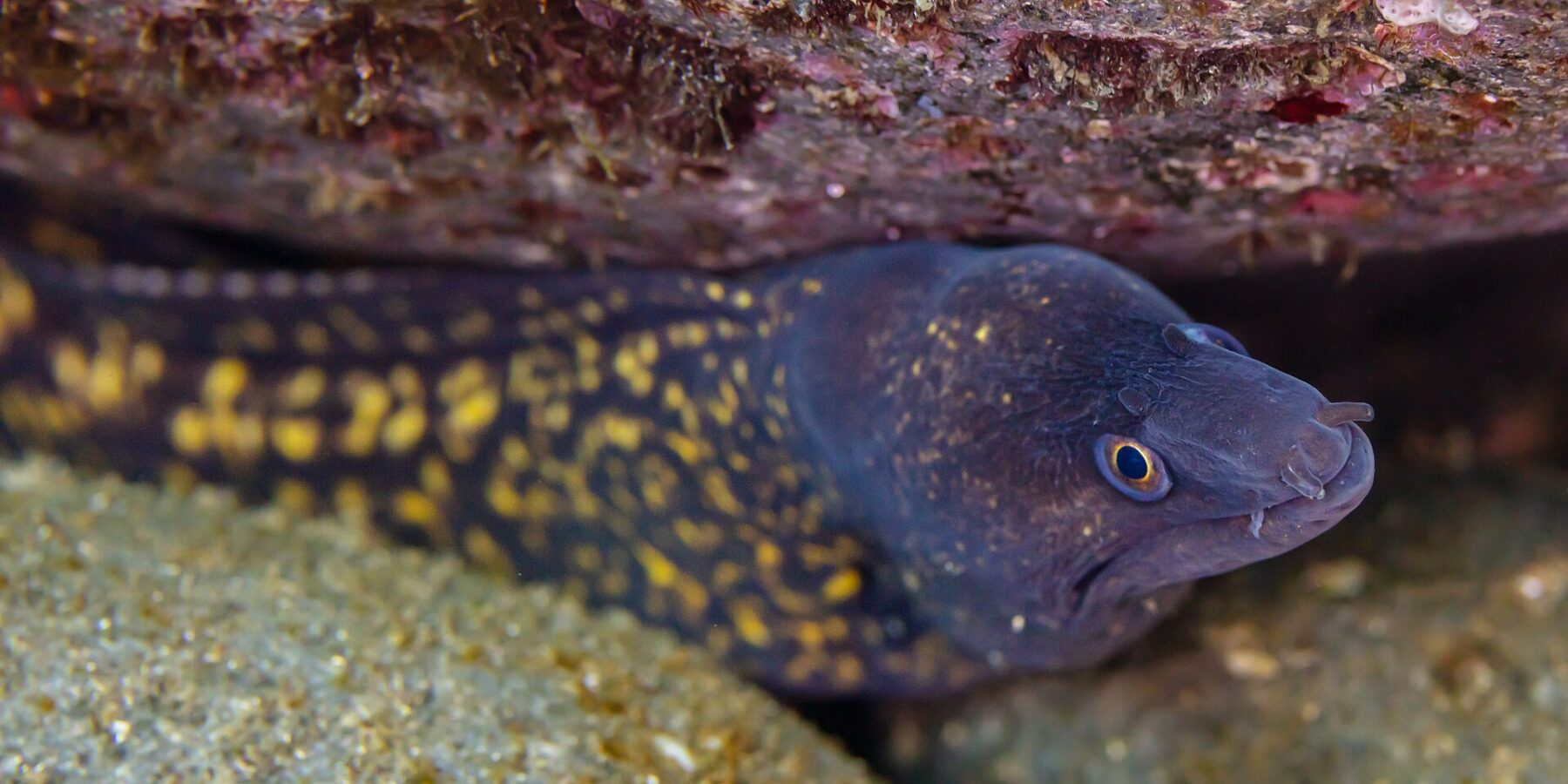
Dark brown and up to 1.50 meters long, the Mediterranean moray hides by day in holes in the rock and in wrecks. It hunts at night and only bites if disturbed, and you see it all year on the Liban wreck, the Rubis and La Gabinière.
Where to dive to see the Mediterranean moray?
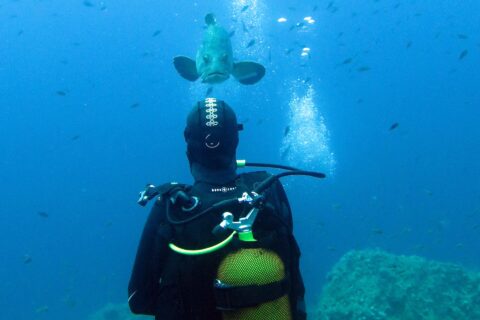
 FranceWall
La Gabinière (Port-Cros)
French Mediterranean: Riviera, Provence and CorsicaPeak season all year round: in the holes of the wall, with the conger eels
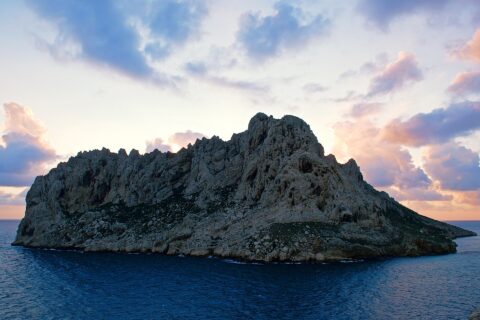 FranceWreck
Liban wreck (Marseille)
French Mediterranean: Riviera, Provence and CorsicaPeak season all year round: plenty of them in the hull plates and the holds
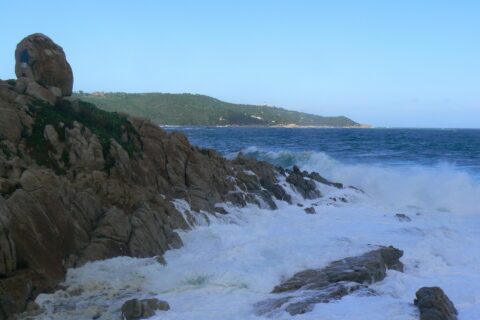 FranceWreck
Rubis wreck (Cavalaire)
French Mediterranean: Riviera, Provence and CorsicaPeak season all year round: in the nooks of the hull
How do you identify a Mediterranean moray?
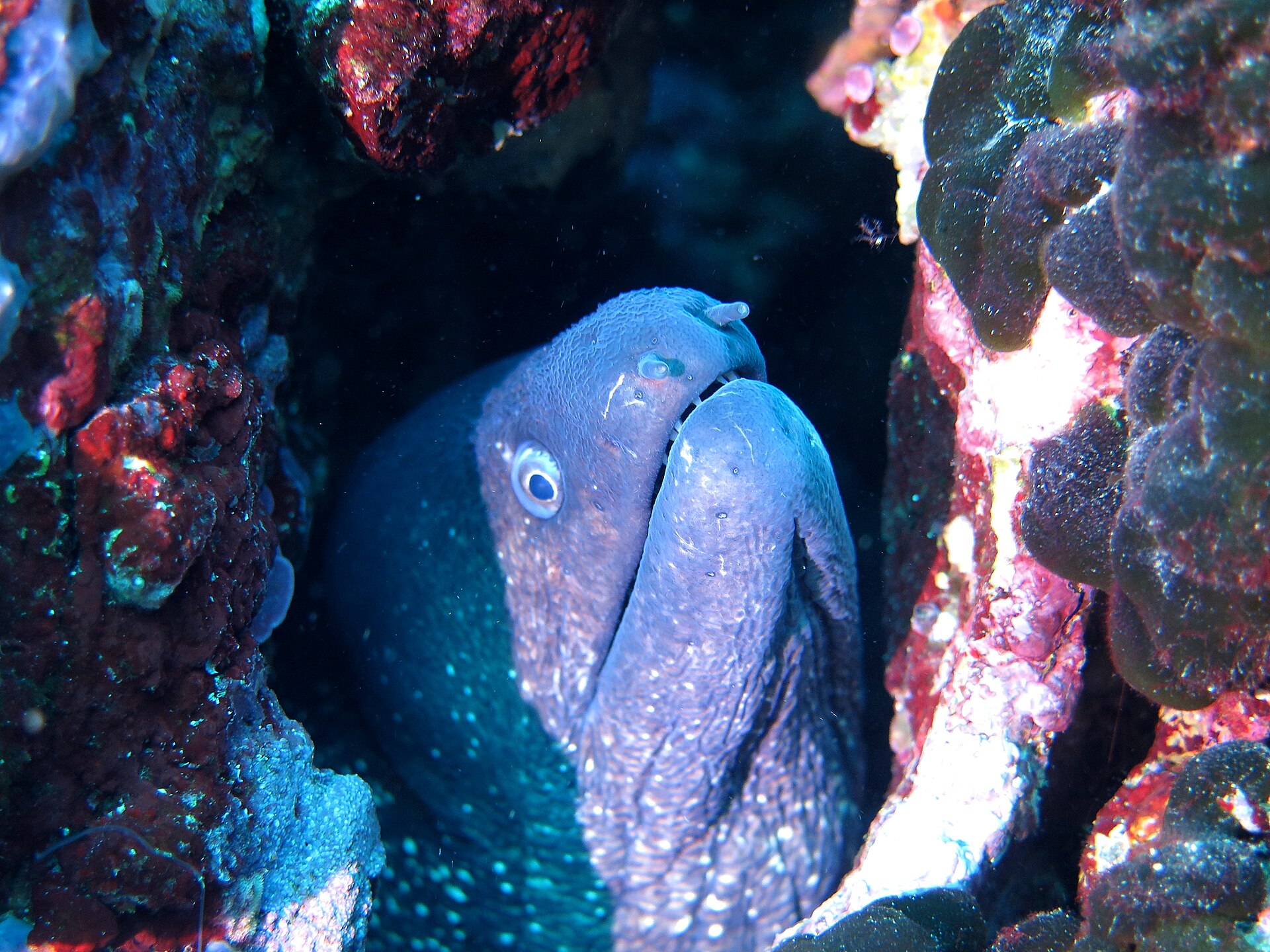
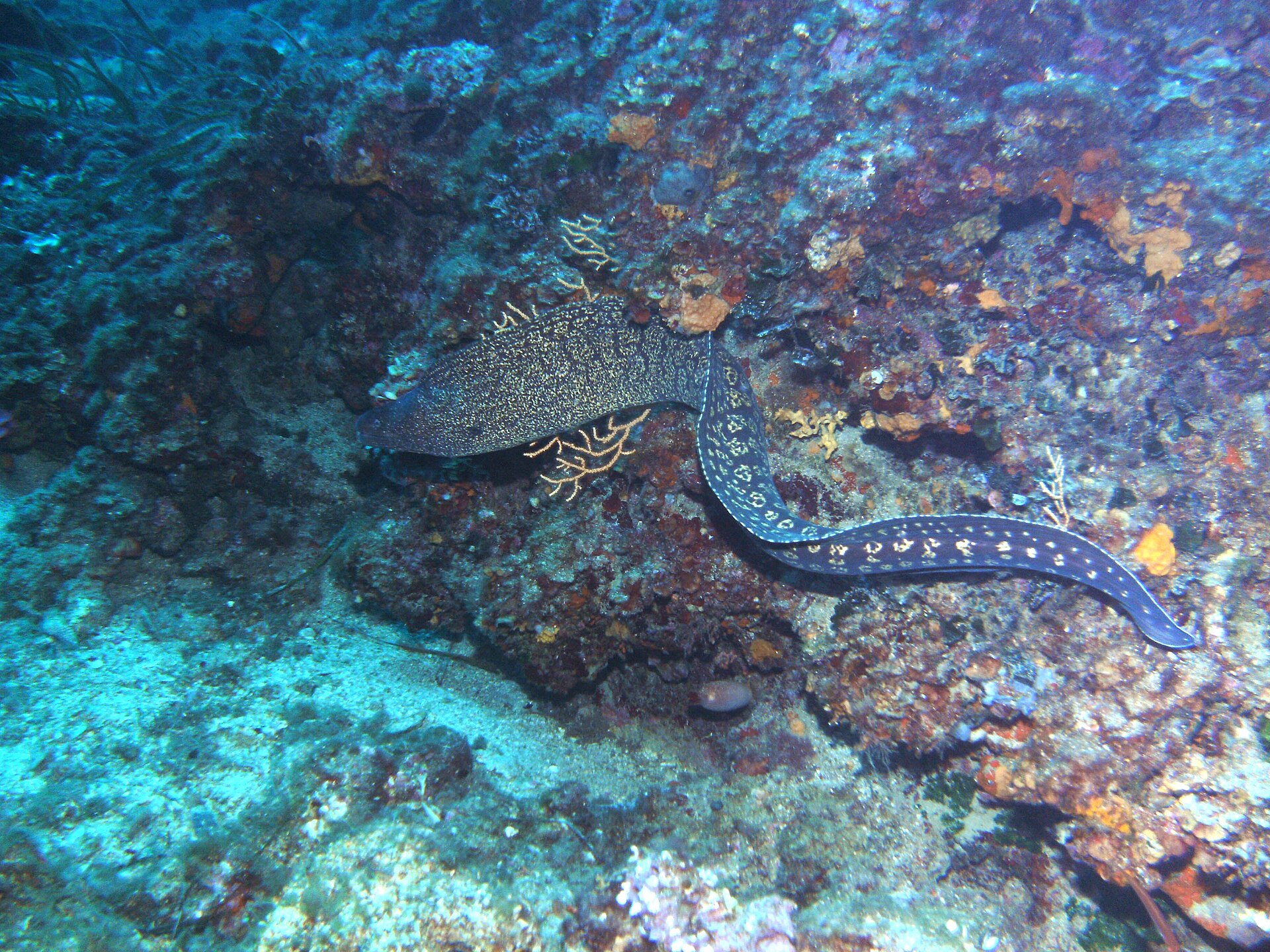
The Mediterranean moray, Muraena helena, has a sturdy, snake-like body, slightly flattened on the sides, scaleless and coated in mucus, with no pectoral fins; the dorsal fin starts behind the head and runs to the tail fin, fused with the anal fin. The coat ranges from dark gray to dark brown, sprinkled with fine spots. The head has tubular nostrils and, in adults, folds of skin on the forehead. The long, powerful mouth opens back beyond the gills and shows long, pointed teeth at the front and small conical ones at the back. It usually measures 80 centimeters, reaches one meter at about 10 years and 1.20 meters at about 15, and can grow to 1.50 meters.
Mediterranean moray in pictures
How does the Mediterranean moray live?
It lives on rocky bottoms, in crevices, Posidonia seagrass meadows, wrecks and even inside amphoras, from the surface to about a hundred meters for most encounters, and much deeper: individuals have been recorded down to 801 meters. It is found throughout the Mediterranean and in the northeastern Atlantic, from the British Isles to Senegal, the Azores, the Canaries and Cape Verde. Territorial and nocturnal, it spends the day in its hole and hunts at night, by ambush. Fish make up almost all of its diet, along with cephalopods and crustaceans, and it does not turn down dead animals. It breeds from July to September and lays some 60,000 eggs, which hatch into transparent larvae, the leptocephali, that drift with the plankton for nearly a year before settling on the bottom.
Where and when can you see Mediterranean morays in France?
You can see it all year at three Mediterranean sites. On the Liban wreck, off Marseille, morays are plentiful in the plating and the holds. On the Rubis wreck, at Cavalaire, look for it in the nooks of the hull. At La Gabinière, in Port-Cros National Park, it occupies the holes in the wall, alongside conger eels. A light is all you need: the head sticks out of the hole, mouth half open, and the rest of the body stays hidden.
Is the Mediterranean moray dangerous?
It is not aggressive and rarely attacks unprovoked, but it bites if threatened, if you jam a hand into its hole or if you feed it. Its saliva contains digestive, hemolytic and neurotoxic secretions, and the mucus on its skin is mildly toxic. This is not venom, but the wound, deep because of the teeth, needs careful cleaning and monitoring. The open mouth is not a threat: it is how the moray moves water over its gills. An old legend clings to its name: ancient Rome kept morays in its fish ponds, and tradition has it that Vedius Pollio threw his slaves to them. The IUCN lists the species as Least Concern.
Our tip
Light the hole from the side and stay an arm's length away: the head comes out on its own, mouth half open. Never slip a hand into a crack without looking first, because that is where bites happen. No feeding, no touching, and the encounter lasts as long as you like.