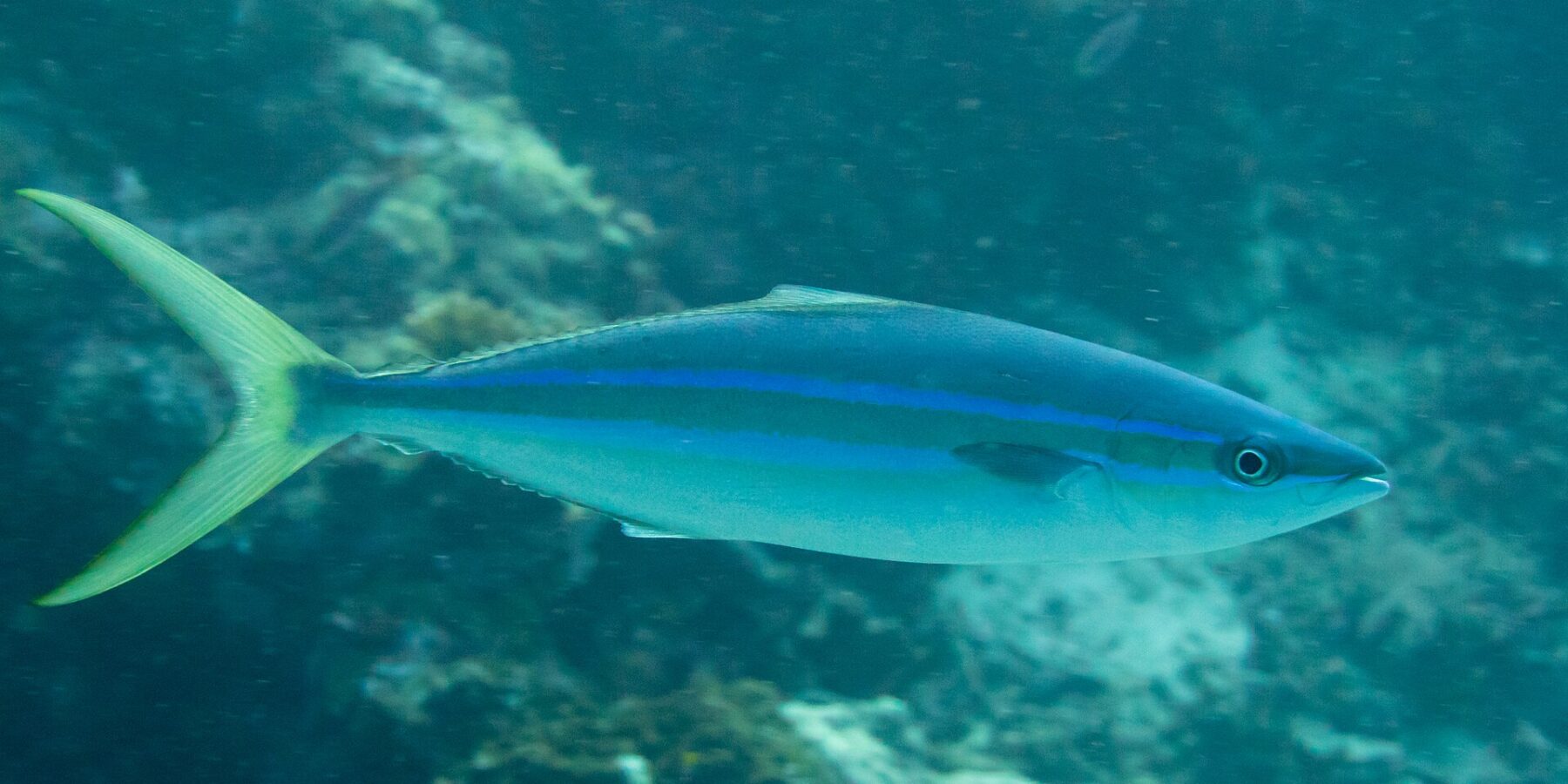
The rainbow runner is an open-ocean jack, blue-green on the back, with a yellow band between two light blue lines, that streaks along in fast schools near the surface. You can see it at El Boiler mostly in May and June, at Hin Daeng from November to May, and at Leven Bank year-round.
Where to dive to see the rainbow runner?
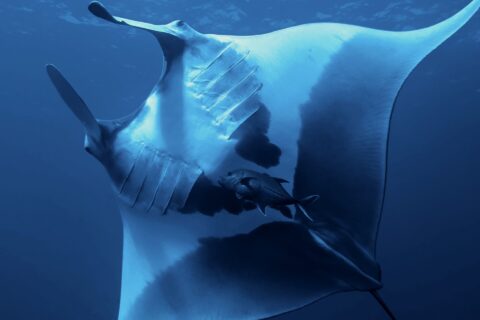
 MexicoPelagic
El Boiler
Revillagigedo Islands (Socorro)Peak season from May to June: schooling in the blue, more numerous in May and June
 ThailandPelagic
Hin Daeng and Hin Muang
Andaman Sea: Similan, Surin and LantaPeak season from November to May: hunting along the walls
 TanzaniaPass
Kinasi Pass
Mafia IslandPeak season all year round: in schools that block out the light, in the pass
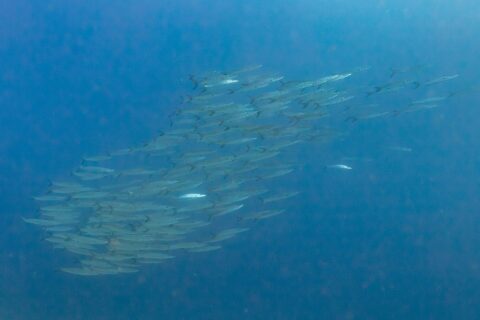 TanzaniaPelagic
Leven Bank
ZanzibarCan be seen all year round: in a fast school above the plateau
How do you identify a rainbow runner?
The rainbow runner is the only species in its genus, a long, streamlined jack built for speed. Most fish measure 80 to 90 centimeters; the maximum is usually put at 1.07 to 1.20 meters, with a single mention of 1.80 meters, and the rod-and-reel record weighs 46.2 kilos. The back is a dark olive blue-green that lightens down to the white belly; two thin light blue lines run lengthwise along each flank, separated by a wider olive to yellow band. Behind the dorsal fin and behind the anal fin, a detached two-rayed finlet sets it apart from other jacks.
Rainbow runner in pictures
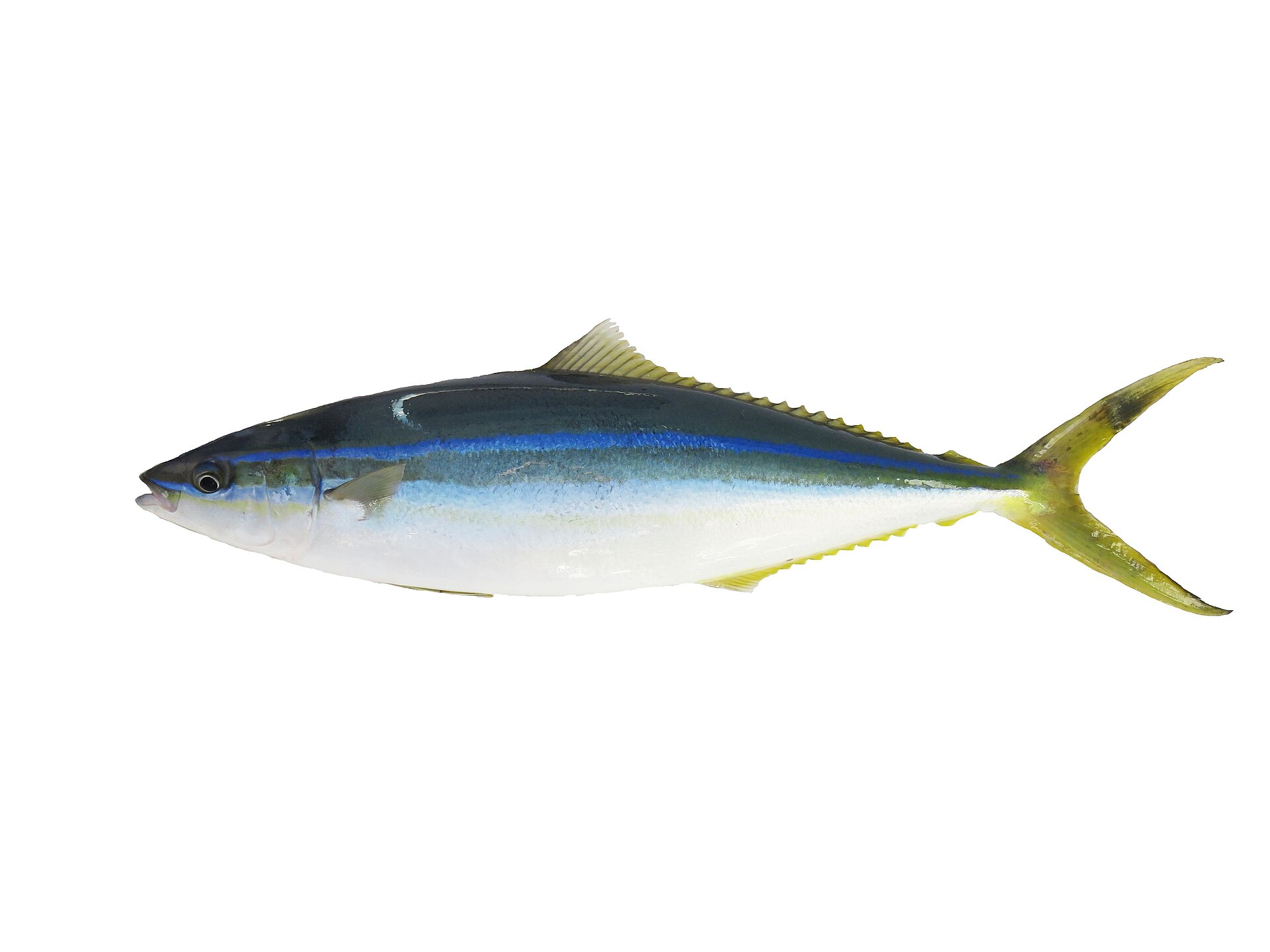
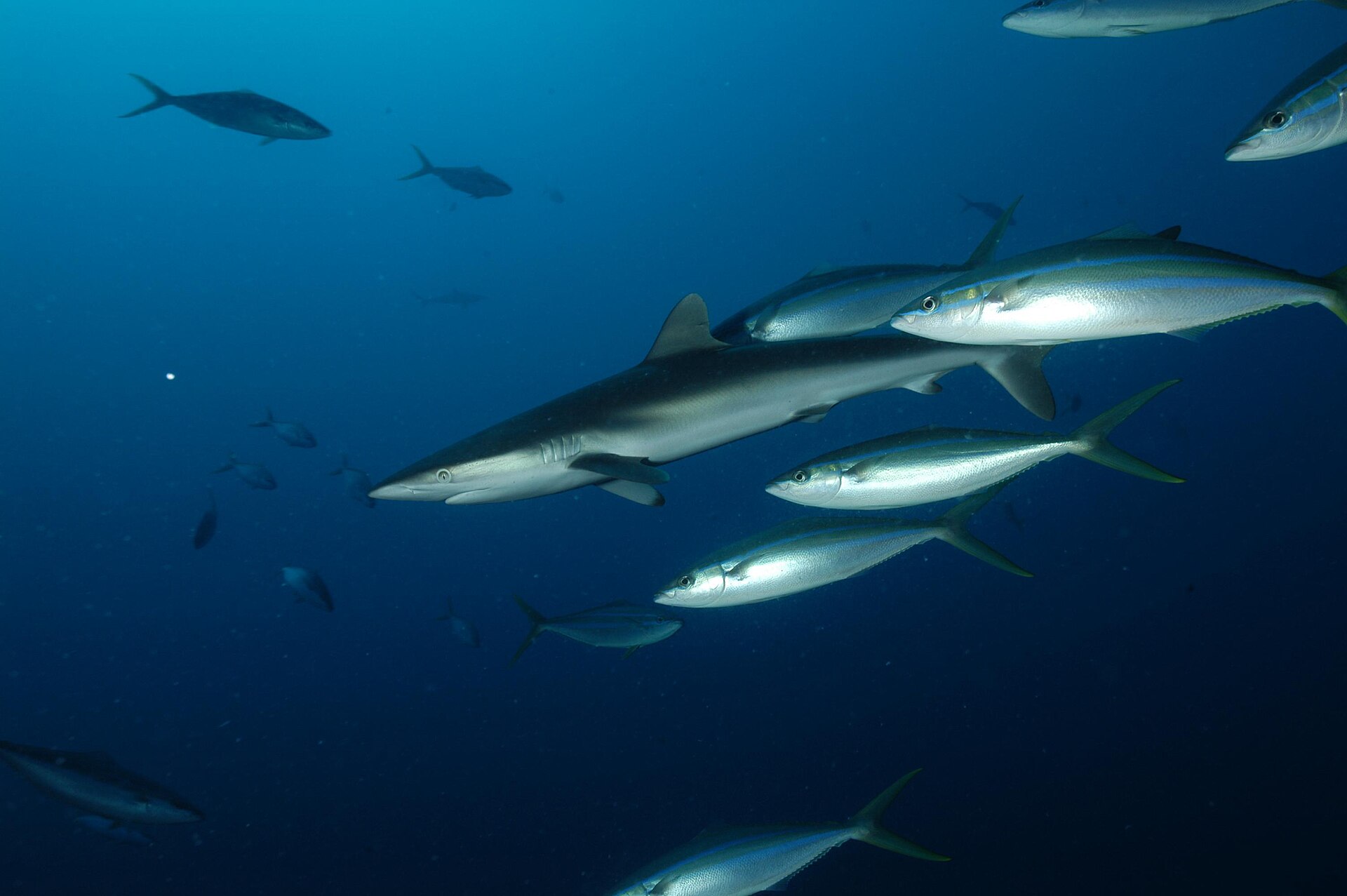
How do rainbow runners live?
The rainbow runner lives in all tropical and subtropical seas: the western Atlantic from Massachusetts to Brazil, the eastern Atlantic from Ivory Coast to Angola and the Canaries, the Indo-Pacific, and the eastern Pacific from the Gulf of California to Ecuador and the Galápagos; it is rare in the Persian Gulf and sometimes enters the Mediterranean through the Suez Canal. A pelagic fish, it lives in the top 150 meters, most often between 2 and 10 meters, near the surface above reefs and offshore, and occasionally enters lagoons and estuaries. It swims fast, migrates widely, gathers around floating objects and forms schools of varying size, up to several hundred fish. It hunts small fish, cephalopods and planktonic crustaceans, down to the Halobates sea skaters that run across the surface. Mature at around 60 centimeters and three years old, it spawns from spring to early fall in the Atlantic and year-round in waters above 27°C; a female produces 1,800 to 95,000 eggs a year, and the species rarely lives beyond six years.
Where and when can you see rainbow runners?
In Mexico, El Boiler, at Socorro, shows it schooling in the blue with yellowfin tuna, mostly in May and June, possible from November to April and rare from July to October. In Thailand, Hin Daeng and Hin Muang have it hunting along the walls with jacks, from November to May, and still in October. In Tanzania, you meet it year-round in fast schools above the Leven Bank plateau, in Zanzibar, and the calendars of Kinasi Pass, on Mafia Island, and Misali Island, on Pemba, list rainbow runners hunting with jacks, in the pass and above the wall, year-round.
Is the rainbow runner endangered?
The rainbow runner is listed as Least Concern on the IUCN Red List. It is a well-known sport fish, sold fresh, salted, dried or frozen, and even as sashimi, but also a major bycatch of tuna and shark fisheries, which use it alive or dead as bait. Its flesh has caused cases of ciguatera. For divers, it is just a flash of blue and yellow at the edge of the reef: harmless and too fast to follow, it shows itself when you stay at its depth, in the blue, and wait for it.
Our tip
Stay at the depth of the school, in the blue off the edge of the reef, and let it come to you: it passes fast, leaves and often comes back. No point chasing it: no fin can keep up with a rainbow runner. Tuna and jacks hunt alongside it, so look behind the school too.