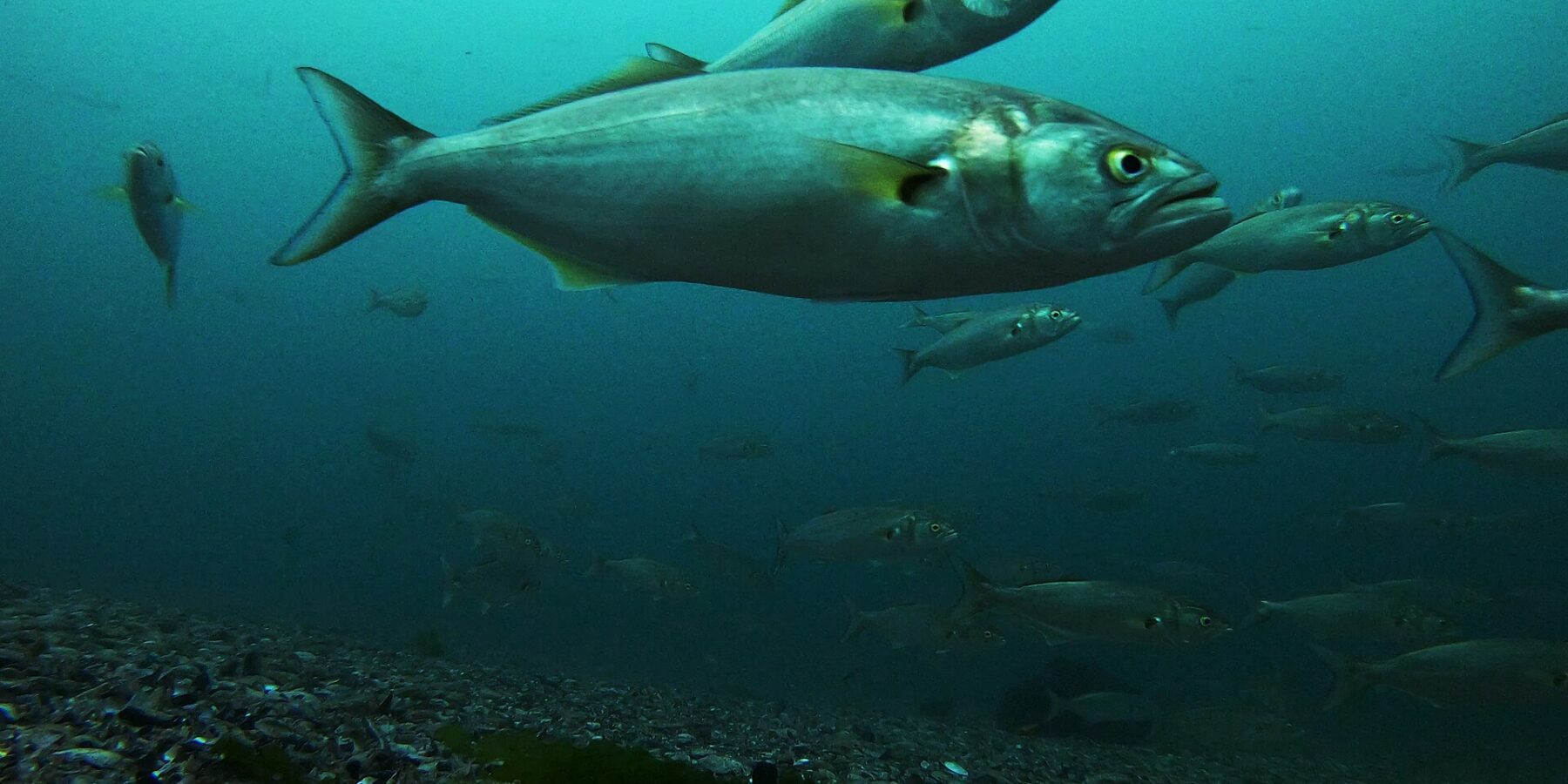
The bluefish is the open-water hunter of the Azores, 60 centimeters long with sharp teeth, attacking small fish in schools. Listed as Vulnerable, it passes in the current at Ambrósio and Baixa do Sul from June to October: watch it go by and stay out of its way.
Where to dive to see the Bluefish?
 Azores

How do you identify a bluefish?
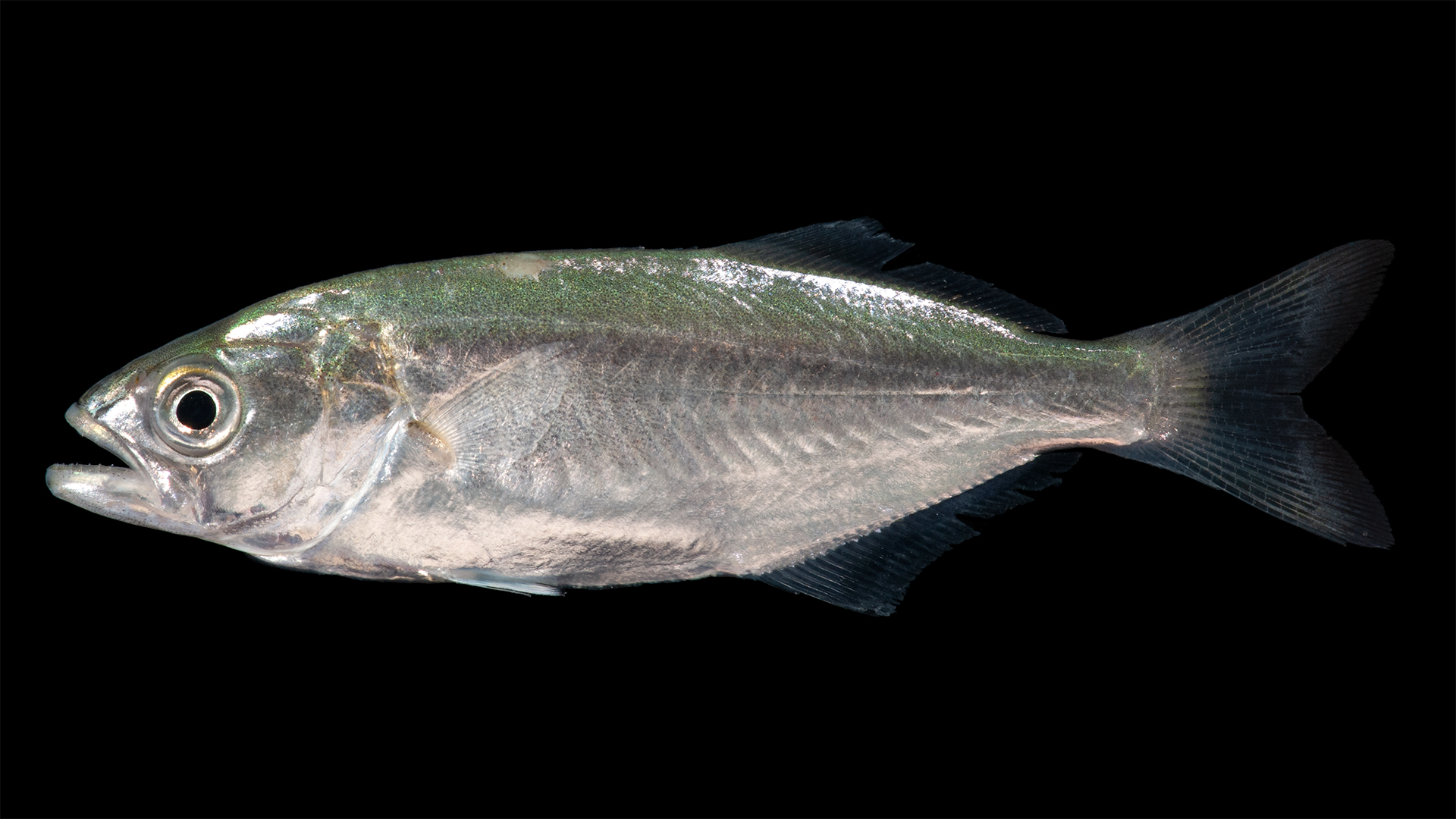
The bluefish is the only member of the family Pomatomidae. It looks like a bass: a well-proportioned body, blue-green gray on the back, fading to white on the flanks and belly, a broad forked tail, and a spiny first dorsal fin that folds into a groove, as the pectorals do. What sets it apart is the mouth: a powerful jaw and, in each jaw, a single row of even teeth, sharp as blades. It most often measures 30 to 60 centimeters and reaches 1.30 meters; the angling record is 14.4 kg, caught off Hatteras, North Carolina.
Bluefish in pictures
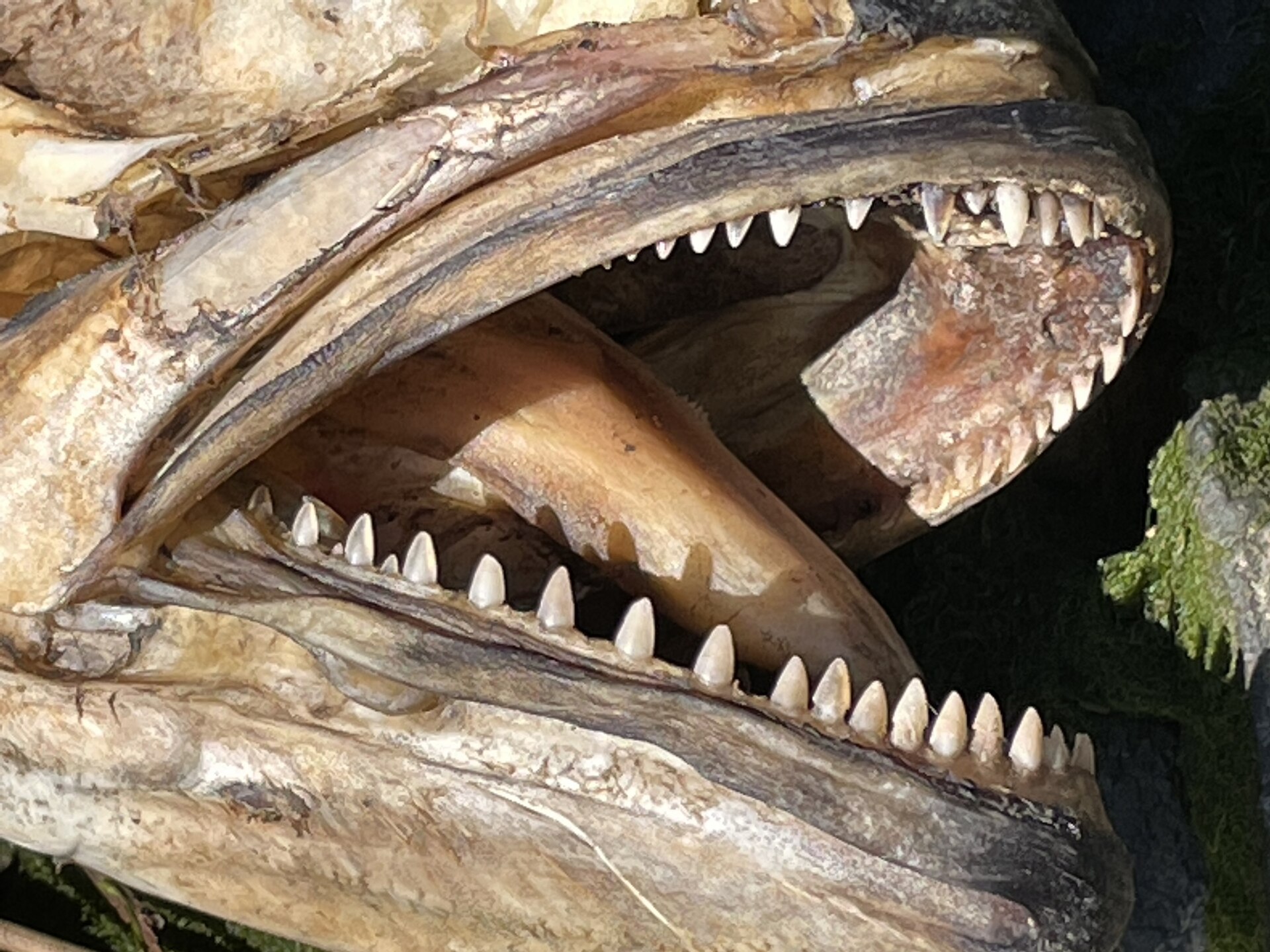
How does the bluefish live?
It lives in temperate and subtropical waters worldwide, in the Atlantic, the Indian Ocean and the southwestern Pacific, but not in the North or East Pacific: eastern America, Africa, the Mediterranean, the Black Sea and the Sea of Marmara, Southeast Asia, and Australia, where it is called tailor. A pelagic fish, it roams the continental shelf from the surface to 200 meters, and it likes the rough water of surf beaches and rocky headlands; it also enters estuaries and brackish water. It lives in loose groups and migrates in schools, toward warm water in winter and cool water in summer. A fast swimmer, it hunts forage fish in schools, such as sardines, anchovies and horse mackerel, as well as shrimp and squid, and it keeps attacking in a feeding frenzy even when full; it is cannibalistic and eats its own young. It breeds in spring and summer, in successive spawnings of 400,000 to 2 million eggs.
Where and when can you see bluefish in the Azores?
Both dive sites where we list it are in the Azores, and the bluefish follows the pelagic season there. At Ambrósio, off Santa Maria, the schools pass in the current mostly from July to September, with possible encounters in June and October. At Baixa do Sul, between Pico and Faial, it schools with the other pelagics from June to October, sometimes from April and until November. To see it, hold on to the rock, facing the current, where everything passes.
Does the bluefish bite, and is it threatened?
The bluefish has seriously bitten anglers unhooking it, and swimming or wading in the middle of a hunting school is dangerous: in July 2006, a seven-year-old girl was bitten near Alicante, Spain. On a dive, the school passes off the reef and takes no interest in divers; keep your hands to yourself and stay out of a hunt. The species has been listed as Vulnerable by the IUCN since 2014.
Our tip
In the Azores, the school arrives in the current with the other pelagics: hold on to the rock, stay together and watch it pass. Never reach out toward a bluefish and do not swim into a hunting school: its teeth cut clean. From June to October, the pelagic season, your chances are best.