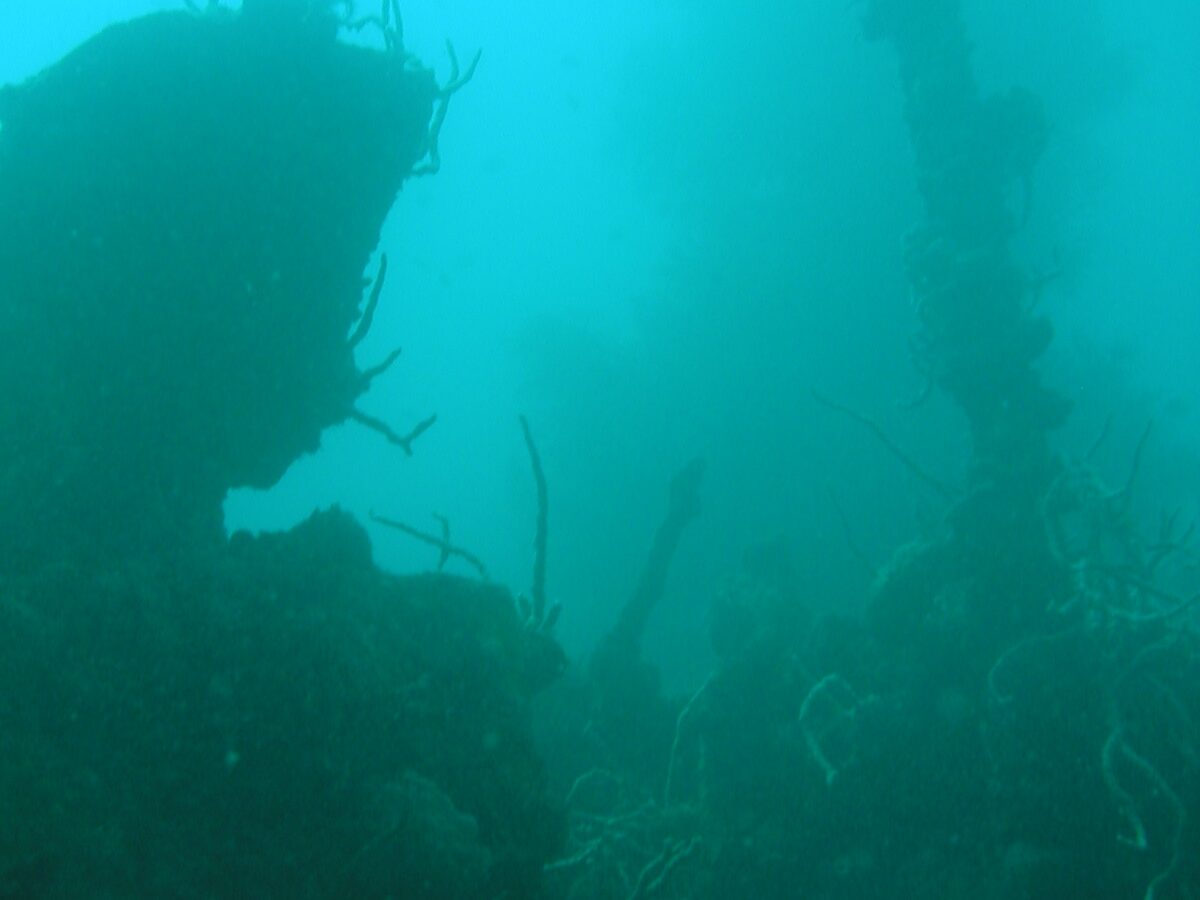
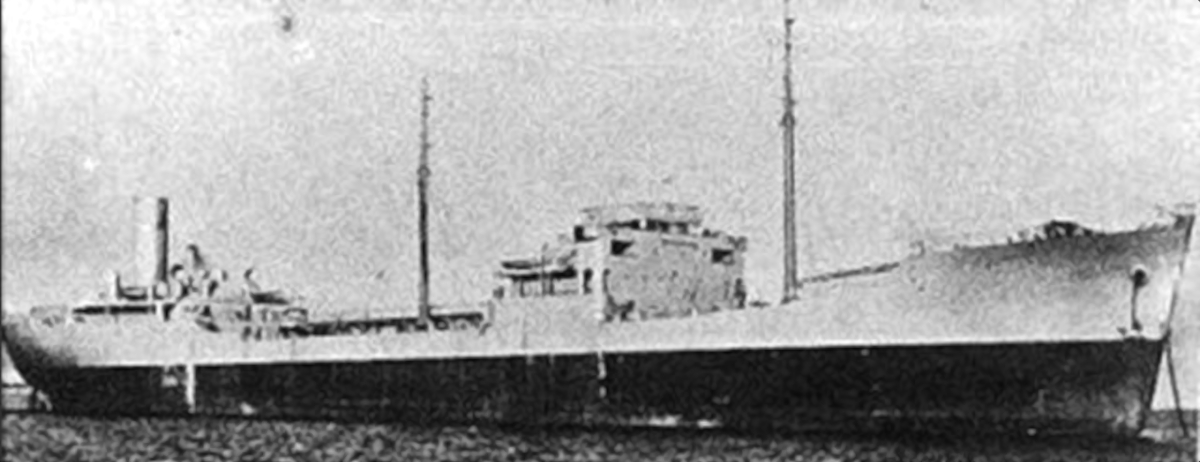
The Coron wrecks are a Japanese supply fleet sunk by American aircraft on September 24, 1944, in northern Palawan. About ten ships from 30 to 168 m long lie between 5 and 43 m, including the Akitsushima and its seaplane crane, and boats from Coron reach them in an hour.
Why dive the Coron wrecks?
- An entire fleet sunk on the same morning, September 24, 1944, by Task Force 38 aircraft: about ten diveable wrecks in a sheltered bay
- The Okikawa Maru, a 160 to 168 m tanker, its deck between 10 and 16 m under dense coral
- The Kogyo Maru's cargo still in place: bulldozer, tractor, bags of cement
- The seaplane crane of the Akitsushima, the only warship in the bay, lying at 36 m
- Barracuda Lake, a karst lake 30 m from the sea, 28°C at the surface and 38°C below the thermocline at 14 m
The Coron wrecks in pictures
What will you see at the Coron wrecks?
Eighty years of coral have turned the hulls into reefs. Lionfish are everywhere on the Akitsushima, the Irako, the Okikawa Maru and the East Tangat; scorpionfish sit on every plate, crocodilefish on the Morazan Maru and the East Tangat. The schools live above the superstructures: barracuda over the Akitsushima and the Kogyo Maru, in a tornado above the Okikawa, batfish at the Okikawa's bow and around the Akitsushima's crane, trevally circling the Irako's mast, yellowfin tuna in the blue. The holds shelter groupers and sweetlips; turtles graze the corals of the Irako, the Kogyo, the Morazan and the Olympia; nudibranchs cover the Kogyo and the Okikawa, whose corals are dense between 10 and 16 m. At dusk, mandarinfish display on the East Tangat Gunboat. A manta ray passes the Kogyo Maru now and then. At Barracuda Lake, there's a single big resident barracuda, on the days it shows up.
| Species | J | F | M | A | M | J | J | A | S | O | N | D | Note |
|---|---|---|---|---|---|---|---|---|---|---|---|---|---|
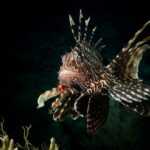 Lionfish | peak season | peak season | peak season | peak season | peak season | peak season | peak season | peak season | peak season | peak season | peak season | peak season | all over the Akitsushima, the Irako, the Okikawa Maru and the East Tangat Gunboat |
 Mandarinfish | peak season | peak season | peak season | peak season | peak season | peak season | peak season | peak season | peak season | peak season | peak season | peak season | at dusk on the East Tangat Gunboat, between 3 and 19 m |
| Barracuda | peak season | peak season | peak season | peak season | peak season | peak season | peak season | peak season | peak season | peak season | peak season | peak season | schooling above the Akitsushima and the Kogyo Maru, in a tornado over the Okikawa Maru |
| Batfish | peak season | peak season | peak season | peak season | peak season | peak season | peak season | peak season | peak season | peak season | peak season | peak season | at the bow of the Okikawa Maru and around the Akitsushima's crane |
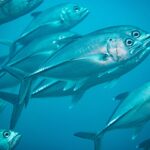 Bigeye trevally | peak season | peak season | peak season | peak season | peak season | peak season | peak season | peak season | peak season | peak season | peak season | peak season | circling the Irako's mast |
| Turtles | possible | possible | possible | possible | possible | possible | possible | possible | possible | possible | possible | possible | on the corals of the Irako, the Kogyo Maru, the Morazan Maru and the Olympia Maru |
| Groupers | peak season | peak season | peak season | peak season | peak season | peak season | peak season | peak season | peak season | peak season | peak season | peak season | in the holds of the Irako, the Kogyo Maru and the Okikawa Maru |
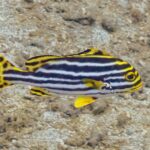 Oriental sweetlips | peak season | peak season | peak season | peak season | peak season | peak season | peak season | peak season | peak season | peak season | peak season | peak season | in the holds of the Irako, the Kogyo Maru and the Okikawa Maru |
| Crocodilefish and scorpionfish | peak season | peak season | peak season | peak season | peak season | peak season | peak season | peak season | peak season | peak season | peak season | peak season | resting on the plates of the Morazan Maru and the East Tangat, scorpionfish on every wreck |
peak seasonpossiblerare
What is diving like at the Coron wrecks?
The wrecks range from 5 to 43 m. The Okikawa Maru, with its deck between 10 and 16 m and the bottom at 26, the Olympia Maru, from 18 to 32 m, the Morazan Maru, from 12 to 26, and the two gunboats, between 3 and 19 m, can be dived from the outside from Open Water level. The Akitsushima, from 22 to 36 m, the Kogyo Maru, from 22 to 34, and the Irako, from 28 to 43, require Advanced and are better on Nitrox. Going inside the holds requires a wreck course, a powerful light and solid buoyancy: silt lifts fast, the Kogyo's passages are narrow, the Irako's ceiling has collapsed in places and the old routes need rechecking, and the Akitsushima is badly damaged. Munitions still lie on some wrecks. The tidal current is sometimes strong, even more so at full and new moon; the Okikawa is exposed to it, while the Morazan and the Lusong stay calm. Visibility 8 to 20 m before high tide, less afterward. Start with the Olympia or the Okikawa before the deep wrecks.
When to dive the Coron wrecks?
idealgoodnot recommended
The wrecks can be dived year-round in a sheltered bay, but the dry season, December to April, brings glassy seas and visibility up to 20 m, even better in March and April; this is the amihan, the northeast monsoon, which blows from early November to early March. From late May to October, the habagat, the southwest monsoon, brings rain, heaviest in July and August, and typhoons pass mostly from July to September: diving goes on in the bay, but swell and runoff from heavy rain cut visibility. October and November are an often good transition, before the high tourist season from December to March. The water drops to an average of 27.3°C in February and rises to 29.9°C in May. More than the month, the tide matters: visibility is better before high tide and drops on the spring tides of full and new moon, when the current also picks up.
How to get to the Coron wrecks?
Busuanga has its own airport, Francisco B. Reyes, just over an hour's flight from Manila; a van takes 30 to 45 minutes to Coron, the town in the south of the island. A PHP 200 environmental fee, valid for ten days, is paid on arrival. The wrecks are about an hour by boat from Coron, in the bay. At Pirates Diving Center, a day of three guided dives costs PHP 5,500 (€78) on the 2025-2026 season rate card, with gear at PHP 800 a day. At Pirate Divers Coron, you meet at the center at 8:30 a.m. and are back around 1 p.m. for two dives at PHP 5,000 or around 3:30 p.m. for three dives at PHP 6,000 (€85), gear, guide, boat, hotel pickup and marine park fees included; the three-day, nine-dive package covering the six main wrecks is PHP 16,000 (€228). Barracuda Lake is paid separately, boat plus an entry fee of PHP 200 to 300. From Concepcion, in northern Busuanga, Pirate Divers Busuanga reaches the same wrecks in 15 to 40 minutes. Prices checked on October 14, 2026.
Stay in Coron
Where to stay near the Coron wrecks?
Hotels, apartments and rooms around Coron, with current prices.
Which hotels to choose near the Coron wrecks?
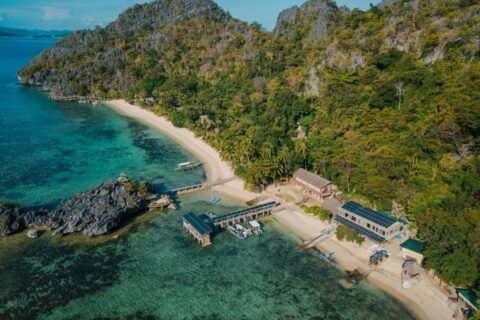
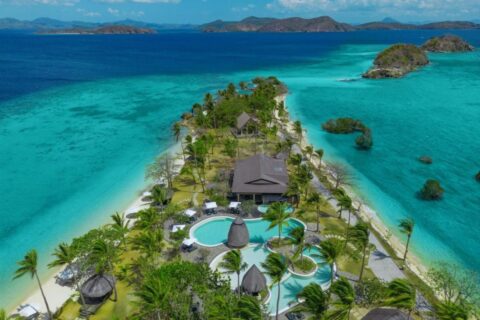
What happened at Coron on September 24, 1944?
In early September 1944, raids by American carriers made the big anchorages of the Philippines untenable, and Japanese ships sought refuge in Coron Bay, between Busuanga and Coron Island, away from the shipping lanes. On September 21, Vice Admiral Mikawa Gunichi obtained the transfer of the supply ships from Manila Bay to Coron; that same day, the Irako weathered the Task Force 38 raid in Manila and took on survivors from the destroyer Satsuki. On the 22nd at 3 a.m., a convoy left Manila for Coron with the Irako, the Taiei Maru and the Olympia Maru; the Akitsushima arrived on the 23rd.
On September 24 at 9 a.m., aircraft from the carriers Intrepid, Cabot and Lexington, launched more than 340 miles from their ships, fell on eleven vessels at anchor. In a single morning they sank the Akitsushima; the Irako, scuttled after its damage; the Kogyo Maru and its 39 dead; the Olympia Maru, hit on the fourth pass of a squadron of ten bombers, with 19 dead; the Taiei Maru, the Kyokuzan Maru, the Terukaze Maru and the Lusong gunboat. The Okikawa Maru, a burning tanker, stayed afloat for a few more weeks before a direct hit on the bow. In the 1970s, salvagers raised engines and propeller shafts from some hulls; the rest stayed in place, and the bay is now a national historical site. In February 2026, six models of the wrecks, surveyed by photogrammetry and 3D printed, entered the National Museum of the Philippines.
What are the Coron wrecks, one by one?
The Okikawa Maru, a 160 to 168 m tanker, is the biggest wreck in the bay: upright on the bottom at 26 m, its deck between 10 and 16 m, its bow almost torn off, dense coral along its whole length, and a penetration through the propeller shaft tunnel to the engine room. The Akitsushima, a 115 to 118 m seaplane tender, is the only true warship: lying on its port side between 22 and 36 m in the channel between Lajo and Manglet, it has its 35-ton crane resting on the sand, its machine guns, its radio mast, a huge impact hole, and three decks to explore down to the four engines for trained divers. The Irako, a 145 m refrigerated supply ship, is the deep wreck, from 28 to 43 m, almost upright, its bridge hit head-on; the engine room, galley and holds full of provisions can be visited with a light, and guides call it DDD, deep, dark and dangerous. The Kogyo Maru, a 130 to 135 m freighter lying on its starboard side between 22 and 34 m, was carrying what was needed to build airstrips: a bulldozer, a tractor and collapsed bags of cement wait in its six holds. The Olympia Maru, a 122 m freighter sitting upright between 18 and 32 m near Tangat, is the easiest of the big wrecks, with open holds. The Morazan Maru, a British passenger-cargo ship from 1907 captured by the Japanese, 92 m long and lying on its starboard side between 12 and 26 m, can be swum through from bow to stern, past two boilers. Outside the bay, northeast of Busuanga, the Kyokuzan Maru, 180 m between 20 and 28 m, is almost intact, with its pottery and truck parts, and an asbestos-covered bottom you don't stir up. The two gunboats complete the picture: the East Tangat Gunboat, a 35 m submarine chaser between 3 and 19 m, and the Lusong Gunboat, 30 m long, whose stern breaks the surface at low tide, reachable by snorkeling.
What is it like to dive the freshwater Barracuda Lake?
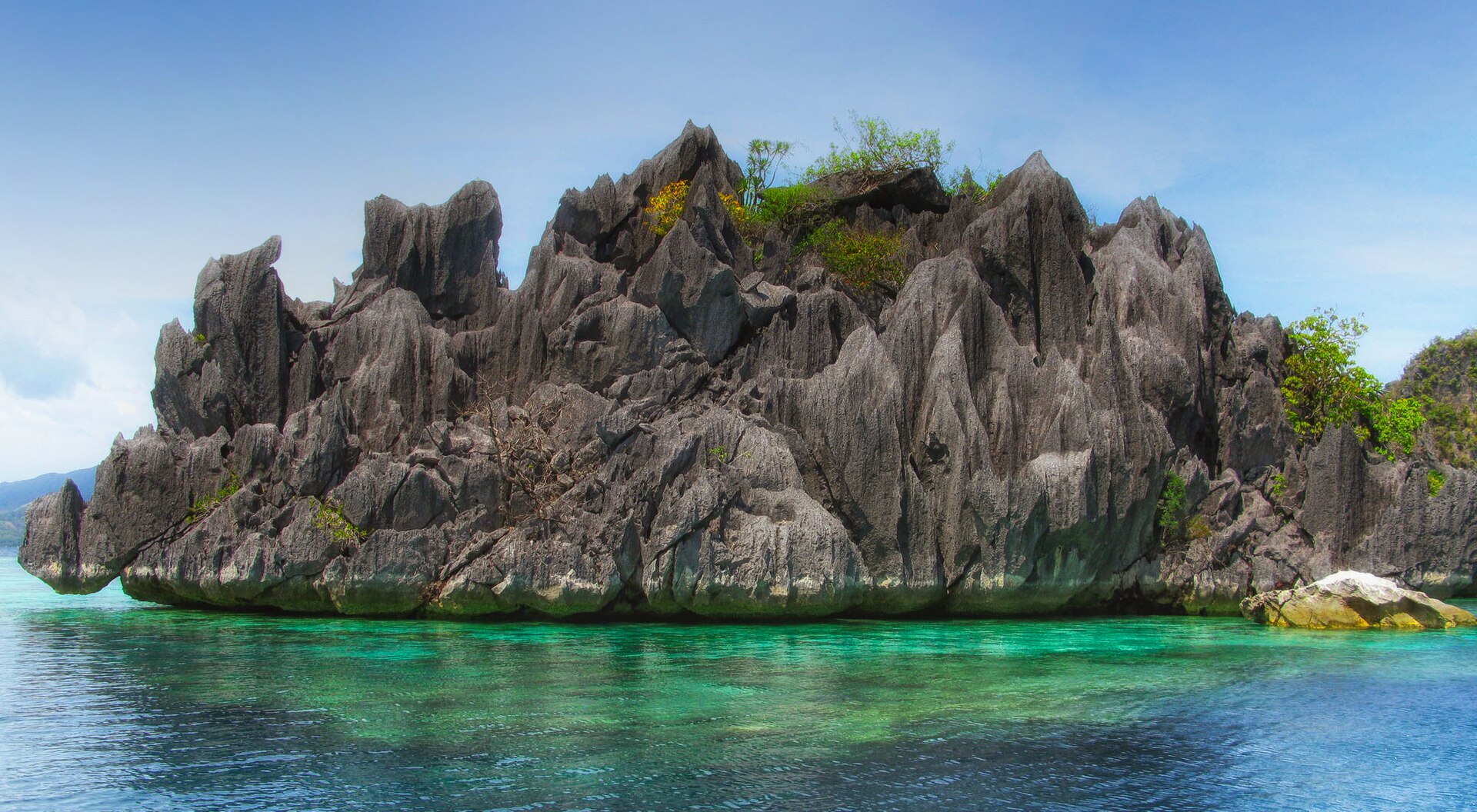
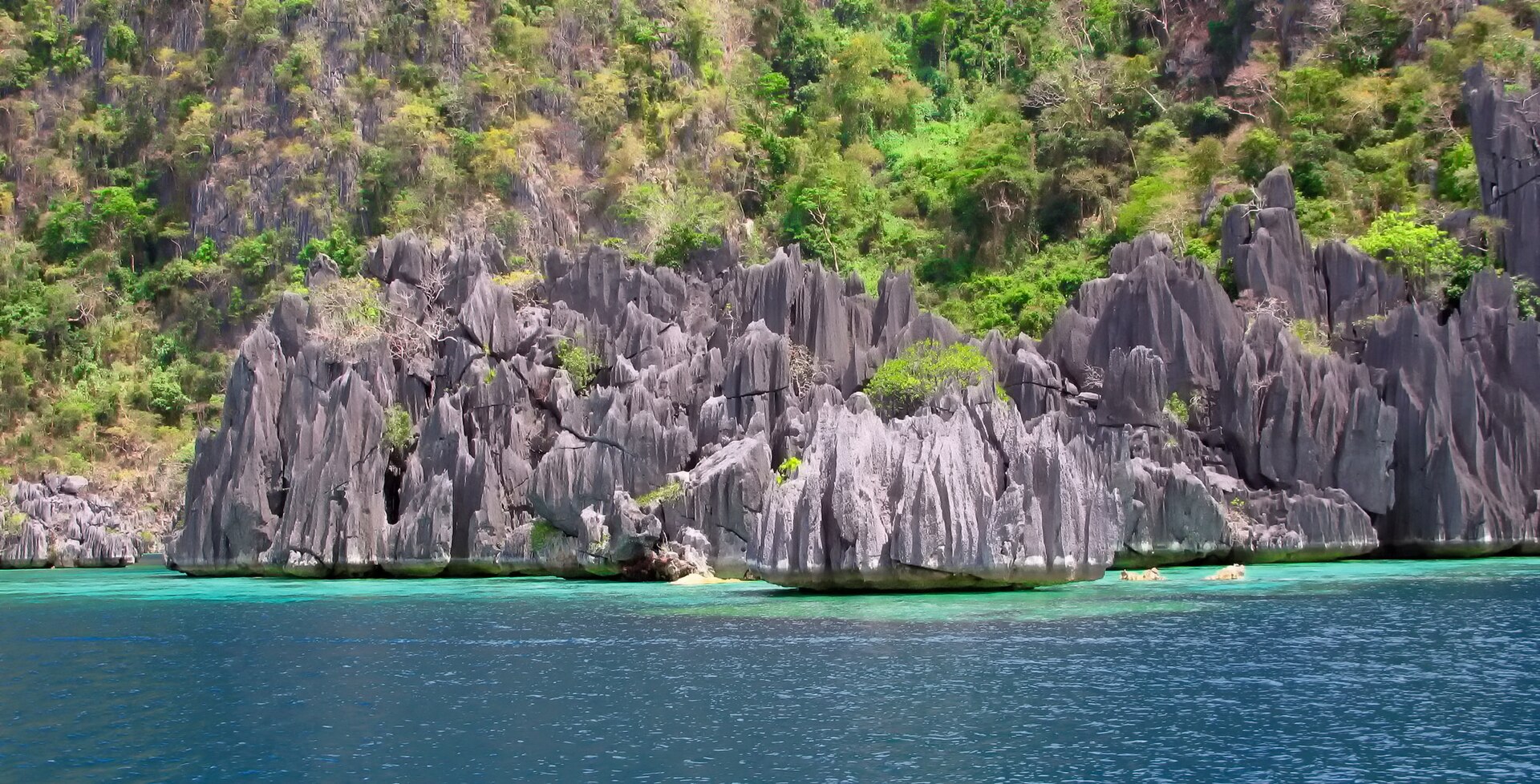
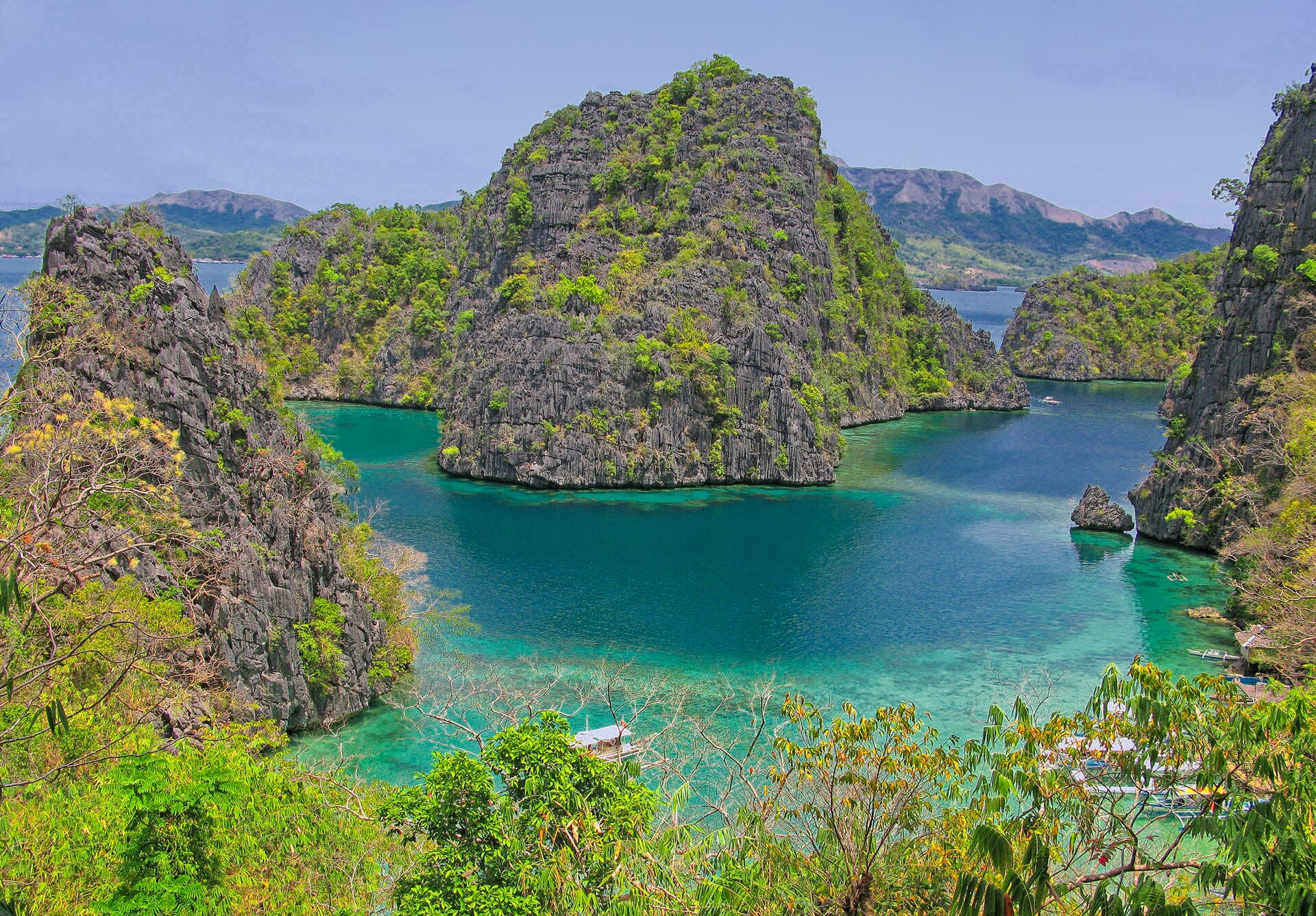
On Coron Island, 30 m from the sea behind a limestone wall, Barracuda Lake is a karst lake that dive centers add to a wreck day. The water is fresh and 28°C down to 14 m; there, a sharp thermocline and halocline take you into salt water at 38°C, which makes a wetsuit pointless and the feeling strange. The bottom, around 32 to 35 m, is a gelatinous brown silt colored by tannins; a 30 m long cave opens at 33 m, one diver at a time. There is almost nothing alive to see, a big resident barracuda on good days, and that's the reason to go: you dive it for the walls, the light and the temperature. The island has been ancestral domain of the Tagbanwa since 1998; entry costs PHP 200 to 300 depending on the dive center, and at the surface you swim with a vest.
How do you get inside the holds of the Coron wrecks?
The Coron wrecks are learned in order: the Olympia or the Okikawa first, for buoyancy and bearings, then the Morazan, the Kogyo, the Akitsushima and the Irako last. Dive centers sell the wreck course on site, one day with SSI, two with PADI, and take only divers who hold it into the engine rooms. A powerful light is essential in the Irako and useful everywhere; the photo subjects are the Akitsushima's crane under its batfish and barracuda, the Okikawa's corals between 10 and 16 m, and the light shafts in the engine rooms of the Kogyo and the Morazan. Dive before high tide for visibility, fin well clear of the plates so you don't lift the silt, and touch nothing: these are war graves, and some still hold their munitions.
Our tip
Set aside three days for the six main wrecks, from shallowest to deepest. Dive in the morning and avoid spring tides, when visibility drops. Take the wreck course on site to go inside the holds.
Other dive sites nearby
 PhilippinesPelagic
Tubbataha Reef
Palawan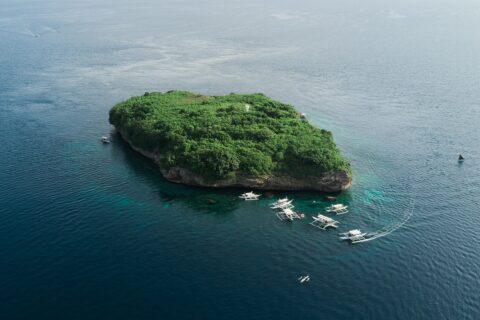 PhilippinesReef
Pescador Island
Visayas: Cebu, Bohol and Negros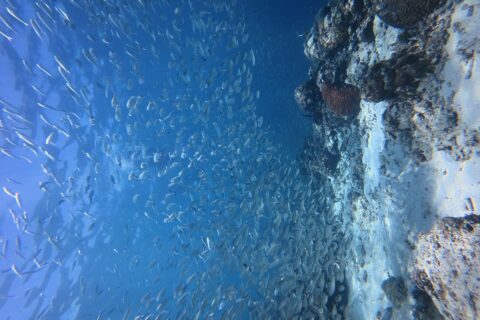 PhilippinesShore dive