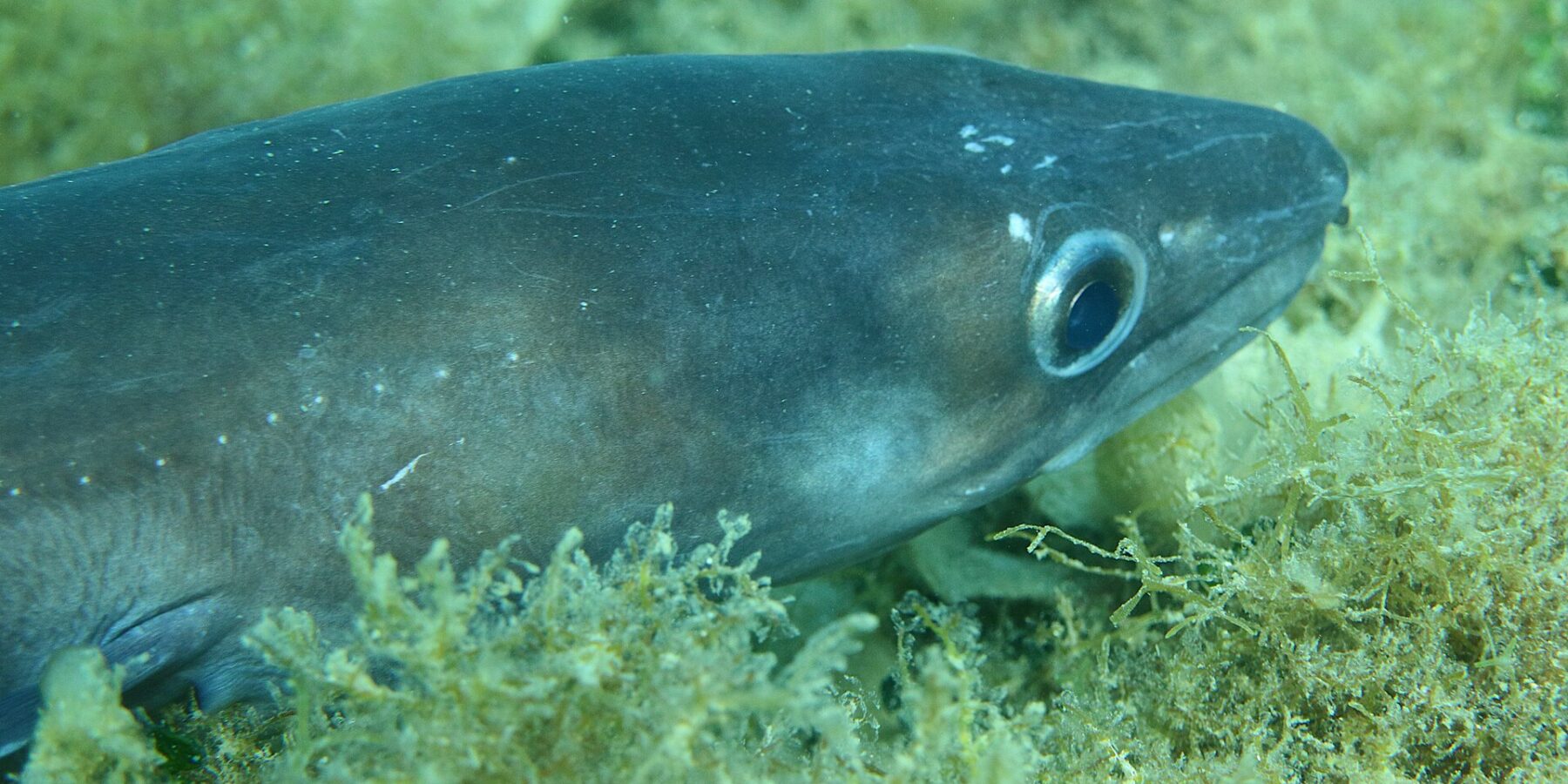
The conger eel is the sea eel of wrecks and rocks, dark gray, up to 3 meters and 110 kilos, the heaviest eel in the world. It spends the day in a hole, head out, and hunts at night. You find it year-round on the Liban wreck, on the Rubis and in the wall at La Gabinière.
Where to dive to see the conger eel?
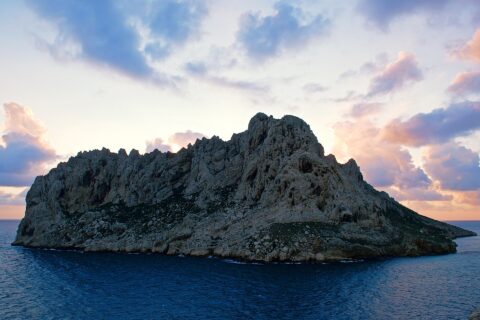
 FranceWreck
Liban wreck (Marseille)
French Mediterranean: Riviera, Provence and CorsicaPeak season all year round: in the nooks of the engine and the boilers
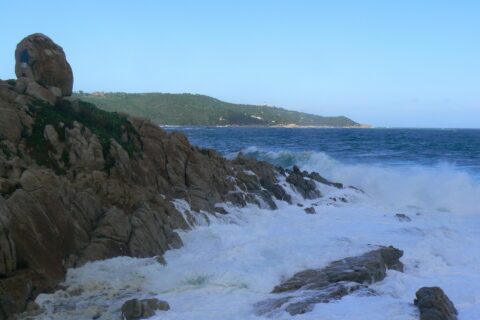 FranceWreck
Rubis wreck (Cavalaire)
French Mediterranean: Riviera, Provence and CorsicaPeak season all year round: in the openings of the conning tower and the hull
How do you identify a conger eel?
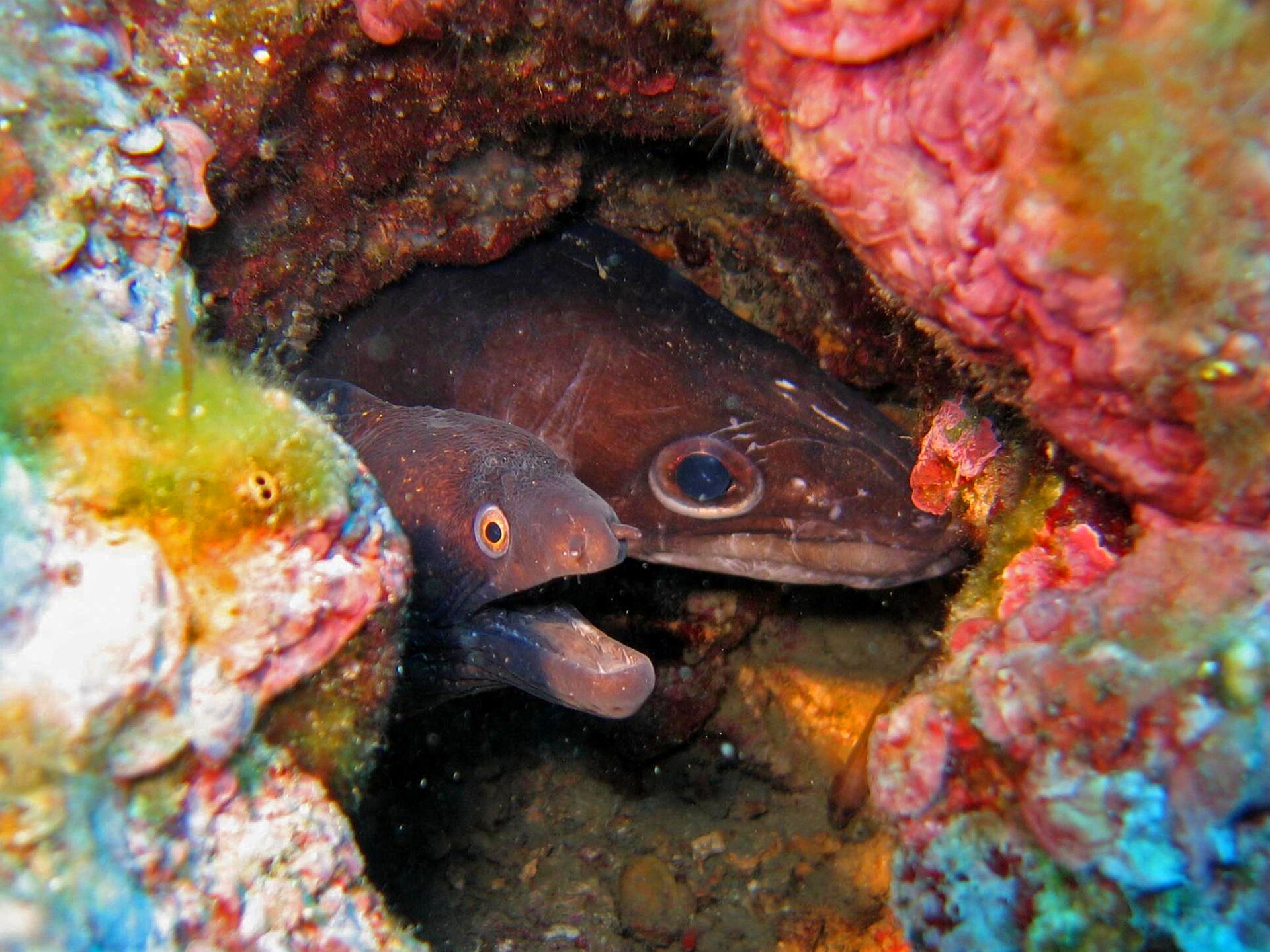
The European conger, also called the sea eel, is an eel-shaped fish of the conger eel family, Congridae, and the heaviest eel in the world. Its body is very long and scaleless, bluish gray to blackish on the back and white on the belly, with a line of small white dots running along the flank. The head is almost conical, slightly flattened, and the upper jaw overhangs the lower one; the conical teeth are set in rows along the jaws. It has well-developed pectoral fins and no pelvic fins, and its long dorsal and anal fins join at the rear without a distinct tail fin. Adults most often measure 1 meter for males and 1.50 meters for females; the largest reach 3 meters and 110 kilos. Next to a moray, you recognize it by its conical head, its pectoral fins and its plain coloring.
Conger eel in pictures
How do conger eels live?
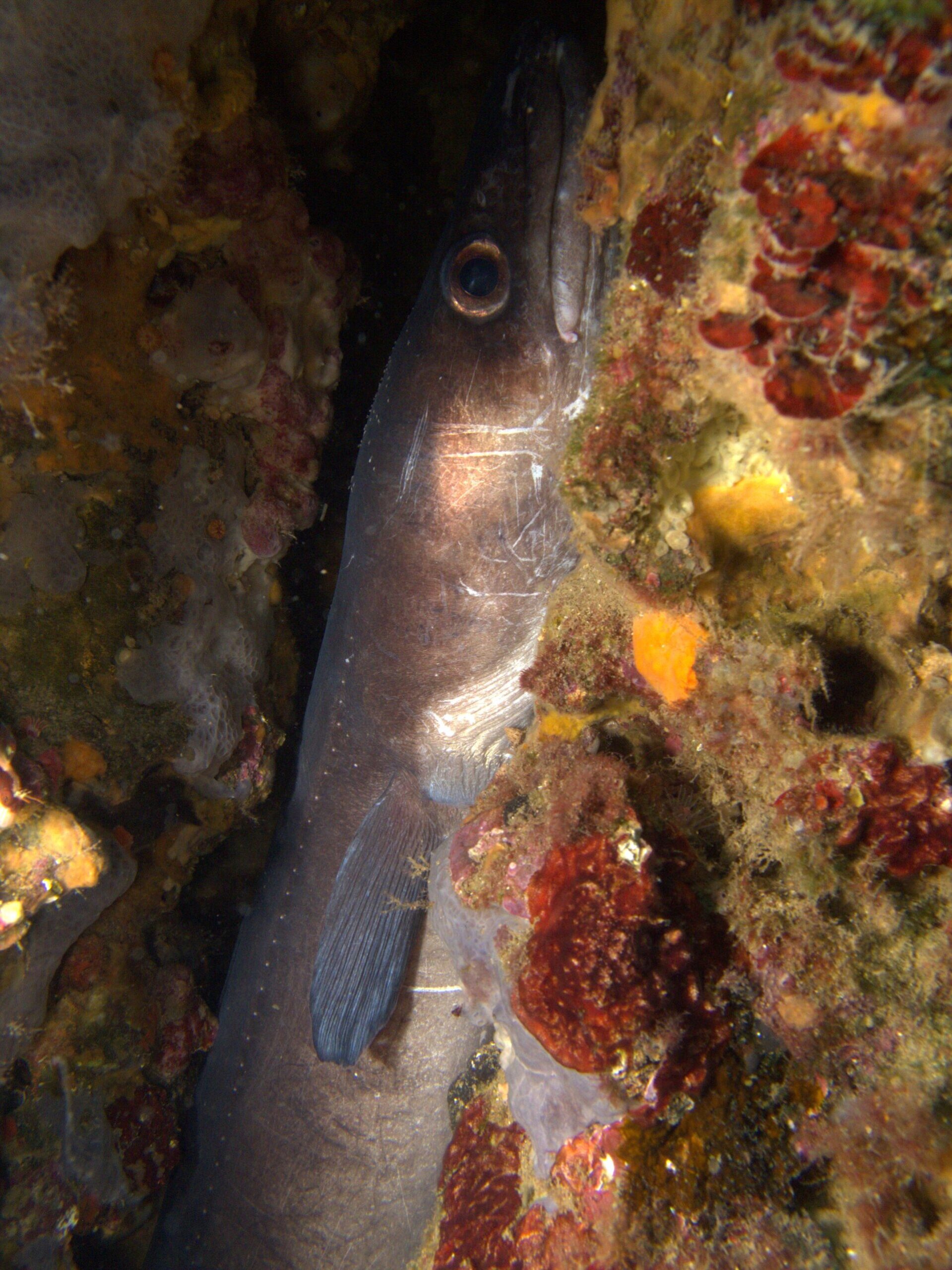
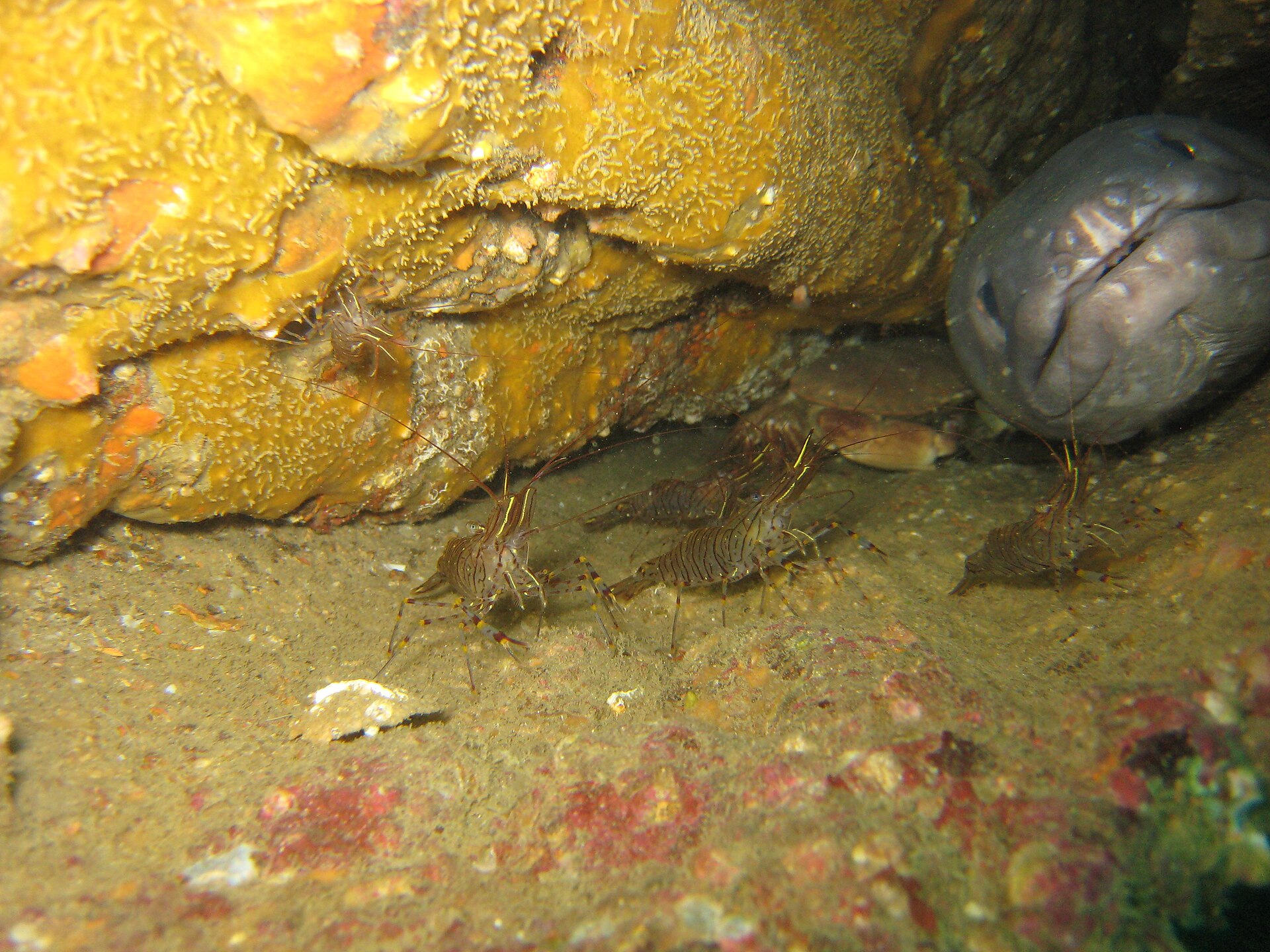
It lives from Norway and Iceland to Senegal, in the North Sea, the Mediterranean and the Black Sea, on rocky and sandy bottoms of the continental shelf, from the tidal zone to 500 meters and beyond. Young congers stay near the coast; adults move to deeper water. By day, it stays in a hole in the rock or in a wreck, head at the entrance; at night, it comes out to hunt, a voracious predator of fish, cephalopods and crustaceans that doesn't turn down dead fish. Its reproduction is unique: between 5 and 15 years of age, when it reaches about 1.20 meters for a male and 2 meters for a female, its body transforms and it leaves to spawn between the Azores and Gibraltar, 3,000 to 4,000 meters deep; the female lays 3 to 8 million eggs there, and both sexes die after spawning. The larvae drift back toward coastal waters before growing.
Where and when can you see conger eels?
Mediterranean wrecks are its best spots, and it is there year-round. On the Liban wreck, off Marseille, it occupies the nooks of the engine and boilers; on the Rubis wreck, off Cavalaire, you find it in the openings of the conning tower and hull. At La Gabinière, in Port-Cros National Park, it shares the holes in the wall with Mediterranean morays. In the Azores, at the Madalena islets, off Pico, it hides in cracks in the volcanic tuff, alongside black and brown morays. Look for it with a light: a gray head at the mouth of a hole, a round eye, and a body you can just make out in the shadow.
Is the conger eel dangerous?
The conger eel does not attack divers: accidents are extremely rare and follow a disturbance, a hand in its hole, an injured or fed animal. But its jaws are powerful, the bite goes deep, and anglers unhooking one sometimes lose a finger; a large conger in the tight space of a passageway is also a reason to keep your distance. The species is listed as Least Concern by the IUCN; in France, the minimum catch size is set at 60 centimeters.
Our tip
Look for it with a light in wreck openings, head out, and stay beyond arm's reach: it won't come out for you. No hands in holes, no feeding: bites are rare, come from provocation and go deep. Watch a big one head-on, without jostling in the passageway.