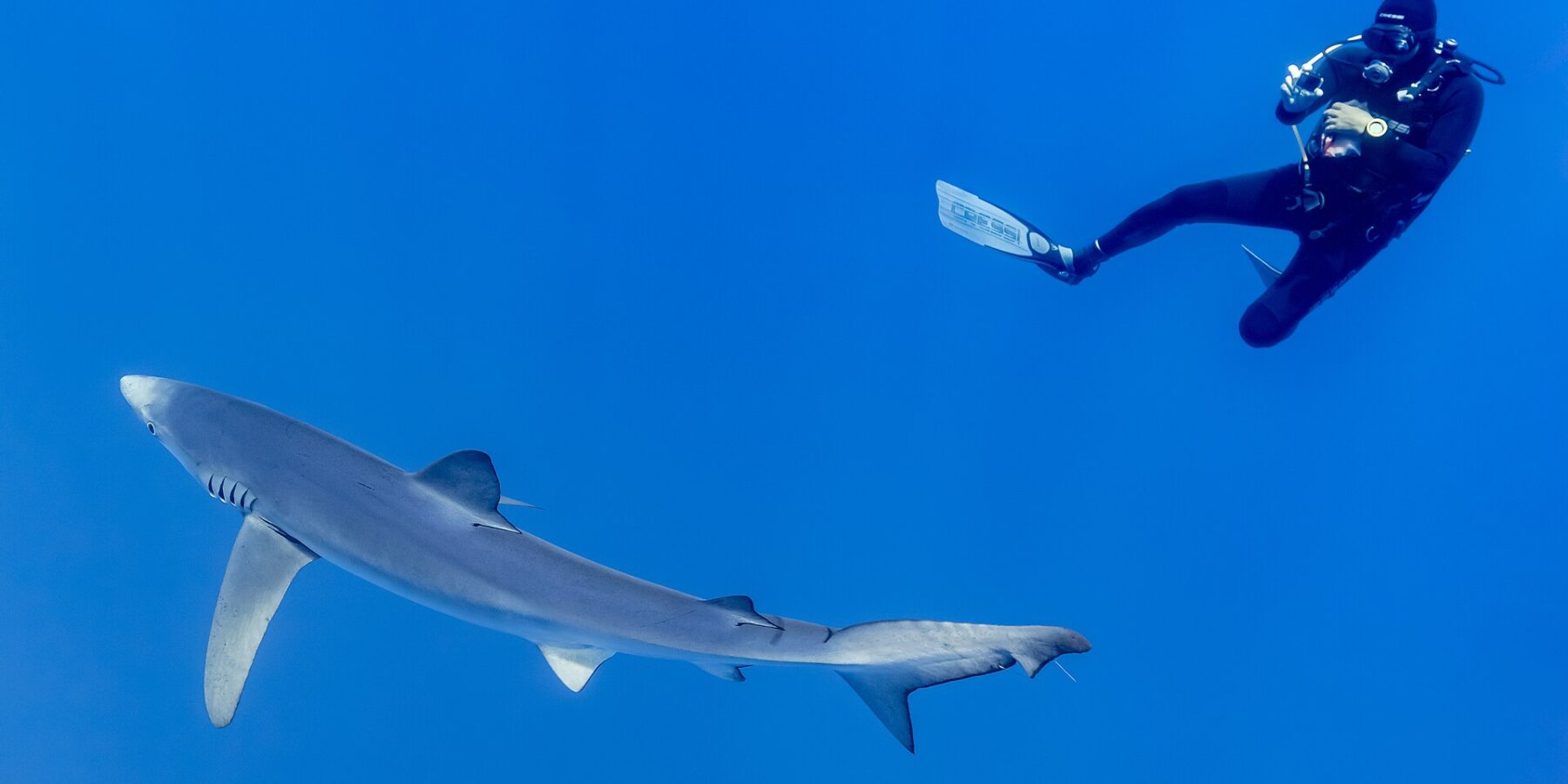
Condor Bank is a seamount 17 km off Faial whose summit stays 185 m down. You dive in open water under the boat, among blue sharks that come in groups of five to fifteen from July to mid-October, an hour by RIB from Horta or Madalena.
Why dive Condor Bank?
- Five to fifteen blue sharks per dive, 5 to 10 m below the surface, with more than 90% successful trips from July to mid-October
- The rarer mako shark on the same site
- The birthplace of blue shark diving in the Azores, launched here in 2009-2010
- A seamount with 1,800 m of relief, closed to bottom fishing since June 2010 and monitored by a scientific observatory since 2008
- One hour by boat from Horta and from Madalena
The dive site on the map
Base: Horta (Faial), 32 km as the crow flies.
See nearby dive sites on the mapCondor Bank in pictures
What will you see at Condor Bank?
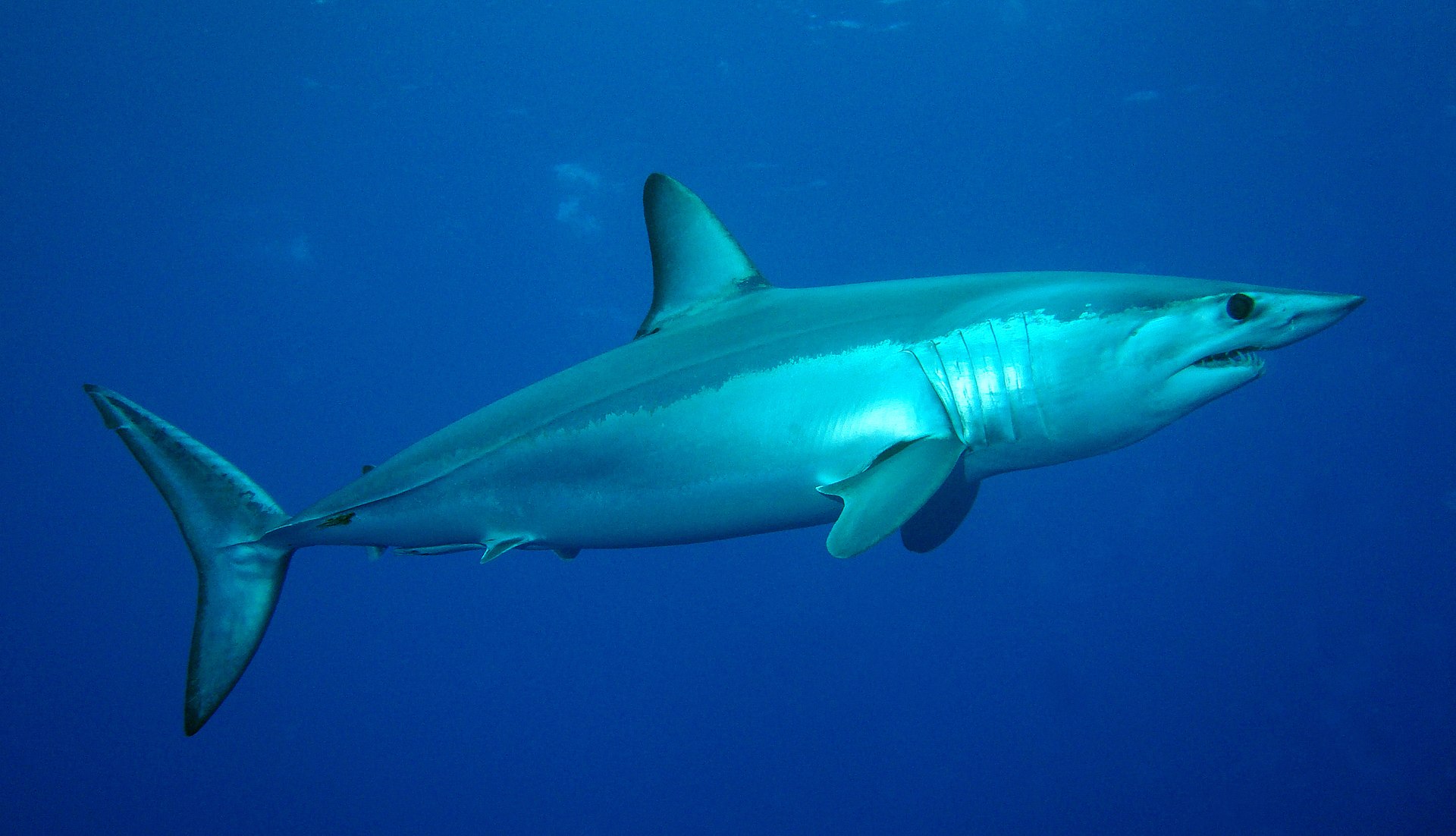
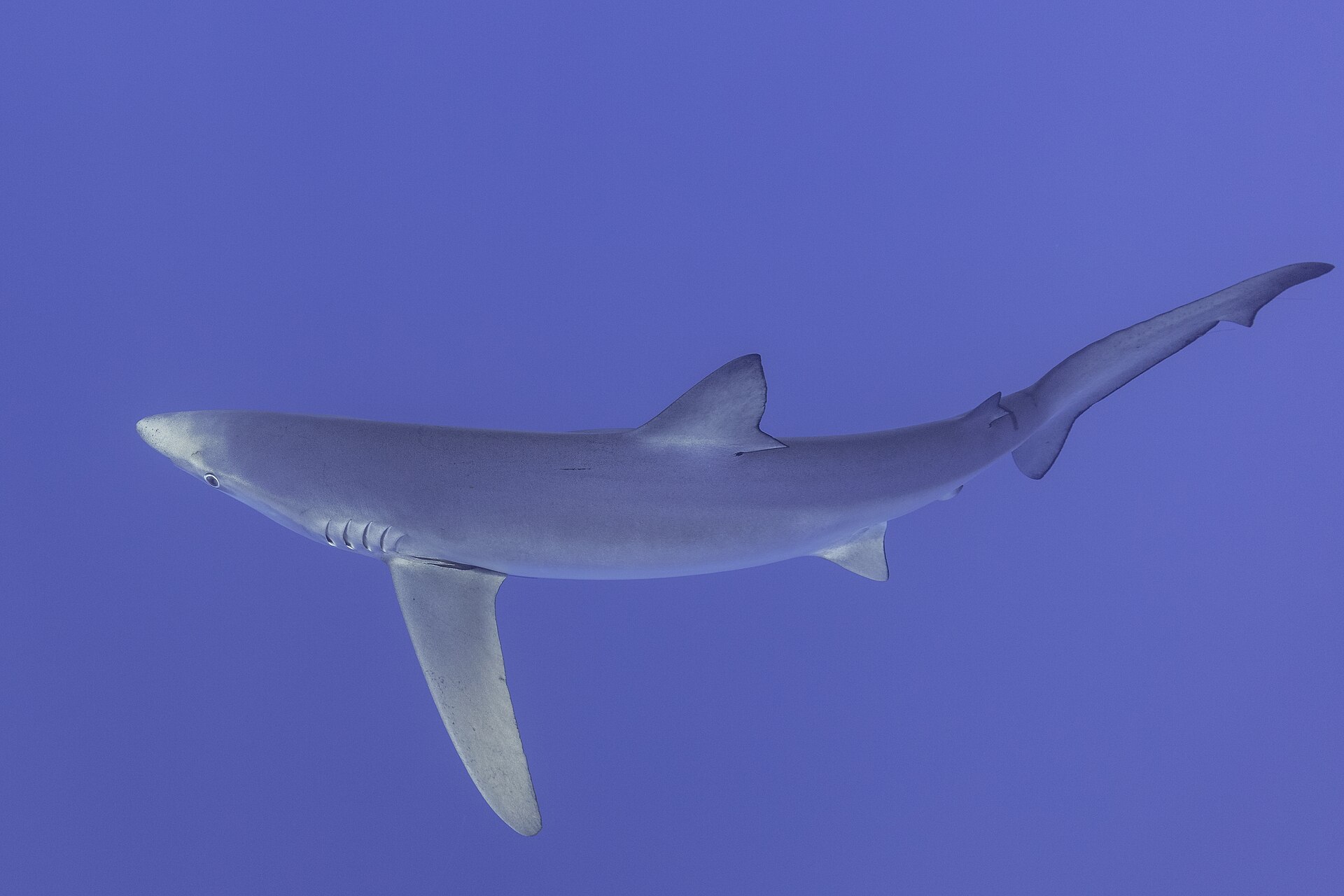
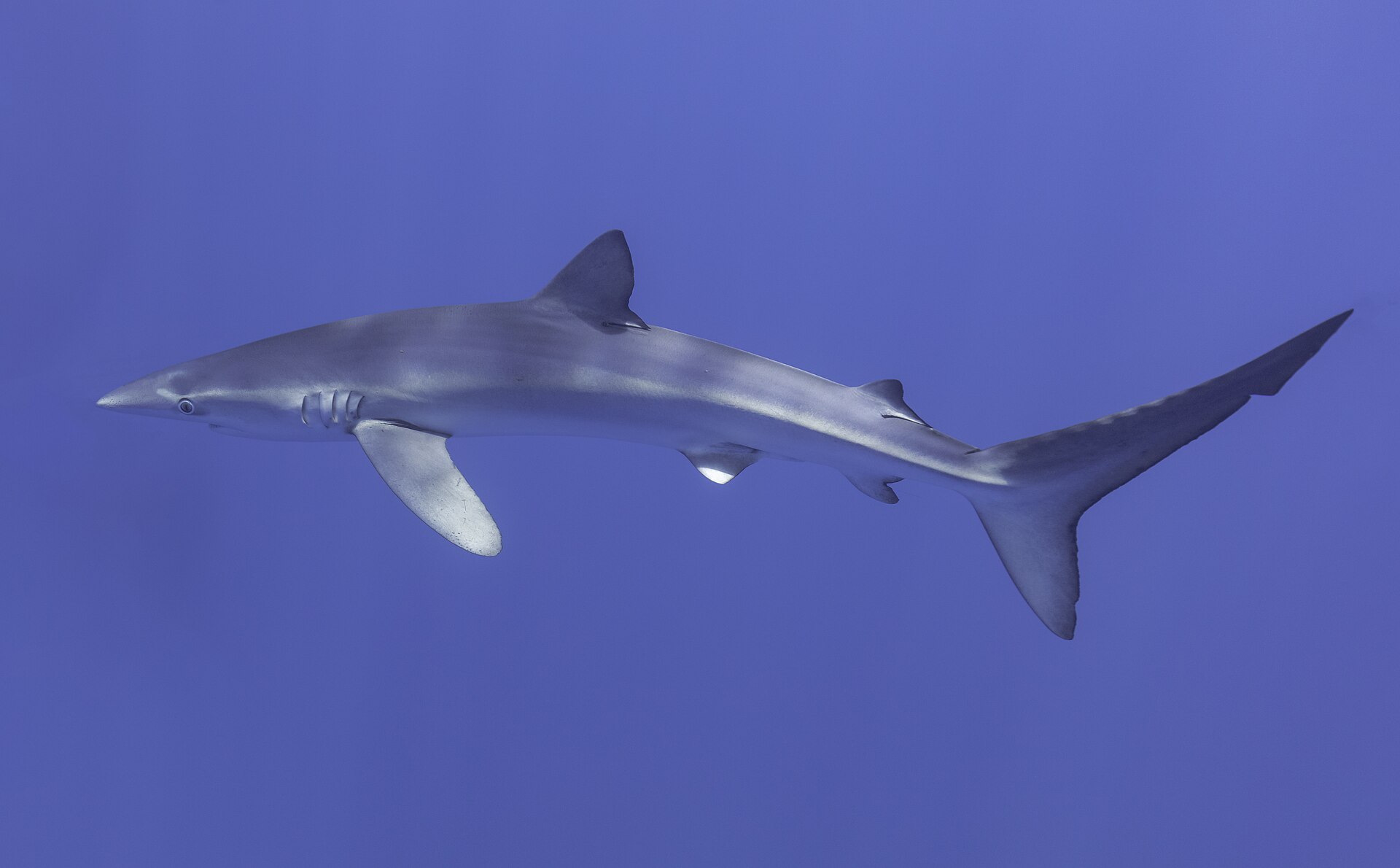
You dive Condor Bank for one species: the blue shark, Prionace glauca. A typical trip brings five to fifteen around the divers, five to ten meters below the surface, from July to mid-October. The sharks arrive after the chumming, circle at a distance at first, then come to inspect each diver up close, snout first, before going back to their circles between the group and the boat. The mako shark, Isurus oxyrinchus, visits the same site but shows up far less often: more nervous and faster, it rushes past and heads back into the blue. The rest of the marine life is sensed more than seen. The top of the seamount sits at 185 m, far too deep for recreational diving, and its gorgonian gardens at 300 m and sponge fields between 700 and 900 m are left to scientific surveys, which have recorded about 900 species there. At the surface, the bank is home to bigeye tuna and skipjack, caught by pole and line in spring and fall, and to blue marlin and swordfish.
| Species | J | F | M | A | M | J | J | A | S | O | N | D | Note |
|---|---|---|---|---|---|---|---|---|---|---|---|---|---|
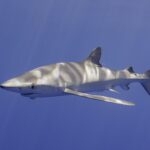 Blue shark | rare | rare | rare | rare | rare | possible | peak season | peak season | peak season | possible | rare | rare | 5 to 15 per dive, 5 to 10 m below the boat, from July to mid-October |
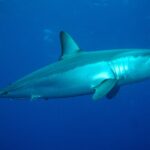 Shortfin mako shark | rare | rare | rare | rare | rare | possible | possible | possible | possible | possible | rare | rare | on the same site, much rarer than the blue shark, passes quickly |
| Bigeye tuna and skipjack tuna | rare | rare | rare | possible | possible | possible | possible | possible | peak season | peak season | rare | rare | pole-and-line fishing ground in spring and fall, hunting at the surface |
| Blue marlin and swordfish | rare | rare | rare | rare | rare | possible | possible | possible | possible | possible | rare | rare | the bank has been a big-game fishing ground since the 1980s; seen from the boat, rarely underwater |
peak seasonpossiblerare
What is diving like at Condor Bank?
You do not dive on the bank but above it: the top of the seamount is at 185 m and the dive takes place in open water, between 5 and 10 m, never deeper than 15 m. The boat is not moored; it drifts with the group and the sharks, in a variable current, over nearly 2,000 m of water. No wall, no bottom for reference: your buoyancy has to be perfect and your eyes keep going back to your computer. Visibility often goes beyond 20 to 30 m, and the light is surface light. The dive lasts up to 70 or 75 minutes, on a 12 or 15 liter tank. CW Azores requires Advanced Open Water or an equivalent certification, 50 logged dives, age 18 and a check dive on the coast with them, no exceptions; Norberto Diver asks for your certification card, a medical certificate, your logbook and the same check dive. The sharks are neither touched nor fed, and the guide ends the dive if their behavior or the divers' calls for it.
When to dive Condor Bank?
idealgoodnot recommended
Dive centers run trips to Condor from July to mid-October. CW Azores, in Madalena, reports more than 90% successful trips over that period. Norberto Diver, in Horta, only schedules shark dives from July to September and confirms each trip one or two days ahead, depending on the weather and the number of divers signed up. In late June, only a few trips leave from Lajes do Pico. The water is 19 °C in June, 22 °C in July, 23 °C in August, 22 °C in September and 21 °C in October: shark season means water at 21 to 25 °C, with a 5 mm wetsuit in midsummer and 7 mm in June and October. Out of season, from November to May, nobody goes out: the water drops to 16 °C and the wind rules out an hour's boat ride offshore. Plan a week on site to get two or three chances, because the trip depends on the sea and is decided the day before.
How to get to Condor Bank?
Condor Bank lies 17 km west-southwest of Faial, about ten nautical miles from Horta and roughly as far from Madalena: an hour by RIB from either harbor. The trip takes five to six hours, a good part of it spent chumming from the boat while waiting for the sharks, for a single dive. From Madalena, CW Azores sells the shark expedition for €200, tanks, weights and guide included, or €510 for three, with the check dive on the coast at €55. From Horta, Haliotis Faial charges €199 for its shark trip, tank, weights, boat and snack included, and €25 for full gear for the trip; Norberto Diver offers it for €200 to €220, for at least four divers, with full gear at €20 a day. You reach Faial and Pico via Lisbon with Azores Airlines, or via Ponta Delgada, four hours nonstop from Paris three times a week, then on a SATA Air Açores flight; the ferry crosses the channel between Horta and Madalena.
Stay in Horta (Faial)
Where to stay near Condor Bank?
Hotels, apartments and rooms around Horta (Faial), with current prices.
How did Condor Bank, an 1,800 m seamount, get its name?
The bank is named after a Pico tuna boat, Captain Jaime Medeiros's Condor, which found it again in 1962 thanks to an old French chart showing a 230 m sounding. It is a volcano stretched from east to west, 39 by 23 km, with a flat top at 185 m and a base at 2,003 m: 1,800 m of relief. On the western ridge, rounded pebbles tell of a time when the sea was 120 m lower and waves pounded this summit. Since 2008, the University of the Azores has run it as a scientific observatory; surveys have recorded about 900 species there, including species new to science, gorgonian gardens down to 300 m and sponge fields between 700 and 900 m. To protect this work, bottom fishing has been banned there since June 2010, and the bank is now a marine protected area of the Azores Marine Park.
How does a blue shark trip at Condor Bank unfold?
Blue shark diving was launched here, on a trial basis, in 2009 and 2010: Condor is the birthplace of the activity in the Azores. The boat leaves Horta or Madalena for an hour's ride, then starts chumming. The wait can be long: it makes the difference between a five-hour trip and a six-hour one. When the first fins appear, the group gets in and settles between 5 and 10 m, in bottomless blue. The sharks approach, inspect each diver one after another, then start circling between the group and the hull, often less than a meter away. Photographers work in natural light, in water with 20 or 30 m visibility. When a mako joins the round, everything speeds up. The dive ends after 70 to 75 minutes, or sooner if the guide decides.
How should you behave with the sharks at Condor Bank?
The rules are short: no touching, no feeding, keep your hands close to your body and never chase an animal. Chum is kept to a minimum in food, blood and oil, and the sharks get nothing to eat. The briefing goes over the behaviors to avoid, and the guide has the last word: if a shark gets too insistent or a diver strays, the dive is called off. For gear, a computer and a DSMB are essential, and several dive centers ask for a dark wetsuit. Operators take different positions on strobes and video lights, so ask before the trip. Finally, no cage is described at Condor: you dive freely in the water, at the animals' level.
Our tip
Do the check dive as soon as you arrive and keep several spare days. Bring a dark wetsuit, a dive computer and a DSMB: you dive in open water, with no bottom for reference. Ask about the rules on strobes before boarding.
Other dive sites nearby
 AzoresReef
Baixa do Sul
Pico and Faial AzoresReef
Ilhéus da Madalena
Pico and Faial AzoresPelagic