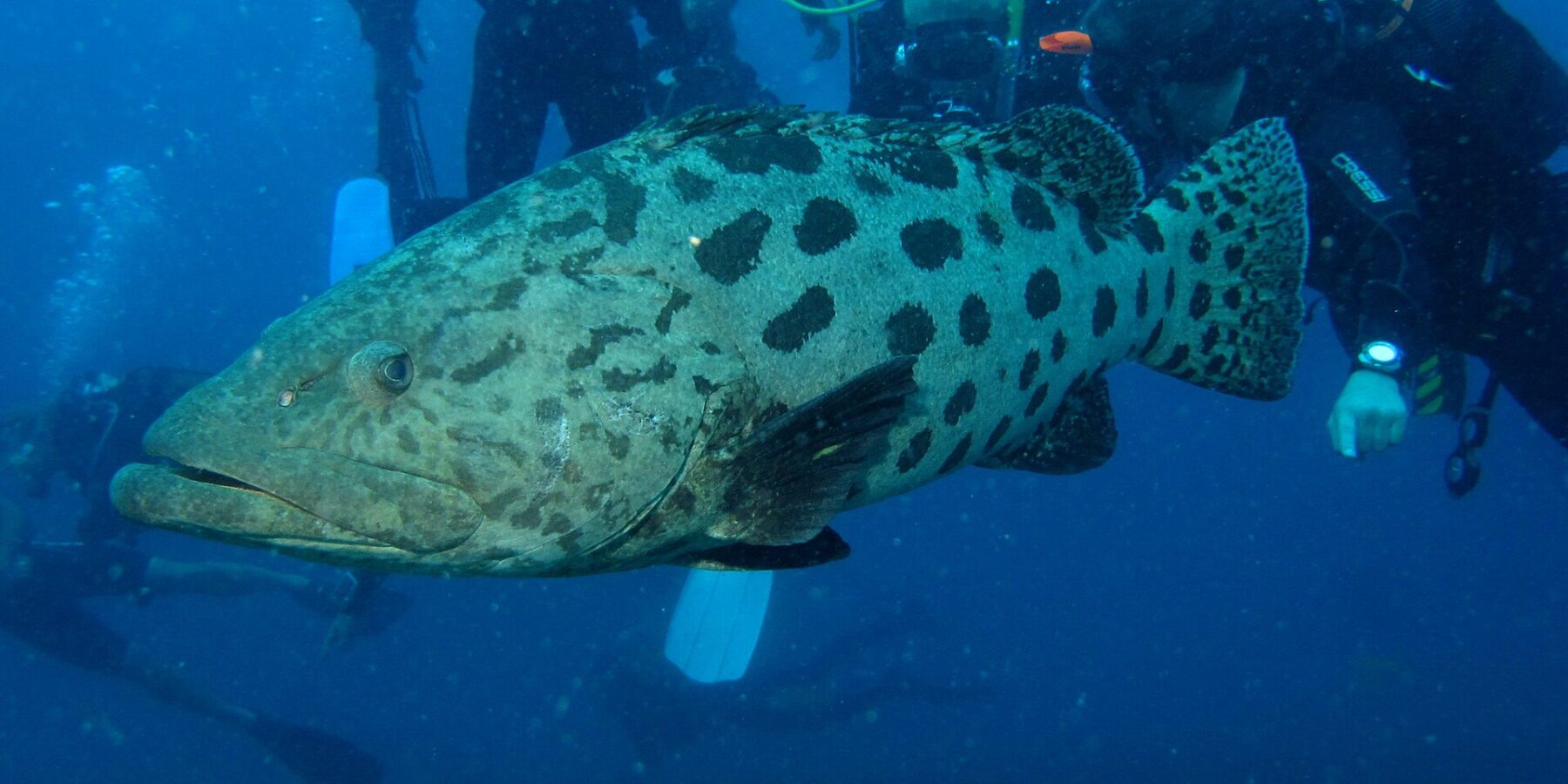
The potato grouper is a big reef grouper, up to 2 meters and 110 kilos, with large dark potato-shaped blotches. Curious and territorial, it comes to check out divers and keeps to the same patch of reef: a very large resident lives at Kinasi Pass, others at Misali and Panorama Reef.
Where to dive to see the potato grouper?
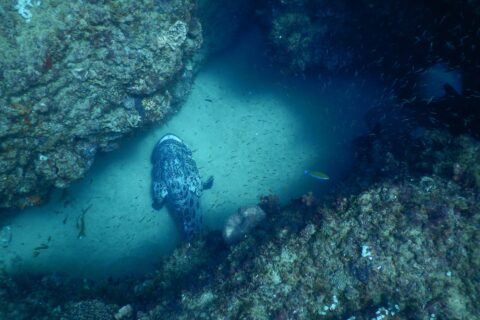
 TanzaniaPass
Kinasi Pass
Mafia IslandPeak season all year round: a very large resident on the Pinnacle, others in the caves of Kinasi Wall
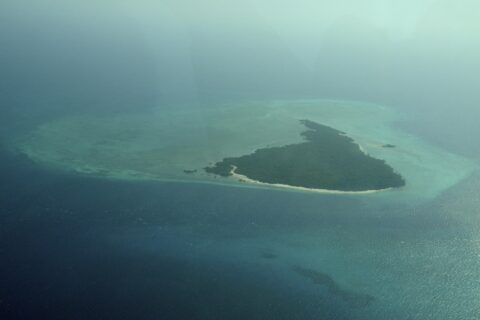 TanzaniaReef
Misali Island
PembaPeak season all year round: under the Coral Mountain overhangs
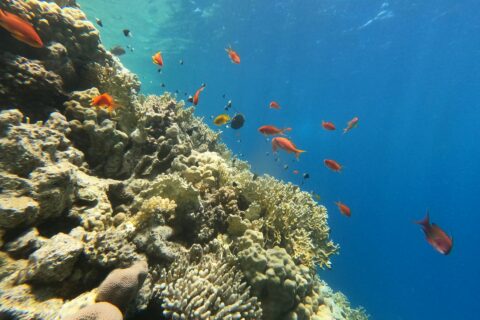
 EgyptReef
Panorama Reef
Central Red Sea, EgyptPeak season all year round: on the south plateau
How do you identify a potato grouper?
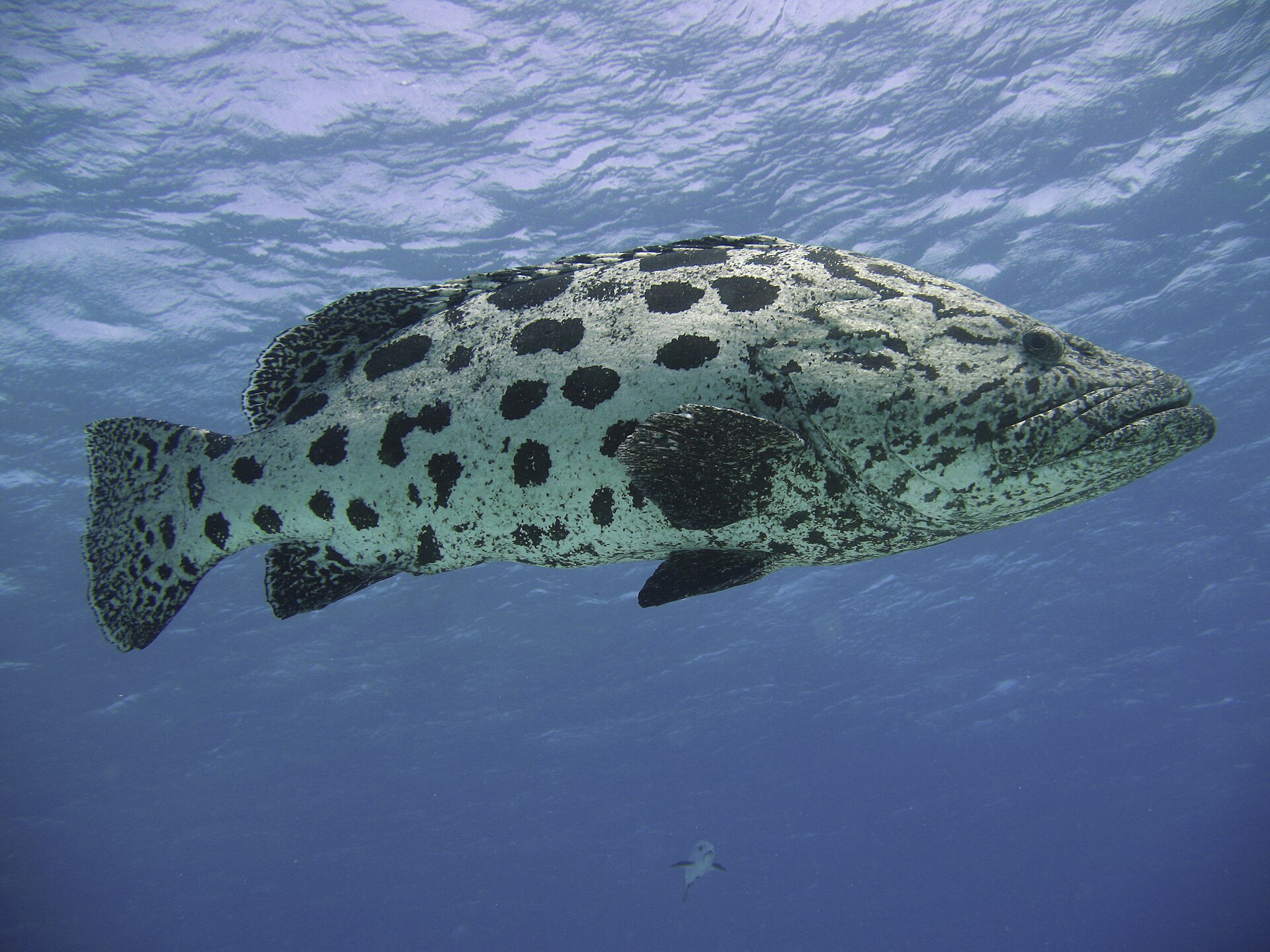
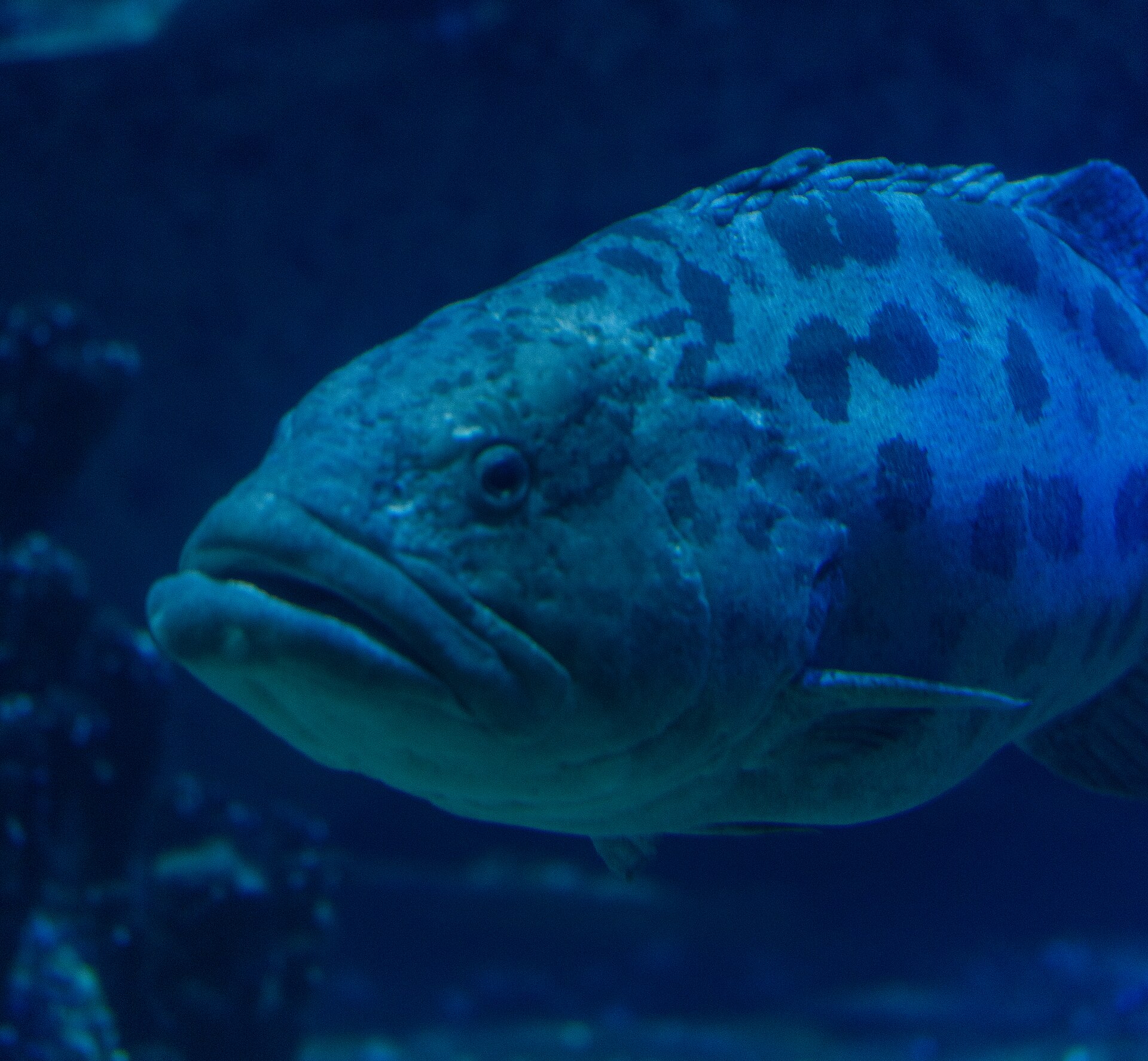
The potato grouper is a big, massive grouper with a heavy head and thick lips that can reach 2 meters and 110 kilos. Its coat gives it away from afar: a pale gray to gray-brown background scattered with large dark blotches, well separated from one another, whose shape recalls a potato and gave the fish its name, in English as in French. Up close, you can make out the dark lines radiating around the eye and the small black dots sprinkled over the fins. These widely spaced blotches on a pale background are its distinctive mark.
Potato grouper in pictures
How does the potato grouper live?
The potato grouper lives on coral reefs, in passes, along walls and around pinnacles and seamounts, often where the current is strong. Young fish stay in shallow water and tide pools; adults live between 10 and 150 meters and go down to 400 meters. Solitary and territorial, it holds a small home range that it defends against intruders. It is an ambush hunter that swallows its prey whole: small rays, crabs, fish, squid, octopus and spiny lobsters. It grows slowly and only reaches maturity at about 90 centimeters and 16 kilos, at around a dozen years old. It ranges from the Red Sea and the Persian Gulf to South Africa, and east to Japan, Papua New Guinea and Australia. It is most common along the east coast of Africa.
Where and when can you see potato groupers in Tanzania and Egypt?
The potato grouper is a resident: on our dive sites, you see it all year, in the same spot. In Tanzania, the Pinnacle at Kinasi Pass, the coral tower at the mouth of the pass on Mafia Island, is home to a very large potato grouper. You greet it as you circle the rock, before drifting toward the wall, whose caves hide others. At Misali Island, off Pemba, potato groupers stay under the overhangs of the Coral Mountain wall. In Egypt, they hold the southern plateau of Panorama Reef, along with whitespotted groupers.
Can you feed a potato grouper?
Where it is not hunted, the potato grouper swims straight up to divers, stays a meter away and can follow them along a wall for the whole dive; guides end up recognizing individual fish. Where it is speared, it disappears. Its slow growth, late maturity and attachment to a small territory make it vulnerable to spearfishing, even though the IUCN Red List classes it as Least Concern. At some sites, divers hand-feed it: the practice is dangerous for inexperienced divers, and on our dive sites, nobody holds anything out to it.
Our tip
Never hold anything out to it: once hand-fed, this grouper that swallows its prey whole becomes dangerous for inexperienced divers. Stay calm near its patch of reef, a pinnacle, an overhang or a cave, and let it come to you: it often approaches within a meter. Photograph it in profile, because the big blotches on its flank are its signature.