You can dive Pemba from June to early April, on the rising tide, when clear water from the channel flows onto the reef. Visibility is best from July to October, and the water rises to 28 or 29 °C from October to March. Several dive centers close in May, during the long rains.
Budget
Pemba is Tanzania's expensive island: two dives cost US$120 in Makangale and US$130 to US$200 at Swahili Divers, depending on distance, and gear rents for US$20 a day. On top come US$10 per adult per day in marine area fees, collected by the dive centers.
Getting there
Pemba is a 30 minute flight from Zanzibar, for US$100 plus US$20 in taxes, and the ferries dock at Mkoani. Each lodge has its own dive center. The Tanzanian visa costs US$50, and the Zanzibar insurance, US$44, also applies to Pemba.
Pemba, the second island of the Zanzibar archipelago, is a 30 minute flight north of Unguja, US$100 one way with Coastal Aviation, plus US$20 in taxes. The Pemba Channel separates it from the mainland and explains everything: the walls of the west coast drop into the blue, the current is strong and visibility reaches 20 to 40 meters. There is no beach resort town here, just a few isolated lodges, each with its own dive center: Fundu Lagoon in the southwest, The Manta Resort and Gecko Nature Lodge on the Kigomasha peninsula in the north, Pemba Dive Center in Makangale, Afro Divers in the northwest. The towns are Chake Chake, the capital, with the airport 7 kilometers away, Wete in the north and Mkoani in the south, where the ferries dock.
Where do you dive on Pemba: Misali or the northern passes?
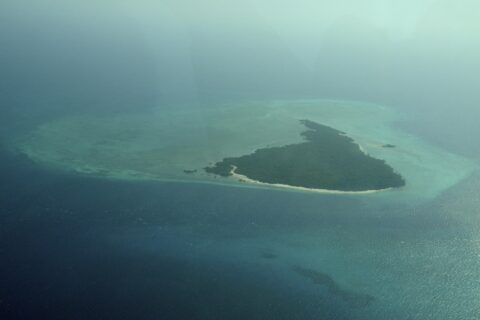
Misali, 10 kilometers west of Chake Chake, is Pemba's reserve island: 0.9 square kilometers of forest, nesting beaches for green and hawksbill turtles, 40 species of coral, more than 300 species of fish, shallow coral gardens on the sheltered side and walls to 40 meters in the channel. Off Wete, the islands of Fundo and Njao close off the harbor. Between and around them open the passes, Fundu Gap and Njao Gap, five sites each from 5 to 40 meters, with walls, sea fans, eagle rays, Napoleon wrasse, trevallies and barracudas in the current. Farther north, Swiss Reef, Manta Point and The Edge, a wall that starts below 30 meters, are dived from Kigomasha. Advanced is required on the passes and the deep sites, while Misali is fine from Open Water on the garden side.
When should you dive Pemba, and how much does it cost?
The water stays between 25 and 26 °C from July to September and rises to 28 or 29 °C from January to April. Visibility is at its best from July to October, and several dive centers close in May, in the heart of the long rains. Pemba is Tanzania's expensive island: US$120 for a half day of two dives at Pemba Dive Center, with gear at US$20 a day; US$120 too at Afro Divers; US$130 for two nearby dives and US$200 for the distant ones at Swahili Divers, at Gecko Nature Lodge. On top come the Pemba marine conservation area fees, US$10 per adult per day and US$5 for children, and, as on Unguja, the Zanzibar insurance at US$44.
Where to stay on Pemba?
Hotels, apartments and rooms around Chake Chake, the starting point for dives at Misali Island, with current prices.
 TanzaniaPass