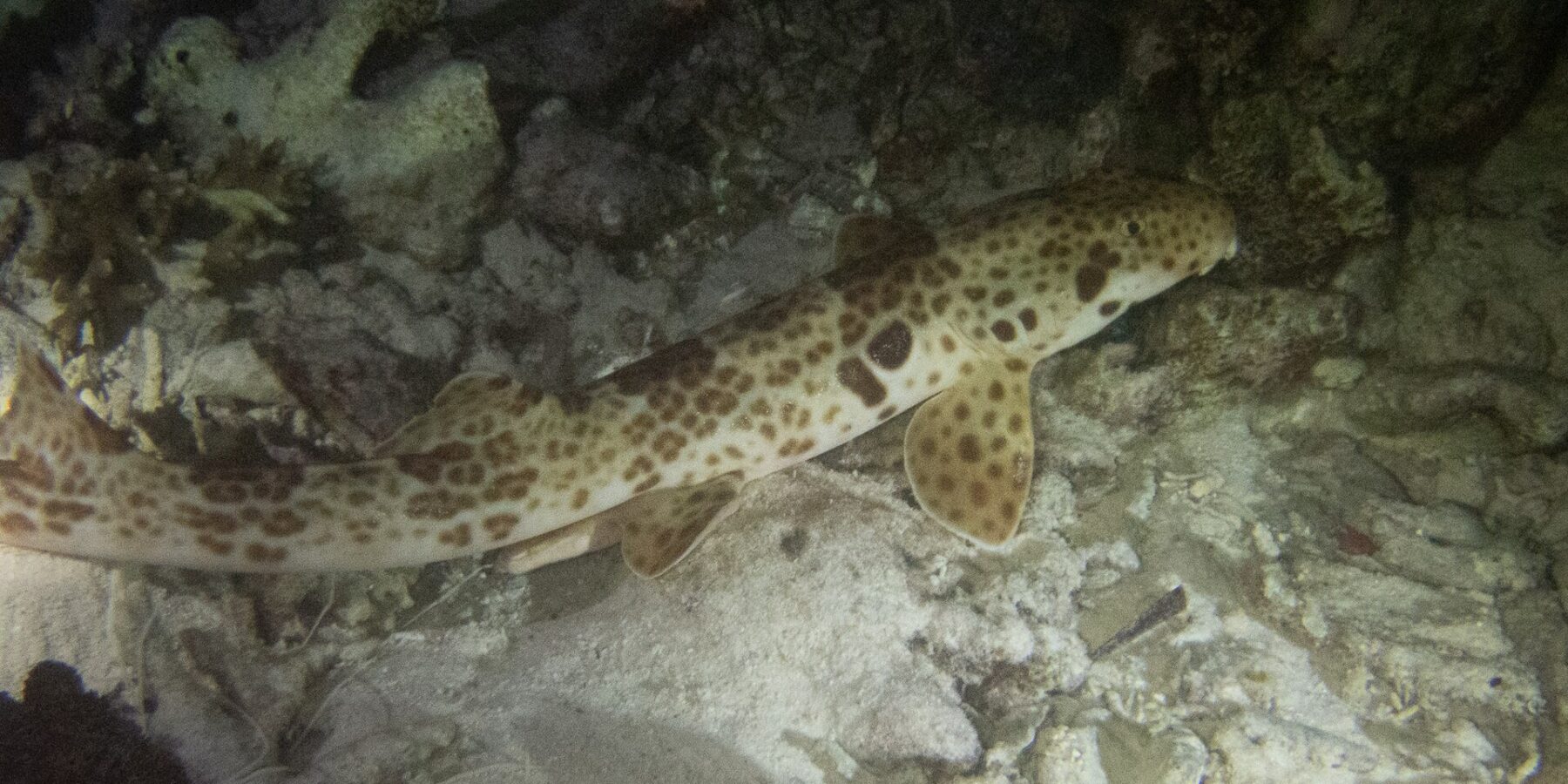
The Raja Ampat walking shark, small and spotted, lives only in Raja Ampat and walks on the bottom using its fins. Look for it all year round at Cape Kri, at night on the top of the reef, and at Magic Mountain, south of Misool. Harmless and Near Threatened, it is there to be watched, not touched.
Where to dive to see the raja Ampat walking shark?
 Indonesia
How do you identify a Raja Ampat walking shark?
The Raja Ampat walking shark, also called the Raja Ampat epaulette shark or the Indonesian speckled carpetshark, is a small shark with a slim, elongated body that ends in a long, straight tail. It rarely exceeds 75 centimeters, the size of the largest individual measured in Raja Ampat, and it becomes an adult at around 56 centimeters. The body is pinkish beige to cream, dotted with small round or oval brown spots, which cluster in places into eight or nine darker bars on the body and tail. Behind the head, above the pectoral fin, a large oval black spot, edged in white underneath, mimics an eye: this is the epaulette that gives the group its name. A smaller, figure-eight-shaped spot sits just below it, and two large spots mark the cheek just behind the eye. The broad pectoral and pelvic fins, rounded like paddles, serve as its legs.
Raja Ampat walking shark in pictures
How does the walking shark live?
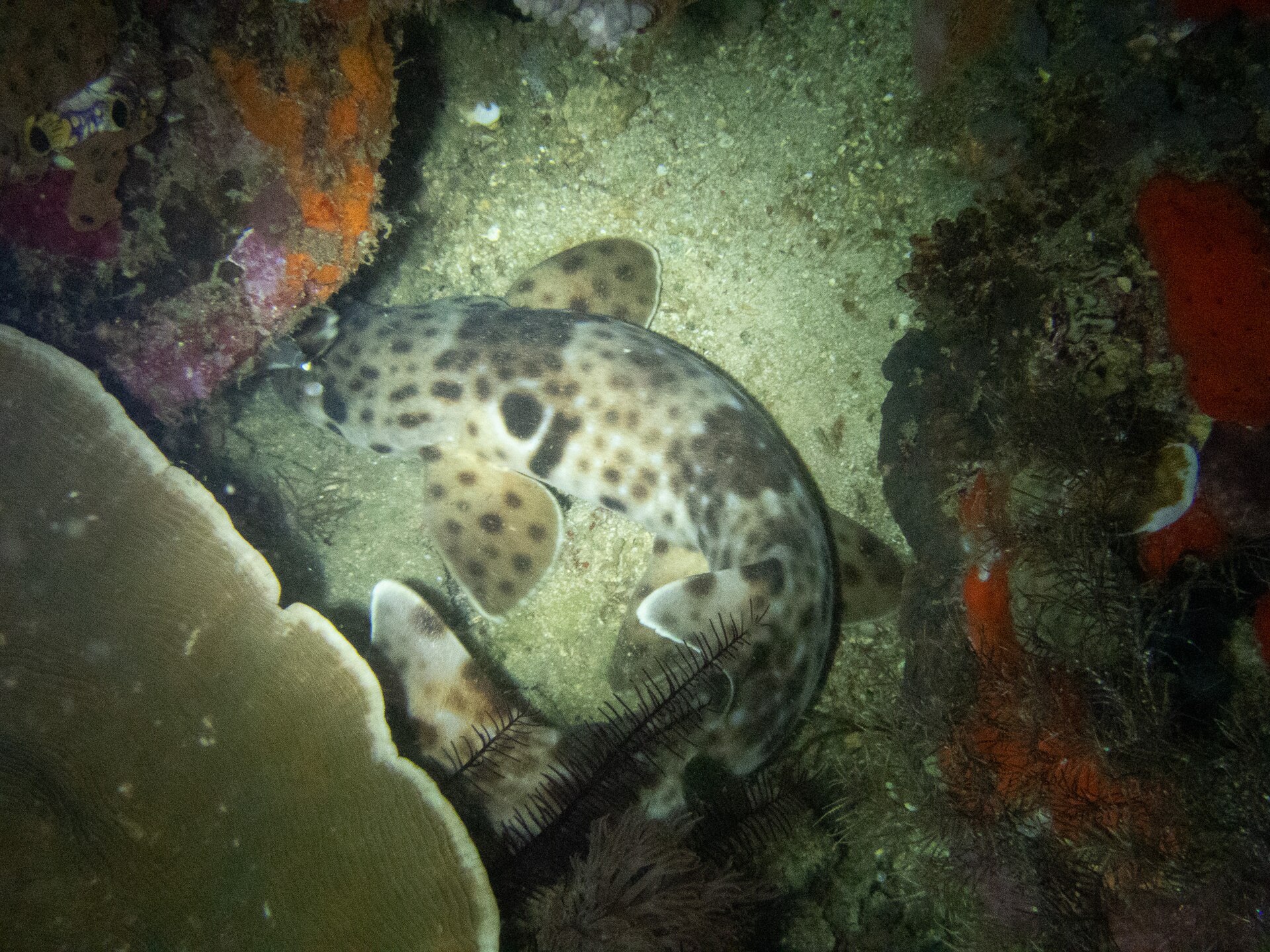
It is a shallow-water shark that lives on coral reefs, in seagrass beds and in mangroves, from the intertidal zone down to about ten meters. Nocturnal, it spends the day hidden in cracks in the reef or under coral and comes out at nightfall to hunt. It then moves by walking on the bottom, pushing off with its pectoral and pelvic fins in turn, and searches the coral and rubble for small invertebrates: snails, crabs and worms. It is oviparous: the female lays her eggs in pairs, in capsules, and the embryo feeds only on its yolk.
Where and when can you see the walking shark in Raja Ampat?
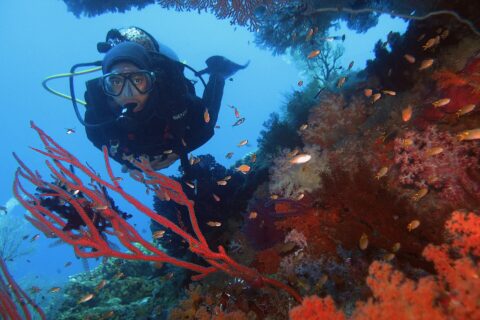
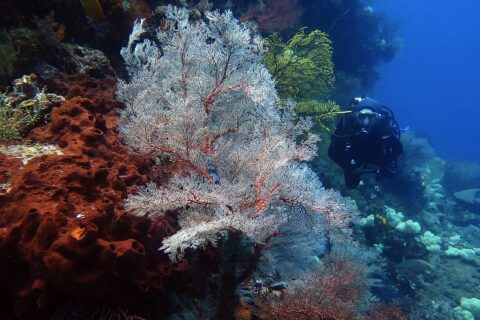
The Raja Ampat walking shark lives only in Raja Ampat, and two of the dive sites we cover in the archipelago list it in their calendar, as possible all year round. At Cape Kri, the eastern tip of Kri Island in the Dampier Strait, you look for it on a night dive on the top of the reef. The resort's house reef, dived from the jetty by day and by night, has its own too. At Magic Mountain, the seamount south of Misool, it hides in the nooks of the summit. Both sites have their best season from October to April, and Magic Mountain sees few dives from June to September.
Is the walking shark endangered?
The Raja Ampat walking shark was described in 1824 by Quoy and Gaimard and named after the navigator Louis de Freycinet, who had brought back the first specimen. It was long confused with a neighboring species from Papua New Guinea, Hemiscyllium michaeli, described in 2010, which has larger spots and a sharper epaulette: many books show one under the other's name. Its tiny range makes it fragile in the face of coastal development, targeted fishing and warming waters. The IUCN listed it as Near Threatened in its 2020 assessment, and Indonesia placed its walking sharks under full protection in 2023.
Our tip
Look for it on a night dive, on the top of the reef, slowly sweeping the coral and rubble with your light. When you find it, keep the beam out of its eyes and follow its walk from a distance, without cutting across its path or pinning it against the coral. Don't get too close: at a good distance, it keeps hunting right in front of you.